

Sweet Potato Companion Plants: 8 Best Garden Friends & 3 Foes to Avoid
Written with AI assistance, edited and checked against horticultural sources.
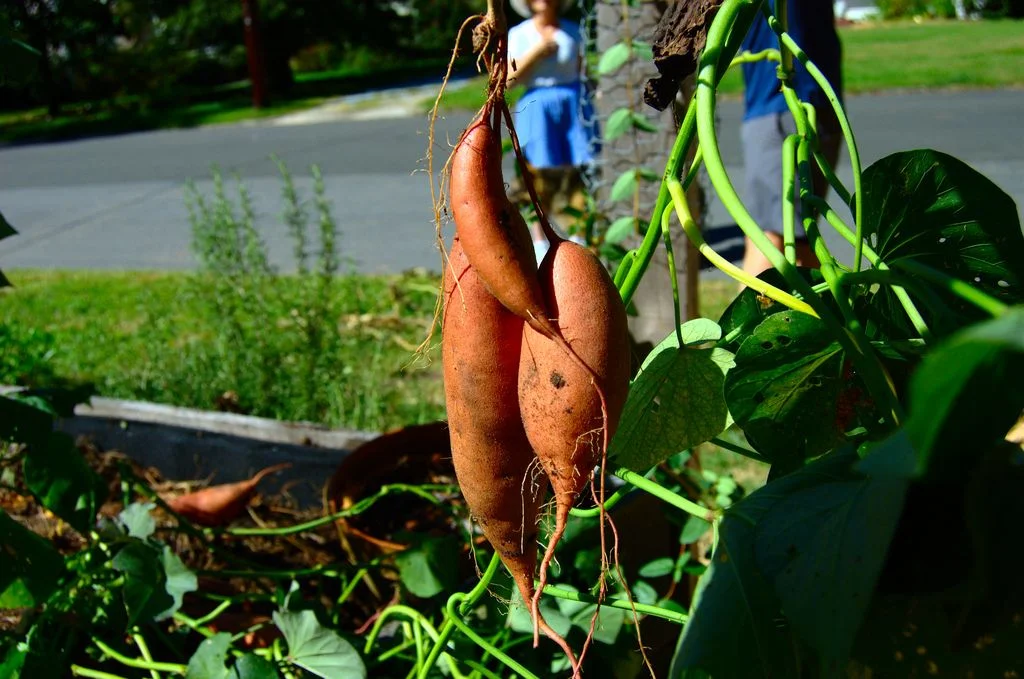
The remarkable physiology of Ipomoea batatas—the sweet potato—captivates botanists and edible landscape designers alike, backed by more than two decades of research greenhouse management.

1. Botanical Overview & Natural Habitat
Native to the tropical regions of Central and South America, Ipomoea batatas is a perennial vine grown cultivated largely as an annual root vegetable. Unlike true yam species (Dioscorea), which are monocots, sweet potatoes are dicotyledonous plants that produce tender, edible storage roots rich in starches and beta-carotene.
In its natural habitat, Ipomoea batatas thrives in warm, humid tropical conditions where its vining shoots form dense mats along the forest floor. This creeping growth habit serves a dual ecological role: it shields the topsoil from moisture evaporation and suppresses competing understory vegetation. The plant features an extensive adventitious root system, with underground storage roots expanding from node intersections that maintain contact with moist, friable soil.
When designing a companion guild for sweet potatoes, we must account for their aggressive, trailing foliage and deep, expanding storage roots. The ideal companion plants fall into distinct functional categories: living trellises, nitrogen-fixers, ground cover synergists, and biological pest deterrents.
 [ Sweet Corn / Trellis Plant ]
 | (Vertical Canopy)
 v
 [ Bush Beans ] ---> [ IPOMOEA BATATAS ] <--- [ French Marigolds ]
 (Nitrogen Fixation) (Sprawling Ground Cover) (Nematode Suppression)
 ^
 | (Biocontrol Attractor)
 [ Sweet Alyssum ]
The 8 Best Garden Friends (Beneficial Companions)
- Bush Beans (Phaseolus vulgaris): As nitrogen-fixing legumes, bush beans harbor symbiotic Rhizobium bacteria within their root nodules. They convert atmospheric nitrogen into bioavailable ammonium without competing for vine space, enriching soil for expanding sweet potato roots.
- Sweet Corn (Zea mays): Serving as a structural dynamic accumulator, corn stalks grow upright, occupying the vertical stratum while sweet potato vines carpet the ground below, creating a microclimatic living mulch that stabilizes soil temperatures.
- French Marigolds (Tagetes patula): Famous for their subterranean defense mechanisms, marigold roots exude alpha-terthienyl, a chemical compound that kills root-knot nematodes (Meloidogyne spp.)—one of the most devastating pests of Ipomoea batatas.
- Sweet Alyssum (Lobularia maritima): This low-growing flower acts as a nectar reservoir for syrphid flies, parasitic wasps, and lacewings. These beneficial insects prey heavily on sweet potato whiteflies (Bemisia tabaci) and aphids.
- Radishes (Raphanus sativus): Fast-maturing root crops like radishes break up compacted surface soil before sweet potato vines establish dominance. They are harvested long before Ipomoea batatas begins its intensive root expansion phase.
- Thyme (Thymus vulgaris): The aromatic volatile oils (thymol) produced by thyme act as a natural deterrent against sweet potato weevils (Cylas formicarius), while its shallow root footprint prevents root competition.
- Oregano (Origanum vulgare): Like thyme, oregano creates a pungent aromatic perimeter around sweet potato beds, confusing flying insect pests while providing low-maintenance ground cover along bed borders.
- Horseradish (Armoracia rusticana): Planted at the perimeter of sweet potato plots, horseradish exudes glucosinolates into the soil, which act as a natural biofumigant against soil-borne fungal pathogens like Fusarium wilt.
The 3 Foes to Avoid (Incompatible Plants)
- Squash & Pumpkins (Cucurbita spp.): Both cucurbits and sweet potatoes share a rampant, creeping growth habit and heavy water requirements. Planted together, they engage in severe light competition and tangle vines, complicating harvest.
- Irish Potatoes (Solanum tuberosum): Despite their shared common name, Irish potatoes belong to the Solanaceae family. They attract common pests like wireworms (Agriotes spp.) and share susceptibility to fungal pathogens, creating a disease vector when planted in proximity.
- Fennel (Foeniculum vulgare): Fennel exhibits powerful allelopathic properties, secreting toxic root exudates that stun the growth of surrounding root crops and drastically reduce sweet potato storage tuber yield.
2. Essential Environmental & Care Requirements
To cultivate healthy Ipomoea batatas alongside its companion plants, you must maintain precise environmental conditions. Soil dynamics, irradiance levels, and moisture delivery must balance the requirements of both the sprawling vines and their beneficial plant partners.
| Parameter | Optimal Condition | Common Mistake | Biological Effect |
|---|---|---|---|
| Light | 8 to 10+ hours of direct, unfiltered solar radiation per day. | Planting under heavy tree canopies or tall crops that cast dense full-day shade. | Insufficient photon flux reduces photosynthetic rate, leading to leggy vines and undersized tubers. |
| Watering | 1 to 1.5 inches of water per week; deep, infrequent soakings. | Frequent light overhead sprinkles late in the evening. | Creates persistent moisture on foliage, promoting fungal pathogens like Alternaria leaf spot. |
| Humidity | Relative humidity between 60% and 80%. | Growing in overly dry climates without soil mulching. | Low humidity increases stomatal closure, suppressing photosynthetic efficiency and vine growth. |
| Soil | Well-draining, sandy loam with a pH of 5.8 to 6.2. | Planting in heavy, unamended clay or highly alkaline soil ($>\text{pH } 7.5$). | Excess moisture retention in clay causes tuber rot; high pH induces micronutrient chlorosis. |
| Fertilizer | Low Nitrogen, High Potassium/Phosphorus balance (e.g., NPK 5-10-10). | Applying high-nitrogen animal manures or lawn fertilizers. | Promotes massive leaf production at the expense of storage root development (all vine, no tubers). |
3. Step-by-Step Cultivation, Feeding & Propagation Protocol
Successfully establishing a sweet potato polyculture requires proper slipping (vegetative propagation), bed preparation, and scheduled companion planting integration.
[ Step 1: Slip Production ] ──> [ Step 2: Rooting ] ──> [ Step 3: Bed Prep ] ──> [ Step 4: Companion Planting ]
 (Root in water/soil) (Develop 2" roots) (Mound sandy loam) (Interplant friends)
Step-by-Step Slip Propagation & Planting Protocol
- Initiate Slip Production (8–10 Weeks Before Last Frost): Select a healthy, organic sweet potato tuber. Suspend it half-submerged in water using toothpicks, or submerge it horizontally in a tray of moist coconut coir maintained at 75°F–85°F (24°C–29°C).
- Harvest and Root Adventitious Shoots: Once green shoots (slips) reach 6 to 8 inches in length, snap them gently off the mother tuber. Place the bottom half of the slips in clean water for 5 to 7 days until adventitious roots grow to 2 inches long.
- Prepare the Raised Bed Mound Structure: Construct raised mounds or ridges 8 to 12 inches high and 12 inches wide, spaced 3 feet apart. Amend the soil with well-rotted leaf compost and bone meal to supply phosphorus without spiking nitrogen.
- Plant Slips with Intentionally Spaced Companions: Plant sweet potato slips 12 to 18 inches apart down the center of the mound, burying stems up to the top 2 sets of leaves. Interplant bush beans along the mound sides, and space marigolds and sweet alyssum along the bed borders.
- Establish Companion Hydration Routine: Water deeply immediately after transplanting. Maintain consistent moisture levels for 2 weeks until slips show new green expansion.
💡 Pro-Tip: Never apply fresh manure or high-nitrogen fertilizers to sweet potato beds! High nitrogen triggers luxurious, leafy vine production while suppressing storage root initiation. If you want huge, carbohydrate-dense tubers, keep soil nitrogen modest and boost potassium during root bulking (week 6 onward).
⚠️ Important Caution: Refrain from disturbing the soil around Ipomoea batatas once vines begin running. Tuberous roots form shallow adventitious networks near the surface; aggressive mechanical weeding or root disruption from incompatible neighbors (like squash or fennel) will cause tuber scarring and lower total yield.
4. Common Plant Issues, Pests & Troubleshooting
Even in a balanced garden, environmental stress and pest pressure can arise. Here is how to diagnose and resolve common Ipomoea batatas problems using botanical biocontrols and cultural adjustments.
[ Yellowing Foliage ] ──> Check Nitrogen vs. Fusarium Wilt ──> Adjust feeding / Apply Trichoderma
[ Punctured Tubers ] ──> Check for Wireworms / Weevils ──> Interplant Marigolds & Thyme
[ Wilting Vines ] ──> Check Soil Moisture / Root Rot ──> Improve drainage & reduce water
- Sweet Potato Weevil (Cylas formicarius): Small, ant-like beetles lay eggs in vines and exposed roots; larvae tunnel through tubers, causing bitter flavors and rot.
- Solution: Interplant heavy aromatics like thyme and oregano. Hill soil over exposed root crowns regularly to prevent adult female access.
- Root-Knot Nematodes (Meloidogyne species): Microscopic roundworms attack root systems, causing galling, stunted vines, and cracked, misshapen tubers.
- Solution: Plant French Marigolds (Tagetes patula) densely around bed borders 4 weeks prior to slip planting. The exudates act as a powerful natural nematicide.
- Fungal Stem Rot / Fusarium Wilt (Fusarium oxysporum): Leaves turn yellow, wilt, and drop, starting from the base of the vine. Stems exhibit vascular discoloration inside.
- Solution: Practice a 4-year crop rotation. Dip slips in a solution containing beneficial fungi (Trichoderma harzianum) prior to planting, and interplant horseradish as a biofumigant.

5. Frequently Asked Questions (FAQ)
What is the precise biological benefit of planting sweet corn alongside sweet potatoes?
Sweet corn serves as a vertical structural scaffold and light filter for Ipomoea batatas. From a physiological standpoint, corn utilizes the vertical niche, capturing overhead solar radiation without shading the sprawling vine ground cover beneath it. In return, the dense carpet of sweet potato leaves acts as a living mulch, suppressing weed emergence, retaining soil moisture, and moderating ground temperatures for the shallow root system of the corn.
How do French marigolds eliminate root-knot nematodes around sweet potato tubers?
French marigolds (Tagetes patula) produce a naturally occurring biochemical compound in their roots known as alpha-terthienyl. When juvenile root-knot nematodes enter the root zone of the marigold, exposure to this nematicidal compound disrupts their metabolic functions and inhibits their ability to feed and reproduce. Over a single growing season, a dense border of marigolds can reduce soil nematode populations by over 80%.
Why should I avoid planting Irish potatoes in the same bed as sweet potatoes?
Although both species form edible subterranean tubers, Irish potatoes (Solanum tuberosum, family Solanaceae) and sweet potatoes (Ipomoea batatas, family Convolvulaceae) share susceptibility to destructive soil-borne pests, particularly wireworms (Agriotes spp.) and fungal wilts. Planting them in close proximity concentrates these pathogens, making pest management difficult and increasing the risk of crop loss. Additionally, Irish potatoes prefer cooler spring soils, while sweet potatoes require warm soil temperatures, creating conflicting care regimes.
Related Guides
- How to Tell If a Sweet Potato is Bad
- Zucchini Companion Plants Good Bad
- Best Companion Plants for Organic Vegetable Gardens
- Sweet Memory Sky Flower
- Can Rabbits Eat Sweet Basil
Further Reading
📋 Table of Contents ▼ Click to expand
Tags:
Keep reading
🌿 Related Plants You Might Like






PlantSavvyWorld
Editorial team
PlantSavvyWorld is an independent botanical education project. Articles are drafted with AI assistance, then edited and checked against university extension services, botanical garden collections and other published horticultural sources.