

Best Companion Plants for Organic Vegetable Gardens
Written with AI assistance, edited and checked against horticultural sources.
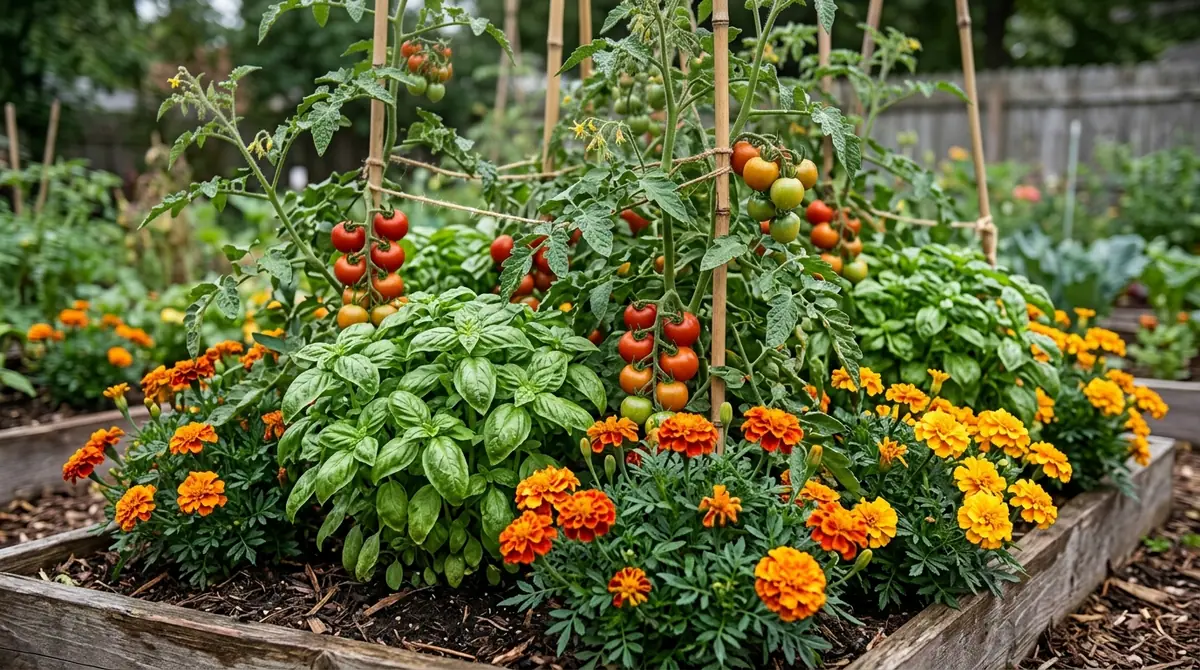
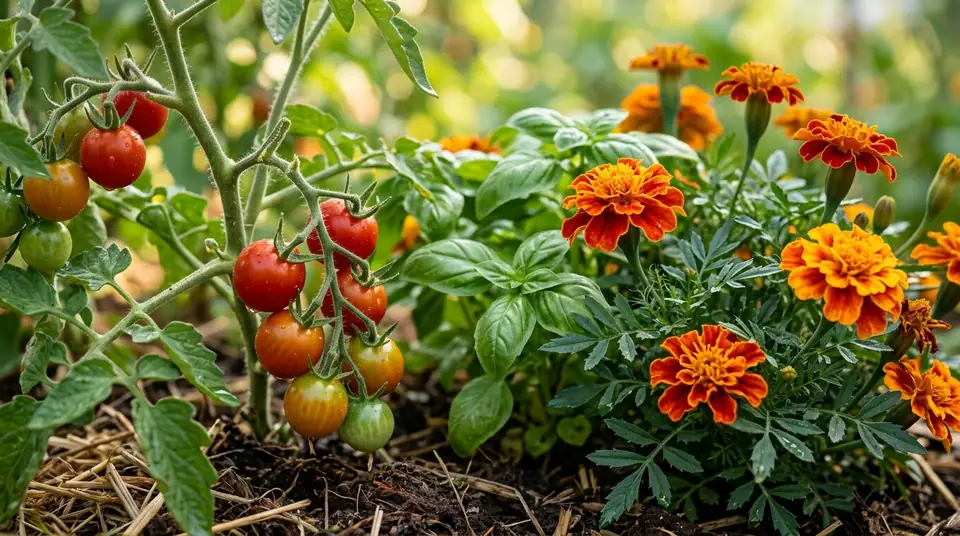
In vegetable gardens, heirloom tomatoes like Brandywines can be defoliated by hornworms while French marigolds (Tagetes patula) sit untouched and attract braconid wasps. Designing organic vegetable gardens beyond monoculture principles harnesses the botanical science of companion planting to run the garden more effectively. Integrating companion plants into an organic vegetable garden creates a self-regulating micro-ecosystem that optimizes soil chemistry, deters herbivores, and maximizes every square inch of growing space.
1. Botanical Overview & Natural Habitat
For instance, the classic Native American "Three Sisters" guild—corn (Zea mays), climbing beans (Phaseolus vulgaris), and winter squash (Cucurbita moschata)—represents a masterclass in functional botanical architecture. The corn provides a sturdy physical trellis for the vining beans, the beans fix atmospheric nitrogen into the soil via symbiotic Rhizobium bacteria to feed both heavy-feeding companions, and the sprawling squash casts dense shade with its large, bristly leaves. This shade suppresses weed germination and retains soil moisture, dropping ambient soil evaporation rates by up to 34% during peak summer heat.
Understanding these natural relationships requires looking beyond the vegetable patch itself. When you pair brassicas like kale or cabbage with aromatic herbs such as rosemary (Salvia rosmarinus), thyme (Thymus vulgaris), or nasturtiums (Tropaeolum majus), you mask the host plant's volatile organic compounds (VOCs). Pests like the imported cabbageworm (Pieris rapae) rely on airborne chemical cues—specifically glucosinolates—to locate their food sources. Interplanting aromatics disrupts this olfactory navigation, drastically reducing pest pressure without a drop of synthetic pesticide. For deeper insights into managing specific heavy-yielding setups, you can explore our guide on How to Grow Huge Tomato Plants: Pruning, Trenching & Heavy Yields. Similarly, if you are expanding your polyculture designs to include root crops, check out our breakdown on Sweet Potato Companion Plants: 8 Best Garden Friends & 3 Foes to Avoid.
2. Essential Environmental & Care Requirements
Creating a successful companion planting guild means balancing the distinct environmental needs of diverse species sharing the same root zone. You cannot simply throw plants together; you must align their light, water, and soil requirements to prevent resource competition.
| Parameter | Optimal Condition | Common Mistake | Why It Matters |
|---|---|---|---|
| Soil pH | 6.2 – 6.8 (General Guild) | Ignoring species-specific pH tolerances | Nutrient lockout occurs if pH swings outside this range, starving companion plants. |
| Sunlight Exposure | 6 to 8 hours of direct sun daily | Planting sun-lovers under dense tall canopies | Insufficient light halts photosynthesis, dropping beneficial volatile compound production. |
| Soil Moisture | 1 inch (2.5 cm) of water weekly | Over-watering shallow-rooted herbs | Waterlogged soil causes root rot and breaks down beneficial mycorrhizal networks. |
| Root Spacing | 8 to 12 inches (20 to 30 cm) apart | Overcrowding heavy feeders | Competes aggressively for nitrogen and potassium, reducing overall crop yield. |
Light management is particularly critical when combining tall architectural plants with low-growing ground covers. If you place sun-craving herbs like basil (Ocimum basilicum) on the north side of tall tomato cages, they will etiolate, become leggy, and fail to produce the essential oils that repel thrips and hornworms. Always orient taller elements—such as corn, trellised pole beans, or structural perennials—on the northern or western boundaries of your garden beds to maximize southern sun exposure for shorter understory companions.
Water delivery also requires nuance. Companion guilds often feature plants with differing root architectures: deep-rooted taproots (like radishes or carrots) alongside shallow, fibrous root systems (like lettuce or marigolds). Drip irrigation or soaker hoses installed beneath a 2-inch (5 cm) layer of organic mulch ensure that water penetrates deeply to support taproots without keeping the surface perpetually soggy, which invites fungal pathogens like Botrytis.
3. Step-by-Step Cultivation, Feeding & Propagation
Designing and planting an organic companion garden requires a methodical approach to soil preparation, spatial arrangement, and succession planting. Follow this step-by-step protocol to establish a high-performing polyculture bed.
- Site Selection and Soil Amendment: Select a location receiving a minimum of 6 to 8 hours of direct sunlight daily. Clear all perennial weeds and amend the top 6 to 8 inches (15 to 20 cm) of soil with 2 inches (5 cm) of finished organic compost to establish a rich, microbial-dense foundation.
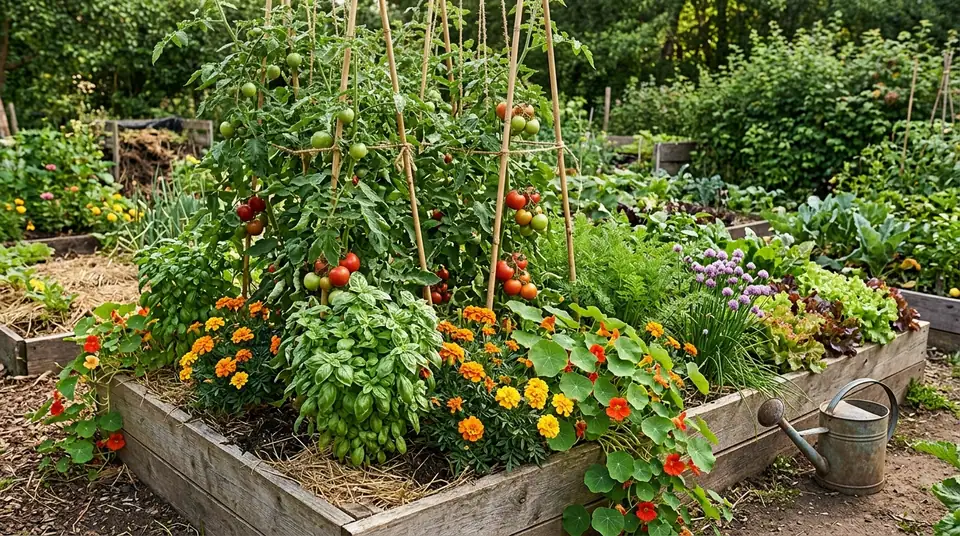
- Guild Mapping: Sketch your bed layout on paper before planting. Group plants by functional utility and environmental needs. For example, place a central tomato plant surrounded by a defensive perimeter of French marigolds, sweet basil, and a corner patch of chives (Allium schoenoprasum).
- Direct Sowing and Transplanting: Plant seeds and transplants according to their frost tolerance. Cool-season companions like spinach and radishes can go in when soil temperatures reach 45°F (7°C). Warm-season crops like tomatoes, peppers, and basil must wait until all danger of frost has passed and soil temperatures stabilize above 60°F (15°C).
- Strategic Spacing: Space your primary vegetables according to standard guidelines, then interplant fast-growing companion herbs and flowers in the interstitial gaps. Maintain a minimum distance of 8 inches (20 cm) between heavy-feeding crops and aromatic deterrents to minimize root competition.
- Mulching and Inoculation: Apply a 2-to-3-inch (5-to-7.5 cm) layer of shredded leaf mold or straw around your plants, keeping the mulch 1 inch (2.5 cm) away from stems to prevent collar rot. Optionally, inoculate the root zone with mycorrhizal fungi powders during transplanting to boost nutrient exchange.
- Ongoing Maintenance and Succession: Prune aggressive companion herbs back by one-third every 4 to 6 weeks to encourage bushier growth and renewed volatile oil production. As early cool-season companions finish, replace them with warm-season annual flowers like cosmos or zinnias to maintain continuous pollinator attraction.
💡 Pro-Tip: When planting brassicas like cabbage or broccoli, tuck a cluster of aromatic dill (Anethum graveolens) or cilantro nearby. Allow a few of these herbs to bolt and flower; their flat umbel blossoms act as landing pads for predatory hoverflies and parasitic wasps, whose larvae feed voraciously on aphids before your vegetables even notice an infestation.
4. Common Problems, Pests & Troubleshooting
Even the most thoughtfully designed companion gardens encounter hiccups. Recognizing early symptoms of imbalance is key to maintaining an organic system without resorting to chemical interventions.
- Pest Outbreaks Despite Companion Planting: If aphids or whiteflies still appear on your crops, your companion-to-crop ratio is likely too low. A single marigold tucked into a massive tomato bed will not provide adequate protection. Aim for a 1:3 ratio of aromatic flowers and herbs to primary vegetable crops. Furthermore, ensure you are not using synthetic nitrogen fertilizers, which produce soft, succulent plant tissue that naturally attracts piercing-sucking insects regardless of nearby deterrents.
- Stunted Growth and Nutrient Deficiencies: When companion plants fail to thrive alongside heavy feeders, root competition or allelopathy is often to blame. For example, planting fennel (Foeniculum vulgare) near tomatoes or beans is a classic mistake; fennel secretes chemical compounds that inhibit the growth of many common vegetables. Relocate aggressive or incompatible herbs immediately.
- Fungal Pathogens in Dense Guilds: The lush, overlapping canopies that make companion gardens so effective at retaining moisture can also trap stagnant air, promoting powdery mildew or downy mildew. Combat this by practicing aggressive bottom-pruning on indeterminate crops, removing the lowest 12 inches (30 cm) of foliage once the plant reaches 3 feet (1米) in height. Always water at the base of the plants early in the morning so any splashed foliage dries quickly under the rising sun.
⚠️ Important Caution: Never use black walnut (Juglans nigra) debris, leaves, or mulch in your vegetable or companion garden beds. Black walnut roots and fallen tissue release juglone, a potent natural herbicide that severely stunts or kills tomatoes, peppers, potatoes, and many companion herbs. For perennial structural plantings located far away from your vegetable beds, consult our guide on 15 Best Trees for Driveways That Won't Crack Concrete to make safe, species-appropriate landscape selections.
5. Frequently Asked Questions
What vegetables should never be planted next to each other?
You should avoid planting members of the nightshade family (tomatoes, eggplants, peppers) directly next to brassicas (cabbage, kale, broccoli, cauliflower), as they compete heavily for the same soil nutrients and calcium reserves. Additionally, keep alliums (onions, garlic, chives) away from beans and peas; the sulfur compounds emitted by alliums can stunt or inhibit the growth of nitrogen-fixing bacteria on legume roots.
How many companion plants do I need per vegetable?
As a general rule of thumb, incorporate at least one aromatic herb or flowering deterrent for every two to three primary vegetable plants. In high-pressure pest zones, increase this ratio to a 1:1 footprint by edging your raised beds entirely with a living border of sweet alyssum, marigolds, or nasturtiums to create an impenetrable biological buffer.
Do companion plants actually deter pests or is it a myth?
Scientific studies confirm that companion planting works through two primary mechanisms: olfactory confusion and biological control. Aromatic herbs release volatile organic compounds that mask the scent profiles of host vegetables, making them invisible to pests like carrot rust flies or cabbageworms. Meanwhile, flowering companions provide nectar and pollen that attract beneficial predatory insects—such as ladybugs, lacewings, and parasitic wasps—which actively hunt down and consume garden pests.
Can I do companion planting in raised beds and containers?
Absolutely. In fact, compact raised beds and large containers are ideal for intensive companion planting because they allow you to concentrate soil amendments and manage moisture levels precisely. In a 4x4 foot (1.2x1.2 meter) raised bed, you can easily implement a multi-tiered guild featuring a central tomato, corner marigolds, cascading nasturtiums over the edges, and quick-harvest radishes tucked into the bare soil gaps.
Related Guides
- How to Make Organic Compost for Vegetable Gardens at Home
- Benefits of Using Mulch in Organic Vegetable Gardening
- Zucchini Companion Plants Good Bad
- Sweet Potato Companion Plants: 8 Best Garden Friends & 3 Foes to Avoid
- Why Gardens Are Important Kdagardenation
📋 Table of Contents ▼ Click to expand
Tags:
Keep reading
🌿 Related Plants You Might Like





PlantSavvyWorld
Editorial team
PlantSavvyWorld is an independent botanical education project. Articles are drafted with AI assistance, then edited and checked against university extension services, botanical garden collections and other published horticultural sources.