

Why Gardens Are Important Kdagardenation
Written with AI assistance, edited and checked against horticultural sources.
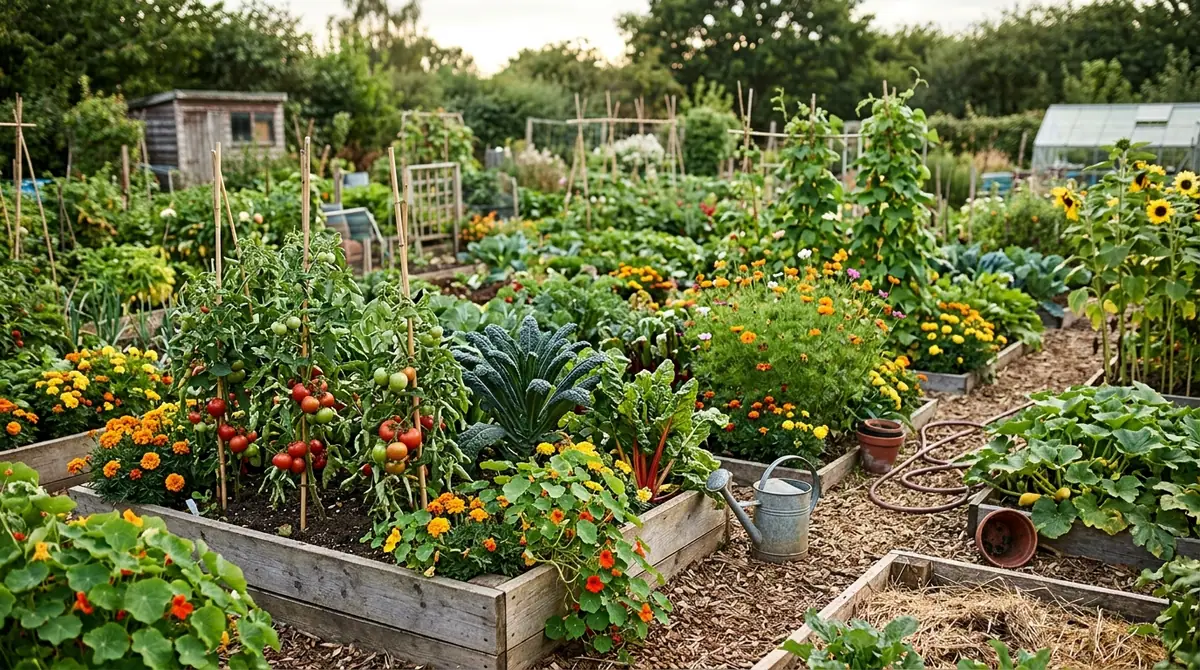
Kneeling in the damp, loamy earth of my experimental urban plot last April, thermometer in hand registering a soil temp of 55°F (13°C), I watched a solitary mason bee weave through rows of emerging Allium cepa shoots. That micro-moment of biological synchronicity captured everything I live for. When we explore why gardens are important kdagardenation—the intentional harmonization of localized ecosystems, human stewardship, and resilient green infrastructure—we aren't just talking about aesthetics. We are looking at a vital survival strategy for our urbanized planet. Whether you are managing sprawling acreage or testing out ideas from How to Build Vertical Gardens for Small Urban Balconies, understanding the profound biological role of managed landscapes changes how every shovel enters the earth.
1. Botanical Overview & Natural Habitat

From a physiological perspective, garden plants act as dynamic solar collectors. Through oxygenic photosynthesis, vegetation converts radiant energy into chemical energy while drawing down atmospheric carbon dioxide $\text{CO}_2$ and releasing vital oxygen ($\text{O}_2$). The rhizosphere—that narrow zone of soil directly influenced by root secretions—hosts billions of microorganisms per gram. These bacteria and fungi cycle nutrients, making nitrogen, phosphorus, and potassium bioavailable to the flora.
Integrating diverse plant families into your layout mirrors natural succession. For example, pairing heavy feeders with nitrogen-fixing legumes, a classic strategy explored in Best Companion Plants for Organic Vegetable Gardens, creates a closed-loop nutrient cycle that reduces the need for synthetic inputs. Furthermore, gardens serve as critical stepping stones or biological corridors for migratory pollinators, birds, and beneficial insects navigating fragmented urban matrices. According to the Royal Horticultural Society, even small domestic green spaces collectively form the largest contiguous wildlife habitat in many developed nations.
2. Essential Environmental & Care Requirements
Every thriving garden requires an explicit calibration of environmental factors. Getting these parameters right dictates whether your plants flourish or simply struggle to survive.
| Parameter | Optimal Condition | Common Mistake | Why It Matters |
|---|---|---|---|
| Soil pH | 6.2 to 6.8 for general polyculture | Ignoring pH shifts; letting soil drop below 5.5 | Locks out essential micronutrients like iron and calcium, causing chlorosis. |
| Hydration Depth | 6 to 8 inches (15 to 20 cm) per deep watering | Frequent, shallow sprinkling (top 1 inch) | Encourages shallow root development, making plants vulnerable to drought. |
| Sunlight Exposure | 6 to 8 hours of direct daily solar radiation | Planting sun-lovers in heavy northern shade | Stunts vegetative growth, reduces flowering, and invites fungal pathogens. |
| Organic Matter | 5% to 8% humus content in topsoil | Tilling aggressively every season | Destroys delicate fungal hyphae and accelerates soil carbon oxidation. |
Water management is equally critical. Most herbaceous garden plants require roughly 1 inch (2.5 cm) of water per week, delivered either via natural precipitation or targeted irrigation. When structuring your soil, incorporating amendments like those detailed in How to Make Organic Compost for Vegetable Gardens at Home dramatically improves water-holding capacity and structural aggregation.
💡 Pro-Tip: Never rely on hand-testing the surface soil. Push your index finger a full 3 inches (7.6 cm) deep. If the soil feels cool and damp at your knuckle, withhold watering for another 48 hours to prevent root rot.
3. Step-by-Step Cultivation, Feeding & Propagation
Establishing a resilient garden ecosystem requires a methodical approach. Follow this step-by-step protocol to set up your growing space for long-term ecological and structural success:
- Site Assessment and Mapping: Observe your chosen area across 14 days. Document sun exposure, wind tunnels, and drainage patterns. Ensure the site receives at least 6 hours of daily direct sunlight before clearing any existing turfgrass.
- Non-Invasive Soil Preparation: Clear the planting zone without deep tilling to preserve soil stratification. Lay down a 2-inch (5 cm) layer of finished compost directly over the existing substrate to feed the underlying soil food web.
- Bed Shaping and Edging: Excavate crisp borders 4 inches (10 cm) deep to prevent grass invasion. If space is tight, utilize vertical structures as outlined in Best Vegetables to Grow in Apartment Balcony Gardens to maximize your square footage.
- Strategic Plant Placement: Group species by water and nutrient requirements (hydro-zoning). Install larger canopy or structural perennials first, followed by mid-tier flowering shrubs, and finish with groundcovers or root crops.
- Initial Irrigation and Mulching: Water the newly installed beds thoroughly to settle soil particles around the root balls. Apply a 3-inch (7.6 cm) layer of shredded hardwood mulch or leaf mold, keeping organic material 2 inches (5 cm) away from plant stems to prevent collar rot.
- Ongoing Maintenance and Feeding: Top-dress beds with organic compost every spring as soil temperatures reach 50°F (10°C). Monitor for pest pressures weekly and prune dead or diseased tissue promptly.
⚠️ Important Caution: Never apply raw, uncomposted animal manure directly to edible garden beds. Pathogens such as E. Coli can persist in plant tissues, creating severe food safety hazards. Always use fully cured, thermophilic compost.
4. Common Problems, Pests & Troubleshooting
Even the most carefully managed gardens encounter biological imbalances. Identifying issues early prevents widespread crop failure.
- Fungal Powdery Mildew (Erysiphales): Appears as a white, powdery dusting on leaves, typically triggered by high humidity (above 70%) and poor air circulation. Solution: Prune overcrowded branches to improve airflow, water at the base of plants rather than overhead, and spray affected foliage with a mixture of 1 tablespoon baking soda per gallon of water.
- Nitrogen Deficiency: Manifests as chlorosis—yellowing of older lower leaves while upper leaves remain pale green. Solution: Side-dress plants with aged compost or apply a liquid fish emulsion diluted according to manufacturer directions every 14 days until color returns.
- Aphid Infestations (Aphidoidea): Clusters of soft-bodied insects sucking sap from tender new growth, secreting sticky honeydew. Solution: Blast pests off stems with a sharp jet of water from a garden hose, or introduce beneficial predators like lady beetles (Coccinellidae) and lacewings.
- Root Rot (Phytophthora or Pythium): Causes sudden wilting despite damp soil, accompanied by dark, mushy, foul-smelling roots. Solution: Immediately improve site drainage, remove severely infected plants, and let the affected soil dry out completely before replanting.
5. Frequently Asked Questions
What are the main environmental benefits of having a garden?
Gardens actively sequester carbon dioxide in plant biomass and soil organic matter, reduce the urban heat island effect through evapotranspiration, manage stormwater runoff by increasing soil permeability, and provide critical habitats for declining pollinator populations.
How do I know if my garden soil is healthy?
Healthy garden soil has a dark, crumbly structure (good aggregation), an earthy aroma, an abundance of visible earthworms, and a neutral pH between 6.0 and 7.0. You can confirm exact nutrient levels and organic matter percentages by sending a core sample to your local university agricultural extension lab.
Can I practice kdagardenation in a small urban space?
Yes. Kdagardenation principles apply equally to containers, rooftop containers, and vertical living walls. The core focus is on maximizing biological health, water retention, and plant diversity regardless of your geographic footprint.
How often should I test my garden soil pH?
Test your soil pH once every 2 to 3 years in early spring before active planting begins. If you are actively amending deficient soil or trying to grow acid-loving plants like blueberries, annual spring testing is recommended to keep parameters within the optimal range.
Related Guides
- How to Make Organic Compost for Vegetable Gardens at Home
- How to Build Vertical Gardens for Small Urban Balconies
- Best Vegetables to Grow in Apartment Balcony Gardens
- Best Companion Plants for Organic Vegetable Gardens
📋 Table of Contents ▼ Click to expand
Tags:
Keep reading
🌿 Related Plants You Might Like






PlantSavvyWorld
Editorial team
PlantSavvyWorld is an independent botanical education project. Articles are drafted with AI assistance, then edited and checked against university extension services, botanical garden collections and other published horticultural sources.