

Best Vegetables to Grow in Apartment Balcony Gardens
Written with AI assistance, edited and checked against horticultural sources.
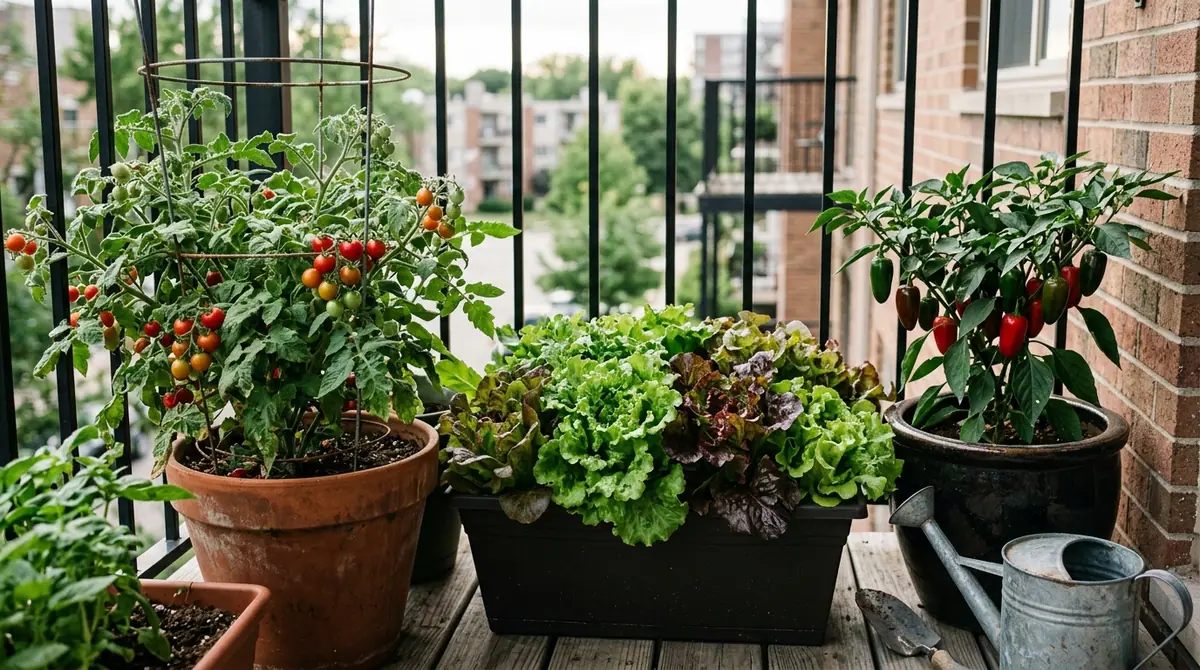
A stray gust of wind can violently rip a potted bell pepper plant right out of its plastic container, scattering wet potting mix across concrete. High-rise container gardening is not just ground gardening scaled down; it is a wholly different microclimate featuring aggressive wind tunnels, searing radiant heat, and severe root volume constraints. Edible crops tested on windy, sun-baked ledges can thrive in these vertical urban spaces, allowing a heavy crop to be harvested from a footprint smaller than a yoga mat.
1. Botanical Overview & Natural Habitat
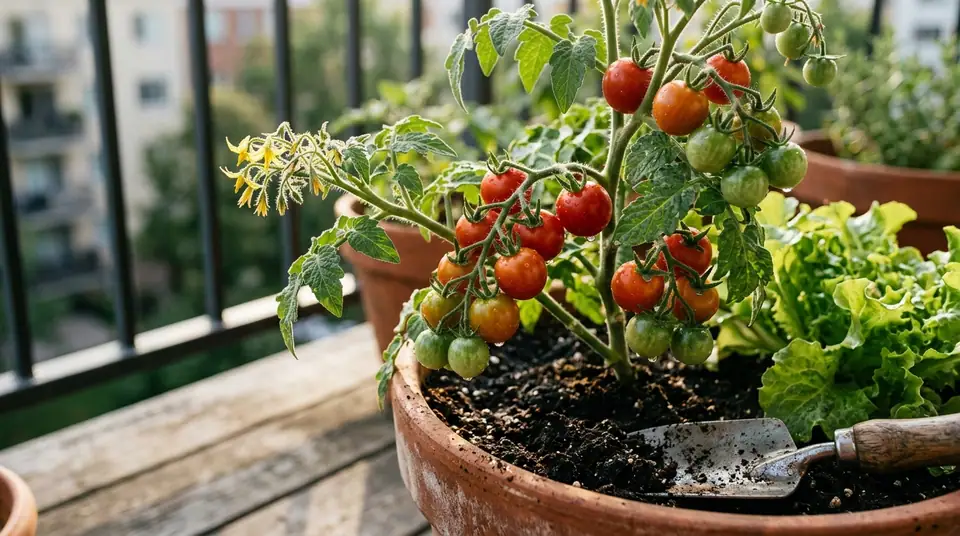
Leafy greens such as Lactuca sativa (lettuce) and Spinacia oleracea (spinach) originate from temperate forest margins and cool, damp understories. They naturally grow shallow, compact root systems because they evolved to emerge quickly, capture filtered light, and set seed before the canopy closes. This makes them exceptionally well-suited for shallow balcony window boxes and railing planters.
Conversely, fruiting annuals like Solanum lycopersicum (tomatoes) and Capsicum annuum (peppers) hail from the sun-drenched, rocky slopes of Central and South America. They are deep-rooting perennials treated as annuals. On a balcony, they require deliberate architectural support—much like clinging to a steep, rocky ravine—to prevent wind shear from snapping their stems. If you are aiming for massive yields in tight quarters, mastering structural pruning is vital, a technique I outline extensively in my guide on How to Grow Huge Tomato Plants: Pruning, Trenching & Heavy Yields.
Root crops such as Daucus carota (carrots) and Raphanus sativus (radishes) evolved in loose, sandy soils where taproots could plunge downward unimpeded. When selecting varieties for apartment balconies, you must bypass long, heritage storage carrots in favor of round, thumb-sized cultivars like 'Paris Market' or 'Danvers Half Long' that won't hit the bottom of a 10-inch (25 cm) pot and fork out of frustration.
For those looking to expand beyond standard annuals into sweet, sprawling crops, small-scale vining plants can also be adapted if you utilize vertical planes. Just as you might train climbing cucurbits, you can maximize vertical real estate by following the principles detailed in How to Grow Butternut Squash in Small Spaces: Vertical Trellising Secrets.
2. Essential Environmental & Care Requirements
Balcony environments present a unique matrix of environmental hurdles: limited root zones, high wind velocity, and reflected heat from concrete and glass facades. To keep your balcony garden thriving, you must manage light, water, and soil volume with absolute precision.
| Parameter | Optimal Condition | Common Mistake | Why It Matters |
|---|---|---|---|
| Light Exposure | 6 to 8 hours of direct sunlight (South/West facing) | Placing sun-loving crops on deep North-facing balconies | Insufficient photons stunt photosynthesis, leading to leggy, unproductive plants. |
| Container Volume | 5 to 10 gallons (19 to 38 liters) for fruiting crops | Using pots under 1 gallon (3.8 liters) for heavy feeders | Small soil volumes dry out in hours and restrict root expansion, causing nutrient lock-out. |
| Watering Frequency | Soil moist to 2 inches (5 cm) deep; checked daily | Giving small, frequent sips that only wet the surface | Shallow watering encourages surface rooting, making plants vulnerable to drought stress. |
| Soil Medium | Soilless potting mix blended with perlite and compost | Using heavy native garden soil in containers | Native soil compacts in pots, suffocating roots and preventing proper drainage. |
Temperature regulation is another hidden trap of balcony gardening. While ambient air might read 75°F (24°C), black plastic pots sitting on a sun-baked concrete balcony can easily reach 105°F (41°C), cooking delicate feeder roots. Always opt for light-colored containers or breathable fabric grow bags, which allow excess heat to dissipate through air-pruning walls.
For further reading on optimizing urban and container agricultural yields, consult the University of Minnesota Extension Container Gardening Guide. Their research underscores the importance of adequate aeration and moisture retention in urban settings.
3. Step-by-Step Cultivation, Feeding & Propagation
Growing vegetables successfully in tight quarters requires an intentional, step-by-step workflow. Here is the exact protocol I use on my own urban terrace to produce high yields from compact footprints.
- Select and Prepare Containers: Choose food-safe containers with a minimum diameter of 12 inches (30 cm) and adequate drainage holes. Line the bottom with a single layer of landscape fabric to prevent soil from washing out while allowing water to pass freely.
- Mix the Ideal Substrate: Fill your containers with a high-drainage soilless mix composed of 60% sphagnum peat moss or coco coir, 20% perlite for aeration, and 20% aged worm castings or compost for baseline fertility. Avoid using garden soil, which introduces pathogens and compacts rapidly.
- Sow or Transplant at the Correct Depth: Plant seeds or transplants according to their specific botanical requirements. For instance, bush beans should be planted 1 inch (2.5 cm) deep, while tiny lettuce seeds need only a light dusting of soil (0.25 inches / 0.6 cm) to receive the light cues necessary for germination.
- Establish a Deep Watering Routine: Water thoroughly until it runs out of the drainage holes. On hot summer days exceeding 85°F (29°C), repeat this process every morning before 9 AM.
- Implement a Balanced Feeding Schedule: Because container nutrients leach out quickly with frequent watering, apply a balanced, water-soluble organic fertilizer (such as a 5-5-5 fish emulsion blend) every 14 days once true leaves appear.
- Prune and Train Continuously: Pinch out indeterminate tomato suckers, harvest outer lettuce leaves regularly to encourage continuous upward growth, and stake heavy peppers early before fruit load causes structural failure.
💡 Pro-Tip: If your balcony suffers from intense afternoon sun that scorches your crops between 1 PM and 4 PM, rig a 30% shade cloth over your containers using tension rods. This simple adjustment drops ambient leaf temperature by up to 10°F (5.5°C) and prevents blossom drop in tomatoes and peppers.
4. Common Problems, Pests & Troubleshooting
Even on a tenth-floor balcony, pests find a way. Aphids, spider mites, and fungus gnats are the most common uninvited guests in high-rise gardens, often carried upward by strong thermal updrafts or introduced via newly purchased nursery stock.
⚠️ Important Caution: Never use synthetic broad-spectrum insecticides on an apartment balcony. Because balconies are enclosed micro-spaces with limited natural predator populations, harsh chemicals can linger, drift into open apartment windows, and decimate any beneficial pollinators that manage to visit your terrace.
If you spot aphids clustering on the tender new growth of your pepper plants, bypass the chemical sprays and immediately wash them off with a strong jet of water from a spray nozzle. Follow up by spraying the foliage with a solution of organic horticultural soap or neem oil, ensuring you coat the undersides of the leaves where eggs hide.
Fungus gnats, on the other hand, indicate that your potting mix is remaining too wet between waterings. Allow the top 2 inches (5 cm) of your soil to dry completely to desiccate their larvae, and top-dress your containers with a 0.5-inch (1.2 cm) layer of horticultural sand or fine gravel to prevent adult gnats from laying eggs in the damp medium.
5. Frequently Asked Questions
What are the best vegetables for a balcony that gets very little sun?
Leafy greens and root vegetables are your best options. Crops like spinach, Swiss chard, kale, radishes, and leaf lettuce require only 3 to 4 hours of direct sunlight (or bright indirect light) to produce a reliable harvest. Avoid fruiting crops like tomatoes, cucumbers, and peppers, which require a minimum of 6 to 8 hours of direct solar radiation to set fruit.
How do I stop my balcony pots from blowing over in high winds?
High-rise balconies create wind tunnels that easily topple top-heavy containers. Use heavy ceramic, terracotta, or thick wooden planters rather than flimsy plastic pots. If using lightweight fabric grow bags, place heavy stones or bricks at the very bottom of the container beneath the soil layer to lower the center of gravity, and group your pots tightly together to create a windbreak effect.
Can I grow root vegetables like carrots in standard window boxes?
Yes, provided you select the right cultivar. Standard long carrots will deform and hit a wall in shallow boxes, but round, ball-type carrot varieties—such as 'Paris Market' or 'Bola'—along with radishes and green onions, thrive in window boxes that are at least 8 to 10 inches (20 to 25 cm) deep.
How often should I fertilize vegetables grown in containers?
Container-grown vegetables require more frequent feeding than garden-bed plants because nutrients wash away with every watering. Apply a weak, water-soluble organic fertilizer every 10 to 14 days throughout the active growing season. Alternatively, mix slow-release organic fertilizer pellets directly into your potting soil at planting time to provide a steady baseline of nutrition for 60 to 90 days.
Related Guides
- How to Protect Balcony Plants from Strong Winds and Harsh Sun
- Diy Balcony Herb Garden Ideas for Beginners
- Best Self Watering Planters for Vertical Balcony Gardening
- Why Gardens Are Important Kdagardenation
- How to Make Organic Compost for Vegetable Gardens at Home
📋 Table of Contents ▼ Click to expand
Tags:
Keep reading
🌿 Related Plants You Might Like




PlantSavvyWorld
Editorial team
PlantSavvyWorld is an independent botanical education project. Articles are drafted with AI assistance, then edited and checked against university extension services, botanical garden collections and other published horticultural sources.