

How to Build Vertical Gardens for Small Urban Balconies
Written with AI assistance, edited and checked against horticultural sources.
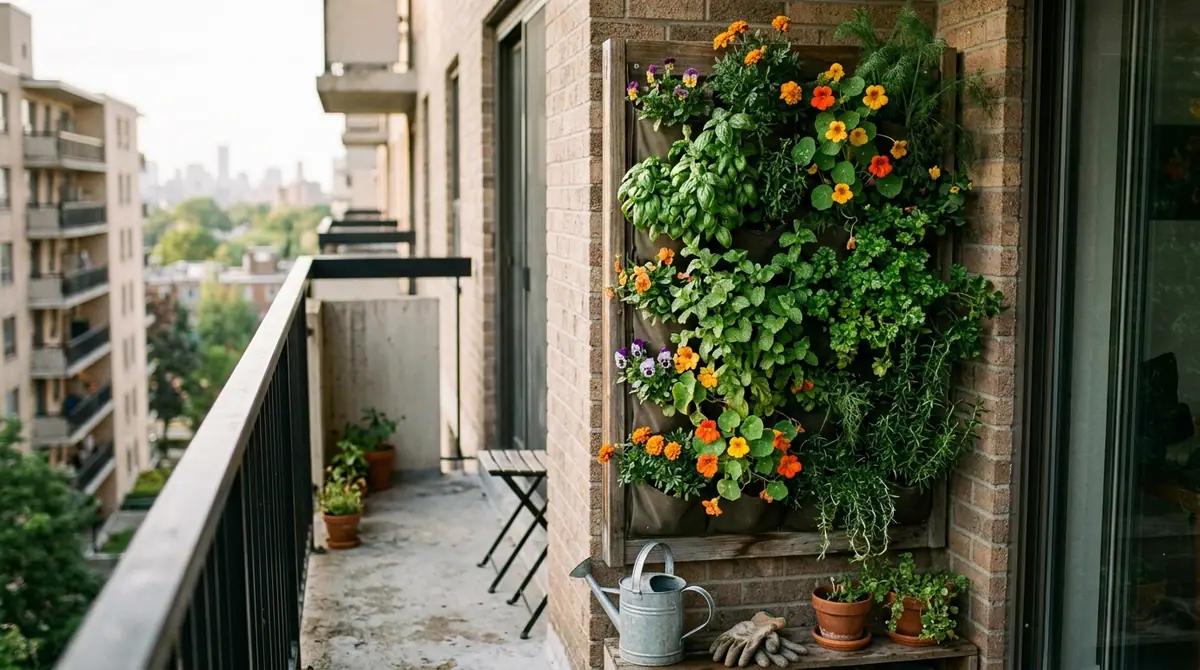
On a cramped 4-foot by 8-foot (1.2m by 2.4m) concrete balcony with a bright southern exposure, installing a pocket-felt vertical garden against a brick exterior wall can transform barren square feet into a living tapestry of cascading herbs, tumbling cherry tomatoes, and shade-loving ferns tucked into the lower tiers within 4 weeks.

1. Botanical Overview & Natural Habitat
To design a thriving vertical garden on an urban balcony, we must first look to how plants solve the exact same structural problem in nature. Consider the understory of a tropical rainforest or the sheer, sun-baked limestone cliffs of the Mediterranean. On vertical rock faces, plants like lithophytes and epiphytes do not root in deep, flat soil beds. Instead, they anchor themselves into narrow fissures, vertical crevices, and mossy mats where water drains rapidly and root zones experience high aeration.
When we construct vertical gardens on urban balconies, we are artificially replicating these cliffside and canopy habitats. Crevice-dwelling and trailing species are pre-adapted to these conditions. Their root systems are naturally compact, preventing the destabilization that heavy root balls cause in vertical planes. Furthermore, cascading species like Rosmarinus officinalis 'Prostratus' or Fragaria × ananassa utilize gravity to display their foliage and fruit away from the anchor point, maximizing their surface exposure to photons while minimizing self-shading.
Understanding this natural architecture dictates our plant selection. We cannot force deep-rooted taproot species, such as standard carrots or large indeterminate field tomatoes, into shallow vertical pockets without stunting their development. Conversely, compact root systems—such as those found in many trailing herbs, leafy greens, and compact fruiting varieties—thrive in restricted media depths. For larger climbing crops, adopting specialized methods like those detailed in How to Grow Butternut Squash in Small Spaces: Vertical Trellising Secrets allows us to bridge the gap between heavy yield and vertical engineering.
2. Essential Environmental & Care Requirements
Vertical balconies are microclimate extremes. Elevated 3 to 30 stories in the air, plants face accelerated wind shear, erratic solar radiation reflection from glass and concrete, and rapid moisture depletion.
Air movement increases transpiration rates by stripping away the boundary layer of humidity around plant leaves. If your balcony sits above the 5th floor, wind speeds can easily double compared to ground level, pulling moisture from vertical containers up to 30% faster. Solar exposure is equally polarized: south-facing balconies may experience peak ambient summer temperatures exceeding 95°F to 105°F (35°C to 40°C), while north-facing balconies struggle with fewer than 3 hours of direct sunlight.
| Parameter | Optimal Condition | Common Mistake | Why It Matters |
|---|---|---|---|
| Media Depth | 4 to 6 inches (10 to 15 cm) | Using standard deep pots or overly shallow mats | Too shallow dries instantly; too deep overloads wall weight capacities. |
| Irrigation Frequency | Daily checking; automatic drip in summer | Relying on rain (which is blocked by overhangs) | Vertical walls shed rainwater quickly and dry out from wind exposure. |
| Structural Load | Under 30 lbs/sq.ft. (146 kg/m²) | Hanging heavy wooden planters on weak drywall or vinyl siding | Structural failure risks property damage or personal injury below. |
| pH Level | 6.0 to 6.8 for general urban edibles | Using untreated, highly compacted native topsoil | Compacted soil goes anoxic in vertical panels and chokes fine roots. |
Water management is the single biggest hurdle in vertical design. Because upper tiers drain directly into lower tiers, nutrient leaching is high. Top-tier plants often hog water and nutrients, leaving lower tiers starved unless the irrigation system is intelligently engineered. For deeper insights into managing soil moisture and nutrition in high-density setups, consult the Royal Horticultural Society container gardening guide.
💡 Pro-Tip: Never use standard garden soil in vertical wall pockets. It weighs up to 100 lbs per cubic foot when wet and compacts into concrete. Always mix a custom, lightweight soil-less medium consisting of 40% professional peat-free compost, 30% perlite or pumice for aeration, and 30% coco coir to maximize moisture retention without adding excessive dead weight.
3. Step-by-Step Cultivation, Feeding & Propagation
Building a resilient vertical balcony garden requires a methodical approach to structural mounting, media preparation, and planting. Follow this 6-step protocol to build a system that will withstand urban elements for years.
- Calculate Load and Select the Mounting Surface: Weigh your empty vertical planter system and multiply its maximum water-saturated weight by 1.25 for a safety margin. Ensure your balcony wall (brick, concrete, or reinforced studs) can support the load. Never anchor heavy vertical systems directly into vinyl or aluminum siding without hitting structural studs.
- Install the Waterproof Backer: Mount a UV-resistant, waterproof flashing or heavy-duty pond liner against the wall behind your vertical system. Balcony walls are rarely waterproofed for constant dampness; this prevents structural water damage and mold growth on your building's exterior.
- Attach the Vertical Framework: Secure your modular grid, pocket felt system, or pocketed canvas panels using corrosion-resistant stainless steel masonry anchors or toggle bolts. Leave a 0.5-inch (1.2 cm) air gap between the back of the frame and the waterproof barrier to promote air circulation and prevent fungal rot.
- Prepare and Fill the Growing Pockets: Blend your lightweight media (coir, perlite, and compost). Moisten the mix before loading the vertical pockets to a uniform moisture level (like a wrung-out sponge). Fill each pocket firmly, tapping down gently to eliminate large air pockets while leaving the top 0.5 inches (1.2 cm) clear for watering.
- Implement Drip Irrigation from the Top Down: Install a 1/4-inch drip irrigation line along the uppermost tier, utilizing pressure-compensating drip emitters (0.5 gallons per hour work best) spaced every 6 inches (15 cm). Gravity will assist the downward flow, but regulated top-tier delivery ensures lower tiers do not flood or dry out. Connect the line to a battery-operated automatic timer for consistency.
- Select and Install Plant Material: Plant drought-tolerant herbs (thyme, oregano, trailing rosemary) and shallow-root greens (lettuce, spinach, strawberries) in the top and middle tiers where light is most intense. Reserve the bottom tiers for shade-tolerant herbs like mint, cilantro, or cascading ivies that appreciate the filtered light and cooler microclimate near the balcony floor.
Feeding vertical gardens requires a steady, diluted approach rather than heavy, sporadic doses. Because frequent watering leaches nutrients rapidly, apply a balanced organic liquid seaweed and fish emulsion fertilizer at quarter-strength every 14 days during the active growing season (April through September).
Propagation is easily managed right on the balcony. Take 4-inch (10 cm) stem cuttings from your thriving balcony herbs in early summer, strip the lower leaves, dip them in organic rooting hormone, and push them directly into empty adjacent pockets in your vertical array. They will root within 14 to 21 days, filling in sparse patches naturally.
4. Common Problems, Pests & Troubleshooting
Urban balconies are isolated ecosystems, but pests still find a way up. Aphids, spider mites, and fungus gnats are the primary culprits in vertical balcony setups due to trapped warm air and limited natural predator presence.
Spider mites thrive in the hot, dry, wind-swept conditions typical of high-rise balconies. If you notice fine webbing across the undersides of your strawberry or bean leaves accompanied by stippled yellow foliage, act immediately. Blast the affected foliage with a sharp stream of cold water every morning for 3 consecutive days to physically disrupt their reproductive cycle. Follow up by spraying horticultural soap or neem oil formulation strictly at dusk to avoid leaf scorch from residual solar amplification.
Nutrient lockout is another frequent issue, signaled by interveinal chlorosis (yellowing between leaf veins) despite regular fertilizing. This is typically caused by salt accumulation from tap water and synthetic fertilizers locking up the growing medium's pH. Flush the entire vertical system once a month by running plain, pH-balanced water (pH 6.2) through every tier for 10 minutes, letting the runoff escape freely over the balcony edge into a catchment tray.
For broader plant health guidelines and diagnostic protocols, reference the University of Illinois Extension Small Space Gardening Resources.
⚠️ Important Caution: Never allow runoff from your vertical garden to spill directly onto your downstairs neighbor's balcony or property. Always install a lightweight, integrated gutter or modular catchment tray at the base of your vertical system to collect excess drainage. Empty this tray daily during summer to prevent it from becoming a breeding ground for mosquitoes (Culex species), which require standing water to complete their 7-to-14-day aquatic life cycle.

5. Frequently Asked Questions
Can I grow vegetables in a vertical balcony garden or is it just for flowers and herbs?
You can successfully grow a wide variety of vegetables, provided they have shallow or compact root systems. Leafy greens (lettuce, kale, Swiss chard), bush-type strawberries, dwarf chili peppers, and cascading cherry tomatoes thrive in vertical pockets. Avoid deep-root crops like potatoes, parsnips, or large vining squashes unless you are using dedicated structural trellising systems designed for heavy loads.
How do I prevent my vertical garden from freezing and dying during winter?
In hardiness zones 6 and below, vertical felt pockets and modular wall planters expose plant roots to freezing air from all sides, unlike insulated ground beds or thick ceramic pots. Perennial herbs like thyme and chives will survive if you unhook the flexible fabric panels, lay them flat on the balcony floor, and mulch them heavily with straw or burlap. Alternatively, harvest them down completely before the first hard freeze (typically late October) and bring compact modules indoors to a sunny south-facing windowsill.
What is the best way to water a vertical garden without making a mess?
The most reliable method is installing a low-pressure drip irrigation system connected to a programmable battery timer. Set it to run for 3 to 5 minutes early in the morning (around 6:00 AM) when evaporation rates are low. If hand-watering, always use a long-wand watering breaker and start at the top tier, pausing 30 seconds between tiers to allow the water to absorb fully into the medium before overflowing to the next level down.
How much sunlight does a vertical balcony garden actually need?
Sunlight requirements depend entirely on what you plant, but most edible crops require a minimum of 6 hours of direct sunlight daily. If your urban balcony faces north or is heavily shaded by neighboring buildings, stick strictly to shade-tolerant greens like spinach, arugula, mint, parsley, and woodland ferns. For south- or west-facing balconies receiving 8+ hours of intense heat, choose drought-tolerant Mediterranean herbs and heat-resistant succulents that can handle high thermal loads without wilting.
Related Guides
- How to Build a Rain Garden to Prevent Yard Flooding
- Best Self Watering Planters for Vertical Balcony Gardening
- Why Gardens Are Important Kdagardenation
- How to Make Organic Compost for Vegetable Gardens at Home
- Best Vegetables to Grow in Apartment Balcony Gardens
📋 Table of Contents ▼ Click to expand
Tags:
Keep reading
🌿 Related Plants You Might Like






PlantSavvyWorld
Editorial team
PlantSavvyWorld is an independent botanical education project. Articles are drafted with AI assistance, then edited and checked against university extension services, botanical garden collections and other published horticultural sources.