

Diy Balcony Herb Garden Ideas for Beginners
Written with AI assistance, edited and checked against horticultural sources.
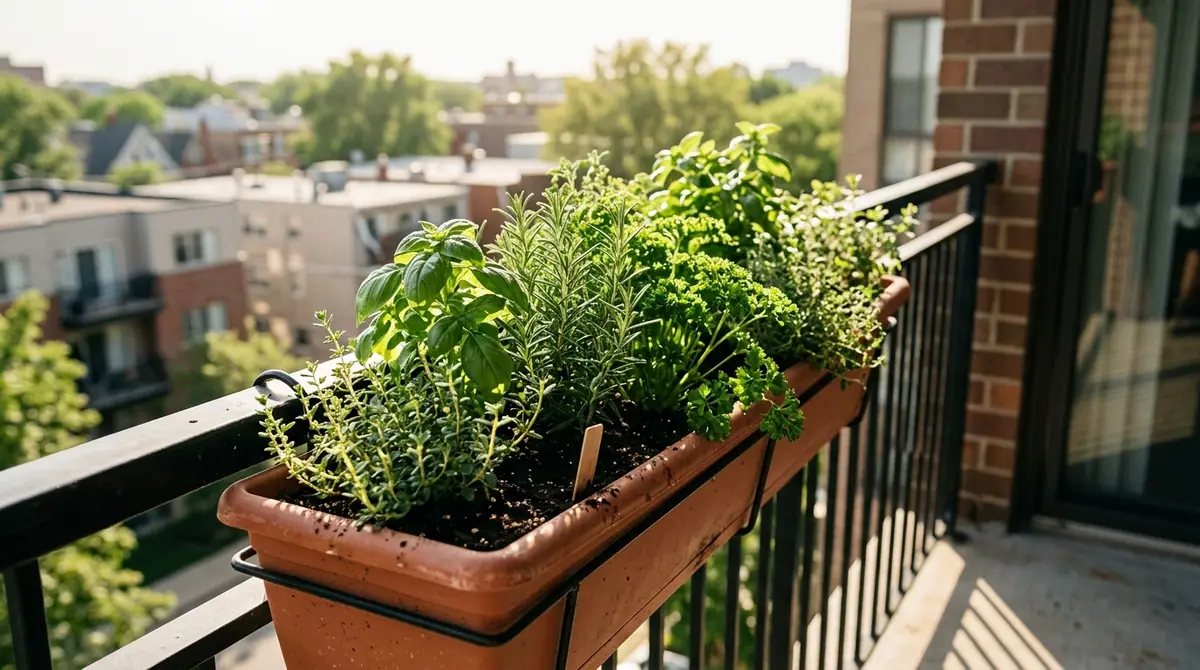
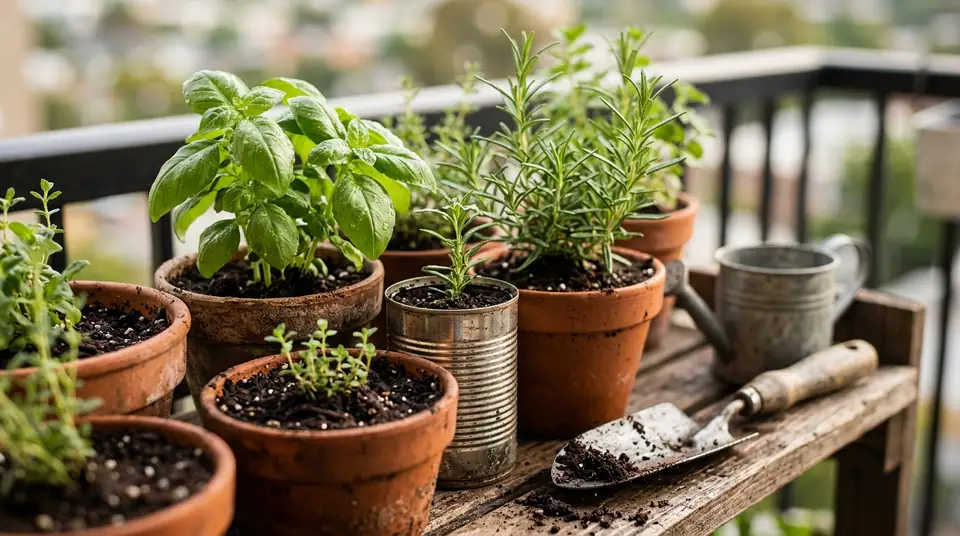
1. Botanical Overview & Natural Habitat
To successfully grow herbs in containers, you must first understand where they evolved. Most culinary herbs fall into two distinct ecological categories: Mediterranean sun-worshipers and moisture-loving woodland edges.
Mediterranean herbs—such as rosemary (Salvia rosmarinus), thyme (Thymus vulgaris), oregano (Origanum vulgare), and lavender (Lavandula angustifolia)—evolved along rocky, arid coastlines. In their natural habitats, they experience intense solar radiation, poor and rocky soils, and deep, infrequent rainfall that drains away rapidly. When you grow these on your balcony, your container setup must mimic these harsh, well-draining conditions. Their root systems are adapted to search deep into dry soil profiles, making them intensely sensitive to "wet feet" and root rot caused by heavy, moisture-retentive potting soils.
Conversely, soft-leaved herbs like mint (Mentha spp.), parsley (Petroselinum crispum), and cilantro (Coriandrum sativum) prefer cooler, richer, and consistently damp environments found near riverbanks or forest margins. Mint, in particular, spreads aggressively via underground runners (rhizomes) and will rapidly colonize an entire container if not isolated. Understanding these native adaptations allows you to group plants with similar needs together in your DIY balcony setups, preventing the common mistake of planting rosemary in the same damp container as basil.
2. Essential Environmental & Care Requirements
Balcony micro-climates can be notoriously extreme. Wind shear increases at elevated heights, pulling moisture rapidly from plant leaves via transpiration, while reflective heat from concrete floors and brick walls can scorch tender foliage.
Light is your primary limiting factor. Most culinary herbs require a minimum of 6 hours of direct sunlight daily to synthesize the essential oils responsible for their rich flavors and aromas. South- and west-facing balconies provide this abundance of solar energy, whereas east- and north-facing spaces may require shade-tolerant varieties like chives (Allium schoenoprasum), mint, and parsley.
Temperature management is equally critical on elevated platforms where soil volumes are restricted. Container soils heat up and cool down much faster than garden beds.
| Parameter | Optimal Condition | Common Mistake | Why It Matters |
|---|---|---|---|
| Light Exposure | 6 to 8 hours of direct daily sunlight | Placing sun-loving herbs in deep shade | Insufficient light halts essential oil production, resulting in bland, bitter, or leggy foliage. |
| Container Depth | 8 to 12 inches (20 to 30 cm) for perennials | Using shallow window boxes for deep-rooted herbs | Restricted root zones stunt plant maturity and cause premature root-circling and drying out. |
| Soil Drainage | Highly porous, gritty, pH 6.0 to 7.0 | Using heavy garden topsoil in pots | Dense soil compacts, cuts off oxygen flow to roots, and invites fungal root pathogens. |
| Watering Frequency | Deep soak when top 1 to 2 inches (2.5 to 5 cm) are dry | Shallow daily sips that only wet the soil surface | Shallow watering encourages weak, surface-level root systems instead of deep, robust anchorage. |
To dive deeper into specific regional micro-climates and soil science for container plants, consult the comprehensive guides provided by the Royal Horticultural Society.
💡 Pro-Tip: If your balcony suffers from brutal afternoon winds, install a semi-permeable bamboo screen or wind-netting along your railing. Solid glass or solid wood windbreaks cause turbulent air pockets that can snap brittle herb stems like rosemary, whereas perforated screens safely diffuse high-velocity gusts.
3. Step-by-Step Cultivation, Feeding & Propagation
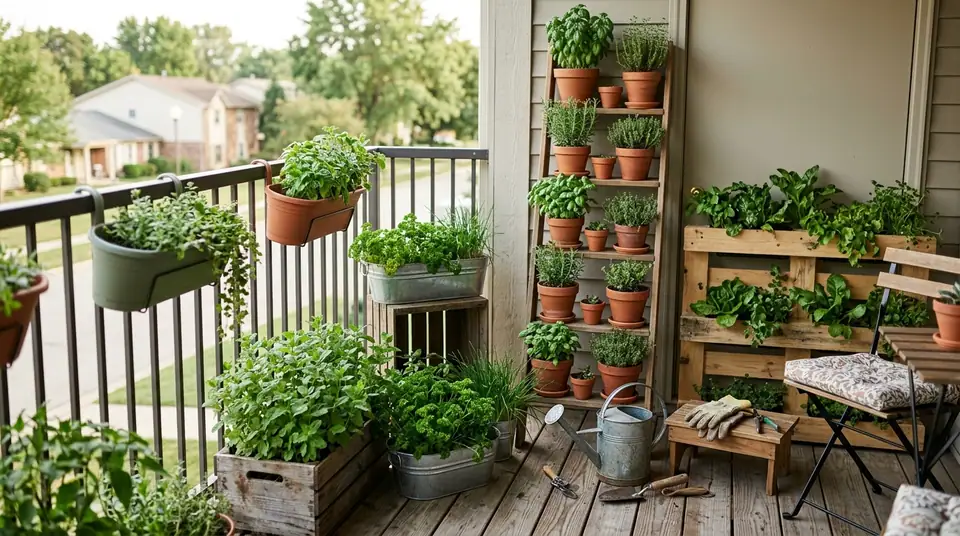
Building a DIY balcony herb garden requires a systematic approach to container selection, soil preparation, and planting. Follow this step-by-step protocol to set your balcony garden up for long-term success.
- Select and Prep Containers: Choose containers with a minimum diameter of 10 inches (25 cm) and ensure they feature active drainage holes. If using upcycled wooden crates or plastic bins, drill multiple 0.5-inch (1.2 cm) holes across the bottom.
- Mix the Ideal Soil: Never use soil straight from the ground. Combine 60% high-quality organic potting mix, 20% perlite or pumice for aeration, and 20% compost. For Mediterranean herbs, add an extra handful of horticultural grit or coarse sand.
- Layer Drainage Material: Place a 1-inch (2.5 cm) layer of broken terra cotta shards or lightweight expanded clay pebbles at the base of your containers to keep drainage holes clear of compacted soil.
- Position and Plant: Fill containers to 2 inches (5 cm) below the rim. Gently loosen the root balls of your starter plants to break up any circling roots. Plant them at the exact same soil depth they were growing in at the nursery.
- Initial Watering: Water your newly planted herbs thoroughly until water runs freely from the bottom drainage holes. This settles the soil around the root zone and eliminates air pockets.
- Establish a Feeding Schedule: Feed your herbs every 3 to 4 weeks during the active growing season (spring through summer) using a balanced, organic liquid kelp or fish emulsion fertilizer diluted to half-strength. Over-fertilizing Mediterranean herbs actually diminishes their aromatic flavor profile, so feed them sparingly.
⚠️ Important Caution: Never let your balcony containers sit in saucers filled with standing water for more than 30 minutes after watering. Stagnant water cuts off oxygen to the root zone, rapidly inducing root rot and inviting fungus gnats.
4. Common Problems, Pests & Troubleshooting
Even on a high-rise balcony, pests and environmental disorders can strike. Because balconies are isolated from many ground-dwelling predators, certain opportunistic insects can multiply rapidly if left unchecked.
Aphids are frequent unwelcome guests on tender spring growth, particularly on tender sweet basil and parsley. These soft-bodied sap-suckers cluster on new stem tips and leaf undersides, excreting a sticky honeydew that attracts sooty mold. Blast them off with a sharp stream of water from a spray bottle, or apply insecticidal soap spray directly to the affected surfaces during the cool evening hours to avoid leaf scorching.
Powdery mildew—a fungal disease characterized by white, powdery spots on leaves—often plagues mint and bee balm when balconies lack adequate air circulation and experience high relative humidity. Space your containers at least 6 inches (15 cm) apart to encourage cross-ventilation, and water at the base of the plant early in the morning so any accidental foliage splashes evaporate quickly in the sun.
Nutrient deficiencies also manifest visibly on balcony plants. If your sage or thyme leaves turn pale yellow while the veins remain green, your container soil is likely lacking available iron or nitrogen, or the soil pH has drifted too high, locking out nutrients. Flush the soil thoroughly with clean water to clear out salt buildups from synthetic fertilizers, and top-dress the container with a 1-inch (2.5 cm) layer of nutrient-dense vermicompost.
5. Frequently Asked Questions
Can I grow perennial herbs on my balcony year-round in cold climates?
Yes, but with caveats. Perennial herbs like rosemary, thyme, and chives can survive winters outdoors in USDA Hardiness Zones 6 through 10, but container-grown plants are far more vulnerable to hard freezes because their root zones lack the thermal mass of the earth. When ambient temperatures consistently drop below 20°F (-6°C), insulate your containers by wrapping them in layers of burlap or bubble wrap, or move them against a warm interior apartment wall. In USDA Zones 5 and colder, bring Mediterranean perennials indoors to a bright, south-facing windowsill before the first hard autumn freeze.
Why do my balcony herbs keep getting leggy and weak?
Legginess is almost always caused by insufficient light exposure. If your balcony receives fewer than 6 hours of direct sun, plants stretch their stems upward in a desperate search for photons, resulting in weak, thin, and pale growth. Relocate your containers to the sunniest section of your balcony. If your entire space is deeply shaded, supplement natural sunlight with a full-spectrum LED grow light positioned 6 to 12 inches (15 to 30 cm) above the plants for 12 hours a day.
How often should I actually water balcony herb containers?
There is no universal calendar schedule for watering containers because evaporation rates fluctuate daily based on wind, temperature, and humidity. Instead, use the finger-test method: push your index finger 1 to 2 inches (2.5 to 5 cm) deep into the potting mix. For Mediterranean herbs like rosemary and oregano, let the soil dry out completely at this depth before watering again. For moisture-loving herbs like mint and cilantro, water when the top 0.5 inches (1.2 cm) feels dry to the touch.
Can I grow different herbs together in the same large container?
You can companion-plant herbs successfully as long as you pair species with identical environmental tolerances. Never plant moisture-loving mint or basil in the same container as drought-tolerant rosemary, thyme, or lavender; one will inevitably suffer and die from improper moisture levels. Instead, create a Mediterranean bowl pairing rosemary, thyme, and oregano together, and reserve a separate, isolated container exclusively for aggressive spreaders like mint.
Related Guides
- Easy Succulent Garden Ideas for Beginners Indoors
- Best Herb Herbalism Courses Books
- How to Protect Balcony Plants from Strong Winds and Harsh Sun
- Best Vegetables to Grow in Apartment Balcony Gardens
- Best Self Watering Planters for Vertical Balcony Gardening
📋 Table of Contents ▼ Click to expand
Tags:
Keep reading
🌿 Related Plants You Might Like




PlantSavvyWorld
Editorial team
PlantSavvyWorld is an independent botanical education project. Articles are drafted with AI assistance, then edited and checked against university extension services, botanical garden collections and other published horticultural sources.