

Best Vegetable Gardening Books for Beginners
Written with AI assistance, edited and checked against horticultural sources.
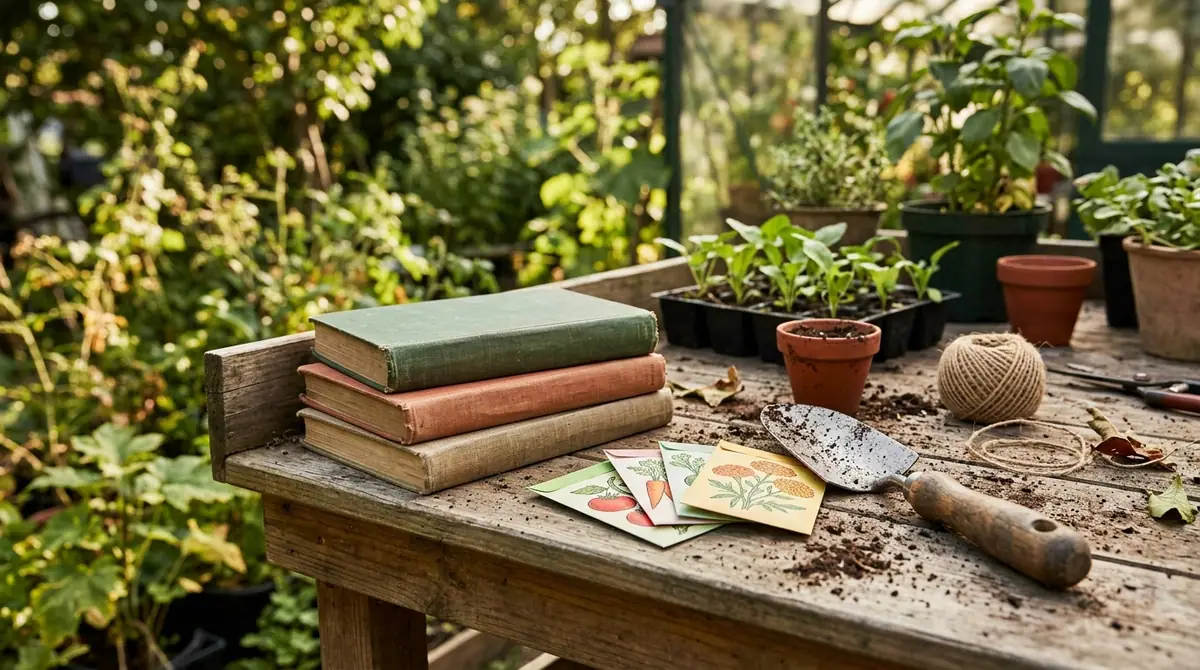
Twenty-two years ago, I stared at a pathetic, half-dead patch of supermarket cilantro in a rented urban yard and wondered why my attempts at growing food resembled a crime scene rather than a harvest. I had enthusiasm, a trowel, and zero botanical grounding. What finally transformed my barren soil into a productive ecosystem wasn't a green thumb—it was a stack of well-thumbed books written by botanists, master gardeners, and seasoned crop scientists who translated complex plant physiology into dirt-under-the-fingernails reality.
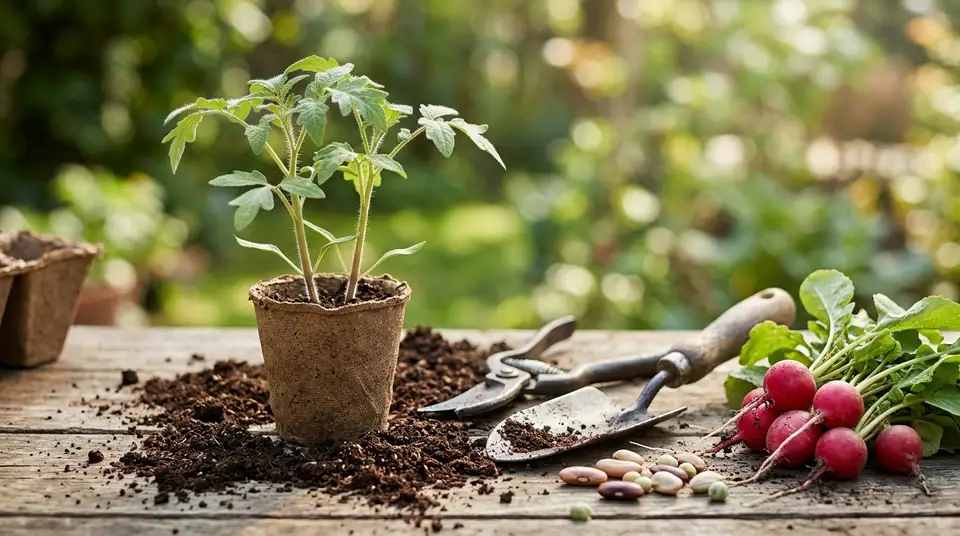
Here is my curated list of the absolute best vegetable gardening books for beginners, categorized by the specific learning style and botanical foundation they provide.
1. The Vegetable Gardener's Bible by Edward C. Smith
Best for: Comprehensive raised bed design, wide-row planting, and soil building. Ed Smith’s "Movable Bed" system is legendary for a reason. This book treats the beginner not as a child, but as an eager steward of micro-ecosystems. Smith explains how to build loose, friable soil that roots can easily penetrate, using organic amendments and double-digging techniques scaled down for backyard plots.
- Why it stands out: His deep dive into soil structure, organic matter ratios, and season extension teaches you how to push your harvest window past the first autumn frost.
2. All New Square Foot Gardening (3rd Edition) by Mel Bartholomew
Best for: Small spaces, urban gardeners, and absolute structural simplicity. If you get overwhelmed by row spacing, thinning, and weeding acres of bare earth, Bartholomew’s grid system is your antidote. By dividing beds into 1-foot by 1-foot squares and planting intensive quantities of individual crops based on their mature size, you eliminate wasted space and suppress weeds naturally.
- Why it stands out: The mathematical clarity. It removes the guesswork of how far apart to plant carrots (16 per square foot) versus cabbages (1 per square foot).
3. Grow Great Vegetables by Marie Iannotti
Best for: Regional clarity, visual learners, and step-by-step confidence. Marie Iannotti provides a masterclass in realistic expectations. Her book focuses heavily on regional differences, acknowledging that what works in USDA Hardiness Zone 4 will spell disaster in Zone 9. She pairs gorgeous photography with precise calendar breakdowns.
- Why it stands out: The troubleshooting guides at the end of each plant profile help beginners diagnose nutrient deficiencies and pest damage instantly.
4. Teaming with Microbes by Jeff Lowenfels
Best for: The science-minded beginner who wants to master soil food webs. While technically a soil science book rather than a traditional "how-to-grow-radishes" guide, Lowenfels' work is essential reading for anyone serious about organic vegetable production. It explains the symbiotic relationships between bacteria, fungi, mycorrhizae, and plant roots.
- Why it stands out: Once you understand that you are feeding the soil microbiome rather than just dumping chemical fertilizers onto plant roots, your entire approach to vegetable cultivation changes permanently.
1. Botanical Overview & Natural Habitat
To get the most out of any vegetable gardening book, you must understand the wild ancestry and botanical classifications of the crops you cultivate. Vegetables are not a single botanical family; they are an eclectic mix of annuals, biennials, and perennials harvested from diverse natural habitats across the globe.
Botanically speaking, when we grow vegetables, we are exploiting specific plant organs:
- Roots and Tubers: Modified underground structures designed for carbohydrate storage (e.g., carrots, Daucus carota subsp. Sativus, originating from temperate Eurasian and Mediterranean meadows).
- Leafy Greens: Fast-growing vegetative tissues adapted to cooler, moist understories or spring flushes (e.g., spinach, Spinacia oleracea, native to central and southwestern Asia).
- Fruiting Vegetables (Botanical Berries and Pods): Ovary-derived structures engineered by evolution to entice animals to disperse seeds (e.g., tomatoes, Solanum lycopersicum, native to the Andean foothills of western South America).
Understanding these ancestral homes dictates how you must treat them in a cultivated setting. For instance, high-altitude Andean tomatoes evolved under intense UV light and sharp day-night temperature swings, which explains why they sulk in stagnant, humid greenhouses and demand robust air circulation.
When reading beginner gardening books, pay close attention to how they categorize plants by family (such as Brassicaceae for cabbages or Solanaceae for peppers and tomatoes). This botanical organization is critical for practicing crop rotation—a foundational concept you will find in every top-tier gardening guide. Crop rotation prevents soil-borne pathogens from decimating your yields year after year.
If your property layout includes challenging planting strips near pavement or driveways, check out our guide on 15 Best Trees for Driveways That Won't Crack Concrete to understand how woody root architecture differs fundamentally from the herbaceous root systems of your vegetable garden.
2. Essential Environmental & Care Requirements
No book can replace the physical realities of sunlight, water chemistry, and thermal limits. Most common culinary vegetables originate from open, sun-drenched habitats and require strict environmental parameters to thrive.
| Parameter | Optimal Condition | Common Mistake | Why It Matters |
|---|---|---|---|
| Sunlight | 6 to 8+ hours of direct daily sunlight | Planting sun-lovers (tomatoes, peppers) in shady corners receiving <4 hours | Inadequate light starves the plant of photosynthetic energy, halting fruit set and making stems weak and spindly. |
| Soil pH | 6.2 to 6.8 (slightly acidic) | Ignoring soil tests and planting in highly acidic (<5.5) or alkaline (>7.5) soil | Extreme pH locks up essential macronutrients like phosphorus and calcium, causing blossom end rot. |
| Watering Volume | 1 inch (2.5 cm) of water per week via rain or irrigation | Frequent, shallow surface sprinklings that wet only the top 0.5 inches (1.3 cm) | Shallow watering encourages shallow root development, making plants highly vulnerable to sudden drought stress. |
| Drainage | Well-drained loamy soil with rich organic matter | Planting in heavy, compacted clay without amendments | Waterlogged soil deprives roots of oxygen, leading directly to root rot and fungal proliferation. |
💡 Pro-Tip: When evaluating beginner books, look for texts that emphasize soil moisture retention via organic mulches (like shredded straw or leaf mold) rather than daily hand-watering schedules. Mulch acts as an ecological thermal blanket, reducing evaporation by up to 70% and keeping soil temperatures stable.
3. Step-by-Step Cultivation, Feeding & Propagation
Applying the lessons from your chosen beginner gardening books requires a methodical approach. Follow this systematic, step-by-step cultivation protocol to establish your first successful vegetable bed:
- Site Selection and Sunlight Audit: Choose a level area that receives a minimum of 6 hours of direct sunlight daily. Monitor the space over a full weekend to confirm shadows from fences or structures do not encroach.
- Site Clearing and Weed Eradication: Clear all perennial weeds, grass sod, and debris from a 4-foot by 8-foot (1.2m by 2.4m) footprint. Avoid tilling if your reference books advise no-dig methods; instead, smother weeds using overlapping layers of unprinted cardboard topped with 4 inches (10 cm) of compost.
- Soil Testing and Amendment: Collect core soil samples from a depth of 6 inches (15 cm) and send them to a local university extension service (such as the Penn State Extension Soil Testing Program) to analyze nutrient profiles and pH. Mix in 2 inches (5 cm) of aged organic compost to jumpstart microbial activity.
- Seed Selection and Sowing: Consult your regional frost dates. Direct-sow cool-season crops (like radishes, Raphanus sativus, and spinach) 4 to 6 weeks before your final spring frost at a depth of 0.5 inches (1.3 cm). Plant warm-season transplants (like peppers, Capsicum annuum) only after nighttime ambient temperatures consistently stay above 55°F (13°C).
- Initial Watering and Thinning: Water newly seeded beds gently using a fine rose attachment on your watering wand to avoid washing seeds away. Once seedlings reach 2 inches (5 cm) in height, thin them by snipping crowding stems at the soil line to achieve the spacing recommended in your gardening guide.
- Fertilization and Maintenance: Apply a balanced, slow-release organic fertilizer or fish emulsion every 3 to 4 weeks during active vegetative growth. Monitor soil moisture daily by inserting your index finger into the dirt; if it feels dry at the second knuckle (approx. 2 inches / 5 cm deep), irrigate thoroughly.
⚠️ Important Caution: Never work or walk on your garden soil when it is soaking wet after a heavy rain. Compacting saturated soil instantly destroys delicate pore spaces, crushes soil aggregates, and suffocates the beneficial aerobic bacteria and earthworms your plants rely on.
4. Common Problems, Pests & Troubleshooting
Even with the best books on your shelf, vegetable gardens face biological pressures. Diagnosing them early is the difference between a bountiful harvest and total crop loss.
- Leggy Seedlings: If your indoor-started tomato or pepper seedlings look like thin, pale string swaying in the breeze, they are suffering from etiolation. They lack sufficient light. Solution: Move seedlings within 2 to 3 inches (5 to 7.5 cm) of a full-spectrum LED grow light for 14 to 16 hours a day, and run a small oscillating fan nearby to strengthen stems through mechanical thigmotropism.
- Blossom End Rot: Dark, sunken, leathery patches appearing on the bottom of your ripening tomatoes, peppers, or squash. This is not a fungal disease, but a physiological disorder caused by irregular watering fluctuations that disrupt calcium uptake into fast-growing fruit tissue. Solution: Maintain consistent soil moisture and avoid letting beds swing wildly between bone-dry and saturated.
- Aphids (Aphidoidea): Small, pear-shaped sap-sucking insects clustering on the tender new growth of brassicas and nightshades, excreting sticky honeydew that fosters black sooty mold. Solution: Blast colonies off with a sharp jet of water from your garden hose, or introduce beneficial predators like ladybird beetles (Coccinellidae) and lacewings. For persistent infestations, apply potassium salts of fatty acids (insecticidal soap) directly to affected leaf undersides.
For advanced diagnostic keys and localized pest alerts, consult the Royal Horticultural Society (RHS) Gardening Advice Portal to cross-reference symptoms with regional biological databases.
5. Frequently Asked Questions
What is the absolute best book for a complete beginner with zero gardening experience?
All New Square Foot Gardening by Mel Bartholomew is widely considered the best starting point. It strips away complicated agricultural jargon, eliminates the need for heavy tilling or large plots, and gives you clear, mathematical formulas for spacing and planting that virtually guarantee success.
How do I know when my garden soil is ready to plant in the spring?
Perform the "squeeze test." Grab a handful of garden soil from a depth of 4 inches (10 cm) and squeeze it firmly into a ball in your palm. If it forms a tight, sticky mud ball that drips water or holds a rock-hard shape when poked, the soil is too wet and will compact. If it crumbles apart easily under gentle pressure, the soil temperature has warmed, the drainage is balanced, and it is ready for planting.
Should I start my vegetables from seeds or buy starter plants?
It depends entirely on the crop's juvenile growth rate and sensitivity. Crops with massive root systems or delicate taproots—such as carrots, radishes, beans, and squash—hate root disturbance and must be sown directly from seed into the garden. Conversely, slow-growing warm-season crops with long maturation windows—like tomatoes, eggplants, and peppers—are much easier for beginners to start as small nursery transplants (plugs) purchased in spring.
How much time do I actually need to spend maintaining a vegetable garden?
For a standard 4-foot by 8-foot (1.2m by 2.4m) beginner raised bed, plan to invest roughly 2 to 3 hours per week. This time is divided between watering, monitoring for pests, gently weeding around young root zones, and harvesting ripe produce. Consistency is far more important than marathon weekend sessions; spending 15 minutes checking your plants every evening yields a healthier garden than ignoring them for six days and panicking on the seventh.
Related Guides
- Complete Guide to Winter Vegetable Harvesting for Beginners
- Best Herb Herbalism Courses Books
- Step By Step Guide to Grafting Fruit Trees for Beginners
- Easy Succulent Garden Ideas for Beginners Indoors
- Diy Balcony Herb Garden Ideas for Beginners
📋 Table of Contents ▼ Click to expand
Tags:
Keep reading
🌿 Related Plants You Might Like


PlantSavvyWorld
Editorial team
PlantSavvyWorld is an independent botanical education project. Articles are drafted with AI assistance, then edited and checked against university extension services, botanical garden collections and other published horticultural sources.