

13 Wonderful Herbs That Like Full Sun for Beginners
Written with AI assistance, edited and checked against horticultural sources.
1. Botanical Overview & Natural Habitat
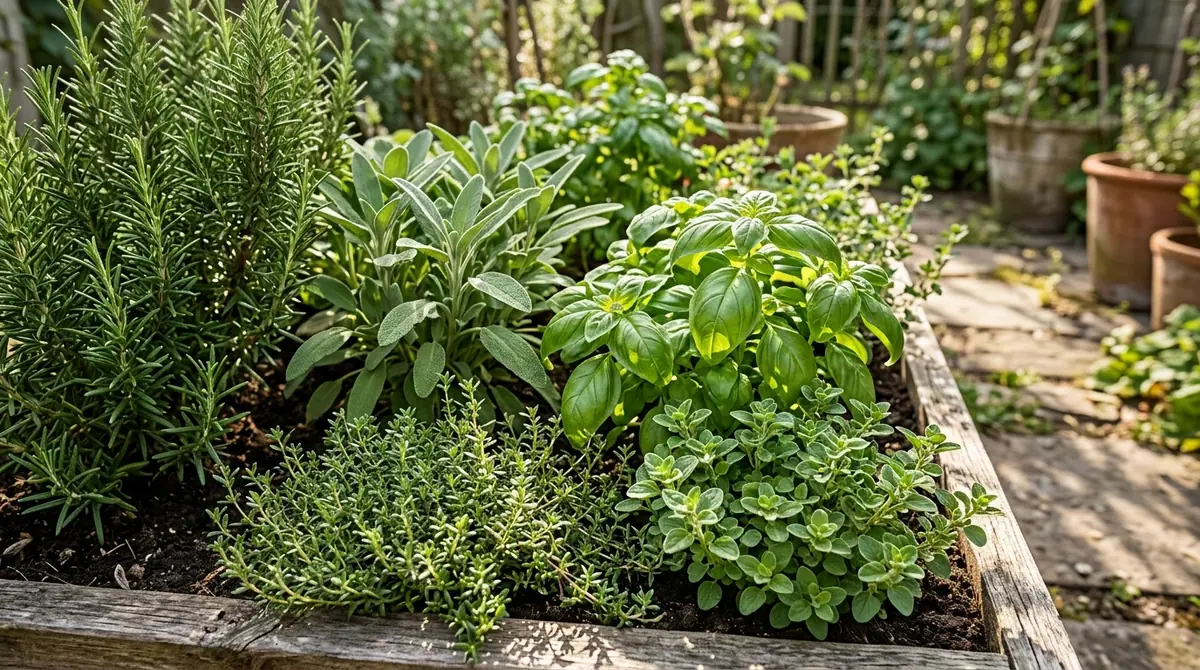
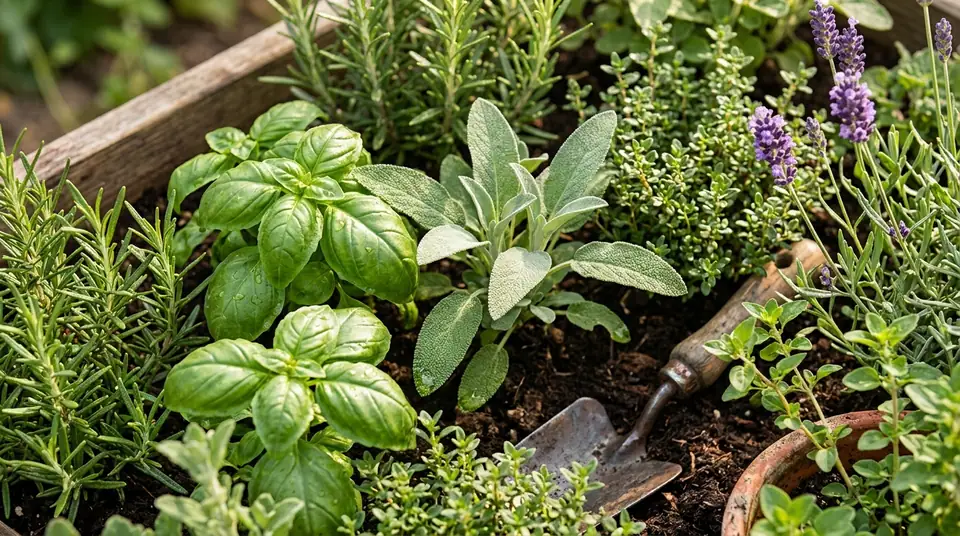
To grow these thirteen herbs successfully, we must first understand where they evolved. Botanically, the vast majority of these plants—specifically rosemary, lavender, thyme, oregano, sage, marjoram, and savory—belong to the Lamiaceae (mint) family or related families native to the Mediterranean chaparral, scrublands, and rocky hillsides.
In their natural habitats, these plants endure blistering summer temperatures regularly exceeding 95°F (35°C), long periods of drought, and poor, rocky, highly alkaline soils. To survive this harshness, they developed specialized morphological and physiological adaptations. Many possess small, narrow, or needle-like leaves (such as rosemary and thyme) to minimize transpirational water loss. Others, like lavender and sage, are covered in a dense mat of fine, silvery hairs (trichomes) that reflect intense solar radiation, trap a boundary layer of moisture, and house volatile aromatic oils. These very essential oils are chemical defense mechanisms designed to deter herbivores, which is precisely why these plants taste and smell so intensely potent when stressed by the sun.
Contrast this with the soft-leaved herbs on our list: basil (Lamiaceae, but tropical in origin, loving humidity and heat), cilantro, dill, parsley, and chives. While these also demand full sun (defined botanically as a minimum of 6 to 8 hours of direct, unobstructed sunlight daily), their native ranges and cellular structures differ. Parsley and cilantro are cool-season annuals or biennials that bolt to seed when days get too hot and dry, whereas basil is a tender tropical annual that collapses if exposed to temperatures dropping below 50°F (10°C).
Understanding these two distinct camps—the drought-tolerant Mediterranean woody perennials and the fast-growing herbaceous annuals/biennials—is the foundational secret to mastering sun-loving herb gardening.
2. Essential Environmental & Care Requirements
Creating the right microclimate for your full-sun herb garden requires balancing light, soil architecture, and hydration. Let us examine the empirical parameters required to keep these thirteen plants thriving.
| Parameter | Optimal Condition | Common Mistake | Why It Matters |
|---|---|---|---|
| Light Duration | 6–8+ hours of direct sun daily | Placing pots on north-facing balconies | Insufficient light halts essential oil production, leading to bland flavor and leggy, weak stems. |
| Soil Drainage | Rapidly draining, sandy or loamy mix (Infiltration rate > 2 inches/hour) | Using heavy clay garden soil or containers without drainage holes | Stagnant moisture around roots causes fatal Phytophthora root rot in Mediterranean species. |
| Soil pH | 6.5 to 7.5 (Slightly acidic to neutral; Mediterranean species prefer up to 8.0) | Acidifying soil with heavy peat moss | Extreme pH locks out essential micronutrients like calcium and magnesium, causing chlorosis. |
| Irrigation Frequency | Deep, infrequent watering; allow soil to dry completely in top 2 inches (5 cm) | Shallow, daily splashes of water | Infrequent deep watering forces roots to drive downward, anchoring the plant and building drought resilience. |
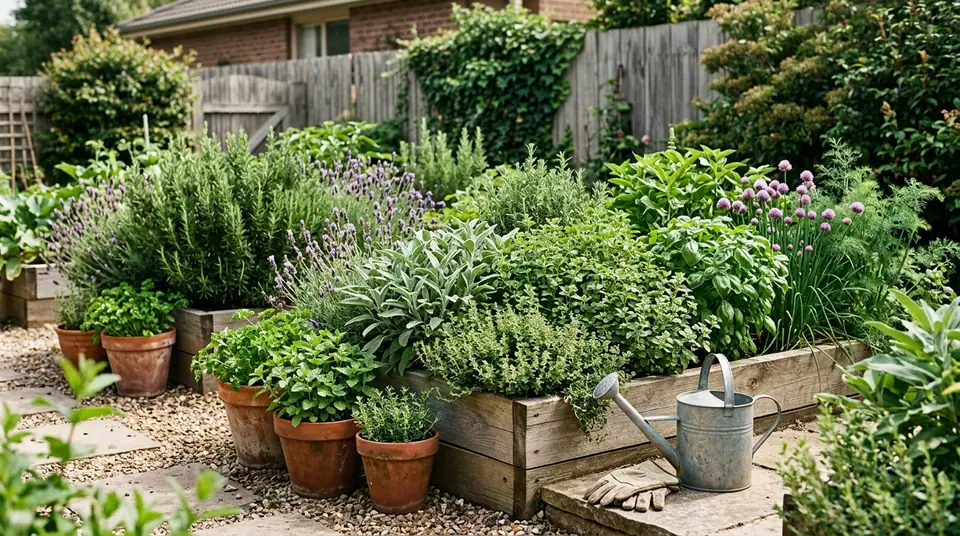
When designing your layout, group your plants by their physiological needs. Rosemary, lavender, thyme, oregano, sage, marjoram, and savory belong together in a high-drainage, lean-soil bed or container. Basil, chives, parsley, cilantro, and dill appreciate slightly more consistent moisture and richer organic matter, though they still demand that bright solar exposure.
💡 Pro-Tip: If your garden soil leans heavy and clay-heavy, do not amend just the planting hole for Mediterranean herbs. That creates a "bathtub effect" where water pools in the amended pocket. Instead, amend the entire bed with coarse horticultural sand and perlite, or plant your sun-lovers in raised beds or breathable terra cotta containers.
3. Step-by-Step Cultivation, Feeding & Propagation
Growing these herbs from seed or nursery starts is straightforward when you follow a methodical protocol. Here is your step-by-step master sequence for establishing your full-sun herb garden:
- Site Selection and Light Mapping: Observe your yard or balcony for 24 hours. Identify the zone that receives uninterrupted, direct sunlight from roughly 9:00 AM to 5:00 PM. Avoid areas overshadowed by tree canopies or eaves.
- Soil Preparation and Testing: Clear the planting area of perennial weeds. Test your soil pH using a standard home test kit. If your soil is heavy clay, incorporate 30% coarse builder's sand (not fine beach sand) and 20% compost to improve structural porosity. For container growing, use a high-quality cactus and succulent mix blended with standard organic potting soil at a 1:1 ratio.
- Planting Depth and Spacing: Dig planting holes twice as wide as the nursery root ball, but maintain the exact same soil depth the plant had in its nursery container—never bury the crown of woody herbs like lavender or rosemary, as this invites stem rot. Space compact herbs (thyme, marjoram) 8 to 12 inches (20 to 30 cm) apart, and larger shrubs (sage, rosemary) 18 to 24 inches (45 to 60 cm) apart to ensure adequate air circulation.
- Initial Irrigation: Water newly planted herbs thoroughly immediately after installation to settle soil particles around the root zone. Deliver approximately 1 inch (2.5 cm) of water equivalent, then withhold further watering until the top 2 inches (5 cm) of soil feel completely dry to the touch.
- Fertilization Protocols: Full-sun Mediterranean herbs require minimal fertility. Over-fertilizing stimulates rapid, soft, sappy green growth that lacks flavor and invites insect pests. Apply a balanced, slow-release organic granular fertilizer (such as a 5-5-5 organic blend) just once in early spring when new growth emerges. Annuals like basil and parsley appreciate a light, water-soluble organic fish emulsion feed once every 4 to 6 weeks during peak summer.
- Propagation Techniques: Expand your garden for free. Propagate woody herbs (rosemary, sage, thyme, oregano) in mid-summer by taking 4-inch (10 cm) semi-hardwood stem cuttings. Strip the lower leaves, dip the base in rooting hormone powder, and insert them into a 50/50 perlite and peat propagation tray kept at 70°F (21°C) until roots form in 21 to 28 days.
⚠️ Important Caution: Never harvest more than one-third of a living herb plant's total foliage at any single pruning session. Over-harvesting strips the plant of its photosynthetic machinery, causing severe shock or plant death, particularly in slow-growing woody perennials like lavender.
4. Common Problems, Pests & Troubleshooting
Even tough-as-nails sun lovers encounter occasional setbacks. Recognizing the early warning signs allows you to intervene before damage becomes irreversible.
Root Rot (Phytophthora and Pythium species)
- Symptom: Sudden wilting despite moist soil, yellowing lower foliage, and dark, mushy, foul-smelling roots.
- Cause: Overwatering combined with dense, poorly draining soil.
- Solution: Remove the affected plant immediately. Improve surrounding soil drainage by incorporating perlite or coarse gravel. For potted specimens, switch to a container with unglazed terra cotta walls and multiple bottom drainage holes. Let soil dry out completely between watering sessions.
Powdery Mildew (Erysiphe species)
- Symptom: A white, talcum-powder-like fungal growth appearing on the upper surfaces of leaves, particularly on sage, basil, and mint.
- Cause: High relative humidity, poor air circulation, and overcrowding of plants.
- Solution: Prune surrounding vegetation to open up the plant canopy and maximize airflow. Water the base of plants directly using drip irrigation or soaker hoses, avoiding overhead splashing on foliage. In persistent cases, spray foliage at dawn with a solution of 1 tablespoon of baking soda mixed with 1 teaspoon of liquid dish soap per gallon of water.
Aphids (Aphidoidea)
- Symptom: Clusters of tiny, soft-bodied green, black, or pink insects clustering on tender new shoot tips, accompanied by sticky honeydew residue and curled leaves.
- Cause: Excess nitrogen fertilization causing a flush of tender, sappy new growth.
- Solution: Blast pests off stems with a sharp, forceful jet of cold water from your garden hose. Introduce beneficial predatory insects such as ladybugs (Hippodamia convergens) or lacewings, or apply horticultural insecticidal soap directly to the affected surfaces.
5. Frequently Asked Questions
Do all 13 of these herbs need to be planted in separate pots?
No, but you must group them according to their environmental tolerances. Rosemary, lavender, thyme, oregano, sage, marjoram, and savory thrive together in large communal containers or raised beds because they share identical needs for lean, dry, alkaline soil and infrequent watering. Basil, chives, parsley, dill, and cilantro prefer slightly richer, more consistently moist soil, so they should be planted in separate containers or a dedicated bed. Mint (Mentha spp.) must always be grown in its own isolated container; its aggressive, creeping underground rhizomes will rapidly overrun any garden bed if given the chance.
How do I know when it is time to water my Mediterranean herbs?
Do not rely on a rigid calendar schedule. Instead, use the digital-sensor method: press your index finger 2 inches (5 cm) deep into the soil. If the soil feels cool and damp at your fingertip, do not water. Only water when the soil feels completely dry and crumbly at that depth. When you do water, apply it deeply and slowly until water runs freely out of the container's drainage holes, ensuring the entire root zone is saturated. For further guidance on vegetable and herb irrigation science, check out the University of California Agriculture and Natural Resources extension.
Can I grow full-sun herbs indoors on a windowsill?
Growing full-sun herbs indoors is notoriously challenging because even the brightest southern-facing indoor window provides only a fraction of the photon intensity found outdoors. If you must grow them indoors, place them directly against your sunniest south-facing glass and supplement their light exposure with a full-spectrum LED grow light suspended 6 to 12 inches (15 to 30 cm) above the foliage, running for 12 to 14 hours daily. Furthermore, indoor heating vents create dry air while indoor potting soils retain moisture longer, so you must reduce your watering frequency significantly to prevent root rot.
Why is my woody herb plant turning brown and woody at the base?
This is a completely normal, natural botanical process known as lignification. As perennial herbs like lavender, rosemary, sage, and thyme age, their soft green herbaceous stems naturally transform into tough, protective woody bark to support their expanding canopy. However, if this browning is accompanied by sudden branch dieback or mushy stems, it is likely due to poor drainage or planting them too deep. Note that unlike soft annuals, you should never prune hard into old, bare, woody stems where there are no green leaves visible; woody herbs generally cannot regenerate new shoots from old, leafless wood. Always prune back into leafy, green stem tissue just above a node.
Related Guides
- What Herbs to Plant Together
- Herbs for Bruises 7 Herbs That Will Get Rid of Bruises Fast
- Zone 9 Plants Full Sun
- Bromeliads Full Sun
- Step By Step Guide to Grafting Fruit Trees for Beginners
📋 Table of Contents ▼ Click to expand
Tags:
Keep reading
🌿 Related Plants You Might Like



PlantSavvyWorld
Editorial team
PlantSavvyWorld is an independent botanical education project. Articles are drafted with AI assistance, then edited and checked against university extension services, botanical garden collections and other published horticultural sources.