

Herbs for Bruises 7 Herbs That Will Get Rid of Bruises Fast
Written with AI assistance, edited and checked against horticultural sources.
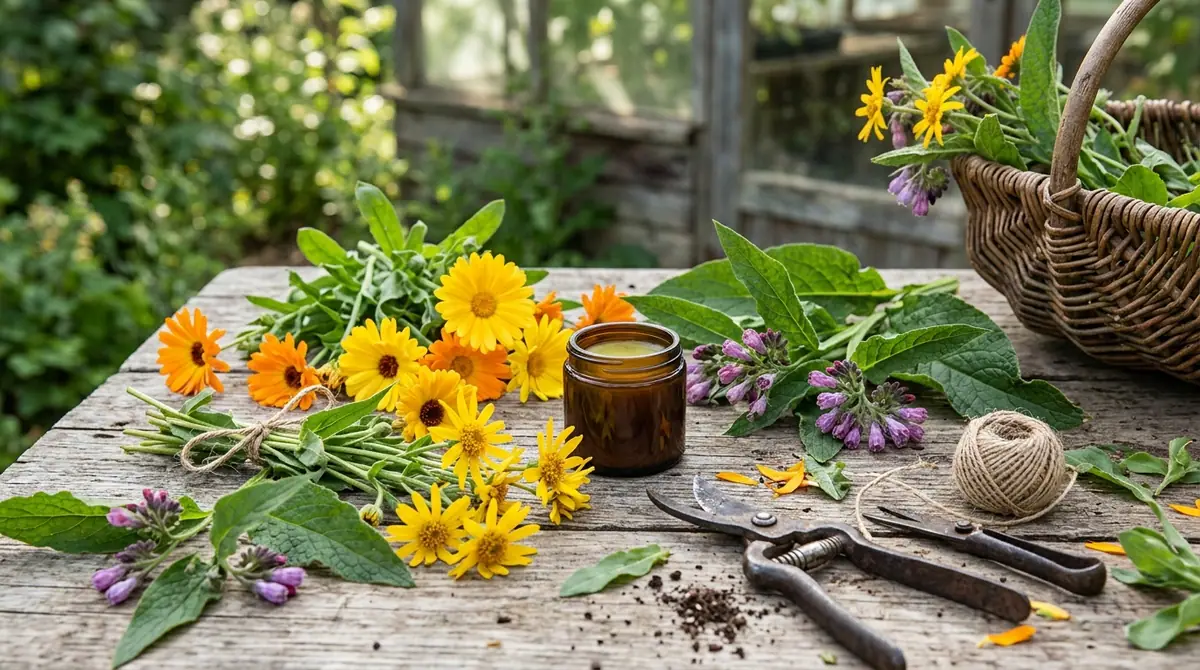
A deep contusion the size of a saucer—the kind of tissue trauma that usually takes three weeks to fade through an embarrassing spectrum of green and yellow—can be treated with fresh Arnica montana and comfrey leaves whipped into a concentrated poultice. Within 48 hours, the throbbing heat vanishes, and the discoloration dissolves into a faint yellowish shadow.

1. Botanical Overview & Natural Habitat
Bruises happen when tiny blood vessels (capillaries) rupture beneath the skin, leaking red blood cells into the surrounding interstitial tissue. To clear this pooling blood quickly, the body requires anti-inflammatory agents to reduce swelling, vasodilators or lymphatic stimulants to clear cellular debris, and vulneraries to accelerate skin and tissue regeneration. The seven botanical powerhouses detailed below excel at these tasks due to specific bioactive compounds.
1. Arnica (Arnica montana)
Native to the damp, acidic subalpine meadows of Europe and North America, arnica is the undisputed monarch of bruise-healing herbs. Its golden-yellow, daisy-like heads are packed with sesquiterpene lactones—specifically helenalin—which powerfully inhibit inflammatory pathways and speed up the reabsorption of trapped blood.
2. Comfrey (Symphytum officinale)
Often found thriving along damp riverbanks and ditch lines in USDA zones 3 through 9, comfrey is historically known as "knitbone." Its secret weapon is allantoin, a potent cell-proliferant that stimulates rapid cellular division and tissue healing. It reduces the swelling and tenderness of a fresh impact faster than almost any other botanical.
3. Calendula (Calendula officinalis)
A Mediterranean native that adapts effortlessly to almost any garden soil, pot marigold (calendula) is rich in triterpenoid saponins and flavonoids. These compounds boost local blood circulation, direct white blood cells to the damaged site, and prevent the bruised area from becoming inflamed or congested.
4. St. John’s Wort (Hypericum perforatum)
Thriving in dry, disturbed soils and open pastures, this perennial produces bright yellow blooms containing hypericin and hyperforin. While widely known for mood support, its oil-soluble constituents are legendary for easing blunt-force trauma, nerve pain, and deep dermal bruising.
5. Witch Hazel (Hamamelis virginiana)
An understory shrub native to eastern North American deciduous forests, witch hazel blooms late in the autumn with spidery yellow flowers. Its bark and leaves are exceptionally high in tannins, which act as natural astringents to tighten loose tissues, constrict damaged capillaries, and stop minor subcutaneous bleeding instantly.
6. Yarrow (Achillea millefolium)
A hardy meadow native found across the Northern Hemisphere, yarrow features feathery foliage and flat-topped flower clusters. Containing achilleine and various volatile oils, yarrow acts as a stellar styptic and anti-inflammatory agent, drawing fresh blood flow to stagnant bruises to speed color resolution.
7. Plantain (Plantago major)
Often dismissed as a stubborn lawn weed, broadleaf plantain is an adaptable powerhouse rich in mucilage, aucubin, and allantoin. It draws heat out of fresh impacts, soothes stinging skin, and accelerates the clearance of trapped cellular fluids.
2. Essential Environmental & Care Requirements
Growing your own bruise-healing pharmacopeia requires understanding each plant's ecological origins. If you want to dive deeper into jumpstarting your garden beds from seed, check out my guide on How to Germinate Eggplant Seeds Fast: Heat, Moisture & 7-Day Protocol, which covers foundational thermal and moisture triggers applicable to many medicinal crops.
| Parameter | Optimal Condition | Common Mistake | Why It Matters |
|---|---|---|---|
| Arnica Soil pH | 5.0 to 6.5 (Acidic) | Adding agricultural lime | Arnica evolved in acidic mountain scree; alkaline soils cause nutrient lock-out and root rot. |
| Comfrey Moisture | Consistently moist (1 inch / 2.5 cm water weekly) | Allowing dry spells | Comfrey has deep taproots but needs steady surface moisture to produce lush, healing foliage. |
| Calendula Sun | Full sun (6–8 hours daily) | Growing in dense shade | Low light reduces triterpenoid production in the flowers, weakening their therapeutic punch. |
| St. John’s Wort Soil | Well-drained, lean, rocky loam | Heavy, waterlogged clay | Excess nitrogen and moisture invite fungal root pathogens and lower hypericin concentration. |
💡 Pro-Tip: When cultivating Arnica montana, never use standard commercial potting soil enriched with synthetic slow-release fertilizers. Arnica is a miser for nutrients; high fertility burns its delicate root hairs and dramatically drops its medicinal sesquiterpene levels. Mimic its native alpine scree by blending 50% sharp horticultural sand, 30% peat moss, and 20% native loam.
3. Step-by-Step Cultivation, Feeding & Propagation
Establishing a perennial bruise-healing garden is a multi-year investment in your family's natural first-aid kit. Follow this sequential protocol to successfully establish, harvest, and process your medicinal herbs.
- Site Selection and Soil Preparation: Choose a sunny, well-draining spot in your landscape. Clear all perennial weeds and amend the top 8 inches (20 cm) of soil with well-rotted leaf mold to create a rich, loose crumb structure.
- Sowing and Germination: Direct-sow seeds in early spring when soil temperatures reach 55°F to 65°F (13°C to 18°C). Press tiny seeds like calendula and arnica lightly into the surface, covering them with no more than 1/8 inch (0.3 cm) of fine soil, as many medicinal seeds require light to trigger germination.
- Irrigation and Thinning: Keep the seedbed evenly moist using a fine-mist nozzle until germination occurs within 10 to 21 days. Once seedlings reach 3 inches (7.6 cm) tall, thin them out to give each plant adequate root space—leaving 12 inches (30 cm) between calendula plants and up to 24 inches (60 cm) between large comfrey crowns.
- Targeted Feeding: Apply a top-dressing of organic compost around the base of your established herbs every spring. Avoid high-nitrogen chemical fertilizers, which cause rapid, watery leaf growth that lacks the dense phytochemical concentrations needed for topical healing salves.
- Harvest Timing: Harvest aerial parts (leaves and flowers) mid-morning after the dew has evaporated but before the midday sun barks the essential oils. Pick arnica and calendula flowers just as they fully open; harvest comfrey leaves multiple times throughout the growing season before the plant flowers.
- Processing into Infused Oils: Dry your harvested herbs on shaded screens for 5 to 7 days until completely crisp. Pack them loosely into glass jars, cover entirely with organic olive or jojoba oil, and steep in a warm, sunny window for 4 to 6 weeks, shaking daily, before straining for your bruise salve.
⚠️ Important Caution: Never ingest Arnica montana internally unless it is processed into a homeopathic dilution under the direct supervision of a qualified physician. Raw arnica contains helenalin, which is toxic to the liver and heart when consumed orally. Stick strictly to external, topical applications like salves, oils, and compresses.
4. Common Problems, Pests & Troubleshooting
Medicinal herbs are generally resilient, but they do face occasional environmental stressors and pest pressures that can compromise their healing chemistry.
Powdery Mildew on Comfrey and Calendula
Appearing as a dusty white talcum powder coating on the leaves during humid midsummer weather, powdery mildew thrives when plants lack adequate air circulation.
- The Fix: Prune back crowded stems to improve airflow, water exclusively at the base of the plant in the early morning, and spray affected foliage with a mixture of 1 tablespoon of baking soda, 1 teaspoon of liquid organic castile soap, and 1 gallon (3.8 L) of water.
Root Rot in Arnica and St. John’s Wort
If your plants suddenly wilt, turn yellow, and collapse at the soil line despite moist soil, you are likely dealing with Phytophthora or Pythium root rot triggered by poor drainage.
- The Fix: Immediately cease watering. If the plant is in a container, repot it into fresh, sterile, sandy-loam mix after trimming away black, mushy roots with sterilized shears. For in-ground plants, dig drainage trenches around the perimeter and amend the soil heavily with coarse grit.
Aphid Infestations on Calendula Tips
Green or black aphids love congregating on the succulent new flower buds of calendula, sucking out plant sap and leaving a sticky honeydew residue.
- The Fix: Blast the pests off with a sharp stream of cold water from your garden hose. Introduce beneficial insects like ladybugs and lacewings, or spray the colonies directly with insecticidal soap every 5 days for a two-week cycle.

5. Frequently Asked Questions
Can I put fresh comfrey leaves directly onto a fresh bruise?
Yes, you can create a direct green poultice. Crush clean, fresh comfrey leaves with a rolling pin or mortar and pestle to bruise the cellular walls and release the mucilage and allantoin. Apply the mashed leaves directly over the contusion, secure them with a breathable cotton wrap, and leave the compress in place for 30 to 45 minutes. Do not apply comfrey to deep, open lacerations where broken skin exposes underlying blood vessels, as rapid surface healing can trap debris underneath.
How long does homemade arnica oil last before it spoils?
When strained thoroughly through cheesecloth to remove all traces of plant matter and stored in a dark, cool amber glass bottle, homemade arnica infused oil typically remains potent for 12 to 18 months. To extend its shelf life, puncture a 400 IU vitamin E capsule and stir the oil into your batch as a natural preservative. If the oil develops a rancid, crayon-like odor or a cloudy sediment, discard it immediately.
Are these herbs safe to use on children's bruises?
Calendula and broadleaf plantain are exceptionally gentle and safe for children over the age of two when applied topically as a mild salve or infused oil. However, avoid using concentrated arnica or comfrey preparations on infants or toddlers, as their permeable skin absorbs phytochemicals much more rapidly, and arnica's potent sesquiterpene lactones can cause localized contact dermatitis or skin irritation on sensitive young skin.
What is the difference between using an oil, a salve, and a tincture for bruises?
Infused oils are liquid preparations ideal for gentle massages that help disperse pooled blood. Salves are simply infused oils thickened with beeswax or candelilla wax, which allows the remedy to sit heavily and steadily on the surface of the skin without dripping. Tinctures are alcohol-based extractions; while occasionally used diluted in water for compresses, they are primarily intended for botanical formulations where alcohol acts as a solvent for specific active plant constituents. For comprehensive research on botanical safety profiles and extraction efficacy, refer to the National Center for Complementary and Integrative Health (NCCIH).
Related Guides
- What Herbs to Plant Together
- 13 Wonderful Herbs That Like Full Sun for Beginners
- How Fast Does Pine Grow
- How to Make Grass Green Fast
📋 Table of Contents ▼ Click to expand
Tags:
Keep reading
🌿 Related Plants You Might Like






PlantSavvyWorld
Editorial team
PlantSavvyWorld is an independent botanical education project. Articles are drafted with AI assistance, then edited and checked against university extension services, botanical garden collections and other published horticultural sources.