

How to Make Grass Green Fast
Written with AI assistance, edited and checked against horticultural sources.
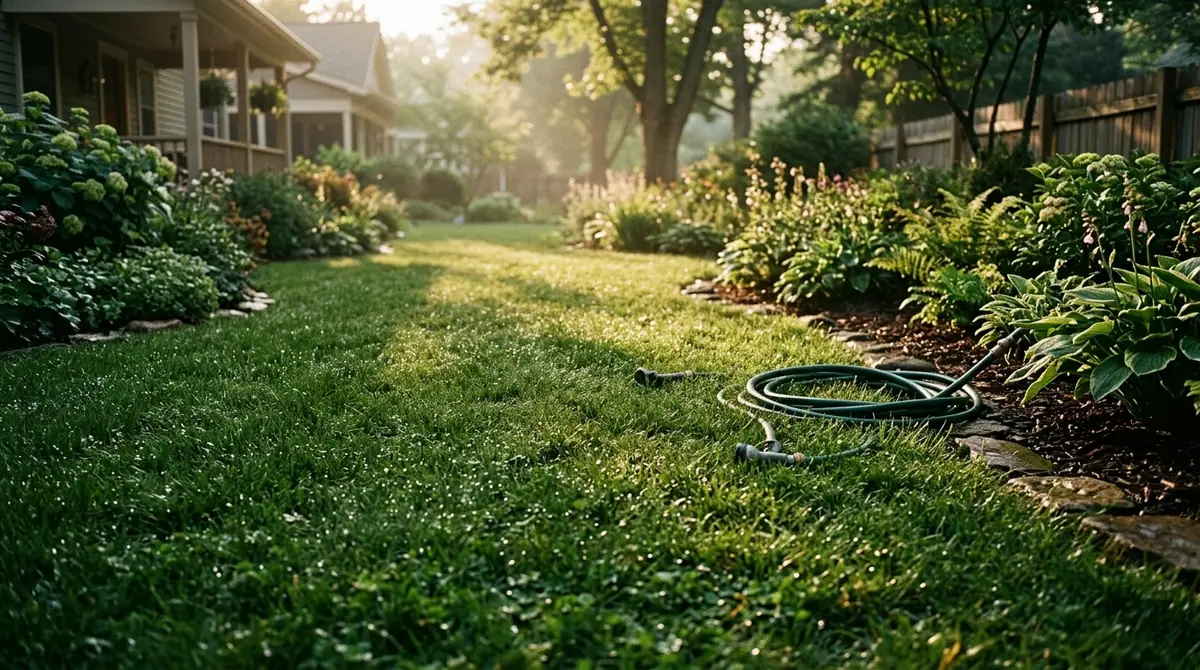
Two springs ago, a panicked gardener called me about her backyard. She was hosting a family graduation party in exactly fourteen days, and her turf looked like a neglected straw mat—yellowish-brown, patchy, and entirely lifeless after a punishing winter. She asked if she needed to rip it up and lay instant sod. I told her to put down the shovel. By leveraging a targeted botanical intervention—manipulating nitrogen availability, adjusting soil pH for optimal nutrient uptake, and applying precise foliar iron—we had that lawn glowing with a deep, emerald-green hue in just ten days.

1. Botanical Overview & Natural Habitat
To make turfgrass green up rapidly, you must first understand what green actually is from a botanical perspective. The vibrant color of a healthy lawn is driven by chloroplasts containing two primary pigments: Chlorophyll a and Chlorophyll b. These molecules absorb blue and red light wavelengths while reflecting green light. When a lawn turns yellow or pale, it is experiencing chlorosis—a condition where chlorophyll production slows down or breaks down faster than it can be synthesized, usually due to nutrient deficiencies, water stress, or compacted soils.
Most lawns fall into one of two botanical categories based on their photosynthetic pathways and native habitats:
- Cool-Season Grasses (Festuca, Lolium, Poa species): Native to the temperate, cool regions of Europe and northern Asia. They thrive in temperatures between 60°F and 75°F (15°C to 24°C) and store energy efficiently during spring and autumn. When summer temperatures spike above 85°F (29°C), they enter a semidormant state and lose their deep green luster.
- Warm-Season Grasses (Cynodon, Stenotaphrum, Zoysia species): Native to tropical and subtropical regions across Africa, Asia, and the Americas. They utilize the C4 photosynthetic pathway, making them incredibly efficient in high-heat environments (80°F to 95°F / 27°C to 35°C), but they turn straw-brown at the first frost as they enter dormancy.
Understanding your grass species dictates how fast you can push color. For instance, forcing rapid green-up on a cool-season grass with high nitrogen during a 90°F (32°C) heatwave will scorch the blades and invite fungal pathogens, whereas the exact same treatment applied to a warm-season grass in mid-summer will yield miraculous results within a week.
2. Essential Environmental & Care Requirements
If you want speed, you must optimize the microenvironment surrounding the grass blades and roots. Without these baseline conditions, no fertilizer in the world will give you that instant emerald pop.
| Parameter | Optimal Condition | Common Mistake | Why It Matters |
|---|---|---|---|
| Soil pH | 6.0 to 7.0 | Ignoring pH tests | Outside this range, essential micronutrients like iron and nitrogen chemically bind to the soil and become unavailable to roots. |
| Watering Depth | 1.0 to 1.5 inches (2.5 to 3.8 cm) per week, deeply and infrequently | Shallow, daily sprinkling | Deep watering trains roots to chase moisture downward, building drought resistance and turgor pressure. |
| Mowing Height | 2.5 to 3.5 inches (6.4 to 8.9 cm), never cutting more than 1/3 of the blade | Scalping the lawn to "reset" it | Taller blades house more chloroplasts for photosynthesis and shade the soil to prevent weed seed germination. |
| Sunlight | 6 to 8 hours of direct sun daily | Planting shade-loving cultivars in deep sun | Insufficient light halts carbohydrate production, making the turf thin and pale regardless of fertilizer inputs. |
💡 Pro-Tip: If your soil pH is stubbornly sitting above 7.2, your grass cannot absorb iron, no matter how much you apply. Spraying a chelated liquid iron foliar treatment directly onto the leaf blades bypasses the alkaline soil chemistry entirely, forcing an instant green-up within 24 to 48 hours while you work on long-term soil acidification.
3. Step-by-Step Cultivation, Feeding & Propagation
When you need a deep, turf-rich green in under two weeks, you cannot rely on slow-release organic granules that take a month to break down. You need a fast-acting, highly calculated botanical protocol.
Follow this 5-step sequence to accelerate greening safely:
- Test and Adjust Soil Moisture (Days 1–2): Apply 0.5 inches (1.3 cm) of water via irrigation or rainfall to ensure the soil profile is moist. Never apply fast-acting synthetic fertilizers to bone-dry turf, as high salt indexes will chemically burn the root hairs.
- Apply Fast-Release Nitrogen and Iron (Day 3): Broadcast a quick-release nitrogen fertilizer (such as urea, 46-0-0) at a conservative rate of 0.5 pounds of actual nitrogen per 1,000 square feet (460 grams per 93 square meters). Tank-mix this with a liquid chelated iron supplement. For those exploring other intensive cultivation projects, proper nutrient timing is just as critical here as it is when learning how to germinate eggplant seeds fast: heat, moisture & 7-day protocol.
- Calibrate Your Mower and Raise the Deck (Day 4): Sharpen your mower blades to a razor edge. Dull blades tear the grass tips, creating jagged wounds that dry out and turn brown, dulling the overall visual impact of your new green color. Mow at 3 inches (7.6 cm) or higher.
- Initiate Deep Irrigation Cycling (Days 5–10): Water the lawn deeply every 48 hours in the early morning hours (between 4:00 AM and 8:00 AM) to minimize evaporation loss and fungal spore germination. This encourages the newly synthesized nitrogen to move efficiently through the vascular xylem into the leaf blades.
- Assess and Spot-Treat (Days 11–14): Inspect the turf for any stubborn pale patches. These are usually indicative of localized soil compaction or localized dry spots (LDS). Apply a second micro-dose of liquid iron to any lagging areas.
⚠️ Important Caution: Never exceed 1 pound of actual nitrogen per 1,000 square feet (454 grams per 93 square meters) in a single application. Exceeding this threshold forces succulent, rapid cell elongation that outpaces root development, leaving the turf highly susceptible to drought collapse and insect invasions from pests like chinch bugs and sod webworms.
For authoritative guidelines on regional turf management practices and local soil amendment recommendations, consult the University of Minnesota Extension Turfgrass Science Program or the comprehensive guides provided by the Royal Horticultural Society.
4. Common Problems, Pests & Troubleshooting
When pushing a lawn to green up fast, you are forcing high metabolic activity. This can unmask underlying issues that were previously hidden by dormancy or slow growth.
- Sudden Yellow Streaking: If your grass shows parallel yellow lines, you likely have a dull mower blade tearing the vascular bundles, or you have linear fertilizer burn from a miscalibrated spreader. Solution: File your mower blades immediately and flush the striped areas with 1 inch (2.5 cm) of water over two days.
- Rust Fungus (Puccinia species): High nitrogen combined with frequent morning moisture can trigger orange-yellow powdery spores on your shoes when walking across the lawn. Solution: Apply a light application of potassium to strengthen cell walls, and stop watering in the evening.
- Black-Green Slime Molds: Appearing after heavy rains and rapid fertilization, these harmless saprophytic fungi coat the grass blades. Solution: Rake them gently with a leaf rake to break up the spores and let sunlight dry out the canopy.

5. Frequently Asked Questions
How can I make my grass green in 24 hours?
You cannot change the biological growth rate of turf in one day, but you can create an optical illusion of instant green. Applying a liquid iron supplement or a turf-safe organic colorant (lawn paint) coats the leaf blades in a vivid chlorophyll-mimicking pigment. Liquid iron triggers biochemical greening within 24 to 48 hours by reacting with existing enzymes inside the leaf cells.
Will baking soda make my lawn green?
No. This is a persistent gardening myth circulating online. Baking soda (sodium bicarbonate) is highly alkaline and contains sodium, which increases soil salinity. High sodium levels destroy soil structure, dehydrate root systems, and will ultimately burn and kill your grass rather than greening it up.
Does Epsom salt green up grass?
Epsom salt consists of magnesium sulfate. If your soil is genuinely deficient in magnesium—the central atom of the chlorophyll molecule—a mild application of Epsom salt can help. However, most soils have adequate magnesium; applying it blindly will not green up your lawn and can disrupt the uptake of calcium and potassium.
Is it safe to fertilize a stressed lawn to get quick green?
No. If your turf is suffering from drought stress, heat dormancy, or severe grub damage, forcing it to grow rapidly with synthetic nitrogen is catastrophic. Stressed plants lack the internal water pressure and root capacity to process high nutrient loads, which will result in chemical burn and rapid turf death. Always resolve underlying moisture and pest issues before applying quick-release fertilizers.
Related Guides
- How Do You Kill Wild Onions Without Killing Grass
- Does Fake Grass Keep Bugs Away
- How Fast Does Pine Grow
- Herbs for Bruises 7 Herbs That Will Get Rid of Bruises Fast
- Emerald Green Arborvitae vs Thuja Green Giant
📋 Table of Contents ▼ Click to expand
Tags:
Keep reading
🌿 Related Plants You Might Like



PlantSavvyWorld
Editorial team
PlantSavvyWorld is an independent botanical education project. Articles are drafted with AI assistance, then edited and checked against university extension services, botanical garden collections and other published horticultural sources.