Written with AI assistance, edited and checked against horticultural sources.
Last July, while kneeling on a blistering patch of polyethylene turf during a residential landscape audit in Austin, Texas, I watched a line of red imported fire ants march triumphantly across a seam that had reached 142°F (61.1°C). The homeowner had installed synthetic turf specifically to rid their yard of pests, yet they were standing knee-deep in an active colony. I hear this misconception daily: that trading natural lawns for plastic substitutes creates an insect-free sanctuary. The biological reality of synthetic turf is far more complex, and understanding how urban ecosystems interact with artificial installations is essential for anyone trying to maintain a balanced, pest-aware outdoor living space.
1. Botanical Overview & Natural Habitat
While synthetic turf is an engineered polymer product rather than a living botanical specimen, its installation mimics, disrupts, and creates micro-habitats that fundamentally alter local soil ecology. Natural lawns act as living interfaces between subterranean root zones and the atmosphere. Kentucky bluegrass (Poa pratensis), tall fescue (Schedonorus arundinaceus), and Bermuda grass (Cynodon dactylon) support complex underground food webs containing billions of microorganisms, nematodes, earthworms, and beneficial insects.
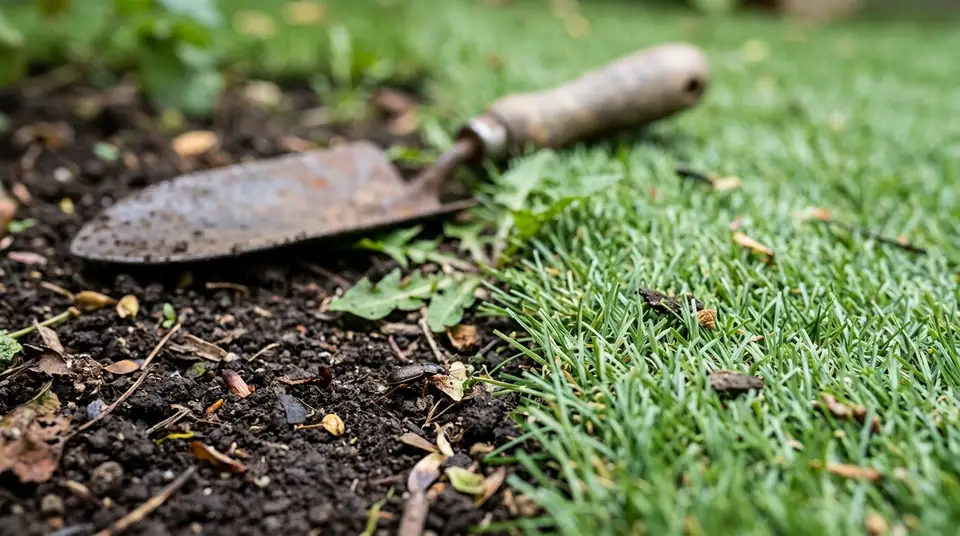
A garden trowel lying in soil beside fake grass and a small bug
When we blanket this ecosystem beneath 1.5 to 2 inches (3.8 to 5 cm) of woven polypropylene or polyethylene fibers backed by perforated polyurethane, we do not eradicate biology; we force it to adapt. Beneath the backing lies the native soil, which retains moisture and microbial life, albeit deprived of direct sunlight and fresh organic matter inputs.
Understanding how to maintain an outdoor space adjacent to synthetic installations requires looking at how traditional plants behave—especially when considering companion plantings. For instance, just as a vegetable gardener must understand the exact lifecycle requirements found in our How Long Does It Take for Tomatoes to Grow Tomato Growing and Harvesting Guide, landscape designers must recognize that artificial turf edges directly interface with living garden beds. Pests do not respect the boundary between plastic blades and natural soil; instead, they exploit the transitional zones where heat, moisture, and organic debris accumulate.
2. Essential Environmental & Care Requirements
To evaluate whether fake grass keeps bugs away, we must analyze the environmental parameters that dictate insect survival and proliferation under artificial turf systems. Insects require moisture, shelter, and a food source. Synthetic turf manages these elements in unique ways compared to living turfgrass, which you might otherwise spend hours trying to revive using tips from resources like How to Make Grass Green Fast.
Parameter
Optimal Condition
Common Mistake
Why It Matters
Infill Depth & Type
1.5 to 2.0 lbs of silica sand or zeolite per sq ft
Using organic infills in high-moisture zones
Organic infills decompose, attracting fungus gnats and flies
Drainage Sub-base
4 inches (10.2 cm) of compacted crushed aggregate
Relying on dense clay sub-bases without drainage
Standing water creates prime breeding grounds for mosquitoes
Surface Sanitation
Rinsing organic debris weekly
Allowing fallen leaves and pet waste to accumulate
Decaying matter provides the organic food source bugs need
Edge Sealing
Secured weed barrier and flush concrete borders
Leaving gaps at turf perimeters
Gaps allow crawling insects and rodents easy subterranean access
Temperature is another critical environmental factor. On a typical summer day with an ambient air temperature of 85°F (29.4°C), synthetic turf surfaces routinely reach temperatures between 130°F and 150°F (54.4°C to 65.5°C). While this heat repels many surface-dwelling insects during peak daylight hours, it drives subterranean pests—like earthworms and ants—deeper into the soil, or creates micro-climates beneath the turf backing where humidity remains trapped. For those who study soil biology, managing these subterranean populations contrasts sharply with regenerative practices like those detailed in our How to Keep Worms Alive Red Wriggler Earthworm Raising Guide, where earthworm populations are actively cultivated rather than suppressed.
Managing pest populations around and beneath synthetic turf requires a proactive maintenance protocol rather than passive reliance on the plastic surface. Follow this step-by-step installation and management sequence to minimize insect infestations:
Excavate and Clear Soil: Remove 3 to 4 inches (7.6 to 10.2 cm) of native topsoil containing decaying organic matter, roots, and existing insect nests.
Apply a Commercial-Grade Geotextile Barrier: Lay down a high-density, permeable weed and root barrier directly over the compacted sub-grade to prevent subterranean insects from burrowing upward through turf drainage holes.
Install Mineral Sub-Base: Lay a 3 to 4 inch (7.6 to 10.2 cm) layer of crushed angular aggregate (such as 3/8-inch minus decomposed granite) and compact it to 95% Proctor density, eliminating air pockets where moisture and pests accumulate.
Select Inorganic Infill: Utilize antimicrobial coated silica sand or zeolite infill instead of organic alternatives (like crushed walnut shells or cork) to deny insects a food source.
Establish a Weekly Sanitation Routine: Power-broom or leaf-blow organic debris (pollen, leaves, pet waste) off the turf surface weekly to prevent the accumulation of detritus that attracts ants, beetles, and roaches.
Apply Targeted Perimeter Treatments: Spray a residual botanical insecticide or diatomaceous earth barrier along the perimeter trenches every 60 to 90 days to intercept crawling invaders.
💡 Pro-Tip: When installing synthetic turf near garden beds, always install a metal or PVC edging that extends at least 2 inches (5 cm) above the turf line and 4 inches (10 cm) below ground. This physical barrier stops soil-dwelling pests like ants and grubs from migrating laterally between your living plants and your turf base.
4. Common Problems, Pests & Troubleshooting
Does fake grass keep bugs away entirely? No. While it eliminates lawn-specific pests that feed exclusively on living grass blades—such as chinch bugs, sod webworms, and white grubs—it invites a distinct suite of nuisance and structural insects.
The primary culprits found thriving on or beneath synthetic turf include:
Ants: Fire ants and pavement ants frequently build nests beneath the turf backing. The turf traps solar heat, creating a warm incubator. When you step on the turf, the ants bite through the perforated backing.
Mosquitoes: If the sub-base was improperly graded, microscopic puddles form beneath the carpet. Mosquitoes breed rapidly in these dark, humid subterranean pockets.
Clover Mites and Springtails: These tiny pests feed on microscopic algae and molds that grow on synthetic fibers shaded by nearby trees or outdoor furniture.
Rodents and Pests of Scale: Voles and mice often tunnel beneath synthetic turf because the plastic barrier protects them from aerial predators like hawks and owls. For homeowners dealing with larger mammalian intruders in adjacent zones, structural exclusion techniques similar to those outlined in How to Keep Rabbits Out of the Garden 5 Humane Solutions That Work are often necessary.
⚠️ Important Caution: Never use petroleum-based solvents or harsh chemical pesticides to flood synthetic turf in an attempt to kill subterranean nests. These chemicals can break down the polyurethane backing, void your manufacturer warranty, and leach toxic compounds into the local water table. Consult guidelines from the University of California Integrated Pest Management Program for safe, targeted invertebrate management strategies.
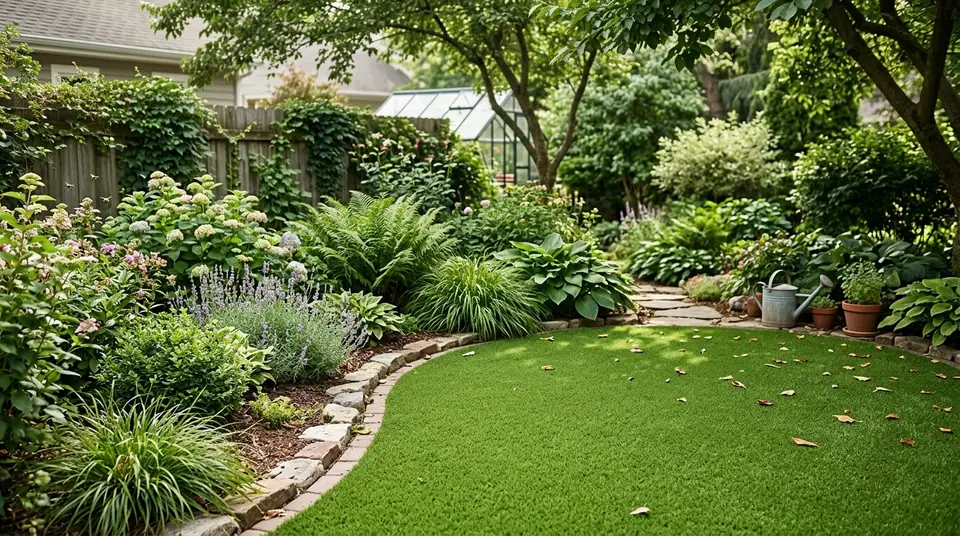
Lush artificial grass lawn bordered by stone edging and diverse garden plants
5. Frequently Asked Questions
Will fake grass attract bugs to my yard?
Synthetic turf does not inherently attract bugs from miles around, but it provides specific micro-climates that certain pests find exceptionally hospitable. While turfgrass herbivores decline due to the lack of living plant tissue, moisture-loving insects, ants, and spiders often move in if organic debris and dust accumulate on the surface. To learn more about how different growing mediums influence moisture and organism retention, review concepts similar to those in our guide on Does Basil Need Light to Germinate? Soil Depth & Sprouting Science.
How do I get rid of ants living under my artificial grass?
To eliminate ants nesting beneath synthetic turf, you must treat the perimeter and the specific colony access points rather than just spraying the plastic blades. Apply a professional-grade granular bait around the perimeter of the turf installation. Forager ants will carry the bait back to the subterranean queen. Additionally, flushing the turf with a mixture of water and insecticidal soap can penetrate the drainage holes to disrupt localized activity. For comprehensive regional insights on turf and landscape pest management, consult the Royal Horticultural Society.
Does pet waste on fake grass cause bug infestations?
Yes. Failing to immediately clean up and rinse pet urine and feces on artificial turf creates a breeding ground for flies, fungus gnats, and beetles. Organic waste breaks down into nitrogen-rich residue that clings to the plastic fibers and infill, providing an abundant food source for scavenging insects. Regular rinsing with an enzymatic cleaner is mandatory to neutralize these organic attractants.
Are mosquitoes able to breed in artificial turf?
Adult mosquitoes do not breed in the turf fibers themselves, but they will rest in the shaded, humid canopy of the turf during hot daytime hours. Furthermore, if your turf sub-base lacks proper drainage grading, pooling water beneath the backing creates an ideal, hidden breeding habitat for mosquito larvae. Ensuring proper sub-base compaction and slope during installation completely prevents this issue.
PlantSavvyWorld is an independent botanical education project. Articles are drafted with AI assistance, then edited and checked against university extension services, botanical garden collections and other published horticultural sources.