

How Do You Kill Wild Onions Without Killing Grass
Written with AI assistance, edited and checked against horticultural sources.
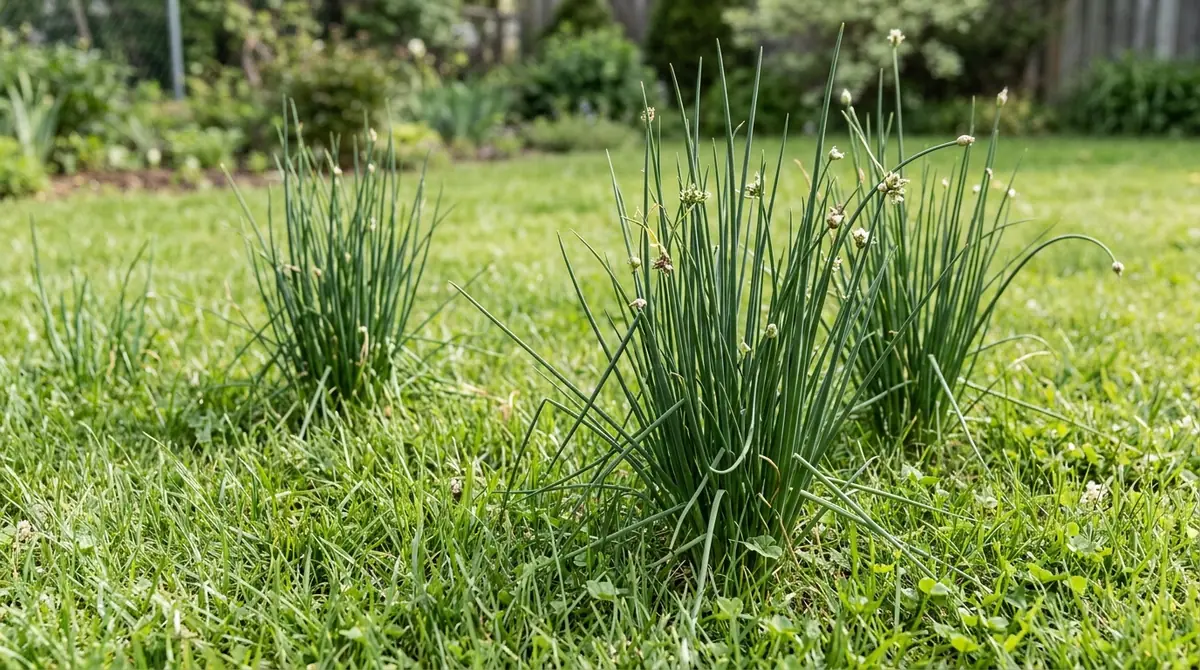
Stepping onto growers’ pristine Kentucky bluegrass lawn last spring, my boots crushed a cluster of emerald-green, hollow shoots, instantly releasing that unmistakable, sharp aroma of onion soup. They had tried everything—pulling them by hand, dumping boiling water over them, and even broadcasting a cheap weed-and-feed from the local hardware store—yet the wild onions kept returning thicker than before. Every time homeowners try to eradicate Allium canadense or Allium vineale without understanding their subterranean architecture, they inadvertently trigger the plant's survival mechanism: multiplying bulblets. Horticultural practice has spent decades analyzing turfgrass ecosystems and perennial weed dynamics. Today, we are going to look past the superficial folklore and apply precise, scientifically validated botany to clear your lawn of wild onions while keeping your turfgrass lush, green, and completely unharmed.
1. Botanical Overview & Natural Habitat

Understanding their subterranean machinery is non-negotiable. These plants do not rely solely on seeds; they reproduce via underground main bulbs and microscopic secondary structures called bulblets (or aerial bulbets in the case of wild garlic). These bulbs can lie dormant in the soil profile at depths ranging from 2 inches (5 cm) to 6 inches (15 cm) for up to 3 years. When you pull a wild onion by hand and snap the stem, the main bulb remains anchored 4 inches (10 cm) below the surface. Worse, mature bulbs often produce 3 to 6 offset bulblets around their base. Hand-pulling without a hori-hori knife or trowel leaves these offsets behind, turning one plant into a cluster of five next season.
In professional turf management, we evaluate soil compaction, moisture, and pH to understand why these Alliums choose specific yards. They thrive in poorly drained, compacted soils with a pH range between 6.0 and 7.0. If your lawn is struggling to make grass green fast, compacted earth combined with poor drainage creates an ideal sanctuary for wild onions to outcompete turf roots. For comprehensive botanical classification data and regional distribution maps, reference the USDA PLANTS Database.
2. Essential Environmental & Care Requirements
Controlling wild onions without harming your turfgrass requires exploiting the physiological differences between monocot weeds and turfgrass monocots. Both belong to the grass-like plant families, which makes broad-spectrum chemical selection tricky. However, their seasonal growth velocity differs dramatically. Wild onions experience peak nutrient uptake and carbohydrate translocation downward to their bulbs during late autumn (temperatures hovering between 50°F and 60°F / 10°C and 15°C) and early spring.
Turfgrasses have a waxy cuticle on their leaves that can shed generic sprays, while wild onions have a glossy, upright, waxy tubular leaf blade that liquid herbicides tend to slide right off of. To solve this, your environmental application parameters must be exact.
| Parameter | Optimal Condition | Common Mistake | Why It Matters |
|---|---|---|---|
| Application Air Temp | 60°F to 75°F (15°C to 24°C) | Spraying below 50°F (10°C) or above 85°F (29°C) | Low temps render systemic herbicides inactive; high temps volatilize chemicals and scorch turf. |
| Soil Moisture | Moderately moist (not saturated) | Applying during a severe drought | Drought-stressed onions close their stomata, preventing systemic chemical absorption. |
| Mowing Interval | 7 to 10 days post-application | Mowing immediately before or after spraying | Mowing removes the foliar surface area needed to absorb the systemic herbicide down to the bulb. |
| Surfactant Inclusion | Non-ionic agricultural surfactant added | Using plain herbicide in water | The waxy cuticle of wild onions causes standard sprays to bead up and roll off without sticking. |
Before launching any chemical campaign, it is wise to evaluate your soil's chemistry. You can check your substrate using simple home methods or follow a guide on how to test garden soil ph without a kit to ensure your lawn amendments are not unintentionally feeding your weed problem.
💡 Pro-Tip: Always add a non-ionic surfactant (sticker-spicker) at a rate of 1 to 2 teaspoons per gallon of herbicide mix. Wild onion leaves are remarkably slick; without a surfactant, up to 80% of your liquid herbicide will simply bead up like morning dew and roll off onto the soil, rendering your treatment completely ineffective.
3. Step-by-Step Cultivation, Feeding & Propagation
To permanently clear wild onions from your grass, you must combine chemical selectivity with cultural turf management. Spot-treating individual clumps with a selective post-emergent herbicide is the gold standard for residential lawns. Herbicides containing 2,4-D, dicamba, and MCPP (commonly found in commercial broadleaf weed killers) are safe for cool-season turfgrasses like Kentucky bluegrass, tall fescue, and perennial ryegrass, yet lethal to Alliums when applied correctly.
Follow this systematic 5-step protocol during the optimal treatment windows in mid-to-late autumn or early spring:
- Inspect and Map Your Infestation: Walk your property when temperatures range between 60°F and 75°F (15°C and 24°C). Mark heavy clusters of wild onion with flags so you do not waste product on uninfested turf.
- Withhold Mowing for 7 Days: Allow the wild onion leaves to reach a height of at least 4 to 6 inches (10 to 15 cm). This provides maximum leaf surface area for the herbicide to contact and absorb.
- Mix Your Selective Herbicide and Surfactant: In a pump sprayer, combine a selective liquid post-emergent herbicide (formulated with 2,4-D and dicamba) with water according to the label instructions. Add your non-ionic surfactant last and agitate gently.
- Apply Targeted Spot Treatments: Adjust your sprayer nozzle to a coarse, direct stream rather than a fine mist to prevent wind drift onto desirable ornamental plants. Lightly coat the wild onion foliage until wet, but stop before it begins dripping off the leaves.
- Wait 14 Days Before Mowing: Let the systemic herbicide translocate all the way down through the hollow stem into the mother bulb and offset bulblets. You will notice the leaves twisting, turning yellow, and collapsing within 7 to 14 days. After this window, resume your regular mowing schedule.
If you are expanding your homestead or landscape to include self-sustaining edible zones, you might also enjoy learning how to grow a wild food forest self sufficiency garden. Just keep your culinary herbs far away from turfgrass areas treated with synthetic selective herbicides!
⚠️ Important Caution: Never use non-selective herbicides like glyphosate (Roundup) for wild onion spot-treatment in a mixed lawn unless you are willing to kill the surrounding grass. Glyphosate is non-discriminatory and will leave dead brown patches in your turf that take weeks to patch and reseed.
4. Common Problems, Pests & Troubleshooting
Even with meticulous execution, you may run into roadblocks during your eradication campaign. Here is how to diagnose and solve them:
- Symptom: The onion leaves turn yellow and die, but new shoots emerge 30 days later.
- Cause: You killed the parent bulb, but dormant offset bulblets in the soil profile were triggered to sprout by the newly available soil space and sunlight.
- Solution: Execute a second round of spot treatments 4 to 6 weeks after the initial application to catch these secondary emergent bulblets.
- Symptom: The surrounding turfgrass turns yellow or shows distortion.
- Cause: Herbicide drift caused by high winds, or mixing the product at a rate higher than the manufacturer's maximum label recommendation.
- Solution: Only spray when wind speeds are below 5 mph (8 km/h). Always calibrate your sprayer and measure your concentrates with a dedicated measuring spoon, never by eye.
- Symptom: Wild onions persist year after year despite continuous spraying.
- Cause: Severe soil compaction or chronic over-watering. Wild onions love heavy, damp clay.
- Solution: Core aerate your lawn in autumn to break up subsurface compaction, and adjust your irrigation system to water deeply and infrequently rather than shallowly every day. For authoritative regional guidelines on turf weed management, consult the University of Illinois Extension Turfgrass Program.

5. Frequently Asked Questions
Will pulling wild onions by hand get rid of them permanently?
No. Hand-pulling almost always snaps the stem above the basal plate, leaving the primary bulb and tiny underground bulblets buried 2 to 4 inches (5 to 10 cm) deep in the soil. Within weeks, those left-behind bulblets will send up multiple new shoots, multiplying your infestation. If you insist on hand-pulling, you must use a hori-hori knife or weeding trowel to dig down at least 5 inches (12 cm) beneath the root zone to extract the entire bulb system intact.
When is the best time of year to spray wild onions?
The ideal times to apply a selective systemic herbicide are mid-to-late autumn (October through November) and early spring (March through April). During these cool windows, warm-season grasses are dormant or slow-growing, while wild onions are actively growing and aggressively translocating sugars and nutrients down into their bulbs. Spraying during these windows ensures the chemical is pulled directly into the bulb for total eradication.
Can I eat wild onions from a lawn treated with weed killer?
Absolutely not. Never consume wild onions, wild garlic, or any foraged greens from a lawn that has been treated with synthetic chemical herbicides (such as 2,4-D, dicamba, or MCPP). These systemic chemicals penetrate every cell of the plant, including the bulb. Ingesting chemically treated lawn weeds can cause severe toxicity and health issues. If you want to harvest and eat wild onions, forage them exclusively from untreated areas like woodlands, roadsides, or dedicated organic garden beds.
Why do wild onions keep coming back in the exact same spots?
Wild onions are indicator weeds. They thrive in damp, highly compacted soils with poor drainage where desirable turfgrass struggles to establish a thick canopy. Because your grass is thin in those specific spots, the wild onion seeds and bulblets face zero competition for sunlight and space. To stop the cycle permanently, you must kill the existing weeds with a selective herbicide, core-aerate the soil to relieve compaction, and overseed the bare patches with hardy turfgrass seed to choke out future invaders.
Related Guides
- 5 Ways to Harvest Dill Without Killing the Plant
- Does Fake Grass Keep Bugs Away
- How to Make Grass Green Fast
- How to Grow a Wild Food Forest Self Sufficiency Garden
- Wild Lettuce vs Dandelion Whats the Difference Between Dandelions and Wild Lettuce
📋 Table of Contents ▼ Click to expand
Tags:
Keep reading
🌿 Related Plants You Might Like






PlantSavvyWorld
Editorial team
PlantSavvyWorld is an independent botanical education project. Articles are drafted with AI assistance, then edited and checked against university extension services, botanical garden collections and other published horticultural sources.