

Wild Lettuce vs Dandelion Whats the Difference Between Dandelions and Wild Lettuce
Written with AI assistance, edited and checked against horticultural sources.
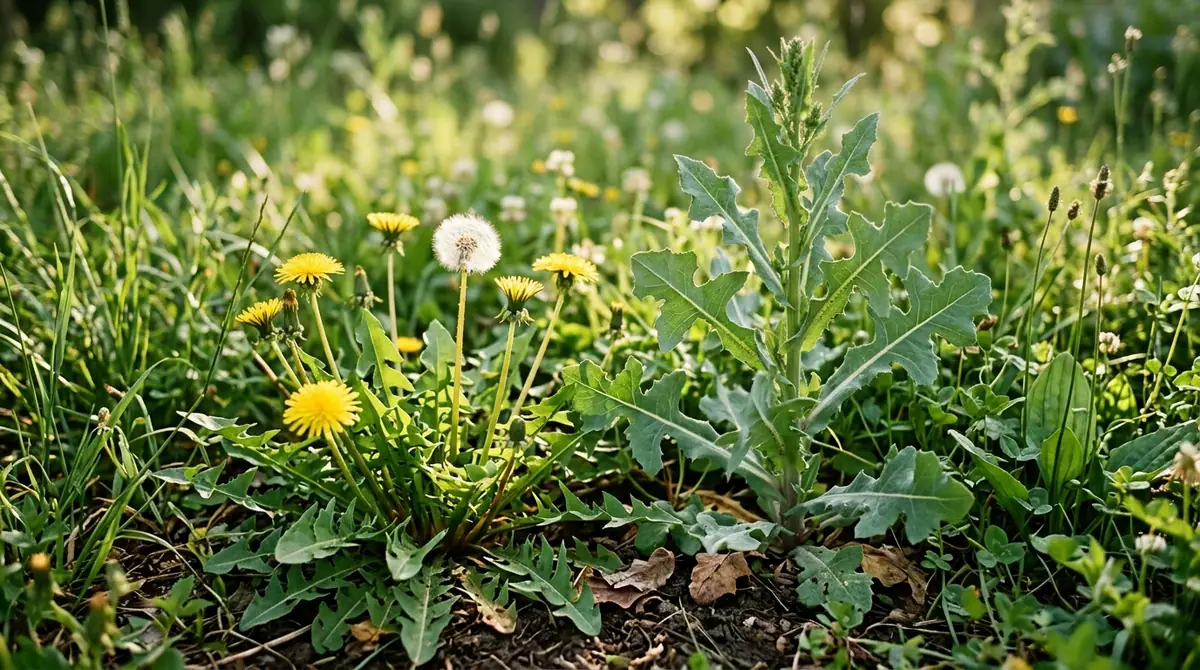
Gardeners frequently confuse the vitamin-rich dandelion (Taraxacum officinale) with the towering, latex-rich wild lettuce (Lactuca virosa), which stands ready to defend its territory with prickly, spine-lined midribs, even though both belong to the Asteraceae family. Their growth habits, internal chemistry, and landscape roles are completely distinct, requiring specific botanical markers, environmental needs, and practical protocols to tell them apart and manage them in your landscape.
1. Botanical Overview & Natural Habitat

Dandelions are classic acaulescent perennials. They form a basal rosette of leaves pressed tight to the soil surface, lacking a true aerial stem until they bolt to produce hollow flowering scapes. Their leaves are typically deeply lobed with downward-pointing segments, giving rise to the French name dent-de-lion (lion's tooth). Dandelions possess a thick, fleshy taproot that can plunge 10 to 12 inches (25 to 30 cm) or more into the soil, anchoring the plant and storing substantial carbohydrate reserves.
Wild lettuce (Lactuca species, most notably Lactuca serriola and Lactuca virosa) behaves differently. It is typically a biennial or annual weed that starts as a flat basal rosette in its first year, but quickly bolts in its second year to form a stiff, straight, upright flowering stem that can reach heights of 3 to 7 feet (90 to 210 cm). The undersides of wild lettuce leaves feature distinct prickles along the central midrib, a feature completely absent in dandelions. Furthermore, wild lettuce leaves often twist to orient themselves in a north-south plane, earning it the historical moniker "compass plant."
Natural habitats also reveal their preferences. Dandelions thrive in highly compacted, nutrient-rich turfgrass, lawns, and urban disturbed soils where pH levels range widely from 5.5 to 7.5. Wild lettuce prefers dry, disturbed ground, roadside ditches, railway ballast, and sandy or gravelly waste areas where soil is loose and nitrogen is moderate to low.
2. Essential Environmental & Care Requirements
Understanding the environmental triggers of these two species helps you either cultivate them for specific botanical collections or eradicate them from your formal garden beds.
Both plants demand high light levels. Dandelions and wild lettuce are obligate sun-lovers that perform poorly in shaded understories. They require full sun exposure, translating to a minimum of 6 to 8 hours of direct solar radiation daily. When it comes to thermal thresholds, dandelion seeds germinate rapidly when soil temperatures hit 50°F to 55°F (10°C to 13°C). Wild lettuce prefers slightly warmer germination beds, typically thriving when soil temperatures stabilize between 60°F and 68°F (15°C and 20°C).
Moisture tolerances separate their survival tactics during seasonal droughts. Dandelions possess high drought tolerance due to their deep taproot, but they will go semi-dormant and drop outer leaves during severe dry spells, greening up almost instantly after a soaking rain of 1 inch (2.5 cm). Wild lettuce is exceptionally xerophytic in its mature stage; its vertical stature and glaucous, waxy leaf coating minimize transpirational water loss, allowing it to withstand baking mid-summer heatwaves where temperatures exceed 90°F (32°C).
Soil compaction is another critical differentiator. Dandelions act as bio-indicators of compacted, low-calcium, high-potassium soils; their taproots physically fracture hardpan layers over time. Wild lettuce prefers looser, well-aerated substrates with excellent drainage, struggling rapidly in waterlogged soils where root rot pathogens take hold.
| Parameter | Optimal Condition | Common Mistake | Why It Matters |
|---|---|---|---|
| Soil Drainage | Fast-draining, loose loam | Planting in heavy, waterlogged clay | Both species rot in anaerobic, saturated root zones. |
| Light Exposure | Full sun (6–8+ hours daily) | Placing in partial shade or deep tree cover | Reduced light halts bolting and stunts overall vigor. |
| Soil pH Range | 6.0 to 7.0 for optimal uptake | Ignoring severe soil acidity below 5.0 | Extreme pH locks out essential micronutrients like calcium. |
| Root Zone Depth | 12 inches (30 cm) or greater | Shallow container gardening | Deep taproots require vertical soil volume to prevent stunting. |
💡 Pro-Tip: If you are trying to eradicate wild lettuce from a landscape bed, do not rely on surface hoeing alone. Because wild lettuce relies on a primary taproot that can regenerate from the crown if left even 1 inch (2.5 cm) below the soil line, you must use a hori-hori knife to sever the root at least 4 inches (10 cm) underground.
3. Step-by-Step Cultivation, Feeding & Propagation
Whether you are studying these plants for botanical illustration, herbalism, or weed management, controlling their propagation cycle is essential. Here is the exact field protocol for starting and managing wild lettuce and dandelions from seed.
- Seed Collection and Stratification: Harvest mature seed heads (achenes with their pappus parachutes) in dry mid-morning conditions once the pappus opens fully. Store seeds in paper envelopes at 40°F (4°C) for 14 days to break minor dormancy inhibitors, though fresh dandelion seeds often germinate immediately without chilling.
- Substrate Preparation: Fill plug trays or containers with a sterile, well-draining seed-starting mix composed of 60% peat, 30% perlite, and 10% vermiculite. Ensure the medium is moist but not saturated, maintaining an ambient room temperature of 65°F to 70°F (18°C to 21°C).
- Sowing Depth: Scatter seeds directly over the surface of the medium. Because both dandelion and wild lettuce seeds require light to germinate (photoblastic), press them gently into contact with the soil using your palm, but do not bury them deeper than 1/16 inch (1.5 mm).
- Moisture Management: Mist the surface daily using a fine-droplet spray bottle. Maintain high relative humidity (70-80%) by placing a clear plastic dome over the tray until germination occurs within 7 to 14 days.
- Transplanting Seedlings: Once seedlings develop their first true leaves (typically around day 21), transplant them individually into 4-inch (10 cm) pots filled with a standard potting mix blended with 20% coarse horticultural sand to replicate gritty field conditions.
- Hardening Off: Expose potted specimens to outdoor conditions gradually over 10 days, starting with 2 hours of morning sun and increasing outdoor exposure daily until they withstand full sun and ambient wind without wilting.
- Permanent Placement: Plant out into garden beds or designated plots, spacing dandelions 8 inches (20 cm) apart and wild lettuce at least 18 to 24 inches (45 to 60 cm) apart to accommodate their massive vertical flowering stalks.
For further reading on managing similar wild species and weeds in agricultural and urban settings, consult the comprehensive guides provided by the University of California Agriculture and Natural Resources database.
4. Common Problems, Pests & Troubleshooting
Even resilient weeds like dandelions and wild lettuce face environmental and biological pressures in cultivated landscapes. Recognizing these issues saves you time and prevents misdiagnoses.
Fungal pathogens present the most frequent challenge. Powdery mildew (Erysiphe spp.) frequently coats the broad leaves of both plants during late summer when relative humidity spikes and nights cool down. You will notice a white, talcum-powder-like residue on the upper leaf surfaces. Combat this by increasing plant spacing to improve air circulation and applying a preventive spray of potassium bicarbonate.
Root rot (Pythium and Phytophthora species) strikes when soils remain waterlogged for more than 48 consecutive hours. The leaves will suddenly wilt, turn yellow, and pull away easily from the crown, revealing a brown, mushy, decayed taproot. Prevent this by amending heavy soils with compost and coarse sand to boost drainage rates.
Insect pests are rarely fatal to these tough plants, but aphids (Aphidoidea) frequently colonize the tender, succulent new growth at the tips of bolting stems. A sharp blast of water from a hose nozzle in the early morning is usually sufficient to knock populations back. For severe infestations, apply organic insecticidal soaps formulated with potassium salts of fatty acids, ensuring complete coverage of the undersides of the leaves where aphids congregate.
⚠️ Important Caution: Wild lettuce (Lactuca virosa) contains high concentrations of bitter sesquiterpene lactones (lactucarium) in its milky latex sap. Consuming large quantities or handling the sap carelessly can cause contact dermatitis in sensitive individuals, gastrointestinal distress, or more severe physiological reactions. Always wear nitrile gloves when handling mature wild lettuce plants.

5. Frequently Asked Questions
How can I tell wild lettuce from a dandelion when they are both small rosettes?
In the early rosette stage, check the texture and undersides of the leaves. Dandelion leaves are smooth-surfaced and lack any prickles, whereas wild lettuce leaves feature tiny, bristly prickles running along the underside of the central midrib. Additionally, wild lettuce leaves often display a slightly bluish-green or glaucous tint, while dandelions are a brighter, glossier green.
Are dandelions and wild lettuce edible?
Yes, both plants are edible, but with distinct caveats. Dandelion greens, roots, and flowers are entirely safe and commonly used in salads, teas, and wines, best harvested before the plant bolts and turns bitter. Wild lettuce is edible when very young and tender, but as it matures and produces its milky latex sap, it becomes intensely bitter and potentially toxic in large amounts due to its medicinal compounds.
Do wild lettuce plants grow as tall as dandelions?
No, their growth habits are drastically different. Dandelions remain low to the ground as flat rosettes, only sending up hollow flower scapes that reach heights of 6 to 18 inches (15 to 45 cm). Wild lettuce, by contrast, bolts dramatically in its second year into a robust, branching stalk that frequently towers between 3 and 7 feet (90 to 210 cm) tall.
How do I permanently get rid of wild lettuce in my garden?
The most effective method is physical removal before the plant sets seed. Use a weeding tool or hori-hori knife to cut the taproot at least 4 inches (10 cm) below the soil surface, as leaving the crown intact will allow the plant to resprout. For persistent infestations, municipal weed management strategies outlined by the Royal Horticultural Society recommend persistent hand-pulling combined with applying a thick 3-inch (7.5 cm) layer of organic mulch to block light and suppress new seed germination.
Related Guides
- How Do You Kill Wild Onions Without Killing Grass
- How to Grow a Wild Food Forest Self Sufficiency Garden
- Grow Hibiscus from Seed
📋 Table of Contents ▼ Click to expand
Tags:
Keep reading
🌿 Related Plants You Might Like



PlantSavvyWorld
Editorial team
PlantSavvyWorld is an independent botanical education project. Articles are drafted with AI assistance, then edited and checked against university extension services, botanical garden collections and other published horticultural sources.