

Grow Hibiscus from Seed
Written with AI assistance, edited and checked against horticultural sources.
1. Botanical Overview & Natural Habitat

Understanding how to grow hibiscus from seed requires looking closely at native ecosystems. Tropical species like Hibiscus rosa-sinensis evolved under high humidity, dappled rainforest understories, and consistently warm temperatures. Hardy perennial species, such as Hibiscus moscheutos (swamp rose mallow) and Hibiscus coccineus (scarlet rosemallow), adapted to wetland edges, riverbanks, and coastal marshes in North America. These hardy varieties experience freezing winters, which naturally stratifies their seed coats in the wild.
When you harvest a hibiscus seed pod (capsule), you will find it splits into five sections, releasing kidney-shaped, pubescent or smooth seeds. In natural settings, these seeds drop into damp, organic-rich soil, enduring fluctuating moisture and warm spring soils to break dormancy. If you are integrating these plants into a broader perennial food forest design alongside companion crops—much like the layout strategies outlined in our guide on How to Grow a Wild Food Forest Self Sufficiency Garden—understanding their natural habitat helps you mimic those exact microclimates in your containers or garden beds. Similarly, managing soil moisture and fertility for heavy-feeding ornamentals shares many cultural parallels with intensive production systems like the Mittleider Gardening Method More Food from your Garden.
2. Essential Environmental & Care Requirements
Hibiscus plants are unapologetic sun worshippers and heavy drinkers. To successfully transition seedlings into vigorous adult specimens, you must replicate their optimal environmental parameters.
Light intensity directly dictates structural integrity and bud formation. Tropical and hardy hibiscus alike require a minimum of 6 to 8 hours of direct sunlight daily. In indoor seed-starting setups, position your flats under high-output LED grow lights for 14 to 16 hours a day, keeping fixtures 3 to 4 inches (7.6 to 10 cm) above the foliage to prevent stretching.
Temperature is the ultimate trigger for germination and metabolic acceleration. Germination soil temperatures must remain between 75°F and 85°F (24°C to 29°C). Use a thermostatically controlled heating mat. Once true leaves emerge, ambient daytime temperatures should sit comfortably between 70°F and 85°F (21°C to 29°C), with nighttime lows no lower than 60°F (15°C) for tropical cultivars.
Moisture management is a delicate balancing act. Seeds and young seedlings require consistently moist, never waterlogged, growing media. Use a sterile, peat-perlite germination mix that drains freely while retaining adequate moisture around the root zone.
| Parameter | Optimal Condition | Common Mistake | Why It Matters |
|---|---|---|---|
| Soil Temperature | 75°F – 85°F (24°C – 29°C) | Letting media drop below 70°F (21°C) | Cold media induces seed rot and prevents enzymatic activation for germination. |
| Light Exposure | 6–8 hours direct sun / 16 hrs LED | Placing seedlings in dim window sills | Low light causes leggy, weak stems that collapse under their own weight. |
| Media pH | 6.0 – 6.5 (Slightly Acidic) | Using alkaline garden soil (pH > 7.0) | High pH locks out essential micronutrients like iron and manganese, causing chlorosis. |
| Water Quality | Low-mineral, room temperature | Using ice-cold or heavily chlorinated tap water | Thermal shock halts root cell division and mineral salts build up in container media. |
3. Step-by-Step Cultivation, Feeding & Propagation
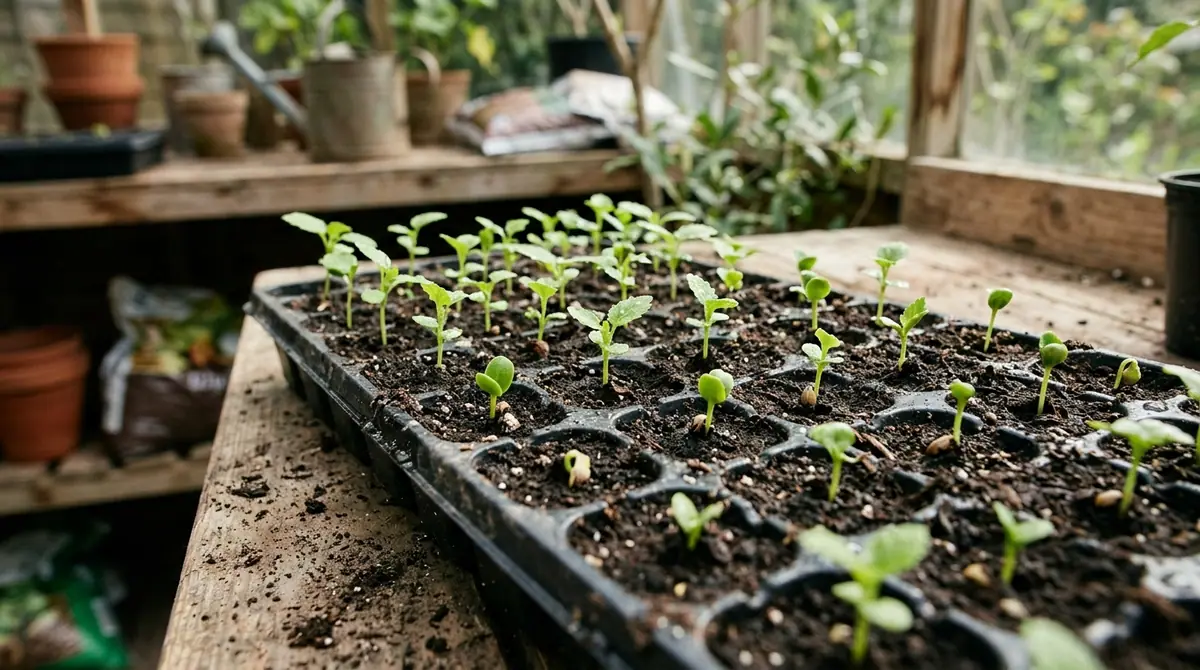
Growing hibiscus from seed requires precision. Follow this sequential protocol to maximize your germination rates and establish healthy root systems.
- Seed Scarification: Hibiscus seeds possess a hard, impermeable seed coat (testa). Gently nick the seed coat using a sharp hobby knife or rub the seed gently between two pieces of medium-grit sandpaper just until the lighter-colored inner tissue becomes visible. Do not pierce the embryo.
- Imbibition (Pre-Soaking): Submerge the scarified seeds in lukewarm water (around 80°F / 26°C) for 12 to 24 hours. Discard any seeds that continue floating after 24 hours, as they are typically non-viable or hollow.
- Media Preparation & Sowing: Fill plug trays or small 2-inch (5 cm) pots with a sterile, fine-textured seed-starting mix. Press each seed into the media at a depth of 1/4 inch (0.6 cm). Firm the soil gently to ensure good seed-to-soil contact.
- Moisture & Heat Management: Water the trays thoroughly with a fine mist. Cover the containers with a clear plastic dome or humidity bag to trap vapor. Place the setup on a propagation heating mat set to 80°F (26°C).
- Germination Window: Monitor daily. Germination typically occurs within 7 to 21 days. The moment the first green cotyledons break the soil surface, remove the plastic dome immediately and transition the tray under grow lights or into bright, indirect sunlight.
- First Transplanting: Once the seedlings develop two sets of true leaves (usually 4 to 6 weeks post-germination), gently step them up into individual 4-inch (10 cm) pots filled with a nutrient-rich, well-draining potting mix containing compost and perlite.
- Fertilization Regimen: Begin a light feeding schedule two weeks after transplanting. Use a balanced, water-soluble fertilizer formulated for acid-loving plants, diluted to one-quarter strength (e.g., 20-20-20 with trace minerals), applied every two weeks. As plants mature into the growing season, transition to a bloom-booster formula higher in phosphorus and potassium.
💡 Pro-Tip: When transplanting your young hibiscus seedlings into larger containers or outdoor beds, dust the root balls lightly with mycorrhizal fungi inoculant. This establishes an immediate symbiotic relationship, dramatically increasing the surface area of the root system and accelerating phosphorus uptake during that critical establishment phase.
4. Common Problems, Pests & Troubleshooting
Even with meticulous care, indoor seed-starting and early plant development present hurdles. Here is how to diagnose and correct them.
- Damping-Off Disease: Caused by soil-borne fungi (Pythium or Rhizoctonia), seedlings suddenly pinch at the base and fall over. Prevent this by using sterile media, sterilizing reused trays with a 10% bleach solution, and ensuring adequate air circulation using a small oscillating fan.
- Yellowing Leaves (Chlorosis): If lower leaves turn yellow while veins remain green, your container's pH has likely drifted too high, or you are overwatering. Allow the top 1 inch (2.5 cm) of soil to dry out between waterings and check your irrigation water pH. For authoritative guidance on diagnosing plant nutrient deficiencies and disease vectors, consult resources like the Royal Horticultural Society (RHS).
- Aphids and Whiteflies: Tender young hibiscus foliage is a magnet for sap-sucking insects. Inspect the undersides of leaves weekly. Treat minor outbreaks immediately with insecticidal soap or neem oil spray, ensuring thorough coverage of all leaf surfaces.
- Bud Drop (Flower Abscission): If mature plants drop their flower buds before they open, it is typically caused by sudden environmental shifts—such as erratic watering schedules, drastic temperature drops, or insufficient light intensity. Maintain consistent environmental parameters to keep the plant stable.
⚠️ Important Caution: Never use systemic neo-nicotinoid insecticides on hibiscus plants, especially if you plan to move them outdoors. These chemicals persist in the nectar and pollen, posing a lethal hazard to visiting pollinators, beneficial hummingbirds, and native bees.

5. Frequently Asked Questions
How long does it take for hibiscus seeds to sprout?
Hibiscus seeds typically germinate within 7 to 21 days when kept at an optimal soil temperature of 75°F to 85°F (24°C to 29°C) and provided with consistent moisture and pre-treatment scarification.
Do I need to soak hibiscus seeds before planting?
Yes. Soaking scarified hibiscus seeds in lukewarm water for 12 to 24 hours softens the hard outer seed coat and accelerates water imbibition, triggering the internal enzymatic processes necessary for rapid germination.
Can you grow tropical hibiscus from collected seeds?
Yes, you can collect and grow tropical hibiscus from seeds, but keep in mind that hybrid cultivars do not "come true" from seed. The resulting offspring will display a wide genetic variation in flower color, growth habit, and petal count compared to the parent plant.
What is the best soil mix for starting hibiscus seeds?
The ideal germination mix is a sterile, fine-textured blend of peat moss, coco coir, and perlite. This provides maximum aeration, prevents compaction, retains adequate moisture, and minimizes the risk of fungal pathogens like damping-off. For comprehensive local climate adaptability trials and regional planting calendars, check the USDA Plant Hardiness Zone Map.
Related Guides
📋 Table of Contents ▼ Click to expand
Tags:
Keep reading
🌿 Related Plants You Might Like

PlantSavvyWorld
Editorial team
PlantSavvyWorld is an independent botanical education project. Articles are drafted with AI assistance, then edited and checked against university extension services, botanical garden collections and other published horticultural sources.