

Mittleider Gardening Method More Food from your Garden
Written with AI assistance, edited and checked against horticultural sources.
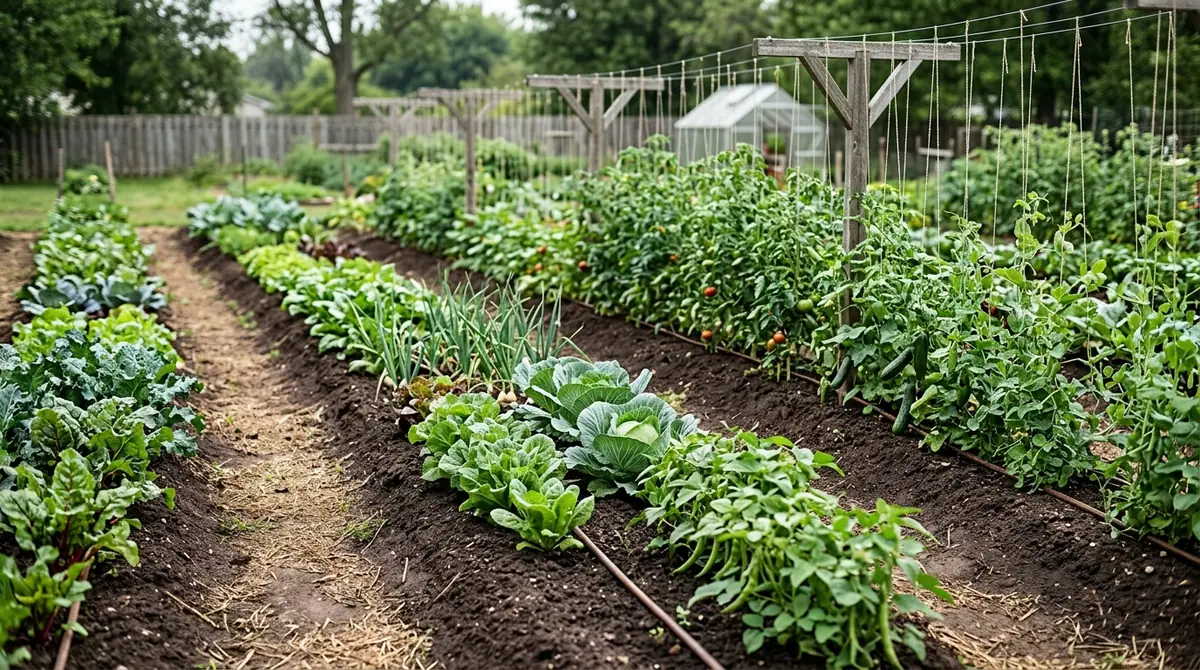
Back in the spring of 2014, I stood in a community garden plot in zone 6b staring at a wall of stunted, yellowing heirloom tomatoes that I had pampered with every organic compost trick in my botanical arsenal. A veteran grower walked up, poked the clay-heavy soil with a calloused thumb, and muttered, "You're feeding the dirt, not the plant." That afternoon, he introduced me to Dr. Jacob R. Mittleider’s methodology. By restructuring how I spaced my plants, erected vertical supports, and applied a mathematically precise blend of macro and micronutrients directly to barren sawdust-and-sand troughs, my harvest tripled within a single season.

1. Botanical Overview & Natural Habitat
The Mittleider Gardening Method is not a plant species, but rather a high-intensity, soil-less (or modified soil) horticultural system developed by Dr. Jacob R. Mittleider over a span of 50 years. Botanically speaking, plants grown under this system operate under optimized physiological conditions. By removing the traditional constraints of native soil limitations—such as erratic nutrient availability, poor drainage, and soil-borne pathogens—veget crops achieve their maximum photosynthetic and uptake potentials.
In nature, plants in wild habitats must compete fiercely for root space, water, and minerals. Root systems stretch laterally and deeply, sometimes up to 72 inches (182 cm) or more, purely to scavenge for scarce nitrogen, phosphorus, and potassium. The Mittleider method mimics an ideal, stress-free micro-habitat by concentrating fertility and moisture precisely in the root zone.
Whether utilizing "Soil-Bed" gardening (modifying existing earth with customized amendments) or "Sawdust-Bed" gardening (growing in inert sawdust, sand, or perlite troughs), the botanical focus is absolute efficiency. Plants are spaced tightly in narrow rows—often as close as 6 inches (15 cm) to 12 inches (30 cm) apart depending on the cultivar—forcing them to grow vertically. This intensive spacing creates a closed canopy that shades out weed competition while maximizing light interception for every leaf blade.
Because root systems do not need to forage across vast expanses of earth, energy is redirected entirely into vegetative growth, flowering, and heavy fruit production. It is an ideal framework if you want to apply high-density techniques similar to those used when learning How to Grow Strawberries Indoors: From Fruit Seeds to Sweet Berries, where root confinement demands absolute precision in feeding.
2. Essential Environmental & Care Requirements
To execute the Mittleider method successfully, you must manage environmental parameters with laboratory-like precision. Because plants are grown at high densities, minor environmental deficits quickly cascade into major crop failures.
| Parameter | Optimal Condition | Common Mistake | Why It Matters |
|---|---|---|---|
| Sunlight | Full sun: 8 to 10 hours daily | Shading beds with nearby structures or trees | Insufficient light halts photosynthesis, dropping fruit yields by up to 50%. |
| Watering | Drip irrigation delivering 1 to 2 inches (2.5 to 5 cm) daily based on heat | Overhead hand-watering that wets foliage | Wet leaves promote fungal spores like powdery mildew and blight. |
| Soil/Medium pH | 6.0 to 6.5 for soil beds; inert for sawdust | Allowing pH to drop below 5.5 or rise above 7.5 | Extreme pH locks out essential micronutrients like iron and calcium. |
| Temperature | 65°F to 85°F (18°C to 29°C) daytime | Exposing cool-season crops to sustained >90°F (32°C) heat | High heat causes blossom drop and forces plants into premature bolting. |
Water delivery is the literal lifeblood of this system. In Mittleider sawdust beds, the medium holds virtually no native nutrients and very little moisture, acting merely as a physical anchor. Therefore, automated drip irrigation systems must pulse water frequently—sometimes 3 to 5 times daily during peak summer temperatures exceeding 90°F (32°C)—to keep the root zone consistently moist without causing waterlogging.
💡 Pro-Tip: When constructing Mittleider sawdust troughs, always line the bottom of your wooden frames with heavy-duty polyethylene sheeting if your native soil is highly alkaline or rocky. This completely isolates your inert medium, giving you 100% control over the root-zone chemistry and preventing native weed seeds from migrating upward.
Air circulation is equally vital. Because plants are spaced closely in narrow rows, relative humidity within the canopy can skyrocket, inviting fungal pathogens. Ensure your garden site receives steady, gentle breezes, and never crowd vine crops without an aggressive vertical staking plan. For deep dives into regional climate adaptations, consult resources provided by the University of Florida IFAS Extension for managing high-intensity garden systems in humid climates.
3. Step-by-Step Cultivation, Feeding & Propagation
The hallmark of the Mittleider method is the Weekly Feed (and Pre-Plant Mix), a balanced formulation of macro and micronutrients applied regularly rather than dumping massive amounts of fertilizer into the earth all at once.
- Construct the Beds: Build wooden frames measuring 18 inches (46 cm) wide and 6 to 8 inches (15 to 20 cm) deep. Space the walkways between beds at least 24 inches (61 cm) wide to allow comfortable crouching and harvesting access.
- Fill the Troughs: Fill the frames with a sterile, inert medium. Pure sawdust (softwood or hardwood, aged for at least 3 to 6 months), clean builder's sand, or a 50/50 mix of perlite and peat moss work exceptionally well.
- Apply the Pre-Plant Mix: Distribute the Mittleider Pre-Plant formula uniformly across the bed surface. For a 100-foot (30.5 m) bed, this typically includes 4 lbs (1.8 kg) of Dolomitic limestone (to supply calcium and magnesium and buffer pH) and 1 lb (0.45 kg) of a complete N-P-K fertilizer containing trace elements. Rake this into the top 2 inches (5 cm) of the medium.
- Sow or Transplant: Plant seeds or transplants in twin rows running down the length of the bed, spacing them 4 to 12 inches (10 to 30 cm) apart depending on the mature plant size. For example, bush beans can sit 4 inches (10 cm) apart, while indeterminate tomatoes require 12 inches (30 cm).
- Erect Vertical Supports: Drive wooden stakes every 10 feet (3 m) along the outside of the beds and run heavy-gauge galvanized wire or string at 12-inch (30 cm) vertical intervals to support vining crops like tomatoes, cucumbers, and pole beans.
- Initiate the Weekly Feed: Beginning two weeks after germination or transplanting, apply the Mittleider Weekly Feed formula directly to the surface of the beds just before irrigation. Apply 1 oz (28 grams) of dry fertilizer per linear foot (30 cm) of crop per week, increasing to 2 oz (56 grams) as plants reach peak heavy-fruiting stages.
- Maintain Daily Irrigation: Run your drip lines immediately after applying the weekly fertilizer dry salts to dissolve them down into the root zone, ensuring soil electrical conductivity (EC) remains stable.
⚠️ Important Caution: Never dump dry Mittleider weekly fertilizer directly against plant stems or leaves. The high concentration of mineral salts will cause immediate chemical burn, desiccating plant tissue within 24 hours. Always distribute the mix evenly down the center of the twin rows, at least 3 inches (7.5 cm) away from any stem.
4. Common Problems, Pests & Troubleshooting
Even in a controlled system like Mittleider's, biological and environmental hiccups occur. Quick diagnosis is your best defense.
- Blossom-End Rot on Tomatoes and Peppers: Dark, sunken leathery patches appear on the distal end of developing fruit. This is caused by an erratic calcium uptake, usually triggered by uneven watering cycles rather than a total lack of calcium in the medium. Correction: Standardize your irrigation timers immediately and ensure your pre-plant dolomitic limestone was thoroughly mixed into the root zone.
- Interveinal Chlorosis (Yellowing Between Leaf Veins): Older leaves turn pale yellow while veins remain dark green. This points to a magnesium deficiency or a locked-out pH environment. Correction: Test your medium pH. If it exceeds 7.0, apply an iron chelate foliar spray and adjust your water acidity to bring the root zone back to a 6.0–6.5 range.
- Aphid Infestations on Tender New Growth: Dense clusters of green or black sap-sucking insects crowd terminal buds. High nitrogen levels, if over-applied, can make plant sap extra sweet and attractive to pests. Correction: Blast colonies off with a sharp stream of water, release beneficial lady beetles (Coccinellidae), and review your weekly feed ratios to ensure you aren't over-supplying nitrogen relative to potassium.

5. Frequently Asked Questions
Can I use regular store-bought potting soil instead of sawdust for Mittleider beds?
Yes, you can use native soil or potting mixes, which falls under the Mittleider Soil-Bed technique. However, you must still apply the exact pre-plant and weekly fertilizer regimens. Inert sawdust beds are preferred if your native soil is heavily infested with nematodes, fungal pathogens, or has stubborn clay compaction issues.
How often do I actually need to water a sawdust bed during the summer?
In peak summer temperatures exceeding 85°F (29°C), sawdust beds dry out rapidly because sawdust holds very little moisture. You will typically need to run your drip irrigation system 2 to 4 times a day for short 10-to-15-minute bursts to keep the root zone evenly moist without washing away water-soluble nutrients.
Is the Mittleider method considered organic gardening?
No. The Mittleider method relies heavily on refined, inorganic chemical fertilizers (mineral salts) to feed plants directly and precisely. While you can adapt the physical spacing, vertical training, and watering protocols to organic inputs, the classic Mittleider nutritional program is synthetic, engineered to bypass the slow breakdown process of organic soil microbiology.
Why do I have to use twin rows instead of a wide block planting?
Twin rows spaced 12 inches (30 cm) apart inside an 18-inch (46 cm) wide bed allow maximum sunlight penetration and airflow while making every single plant easily accessible for pruning, tying, and harvesting from the outer walkways. Wide block plantings trap humidity in the center, dramatically increasing the risk of fungal diseases like grey mold (Botrytis cinerea).
Related Guides
- How to Grow a Wild Food Forest Self Sufficiency Garden
- No Till Gardening Method Step By Step Guide
- Can Cherries Grow in Texas
📋 Table of Contents ▼ Click to expand
Tags:
Keep reading
🌿 Related Plants You Might Like





PlantSavvyWorld
Editorial team
PlantSavvyWorld is an independent botanical education project. Articles are drafted with AI assistance, then edited and checked against university extension services, botanical garden collections and other published horticultural sources.