

Will a Cherry Tree Grow in Texas
Written with AI assistance, edited and checked against horticultural sources.
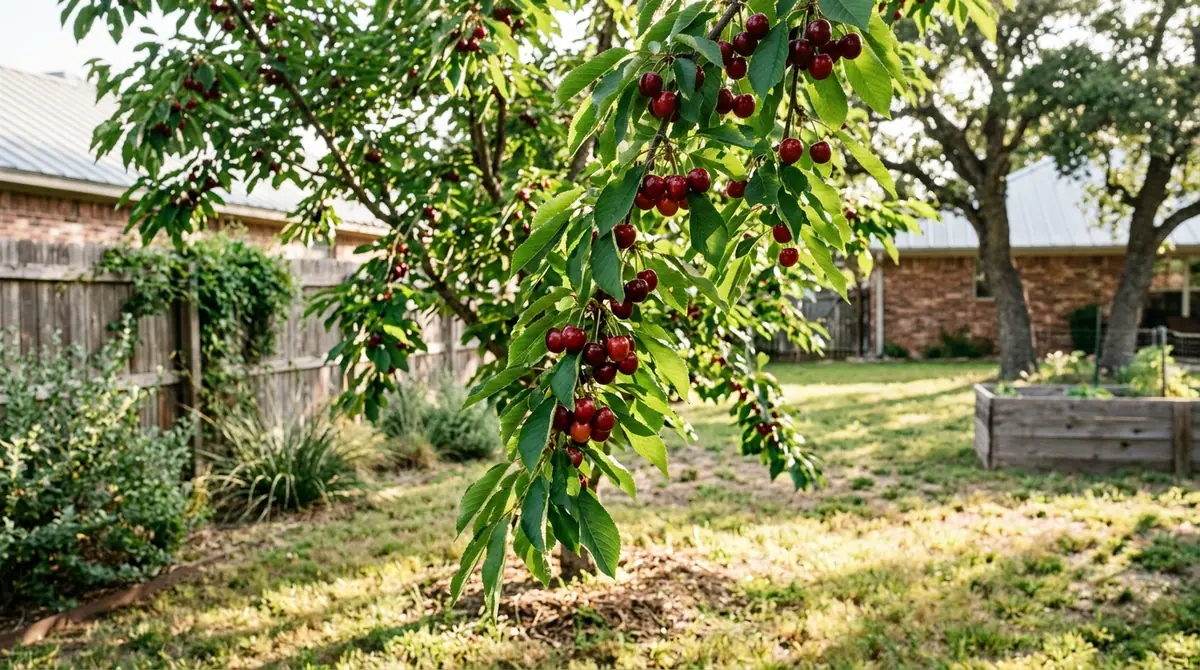
I stood sweating in a sprawling Hill Country orchard outside of Fredericksburg in late July, staring helplessly at a 'Royal Lee' cherry tree that had dropped half its foliage during a blistering 103°F (39.4°C) afternoon. The owner, a frustrated hobbyist who had meticulously followed northern planting guides, wanted to know why his expensive investment was failing. The answer was simple, botanical, and uniquely Texan: he had ignored chill hours and planted a cultivar bred for Michigan winters rather than the capricious, fluctuating seasons of the Lone Star State.
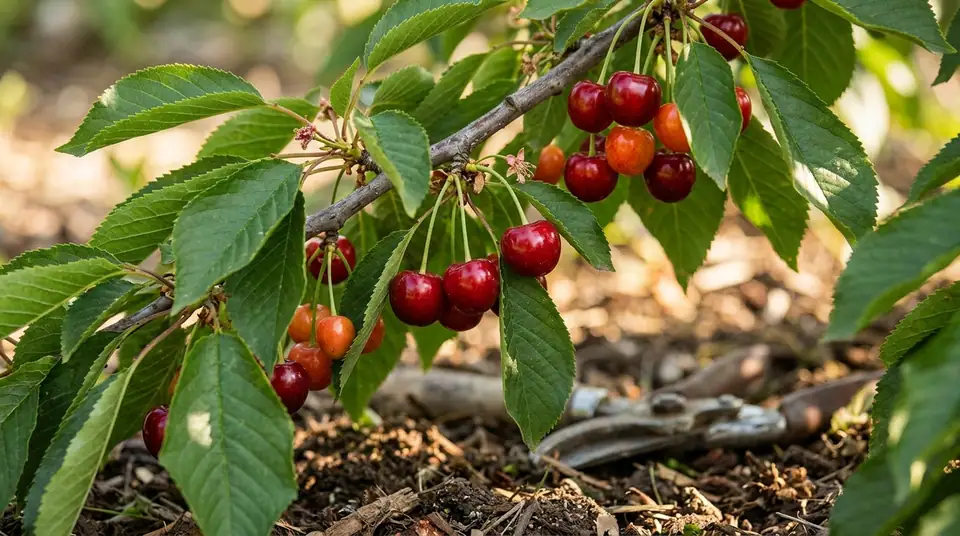
Whether you are designing a productive backyard edible landscape or integrating fruit trees into a broader food production system—much like what I outline in my guide on How to Grow a Wild Food Forest Self Sufficiency Garden—getting the foundations right is essential. Let’s dive into the botany, care requirements, and step-by-step protocols for cultivating healthy, fruit-bearing cherry trees across Texas soil.
1. Botanical Overview & Natural Habitat
Cherry trees belong to the genus Prunus within the family Rosaceae, grouping them botanically with peaches, plums, and almonds. In their natural temperate habitats across Europe and Asia, these deciduous trees experience distinct, freezing winters and mild, dry summers. This evolutionary history dictates their primary physiological requirement: a genetically mandated accumulation of winter chill hours, defined as total cumulative hours between 32°F and 45°F (0°C to 7.2°C).
When planted in Texas, cherry trees face a vastly different climate profile. The state's notorious summer heat spikes routinely push past 95°F (35°C), while winters fluctuate wildly from 70°F (21.1°C) January afternoons to sudden arctic blasts dropping temperatures below 15°F (-9.4°C) within a matter of hours. Sweet cherries, which traditionally demand 700 to 1,000+ chill hours, fail in most of Texas because they never reset their internal dormancy clocks.
However, botanical breeding breakthroughs have changed the landscape. Low-chill cultivars developed by programs like the University of Florida have lowered chilling requirements to a manageable 200 to 400 hours. This adaptation allows select varieties to thrive across Central, East, and North Texas.
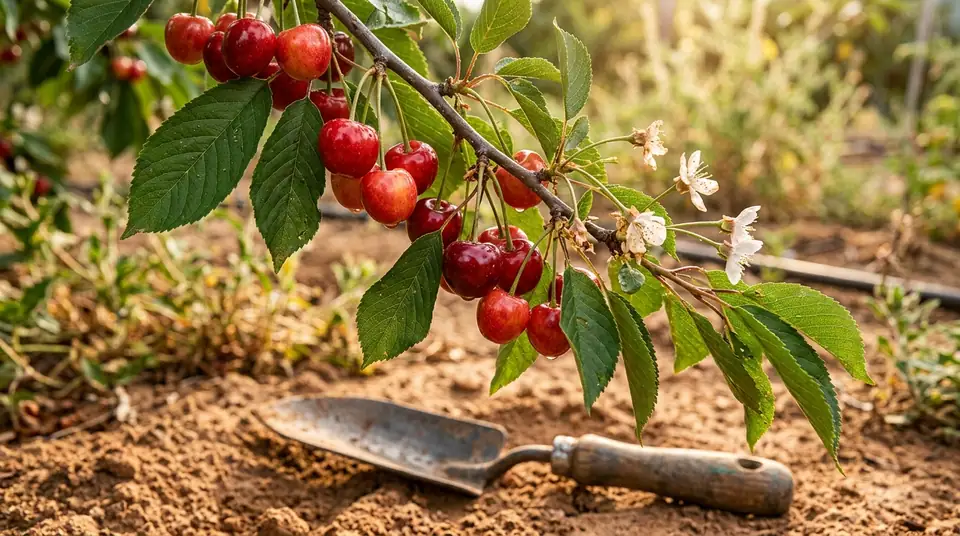
Beyond fruit production, understanding cherry tree morphology is vital for landscape design. The root system is predominantly shallow and spreading, occupying the top 18 to 24 inches (45 to 60 cm) of soil, making them acutely sensitive to both prolonged drought and waterlogged conditions. The bark features prominent horizontal lenticels for gas exchange, which can become entry points for bacterial pathogens if damaged by heavy Texas string trimmers or localized hail.
2. Essential Environmental & Care Requirements
Growing cherries successfully in Texas is an exercise in environmental management. You must meticulously balance sunlight, soil drainage, and irrigation to mimic optimal growing conditions within a challenging climate.
| Parameter | Optimal Condition | Common Mistake | Why It Matters |
|---|---|---|---|
| Soil pH | 6.0 to 7.0 (slightly acidic to neutral) | Planting in highly alkaline Texas blackland clay (pH > 7.8) | High alkalinity locks out iron and manganese, causing severe chlorosis and leaf drop. |
| Drainage | Loamy, well-draining soil with organic matter | Planting in heavy, compacted clay that holds water | Poor drainage rapidly induces Phytophthora root rot, killing the tree within weeks. |
| Sunlight | Full sun (8 to 10 hours daily) | Shading by large architectural elements or dense canopies | Insufficient light reduces photosynthetic yield, lowers fruit sugar content, and invites fungal diseases. |
| Irrigation | 1 to 1.5 inches (2.5 to 3.8 cm) of water weekly via drip lines | Frequent, shallow surface watering | Shallow watering encourages surface root growth, making the tree vulnerable to summer drought stress. |
| Chill Hours | Cultivar-matched (e.g., 300 hours for South/Central, 600+ for Panhandle) | Planting high-chill varieties in low-chill zones | Without adequate chill hours, the tree fails to bloom, set fruit, or break dormancy evenly. |
Soil composition requires immediate attention if you live in regions dominated by heavy clay. Amending the planting hole alone is a frequent error; instead, you must amend a broad, 6-foot (1.8 m) diameter area or build raised berms 12 to 18 inches (30 to 45 cm) high to guarantee aeration.
💡 Pro-Tip: If your Texas property features heavy, alkaline caliche or clay soil, skip traditional sweet cherries entirely and plant 'Montmorency' tart cherries grafted onto 'Mahaleb' or 'Krymsk 5' rootstocks. These specific rootstocks exhibit superior tolerance to lime-induced chlorosis and handle fluctuating soil moisture far better than standard sweet cherry rootstocks.
To accurately track your local winter temperatures and verify your microclimate's accumulated chill units before purchasing bare-root stock, consult the Texas A&M AgriLife Extension Fruit and Nut Website. Their localized agricultural weather data provides precise chill-hour calculators tailored to your specific county.
3. Step-by-Step Cultivation, Feeding & Propagation
Establishing a cherry tree in Texas demands precise timing. The ideal planting window spans from January through February while trees remain fully dormant, allowing roots to establish before the intense spring flush.
When planning your layout, integrate your fruit trees thoughtfully. If you are timing your spring orchard installations alongside early warm-season crops like When Do You Plant Tomatoes in Texas, make sure your orchard prep is completed well in advance so your focus isn't divided when the spring rush hits.
Follow this step-by-step protocol for successful installation:
- Site Selection and Soil Testing: Select a planting site with full sun exposure and unobstructed airflow. Send a soil sample to the Texas A&M Soil, Water, and Forage Testing Laboratory to verify nutrient levels and pH, adjusting pH downward with elemental sulfur if values exceed 7.2.
- Excavation of the Planting Pit: Dig a hole twice as wide as the root ball but strictly equal in depth to the root flare. Never dig deeper than the root ball, as settling will bury the graft union below the soil line, causing structural rot.
- Root Pruning and Inspection: Unpot or unwrap the bare-root tree. Gently tease apart circling roots with your fingers, cutting away any dead, damaged, or girdling roots cleanly with sterilized bypass pruners.
- Positioning the Tree: Place the tree in the center of the pit, ensuring the root flare sits 1 to 2 inches (2.5 to 5 cm) above the surrounding grade to account for natural settling. Verify that the graft union faces away from prevailing southern winds.
- Backfilling and Watering-In: Backfill the hole with the native unamended soil, tamping down gently by foot every 6 inches (15 cm) to eliminate air pockets. Construct a 3-inch (7.5 cm) high earthen watering basin around the drip line perimeter and apply 5 gallons (18.9 liters) of water immediately.
- Mulching: Apply a 3-inch (7.5 cm) layer of shredded hardwood mulch across the root zone to insulate against sudden Texas temperature swings. Maintain a 4-inch (10 cm) clear gap between the mulch ring and the actual tree trunk to prevent collar rot.
- Initial Structural Pruning: Head back the newly planted whip or branched tree by one-third to balance the root-to-shoot ratio and encourage low branching for a manageable harvest canopy.
Fertilization should be approached conservatively. Apply a balanced, slow-release organic fruit tree fertilizer (such as a 10-10-10 formulation) in early spring just as bud swell begins. Avoid high-nitrogen synthetic fertilizers late in the growing season, as excessive tender growth invites devastating outbreaks of aphids and fire blight during wet spring storms.
4. Common Problems, Pests & Troubleshooting
Growing cherries in Texas introduces unique pathology challenges driven by high humidity, intense UV radiation, and shifting insect pressures. Identifying symptoms early prevents widespread orchard decline.
Bacterial Canker (Pseudomonas syringae) is a primary threat, particularly during cool, wet spring weather. You will notice sunken, dark lesions on the branches and trunk that ooze a clear, amber-colored amber gum. Prune out infected wood at least 12 inches (30 cm) below the visible margin during dry summer weather, dipping your pruning saw in a 10% bleach solution or isopropyl alcohol between every single cut. Never prune stone fruit trees during rainy winter months when bacterial populations are easily splashed onto fresh wounds.
⚠️ Important Caution: Avoid using copper-based bactericides indiscriminately on stone fruit trees during active growing periods. High temperatures combined with copper sprays frequently cause severe phytotoxicity, resulting in extensive leaf scorching and premature defoliation across your orchard.
Insect pests include the Cherry Fruit Fly and Peach Tree Borer. The clearwing peach tree borer larvae tunnel into the cambium layer near the soil line, indicated by piles of sawdust-like frass mixed with gum at the base of the trunk. Apply beneficial nematodes (Steinernema carpocapsae) to the soil around the base in late summer to parasitize overwintering borer larvae organically.
5. Frequently Asked Questions
What are the best cherry tree varieties to grow in Texas?
Low-chill sweet and semi-sweet varieties perform best. Look for 'Royal Lee', 'Minnie Lee', and 'Eva's Pride' for Central and South Texas, as they require only 200 to 300 chill hours. For North Texas and the Panhandle, where winter temperatures are colder, 'Montmorency' (tart) and 'Stella' (self-fertile sweet) thrive brilliantly with 500 to 700 chill hours.
Do I need to plant two different cherry trees for cross-pollination?
Most sweet cherry varieties (including low-chill cultivars like 'Royal Lee') are self-incompatible, meaning they require a distinct, cross-compatible variety blooming simultaneously to set fruit. For example, plant 'Royal Lee' side-by-side with 'Minnie Lee'. Conversely, standard tart cherries like 'Montmorency' are fully self-fertile and will produce a heavy crop as a single specimen.
Why is my Texas cherry tree dropping all its leaves in mid-summer?
Mid-summer defoliation is typically caused by drought stress, root rot from poor drainage, or a fungal leaf spot disease like Blumeriella jaapii (cherry leaf spot). Examine your watering habits to ensure deep, infrequent irrigation rather than shallow daily sprinkling, and clear away fallen infected leaves from beneath the canopy to interrupt the fungal spore life cycle.
How many years does it take for a cherry tree to bear fruit in Texas?
When starting with standard bare-root or potted nursery stock grafted onto dwarfing or semi-dwarfing rootstocks, you can typically harvest your first light crop of cherries in year three. Full commercial production capacity is usually achieved by year five, assuming proper pruning, balanced fertilization, and adequate chill-hour accumulation during the preceding winter.
Related Guides
- Cherry Trees in Texas
- Can Cherry Trees Grow in Texas
- Lavender Plant Texas
- Japanese Maple in Texas
- Do Peonies Grow in Texas
📋 Table of Contents ▼ Click to expand
Tags:
Keep reading
🌿 Related Plants You Might Like
PlantSavvyWorld
Editorial team
PlantSavvyWorld is an independent botanical education project. Articles are drafted with AI assistance, then edited and checked against university extension services, botanical garden collections and other published horticultural sources.