

How to Identify and Treat Common Fruit Tree Diseases
Written with AI assistance, edited and checked against horticultural sources.
1. Botanical Overview & Natural Habitat
When a sickly amber ooze weeps from the bark of a heritage Honeycrisp apple tree, the tender shoot tips will often turn black within forty-eight hours, curling back into the shape of a shepherd's crook. This indicates fire blight (Erwinia amylovora), one of the most destructive phytobacterial pathogens a fruit grower can face. Managing fruit tree diseases is not about achieving sterile perfection; it is about early, aggressive botanical intervention using pruning shears sanitized with a 10% bleach solution.

When we domesticate these species into monoculture orchards or suburban backyard landscapes, we break that natural buffer. We crowd trees together, block airflow, and introduce high-nitrogen fertilizers that create lush, succulent vegetative growth. This soft tissue acts as an open invitation to opportunistic pathogens. Fungal spores splash up from the soil during spring rains, while bacterial vectors hitch rides on pollinating insects or wind-driven mist.
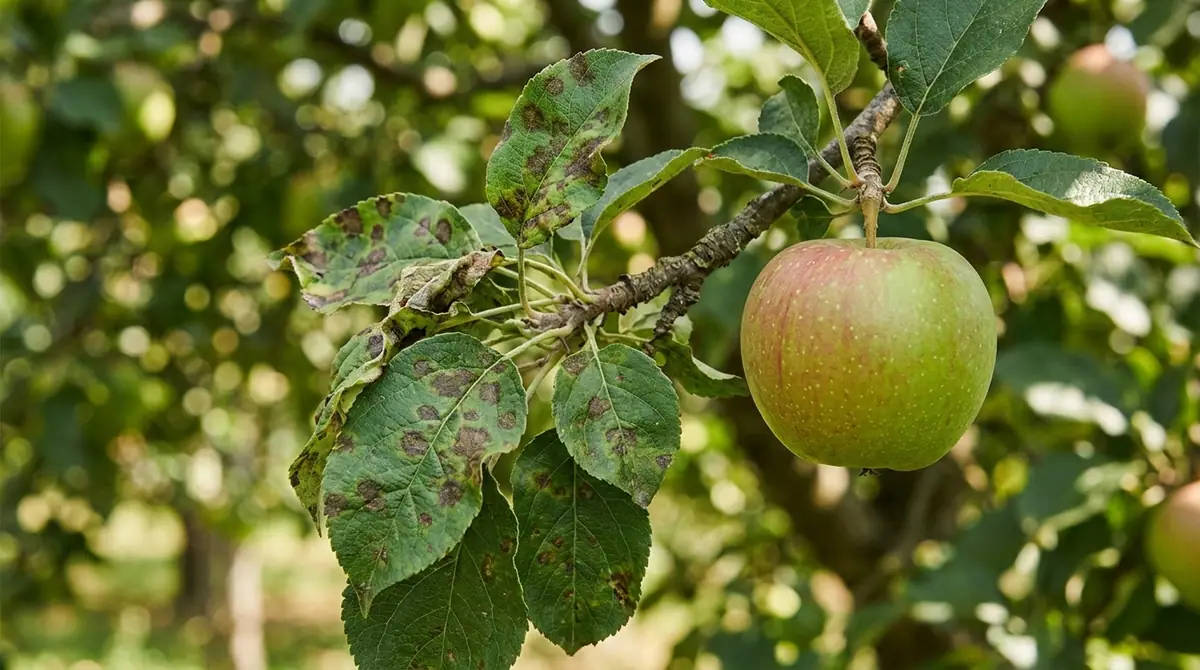
Botanically speaking, fruit trees are perennial woody plants that allocate immense energy reserves into seasonal vegetative flushes, floral development, and fruit maturation. Pathogens hijack this physiological pipeline. Fungi like Venturia inaequalis (apple scab) attack the cuticular layer of leaves, disrupting photosynthesis and starving the developing fruit of essential carbohydrates. Meanwhile, stone fruit canker (Leucostoma) invades xylem and phloem tissues through winter pruning wounds or frost cracks, choking off water and nutrient transport between the root system and the canopy.
Recognizing the specific biological agent—whether fungal, bacterial, or viral—is the foundational step of orchard management. Fungi typically thrive in stagnant, humid environments and spread via microscopic spores released during wet periods. Bacteria require natural openings or physical wounds to enter the vascular system, often spreading rapidly when temperatures hover between 75°F and 85°F (24°C to 29°C) and relative humidity exceeds 70%. By studying the native evolutionary pressures of these trees and matching our cultivation practices to their biological limits, we can drastically reduce disease incidence before it ever gains a foothold.
2. Essential Environmental & Care Requirements
Preventing disease begins with rigorous environmental management. Pathogens require specific microclimates to germinate, colonize, and spread. By optimizing your orchard's environmental parameters, you remove the wet, stagnant conditions that fungi and bacteria need to thrive.
| Parameter | Optimal Condition | Common Mistake | Why It Matters |
|---|---|---|---|
| Soil Drainage | Well-draining loam or sandy loam with a percolation rate of 1 to 2 inches (2.5 to 5 cm) per hour | Planting in heavy clay that retains water for >48 hours after a heavy rain | Waterlogged root zones induce root rot (Phytophthora), suffocating root hairs and crippling nutrient uptake. |
| Sunlight Exposure | Full sun, minimum 6 to 8 direct sunlight hours daily | Shading the lower canopy with dense, unpruned neighboring trees or structures | Insufficient light leaves leaf surfaces damp longer in the mornings, extending the wetness duration required for fungal spore germination. |
| Air Circulation | Open, airy canopy with 15 to 20 feet (4.5 to 6 m) spacing between mature standard trees | Overcrowding trees in small plots or planting against solid brick walls | Stagnant air traps humidity within the leaf canopy, preventing the natural evaporation necessary to halt spore development. |
| Soil pH | 6.0 to 7.0 for stone and pome fruits | Allowing soil to drop below 5.5 or rise above 7.5 | Extreme pH levels lock out essential micronutrients like calcium and iron, weakening cellular cell walls and lowering natural disease resistance. |
| Irrigation Depth | Deep soaking to a depth of 12 inches (30 cm) every 7 to 10 days during dry spells | Shallow, daily overhead sprinkling that wets the foliage | Overhead watering creates prolonged leaf wetness films, directly triggering outbreaks of apple scab, powdery mildew, and rusts. |
Maintaining a clean orchard floor is equally critical. Pathogenic fungi overwinter in fallen leaf litter and mummified fruit hanging on branches or resting on the soil. Raking and composting or burning fallen leaves in late autumn breaks the life cycle of pathogens like Monilinia fructicola (brown rot). Additionally, apply a 3-inch (7.5 cm) layer of organic wood mulch beneath the canopy to suppress weed competition and prevent rain from splashing soil-borne spores onto lower foliage. Always maintain a 6-inch (15 cm) buffer of bare earth between the mulch ring and the tree trunk to prevent collar rot and discourage rodent nesting.
3. Step-by-Step Cultivation, Feeding & Propagation
When disease strikes, immediate and methodical action saves the tree. Here is my proven, step-by-step protocol for identifying, pruning out, and treating common fruit tree infections during the growing season.
-
Conduct a Diagnostic Canopy Audit Walk your orchard weekly from bud break through mid-summer. Inspect leaf undersides, shoot tips, and developing fruitlets for discoloration, spots, abnormal curling, or weeping sap. Match your visual observations with local agricultural extension resources, such as the Cornell Fruit Resources guide, to confirm the exact pathogen before applying treatments.
-
Sanitize Your Pruning Arsenal Prepare a sanitization station using a bucket filled with a 10% solution of household bleach (sodium hypochlorite) or a 70% isopropyl alcohol spray. Dip your pruning shears, loppers, and hand saws between every single cut to avoid transferring bacterial exudates or fungal spores from an infected branch to a healthy one.
-
Execute Therapeutic Pruning Cuts For systemic bacterial infections like fire blight or fungal cankers, prune at least 8 to 12 inches (20 to 30 cm) below any visible symptoms into healthy, white-hued wood. Never tear or rip branches; make clean, flush cuts just outside the branch collar to allow the tree to compartmentalize the wound naturally.
-
Collect and Destroy Infected Debris Immediately place all pruned branches, blighted leaves, and dropped fruit into a sealed plastic bag or burn them where permitted. Do not place diseased plant tissue into cold backyard compost piles, as typical domestic compost temperatures rarely reach the high thresholds required to kill persistent fungal spores and bacterial cells.
-
Apply Targeted Protective Fungicides or Bactericides Apply protective treatments timed precisely with weather events. For pome fruits susceptible to apple scab, apply a dormant copper spray in early spring before bud swell. Follow up with bio-fungicides containing Bacillus subtilis or sulfur-based sprays during the petal-fall window if wet, rainy weather persists.
💡 Pro-Tip: When applying liquid copper or sulfur sprays, always target the application for a dry, calm evening when temperatures are between 50°F and 85°F (10°C and 29°C). Spraying in direct, blazing midday sun can cause severe phytotoxic leaf burn, scorching the very foliage you are trying to protect.
- Monitor and Adjust Soil Fertility Avoid high-nitrogen synthetic fertilizers, which trigger rapid, soft cell growth that is easily pierced by fungal hyphae. Instead, dress the root zone annually with a balanced, slow-release organic fertilizer and compost, supplemented with calcium amendments to fortify cellular pectin layers against invasion.
4. Common Problems, Pests & Troubleshooting
Even with pristine environmental controls, opportunistic pathogens occasionally breach your defenses. Early symptom recognition is your most effective countermeasure.
Fire Blight (Erwinia amylovora)
- Symptoms: Blossoms turn water-soaked and black; leaves wilt and turn brown or black while remaining firmly attached to the branch; twigs bend into a characteristic shepherd's crook shape; milky-amber bacterial ooze appears on bark cracks during humid weather.
- Immediate Treatment: Prune out infected wood 12 inches below visible damage using sterilized tools. Spray remaining canopy with an agricultural streptomycin or copper formulation strictly during the active bloom window if local weather forecasts predict warm, wet conditions.
Apple Scab (Venturia inaequalis)
- Symptoms: Olive-green to velvety brown spots appear on leaf surfaces, eventually turning dark, corky, and cracked. Fruit develops scabby, misshapen lesions that stunt growth and cause premature fruit drop.
- Immediate Treatment: Rake and destroy all fallen leaves in autumn to eliminate overwintering spores. Apply preventative lime-sulfur or captan-based fungicides starting at green-tip stage, repeating every 7 to 10 days through wet spring weather.
Brown Rot (Monilinia fructicola)
- Symptoms: Blossoms turn brown and wither. On ripening stone fruits (peaches, plums, cherries), small brown spots rapidly expand, covering the fruit in concentric rings of powdery, buff-colored spore masses until the fruit shrivels into a hard, gray "mummy."
- Immediate Treatment: Thin fruit clusters so developing fruits do not touch one another. Remove all mummified fruits from the tree and ground. Apply propiconazole or bio-fungicides during the bloom and pre-harvest intervals.
Powdery Mildew (Podosphaera leucotricha)
- Symptoms: White to light-gray, powdery fungal patches appear on young leaves, shoots, and fruit. Affected leaves curl upward, dry out, and stunt overall tree vigor.
- Immediate Treatment: Prune out severely affected shoots during routine winter maintenance. Spray foliage with potassium bicarbonate, horticultural oils, or wettable sulfur at the very first sign of white dusting.
⚠️ Important Caution: Never use copper-based sprays on stone fruits (peaches, nectarines, apricots) once the leaves have fully emerged in spring. Stone fruit leaves are exceptionally sensitive to copper phytotoxicity, which can cause severe defoliation and fruit scarring. Always consult the RHS Fruit Pest and Disease Guide for regional chemical restrictions and safety guidelines.

5. Frequently Asked Questions
How do I know if my fruit tree has a bacterial or fungal disease?
Bacterial diseases, such as fire blight or bacterial spot, typically produce water-soaked lesions that may weep a sticky, amber-colored ooze during wet weather, and infected tissue often turns a uniform black or dark brown. Fungal diseases, by contrast, usually present with distinct spots, concentric rings, velvety surface growth (like mildew), or powdery spores that can be rubbed off between your fingers.
Can I save a fruit tree that has trunk cankers?
It depends entirely on the circumference of the trunk affected. If a fungal or bacterial canker encircles (girdles) more than 50% of the main trunk or scaffold branch, the vascular system is permanently severed, and the tree cannot be saved; it should be removed to protect nearby trees. For smaller cankers affecting less than 25% of the circumference, you can carefully carve away the diseased bark down to healthy, green cambium layer using a sterile knife, leaving the wound open to dry and heal naturally.
When is the best time of year to prune fruit trees to prevent disease?
The absolute best time to prune fruit trees is during deep winter dormancy (January through March) when temperatures are consistently below freezing and fungal spores and insect vectors are completely inactive. Avoid pruning during wet spring weather or warm autumn periods, as fresh pruning cuts left exposed during these humid windows serve as open entry points for airborne pathogens.
Should I rake up fallen leaves in the autumn to stop fruit tree diseases?
Yes, absolutely. Raking and removing fallen leaves is one of the most impactful sanitation steps you can take. Pathogens like apple scab and cherry leaf spot survive the winter months inside fallen leaf litter on the orchard floor. Removing or thoroughly composting this debris in late autumn dramatically reduces the primary inoculum load that would otherwise splash back up onto your lower canopy during spring rainstorms.
Related Guides
- Step By Step Guide to Grafting Fruit Trees for Beginners
- How to Prune Apple Trees for Maximum Fruit Yield
- How to Protect Backyard Fruit Orchard from Winter Frost
- Best Organic Pest Control Methods for Backyard Fruit Trees
- Best Dwarf Fruit Trees to Grow in Small Backyards
📋 Table of Contents ▼ Click to expand
Tags:
Keep reading
🌿 Related Plants You Might Like
PlantSavvyWorld
Editorial team
PlantSavvyWorld is an independent botanical education project. Articles are drafted with AI assistance, then edited and checked against university extension services, botanical garden collections and other published horticultural sources.