

Best Dwarf Fruit Trees to Grow in Small Backyards
Written with AI assistance, edited and checked against horticultural sources.
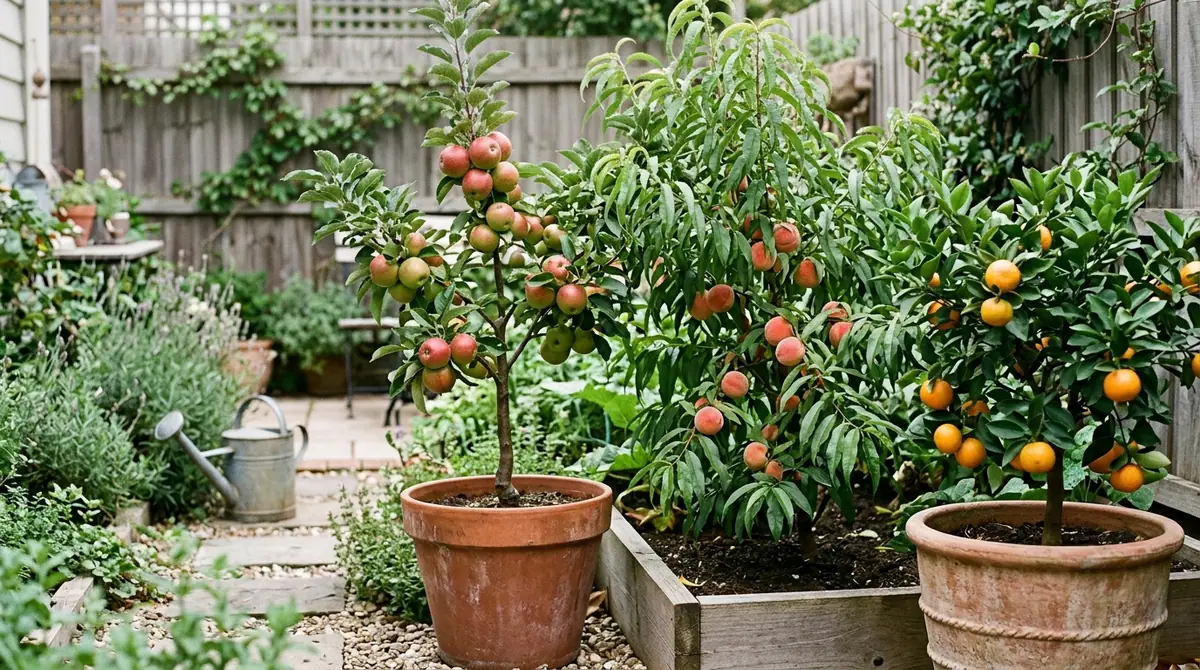
Last Tuesday, while balancing on a cedar stepladder in my postage-stamp urban yard, I harvested precisely 42 pounds of crisp 'Honeycrisp' apples from a single tree that stood no taller than my chin. My neighbors still assume I possess some sort of botanical wizardry, but the truth is far simpler: I stopped fighting my landscape's spatial limits and started leveraging dwarf fruit trees. When you harness true genetic dwarfing rootstocks rather than relying entirely on aggressive pruning, you unlock the ability to harvest orchard-quality stone and pome fruits in spaces no larger than a patio lounge chair. I see gardeners constantly squeeze massive standard trees into compact envelopes, only to watch them fail or overwhelm their property. Let's fix that by examining the finest dwarf fruit cultivars available and mastering how to grow them.
1. Botanical Overview & Natural Habitat
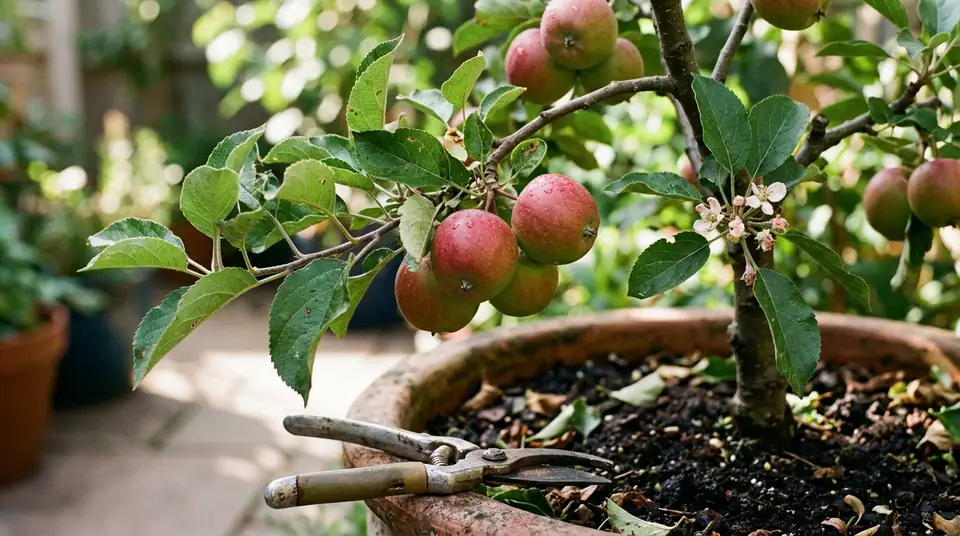
For apples, rootstocks such as M9 or P22 restrict growth to 25% to 35% of a standard seedling tree, halting their vertical climb at 6 to 8 feet (1.8 to 2.4 meters). Stone fruits like peaches and nectarines rely on dwarfing rootstocks like St. Julian A or Krymsk 1, which maintain heights between 5 and 7 feet (1.5 to 2.1 meters) when managed correctly.
In their evolutionary origins, wild ancestral stone and pome fruit species grew as understory or forest-edge trees competing for light, necessitating upward vigor. Modern dwarfing rootstocks interrupt this natural hormonal signaling, redirecting photosynthates away from excessive wood production and into dense, spur-heavy branching and heavy fruit sets. Because their root systems remain shallow and compact—often spreading only 3 to 4 feet (0.9 to 1.2 meters) wide—they adapt remarkably well to containers, courtyard borders, and tight urban footprint layouts. This physiological efficiency is precisely why we can grow high-yield edible crops in spaces where you might otherwise cultivate ornamental shrubs or even manage a sprawling vertical setup like you would when you grow butternut squash in small spaces.
2. Essential Environmental & Care Requirements
Creating a thriving micro-orchard in a restricted footprint requires strict adherence to environmental parameters. Unlike standard trees with deep taproots that hunt for water miles below the surface, dwarf fruit trees have shallow, fibrous root systems that demand consistent, predictable management.
| Parameter | Optimal Condition | Common Mistake | Why It Matters |
|---|---|---|---|
| Soil Drainage | Loamy, well-draining soil rich in organic matter (pH 6.0–7.0) | Planting in heavy, compacted clay | Causes root rot (Phytophthora) and suffocates shallow root systems. |
| Sunlight | Full sun, minimum 6 to 8 direct sunlight hours daily | Shading by fences or neighboring structures | Reduces photosynthetic capacity, lowering sugar content in fruit and inviting fungal diseases. |
| Watering Depth | 1 to 1.5 inches (2.5 to 3.8 cm) of water weekly via drip irrigation | Frequent, shallow surface watering | Encourages shallow roots to stay near the dry surface rather than anchoring securely. |
| Chilling Hours | Cultivar-dependent (e.g., 500–800 hours between 32°F and 45°F / 0°C and 7°C) | Selecting varieties mismatched to local climate zones | Prevents proper dormancy break, resulting in zero blossom set or sporadic fruit drop. |
To dive deeper into regional fruit selection and chilling hour calculations, consult the RHS Fruit Growing Guidelines.
3. Step-by-Step Cultivation, Feeding & Propagation
Planting and maintaining a dwarf fruit tree successfully relies on a methodical sequence of operations. Because dwarf rootstocks are brittle and lack deep anchoring roots, skipping structural steps can cause the tree to lean or snap under a heavy harvest load.
- Site Selection and Soil Preparation: Select a location receiving at least 8 hours of direct sun. Dig a square planting hole twice as wide as the root ball, but maintain an identical depth to the nursery container—typically 12 to 18 inches (30 to 45 cm). Never bury the graft union; it must sit 2 to 3 inches (5 to 7.5 cm) above the final soil grade to prevent the scion from rooting into the soil and reverting to standard size.
- Staking Installation: Drive a sturdy wooden stake or metal conduit 2 feet (60 cm) into the ground on the windward side of the planting hole before placing the tree, ensuring you avoid damaging the root mass.
- Planting and Backfilling: Place the bare-root or container-grown tree into the hole, spreading the fibrous roots outward. Backfill with a 50/50 blend of native soil and well-aged compost. Tamp down gently to eliminate large air pockets.
- Initial Structural Pruning: Cut back the central leader or main scaffold branches by one-third immediately after planting to balance the reduced root mass and stimulate lateral branching. Secure the trunk loosely to the stake using a figure-eight tie made of flexible rubber or canvas.
- Mulch Application: Apply a 3-inch (7.5 cm) layer of shredded hardwood mulch in a 3-foot (90 cm) circle around the base to suppress weeds and retain soil moisture. Keep the mulch pulled 2 inches (5 cm) away from direct contact with the trunk bark to prevent collar rot.
- Fertilization and Irrigation Program: Water deeply immediately after planting with 5 gallons (19 liters) of water. Begin a monthly feeding schedule from early spring through mid-summer using a balanced, slow-release organic fertilizer rich in micronutrients and potassium, mirroring the heavy-feeding approach you might use when you grow huge tomato plants for maximum yield.
💡 Pro-Tip: When planting dwarf fruit trees in urban backyards surrounded by concrete or brick walls, leverage the thermal mass of those structures. South-facing masonry absorbs heat during the day and radiates it slowly overnight, protecting tender early spring blossoms from sudden late-frost events that dip below 28°F (-2°C).
4. Common Problems, Pests & Troubleshooting
Even in compact spaces, dwarf fruit trees face distinct biological pressures. Their dense canopy architecture and high leaf-to-wood ratio create microclimates that fungal spores and sap-sucking insects find exceptionally inviting.
- Aphids and Woolly Apple Aphids: These soft-bodied insects colonize tender shoot tips and root collars, secreting sticky honeydew that leads to black sooty mold. Blast colonies off with a sharp stream of water from a hose nozzle, or apply horticultural neem oil spray during the dormant season to suffocate overwintering eggs.
- Apple Scab and Powdery Mildew: Caused by high humidity and poor air circulation within the canopy. Prune out crossing branches annually in late winter to maintain an open center. Apply liquid copper fungicide or wettable sulfur preventatively at "green tip" stage (when leaves first emerge) if local spring rainfall exceeds 4 inches (10 cm) per month.
- Fruit Drop (June Drop): A natural physiological self-thinning process where the tree sheds excess marble-sized fruits (typically between 30 to 60 days after full bloom) to conserve energy for remaining fruit development. However, excessive drop is often caused by drought stress or sudden temperature swings outside the optimal 65°F to 85°F (18°C to 29°C) range. Maintain consistent soil moisture to minimize stress-induced drop.
⚠️ Important Caution: Never use synthetic broad-spectrum insecticides like pyrethroids or neonicotinoids on flowering fruit trees. These chemicals decimate native solitary bees, honeybees, and beneficial hoverfly populations required for proper cross-pollination, resulting in zero fruit set and dead crops.
5. Frequently Asked Questions
Can I grow dwarf fruit trees successfully in pots on a concrete patio?
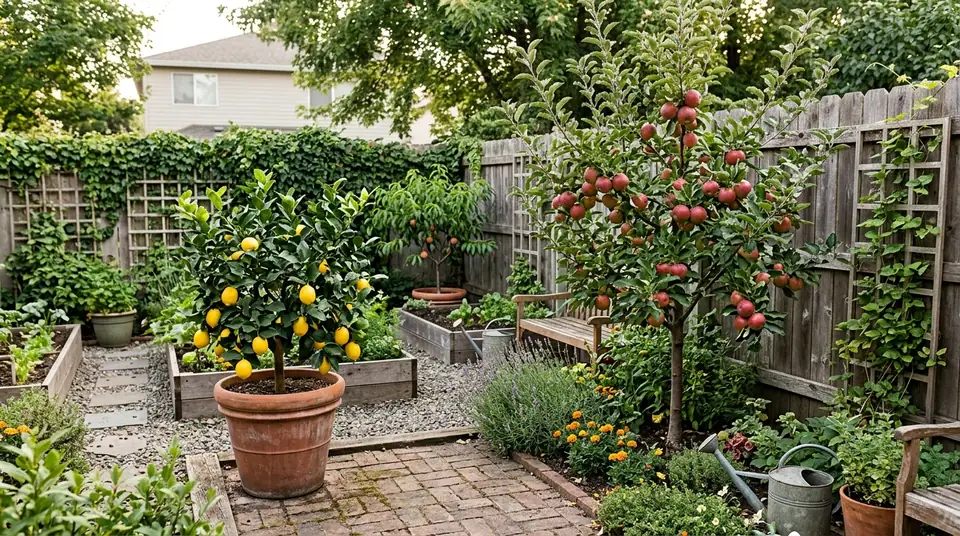
Yes, absolutely. Select containers holding a minimum of 15 to 20 gallons (55 to 75 liters) with adequate drainage holes. Use a high-quality, peat-free potting mix amended with perlite for aeration rather than heavy garden soil, which compacts in containers. Water daily during peak summer months, as container media dries out exponentially faster than in-ground garden beds.
Do I need to plant two different trees for cross-pollination?
It depends entirely on the specific fruit variety. While most apple, pear, and sweet cherry cultivars require a cross-pollinator of a different variety blooming at the same time within 50 feet (15 meters), many modern peach, nectarine, and sour cherry cultivars are completely self-fertile. Always check the pollination tag requirements before purchasing a single specimen for a tiny courtyard.
How soon will a dwarf fruit tree produce its first harvest?
True genetic dwarf fruit trees grown on dwarfing rootstocks bear fruit significantly faster than standard seedling trees. You can realistically expect your first light harvest within 2 to 3 years after planting, reaching full commercial-level production yields by years 4 to 5.
How do I keep my neighborhood squirrels and birds from stealing all my fruit?
Physical exclusion is your most effective defense in a small backyard. Drape lightweight bird-netting over the entire canopy once fruits reach thumbnail size, securing the mesh tightly around the trunk base. For larger mammal pests like squirrels, installing motion-activated sprinklers or wrapping the lower trunk with a 2-foot (60 cm) sheet metal collar stops climbing attempts cold.
Related Guides
- Step By Step Guide to Grafting Fruit Trees for Beginners
- How to Prune Apple Trees for Maximum Fruit Yield
- Best Organic Pest Control Methods for Backyard Fruit Trees
- Why Are My Potatoes So Small
- How to Create a Small Frog Pond in a Backyard Garden
📋 Table of Contents ▼ Click to expand
Tags:
Keep reading
🌿 Related Plants You Might Like
PlantSavvyWorld
Editorial team
PlantSavvyWorld is an independent botanical education project. Articles are drafted with AI assistance, then edited and checked against university extension services, botanical garden collections and other published horticultural sources.