
How to Create a Small Frog Pond in a Backyard Garden
Written with AI assistance, edited and checked against horticultural sources.
1. Botanical Overview & Natural Habitat

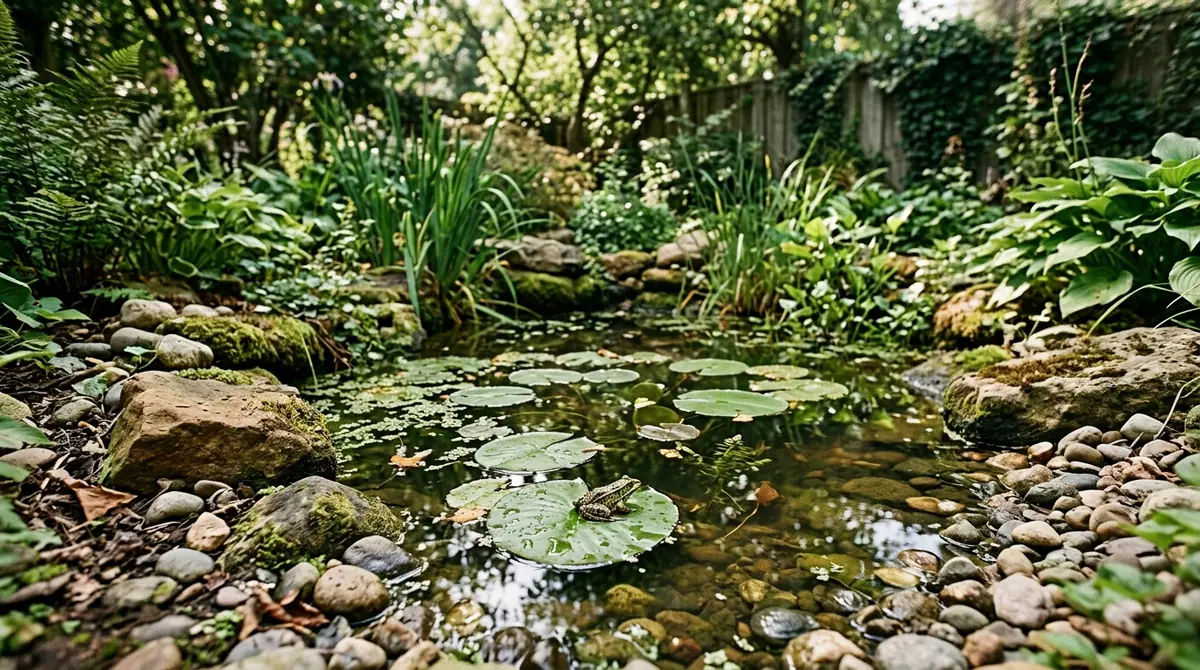
Frogs do not live in the water alone; they live in the ecological ecotone—the transition zone where land meets water. To replicate this, you must select plants that serve specific biological functions. Oxygenators like Hornwort (Ceratophyllum demersum) maintain water chemistry by absorbing excess nutrients and releasing dissolved oxygen. Emergent plants like Pickerelweed (Pontederia cordata) and Arrowhead (Sagittaria latifolia) provide vertical perches for calling males and secure platforms for egg masses. Marginal plants with broad leaves, such as Marsh Marigold (Caltha palustris) and various hardy water lilies (Nymphaea spp.), offer crucial shade that suppresses filamentous algae blooms while providing resting sites for adult frogs escaping the summer heat.
Integrating these plants also requires thinking about how your water feature interacts with the rest of your edible and ornamental landscape. For instance, if you are integrating a productive kitchen garden nearby—perhaps experimenting with How to Grow Butternut Squash in Small Spaces: Vertical Trellising Secrets to maximize your square footage—positioning your frog pond close by offers an organic pest control windfall. The resident amphibians will actively patrol your vegetable beds for slugs, beetles, and cutworms.
2. Essential Environmental & Care Requirements
Maintaining a healthy frog pond is a delicate balancing act of light, depth, and chemistry. Frogs and their tadpoles are exceptionally sensitive to environmental toxins and temperature fluctuations. Unlike large earth-bottomed ponds, small container or liner ponds (typically between 50 to 150 gallons / 190 to 570 liters) heat up and cool down rapidly, making precise site selection and maintenance non-negotiable.
Sunlight exposure dictates the biological health of your pond. You should aim for 4 to 6 hours of direct morning sunlight, followed by dappled afternoon shade. Too little sun (under 3 hours) stunts marginal plant growth and limits the warmth required for tadpole metamorphosis. Too much sun (over 8 hours) turns your pond into a green soup of single-celled algae. Depth is equally critical for survival, especially if you live in regions that experience freezing winters.
| Parameter | Optimal Condition | Common Mistake | Why It Matters |
|---|---|---|---|
| Pond Depth | Minimum 18 to 24 inches (45 to 60 cm) at the deepest point | Making the entire pond a shallow 6 inches (15 cm) | Shallow water freezes solid in winter and overheats in summer, killing tadpoles and overwintering frogs. |
| Sunlight | 4 to 6 hours of morning sun, afternoon shade | Full, blistering all-day sun exposure | Excessive heat accelerates evaporation and triggers devastating algae blooms that deplete dissolved oxygen. |
| Water Chemistry | Neutral pH (6.5 to 7.5); zero chlorine or chloramines | Using unconditioned municipal tap water straight from the hose | Chlorine burns delicate amphibian skin and destroys beneficial nitrifying bacteria instantly. |
| Littoral Slope | Gradual 30-degree incline on at least one edge | Sheer 90-degree vertical walls around the entire perimeter | Sheer drops trap frogs, making it impossible for them (or visiting hedgehogs and birds) to climb out safely. |
For deeper insights into sustainable aquatic garden design and native wildlife requirements, consult the Royal Horticultural Society Wildlife Gardening Guide.
💡 Pro-Tip: When filling your pond for the first time, let the water sit for 48 to 72 hours with a bubbler running before introducing any plants or expecting wildlife. This allows volatile gases to dissipate and gives the water temperature time to stabilize closer to the ambient garden temperature.
3. Step-by-Step Cultivation, Feeding & Propagation
Building a wildlife pond is an exercise in intentional earth-shaping. Follow this proven sequence to establish a biologically stable ecosystem that attracts frogs naturally without the use of chemical additives or mechanical pumps that produce loud noises, which can deter nervous amphibians.
- Excavation and Site Layout: Mark your pond outline with a garden hose or rope. Dig a stepped hole, ensuring the deepest section reaches at least 24 inches (60 cm) for winter survival, while creating intermediate shelves 8 to 12 inches (20 to 30 cm) deep for potted marginal plants and shallow entry zones.
- Lining and Cushioning: Remove all sharp stones, roots, and debris from the excavation site. Lay down a thick layer of damp sand, followed by a heavy-duty non-woven geotextile underlayment. Drape a 45-mil EPDM rubber pond liner loosely over the hole, leaving at least 12 inches (30 cm) of excess liner overlapping the banks.
- Ballasting and Securing Edges: Fill the pond slowly with water using a garden hose equipped with a dechlorinating filter. As the water fills the basin, the EPDM liner will stretch and settle into the contours. Weigh down the perimeter stones on the upper shelves, but leave the final edge-burying until the water level has fully settled over 24 hours.
- Planting the Aquatic Shelf: Place your marginal and oxygenating plants directly onto the shelves using heavy aquatic planting baskets filled with heavy, loam-based topsoil (avoid lightweight commercial potting mixes containing perlite or synthetic fertilizers, which leach excess nitrogen into the water). Top each pot with a 1-inch (2.5 cm) layer of washed pea gravel to prevent fish or frogs from muddying the soil.
- Constructing Amphibian Highways: Create gentle, textured exit ramps using flat slate rocks, stacked flagstones, and decaying logs positioned partially in and out of the water. This ensures that newly morphed froglets can easily scramble onto dry land without drowning.
- Establishing Natural Balance: Allow the pond to cycle naturally for 14 days. Avoid adding commercial bottled bacteria unless necessary; instead, introduce a handful of leaf litter or water from an established, healthy local pond to kickstart microfauna populations like daphnia and copepods.
⚠️ Important Caution: Never introduce store-bought fish (such as goldfish or koi) into a small frog pond. Fish are voracious predators that will consume every single frog egg, tadpole, and micro-organism, completely neutralizing the wildlife-attracting purpose of your habitat.
4. Common Problems, Pests & Troubleshooting
Even the most carefully planned small frog ponds encounter biological hiccups. Recognizing the early warning signs saves you from having to tear down and reset the entire ecosystem.
Blanket Weed and Green Water: Filamentous algae (blanket weed) and green water micro-algae are the most common afflictions of new ponds. They are almost always caused by an imbalance of nutrients (excess nitrogen and phosphorus) combined with too much direct sunlight. Do not reach for chemical algaecides; these contain copper or harsh oxidizers that are lethal to tadpoles. Instead, manually twist out blanket weed using a bamboo cane, increase your coverage of floating plants (like dwarf water lilies or frogbit) to shade the surface, and limit organic debris accumulation by skimming fallen autumn leaves promptly.
Predator Imbalances: While you want to attract wildlife, uncontrolled visits from raccoons, domestic cats, or herons can decimate an amphibian population. Provide dense underwater cover using submerged bundles of pruning brush or thick stands of Hornwort so tadpoles have safe hiding spots. On the landward side, surround the immediate pond perimeter with spiky ornamental grasses or prostrate shrubs like creeping juniper to make predator stalking difficult.
Mosquito Larvae Infestations: Ironically, new ponds sometimes experience a mosquito boom before natural predators arrive. Resist the urge to use chemical mosquito dunks containing synthetic insect growth regulators if you have sensitive amphibian larvae present. Instead, ensure gentle water movement using a small, wildlife-safe solar fountain, which prevents female mosquitoes from landing to lay eggs, or trust that visiting dragonflies, damselflies, and diving beetles will quickly establish themselves and hunt the larvae.

5. Frequently Asked Questions
Do I need a pump and filter for a small frog pond?
No, you do not need a mechanical filter or electrical pump. In fact, most frogs prefer still or slow-moving water because high-powered pump currents can stress tadpoles and wash away delicate egg clutches. A small solar-powered aerator or bubbler is entirely optional and simply helps maintain dissolved oxygen levels during peak summer heat waves.
How do I stop my pond water from turning green?
Green water is caused by single-celled phytoplankton blooming due to excess sunlight and dissolved nutrients. You can clear it naturally by increasing your plant coverage so that 50 to 60 percent of the water surface is shaded by floating or emergent plants. Adding more submerged oxygenators will also starve the algae of nutrients by outcompeting them for nitrates.
Will the frogs make too much noise in the backyard?
The acoustic footprint of a small backyard frog pond depends entirely on the species native to your region. Smaller species like treefrogs or chorus frogs produce a pleasant, high-pitched trill that is rarely intrusive. If you live adjacent to wild wetlands, larger bullfrogs might occasionally visit, but small decorative garden ponds rarely attract large, loud territorial bullfrogs due to their limited surface area and depth.
How long does it take for frogs to find a new pond?
If your pond is built within a healthy suburban or rural ecosystem with existing green corridors, frogs can discover a new water feature anywhere from a few days to a few weeks. You can accelerate this process by placing the pond near damp garden beds, leaving a pile of damp logs nearby, and ensuring there are continuous shady pathways connecting your lawn edges to the water.
Related Guides
- How to Create a Pollinator Garden to Attract Bees and Hummingbirds
- Why Are My Potatoes So Small
- How to Build Vertical Gardens for Small Urban Balconies
- Best Dwarf Fruit Trees to Grow in Small Backyards
- 10 Best Low Maintenance Front Yard Landscaping Ideas for Small Spaces
- Best Bird Nesting Boxes for Backyard Wildlife Conservation
📋 Table of Contents ▼ Click to expand
Tags:
Keep reading
🌿 Related Plants You Might Like

PlantSavvyWorld
Editorial team
PlantSavvyWorld is an independent botanical education project. Articles are drafted with AI assistance, then edited and checked against university extension services, botanical garden collections and other published horticultural sources.