

Best Bird Nesting Boxes for Backyard Wildlife Conservation
Written with AI assistance, edited and checked against horticultural sources.
1. Botanical Overview & Natural Habitat
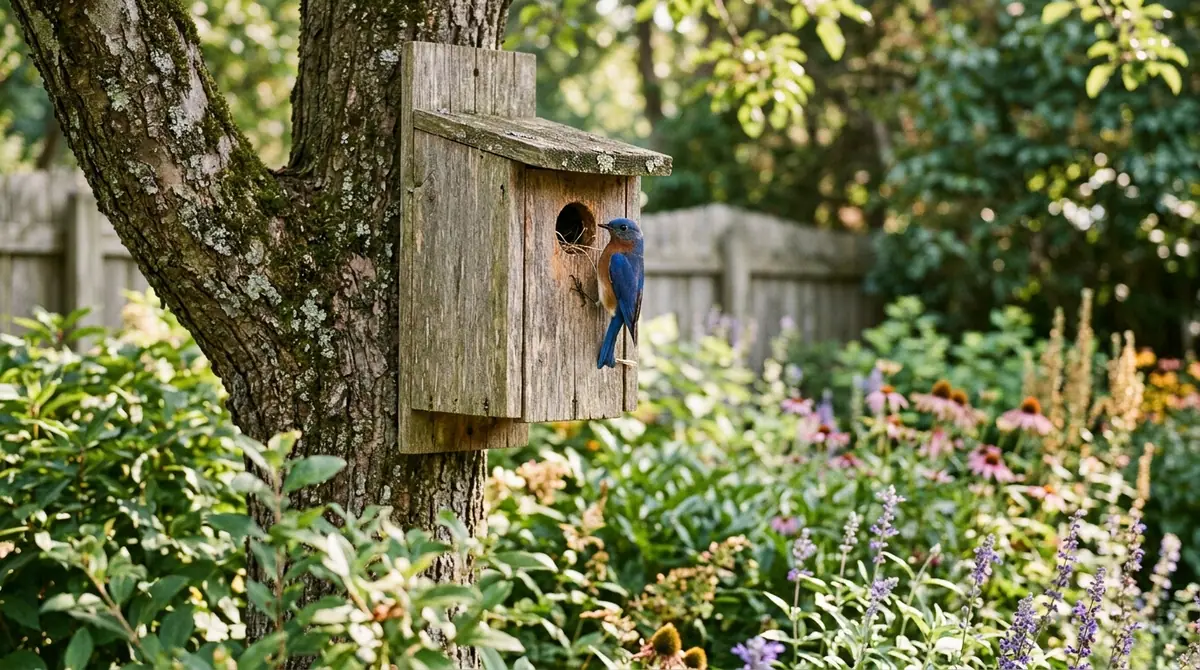
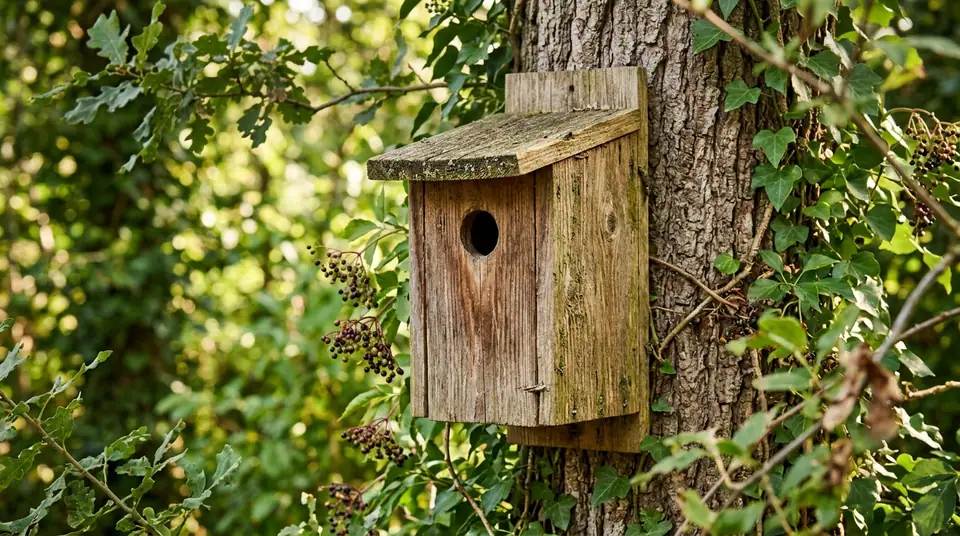
To design an effective backyard wildlife conservation plan, we must first understand how nesting boxes mimic and interact with natural botanical habitats. In an undisturbed woodland or mature savanna, cavity-nesting birds—such as Eastern bluebirds, tree swallows, tufted titmice, and house wrens—rely heavily on snags: standing dead or dying trees. Natural decay, fungal activity by wood-rotting organisms, and excavations by woodpeckers create these hollows over decades.
However, modern property management frequently removes snags for aesthetic and safety reasons, creating a severe ecological bottleneck. Providing the best bird nesting boxes for backyard wildlife conservation bridges this gap. A well-constructed wooden box acts as a synthetic snag, but its success depends entirely on how it integrates with the surrounding plant community. Birds do not view nesting boxes in isolation; they evaluate the vertical stratification of the landscape.
For instance, ground-foraging species like the Eastern bluebird require low-growing native grasses and forbs—such as Echinacea purpurea (purple coneflower) and Schizachyrium scoparium (little bluestem)—within 15 to 30 feet (4.6 to 9.1 m) of the box to hunt for grasshoppers, beetles, and caterpillars during the critical nestling phase. Similarly, integrating structural trees nearby provides essential vantage points and escape cover from avian predators like Cooper's hawks. If you are planting to support these wildlife corridors while managing spatial constraints, selecting appropriate structural plantings is vital; for instance, choosing specimens from our guide on 15 Best Trees for Driveways That Won't Crack Concrete can help you establish canopy shade and structural borders without compromising your hardscaping or utility lines.
2. Essential Environmental & Care Requirements
Installing a nesting box without understanding microclimate physics is a primary cause of nesting failure. A box exposed to unmitigated afternoon sun can quickly turn into a thermal trap, pushing internal temperatures above 105°F (40.6°C) and causing fatal heat stress in altricial nestlings. Conversely, a box facing cold northern winds during early spring snaps, where temperatures drop below 32°F (0°C), can cause hypothermia in brooding females or hatchlings.
The following parameter matrix outlines the non-negotiable physical requirements for functional, conservation-grade nesting boxes.
| Parameter | Optimal Condition | Common Mistake | Why It Matters |
|---|---|---|---|
| Hole Diameter | 1.5 inches (3.8 cm) for Bluebirds | Using a generic 2-inch hole | Allows aggressive non-native starlings to evict native cavity nesters. |
| Mounting Height | 4 to 6 feet (1.2 to 1.8 m) off the ground | Mounting too high for monitoring | Obstructs predator baffling and makes seasonal maintenance impossible. |
| Facing Orientation | East or Southeast | Facing West into prevailing winds | Exposes the interior to punishing afternoon heat and wind-driven rain. |
| Material Thickness | Minimum 0.75 inches (1.9 cm) untreated wood | Using thin plywood (0.25 inches) | Fails to provide adequate thermal insulation against sudden spring freezes. |
| Floor Dimensions | 4 x 4 inches (10 x 10 cm) interior footprint | Excessively large floor areas | Encourages larger clutches than parents can successfully feed. |
💡 Pro-Tip: Always verify that your nesting box features at least four 0.25-inch (0.6 cm) drainage holes drilled into the floor recessed floorboard, and saw-kerfs (horizontal grooves) cut into the interior front wall just below the entrance hole. These kerfs act as a ladder, allowing fully feathered nestlings to climb out easily when it is time to fledge.
3. Step-by-Step Cultivation, Feeding & Propagation
Deploying nesting boxes successfully requires a methodical, seasonal protocol. You cannot simply mount a box and walk away. Habitat management is an active, ongoing ecological commitment. Follow this step-by-step sequence to establish a thriving conservation zone in your yard:
- Site Selection and Floral Mapping: Assess your property in late winter. Identify open, sunny areas bordered by shrubs or trees. Ensure the chosen spot is at least 300 feet (91.4 m) away from poultry operations or heavy pesticide use to protect foraging adults.
- Material and Construction Verification: Procure or build a box using untreated western red cedar, bald cypress, or ethically sourced exterior-grade plywood. Avoid pressure-treated lumber, as chemical preservatives emit volatile organic compounds (VOCs) toxic to birds. Ensure the roof slopes downward toward the front to shed rainwater efficiently.
- Predator Baffling Integration: Mount the box securely on a smooth metal electrical conduit or a galvanized steel pole rather than a wooden tree trunk. Attach a cone or stovepipe baffle at least 4 to 5 feet (1.2 to 1.5 m) off the ground to prevent climbing predators like raccoons, cats, and snakes from accessing the interior.
- Optimal Timing for Deployment: Install the box by late winter (February to early March in temperate zones). This gives local territorial pairs ample time to inspect the box, establish dominance, and incorporate it into their home range before the spring breeding rush.
- Establishment of Supplemental Foraging Resources: Enhance the surrounding landscape by planting native seed-bearing perennials and insect-attracting shrubs. Minimize chemical interventions; a healthy insect population is the single most important dietary requirement for raising nestlings. For comprehensive plant selection strategies, consult the guidelines provided by the Lady Bird Johnson Wildflower Center.
- Post-Fledging Sanitation and Maintenance: Once the final brood has fledged (typically by late August), unlatch the side or front panel of the box. Remove all old nesting material completely to break the lifecycle of bird mites and blowflies. Scrub the interior with a 1:10 bleach-to-water solution if disease was suspected, rinse thoroughly, and leave the access door open during the dead of winter to provide roosting shelter for hardy species.
⚠️ Important Caution: Never paint or stain the exterior of a nesting box with dark colors or products containing toxic chemicals. If you choose to weather-protect the outside of the wood, use a raw, organic linseed oil or a non-toxic, water-based exterior milk paint in muted, earthy tones like olive drab or taupe to avoid drawing unwanted attention from avian and mammalian predators.
4. Common Problems, Pests & Troubleshooting
Even with meticulous planning, backyard conservationists frequently encounter ecological disruptions. Recognizing the warning signs early can mean the difference between a successful breeding season and local nest abandonment.
- Invasion by Non-Native House Sparrows or European Starlings: These aggressive, non-native species frequently kill native bluebirds and swallows to usurp their cavities. If house sparrows dominate your box, immediately remove their messy nests (which are constructed largely of straw, trash, and feathers). If the problem persists, relocate the box to a more open habitat away from farmyards and buildings, as house sparrows prefer human-dominated, highly disturbed microclimates.
- Blowfly Infestations (Protocalliphora species): Larvae of these parasitic flies hide in the nesting material and feed on the blood of nestlings at night. If you notice nestlings appearing weak, anemic, or dying before fledging, it is safe to gently lift the nest halfway through the brooding cycle (around day 6 or 7 post-hatch), remove any visible pupae from the bottom of the nesting cup, and replace the nesting material with clean, dry pine needles.
- Thermal Stress and Dampness: If condensation beads on the interior walls or the floor feels damp 48 hours after a rain event, your box lacks adequate cross-ventilation. Drill supplementary 0.3-inch (0.8 cm) ventilation holes near the upper gable corners, taking care not to create drafts directly across the nesting cup level. For deeper insights into avian health management, consult resources from the Cornell Lab of Ornithology.
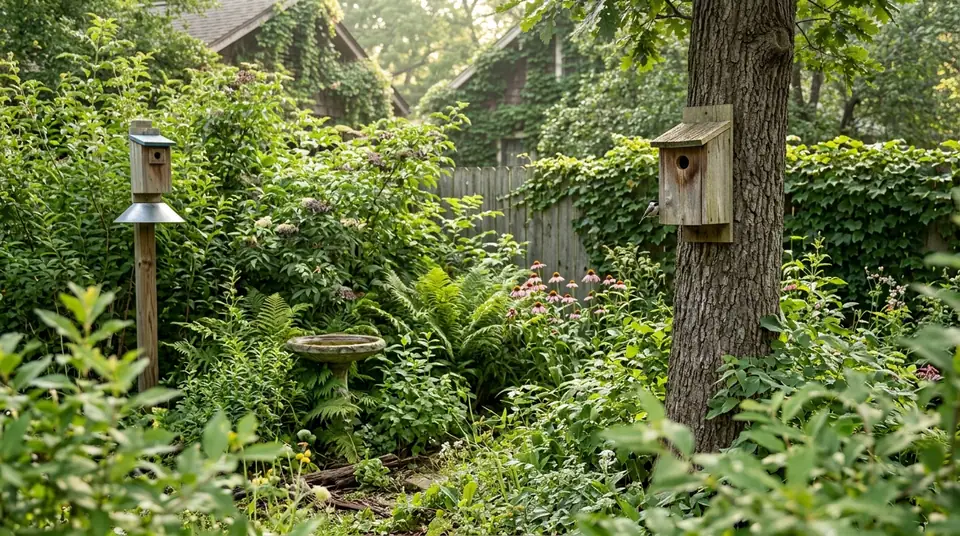
Wooden bird nesting boxes installed on a tree and post in a lush, green backyard garden
5. Frequently Asked Questions
What time of year should I put up a bird nesting box?
The ideal time to install a nesting box is in late winter, between February and early March in temperate regions. This timing allows early scouts—such as bluebirds and titmice—to evaluate the territory and claim the box before hormonal urges peak. However, boxes can be installed at any time of year, as many species will also use them as thermal winter roosts during freezing weather.
How high off the ground should a bluebird house be?
Mount bluebird nesting boxes between 4 and 6 feet (1.2 to 1.8 m) off the ground. This height range is low enough for you to safely monitor clutch progress and clean the box annually, yet high enough to discourage ground predators like domestic cats and small rodents from leaping onto the roof or entrance hole.
Why are birds ignoring the brand-new birdhouse I installed?
Avian occupancy is rarely instantaneous. Birds require time to recognize a new man-made object as a safe, viable habitat structure. Rejection is often caused by incorrect hole sizing (which invites unwelcome competitors), excessive sun exposure, or a lack of suitable insect-rich foraging habitat within the immediate 50-foot (15.2 m) radius. Ensure your native plantings are established and your predator baffling is secure.
Can I leave my nesting box up all winter?
Yes, you should leave your nesting boxes up year-round. During harsh winter conditions when temperatures drop below freezing, birds such as nuthatches, chickadees, and bluebirds utilize unheated nesting boxes as nocturnal roosting sites to escape wind and ice. Clean the box out thoroughly in late summer or early autumn, leave the interior dry, and let it serve as a winter refuge.
Related Guides
- How to Make a Wooden Decoy Bird to Protect your Garden
- How to Protect Backyard Fruit Orchard from Winter Frost
- How to Create a Small Frog Pond in a Backyard Garden
- Florida Backyard Landscape Ideas
- Cheap Diy Backyard Garden Layout Ideas on a Budget
📋 Table of Contents ▼ Click to expand
Tags:
Keep reading
🌿 Related Plants You Might Like


PlantSavvyWorld
Editorial team
PlantSavvyWorld is an independent botanical education project. Articles are drafted with AI assistance, then edited and checked against university extension services, botanical garden collections and other published horticultural sources.