

Florida Backyard Landscape Ideas
Written with AI assistance, edited and checked against horticultural sources.
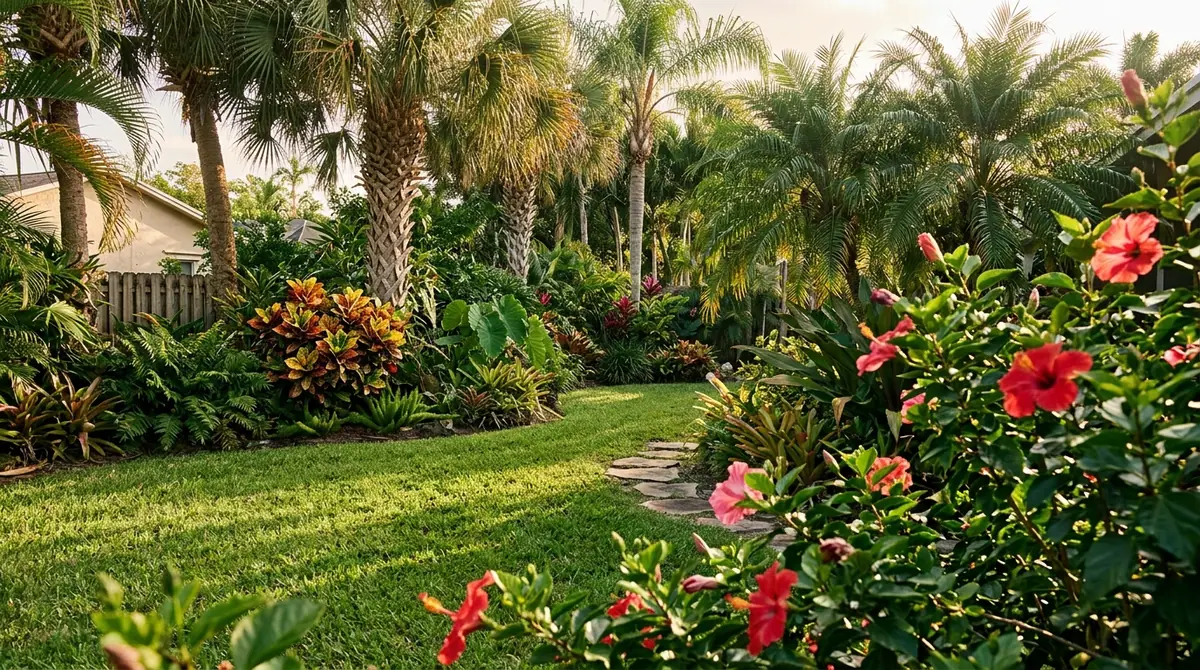
Sweat was dripping off the tip of my nose onto a stubborn clump of Muhly grass roots when I finally realized why growers’s newly installed South Florida backyard looked like a botanical disaster zone. It was mid-July, the ambient air temperature had already spiked to 94°F (34.4°C) by 10:00 AM, and a torrential afternoon downpour was hammering the compacted, sandy loam soil. I had planted drought-tolerant Mediterranean herbs in a depression where the neighborhood runoff pooled. They were drowning, while the tropical ferns I had placed on the blazing southern boundary were scorching into crisp flakes. Designing a Florida backyard isn't about replicating a lush English border or a manicured Pacific Northwest landscape; it's an intricate dance with subtropical humidity, relentless UV radiation, and wildly fluctuating soil conditions.
1. Botanical Overview & Natural Habitat
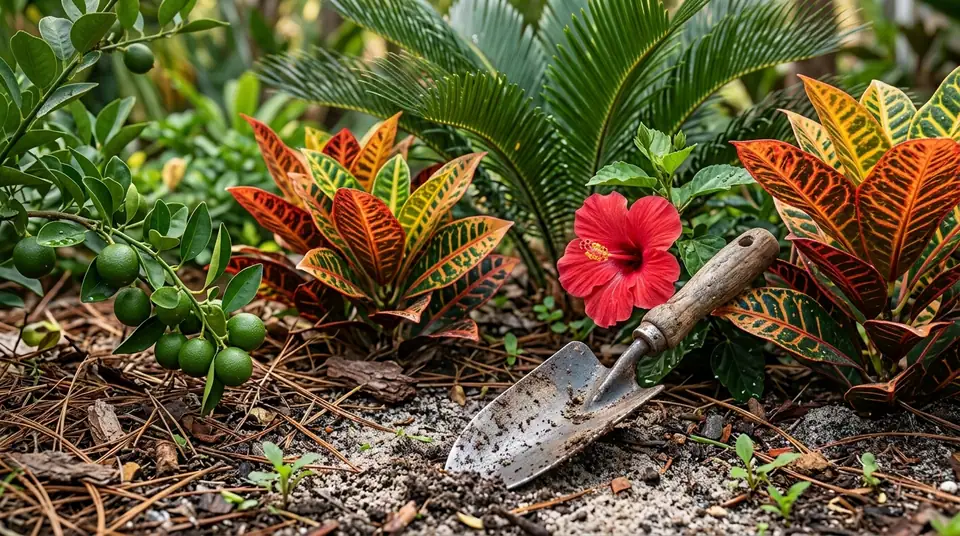
To achieve long-term resilience, your plant palette should blend structural native species with adaptable tropicals that thrive under regional conditions. Here is how key parameters break down across typical Florida backyard designs:
| Parameter | Optimal Condition | Common Mistake | Why It Matters |
|---|---|---|---|
| Soil pH | 6.0 to 7.0 (Slightly acidic to neutral) | Ignoring soil tests in areas with alkaline limestone fill | High pH locks out essential micronutrients like iron, causing severe chlorosis. |
| Organic Matter | 3% to 5% integrated into the top 6 inches (15 cm) | Relying solely on raw, nutrient-deficient native sand | Sand allows nutrients to leach rapidly below the root zone during heavy rains. |
| Mulch Layer | 3 inches (7.6 cm) depth, kept 2 inches (5 cm) away from trunks | Piling mulch directly against stems in a "volcano" shape | Traps moisture against bark, inviting fungal pathogens and collar rot. |
| Root Zone Spacing | 24 to 36 inches (61 to 91 cm) for medium shrubs | Planting specimens too close together for instant fullness | Restricts airflow, dramatically increasing humidity pockets and powdery mildew. |
Understanding your local microclimate is the first step in successful design. A backyard in Jacksonville (Zone 9a) faces freezing temperatures and clay-infused soils that northern plants tolerate, whereas a yard in Miami (Zone 10b) experiences year-round heat and calcareous soils composed largely of crushed limestone. Native plants like Simpson's Stopper (Myrcianthes fragrans) and Coontie (Zamia pumila) have evolved within these specific environments, developing deep root systems that tolerate both the 60 inches (152 cm) of annual rainfall and severe dry seasons.
2. Essential Environmental & Care Requirements
Maintaining a thriving Florida backyard requires managing water, light, and nutrients within the constraints of a tropical and subtropical climate.
Sunlight and Solar Radiation
The angle of the sun in Florida delivers intense ultraviolet radiation, particularly between April and September. Most flowering tropicals and structural palms require full sun, defined as 6 to 8 hours of direct daily sunlight. However, understory plants such as Giant Sword Fern (Nephrolepis biserrata) and Firebush (Hamelia patens) perform best when protected from the searing midday sun by a canopy of live oak (Quercus virginiana) or slash pine (Pinus elliottii).
Irrigation Protocols
In Florida's sandy soils, water drains at a rate of 2 to 10 inches (5 to 25 cm) per hour, carrying soluble nutrients down past the root zone. Established Florida-friendly landscapes generally require no supplemental irrigation during the summer wet season (June through October) due to daily afternoon thunderstorms. During the dry season (November through May), apply 0.75 to 1 inch (1.9 to 2.5 cm) of water every 7 to 10 days, preferably applied via drip irrigation or low-volume micro-sprays between 4:00 AM and 8:00 AM to minimize fungal spore germination.
⚠️ Important Caution: Never install high-pressure irrigation heads directly adjacent to porous concrete pavers or exterior walls. Mineral-heavy well water, commonly used for residential irrigation across Florida, will stain limestone, travertine, and painted stucco an irreversible rust-orange due to high iron and sulfur content.
Nutrient Management
Florida soils are notoriously low in native fertility. Local ordinances in many counties prohibit the application of nitrogen and phosphorus-containing fertilizers during the rainy summer months to prevent nutrient runoff into fragile waterways like the Indian River Lagoon or the Everglades. Utilize slow-release, potassium-heavy formulas (such as an 0-0-16 analysis with added magnesium and manganese) in early spring and early autumn to support cellular strength and vibrant foliage without fueling excessive, weak stem growth.
3. Step-by-Step Cultivation, Feeding & Propagation
Transforming a blank or struggling backyard into a resilient, aesthetically balanced Florida landscape requires precise execution. Follow this chronological protocol for installing new garden beds:
- Site Assessment and Mapping: Survey your yard over 48 hours to identify drainage patterns, water-pooling zones, and microclimates (full sun vs. Heavy shade). Conduct a DIY soil test or send a sample to the University of Florida IFAS Extension to determine exact pH and nutrient levels.
- Bed Shaping and Grass Removal: Outline your new landscape beds using a garden hose for fluid, organic lines. Strip out aggressive turfgrass like St. Augustine (Stenotaphrum secundatum) to a width of at least 6 inches (15 cm) beyond the bed edge to prevent it from creeping back in.
- Soil Amendment: Spread a 2-inch (5 cm) layer of aged compost or well-rotted manure over the native sand. Use a flat-tine fork to incorporate this organic matter into the top 6 inches (15 cm) of soil, taking care not to disrupt underlying soil strata unnecessarily.
- Plant Placement (Dry Run): Arrange your container-grown plants while still in their pots, starting with large structural elements like a Cabbage Palm (Sabal palmetto) or Simpson's Stopper, stepping down to mid-tier shrubs like Simpson's Stopper or Firebush, and finishing with groundcovers like perennial peanut (Arachis glabrata). Space plants according to their mature width, not their current nursery size.
- Digging and Planting Holes: Dig planting holes twice as wide as the root ball but no deeper than the root ball itself. The top edge of the root flare must sit 0.5 to 1 inch (1.3 to 2.5 cm) above the surrounding grade to prevent the crown from sinking as the loose soil settles.
- Backfilling and Watering-In: Backfill with the native soil-compost mix, tamping down gently with your hands or boots to eliminate large air pockets. Construct a 3-inch (7.6 cm) tall soil berm around the outer perimeter of each root ball to create a watering basin.
- Mulching: Apply a uniform 3-inch (7.6 cm) layer of melaleuca, eucalyptus, or pine bark mulch across the entire bed. Pull the mulch back manually so it leaves a clear, 2-inch (5 cm) breathing space around every plant stem.
- Initial Irrigation: Run your irrigation system or soak the beds manually for 30 minutes immediately after installation, delivering a thorough initial hydration to settle the soil profile around the roots.
💡 Pro-Tip: When propagating native shrubs like Firebush (Hamelia patens) or beautyberry (Callicarpa americana) from stem cuttings, dip your 6-inch (15 cm) tip cuttings in a powdered rooting hormone containing IBA (Indole-3-butyric acid) at a 0.3% concentration. Stick them into a 50/50 mix of perlite and sterile peat moss inside a clear plastic storage bin to maintain 90% humidity; they will form robust root systems within 21 to 28 days under bright, indirect light.
4. Common Problems, Pests & Troubleshooting
Florida’s warm, humid climate provides a year-round playground for insects and pathogens. Recognizing early warning signs saves plants from rapid decline.
Fungal Leaf Spot and Root Rot
- Symptoms: Brown or black concentric rings on foliage, premature leaf drop, and sudden wilting of an entire shrub despite damp soil conditions.
- Cause: High relative humidity combined with overhead irrigation and poorly draining soil, which suffocates roots and encourages Phytophthora fungi.
- Correction: Switch from overhead sprinklers to drip irrigation. Prune surrounding branches to increase air circulation through the canopy. Apply a bio-fungicide containing Bacillus subtilis or copper soap at the first sign of leaf spotting.
Scale Insects and Sooty Mold
- Symptoms: Sticky honeydew residue on leaves and patio pavers, accompanied by a black, powdery coating on stems and upper leaf surfaces.
- Cause: Infestations of soft scale insects or whiteflies that pierce plant phloem and excrete sugary waste, which feeds black sooty mold fungi.
- Correction: Wash heavy populations off with a strong jet of water from a garden hose. Apply horticultural mineral oil at a 2% dilution rate during the early morning hours, ensuring complete coverage of the undersides of leaves where scales hide. For broader ecosystem strategies, consult the guidance provided by the Fairchild Tropical Botanic Garden.
Nutrient Deficiencies (Chlorosis)
- Symptoms: Interveinal chlorosis (yellowing of leaves while veins remain green) on palms, ixoras, and hibiscus.
- Cause: High soil pH (above 7.2) locking up manganese, iron, or magnesium, preventing roots from absorbing these vital elements.
- Correction: Apply a granular, chelated micronutrient drench containing soluble iron, manganese, and zinc directly to the root zone. Follow up with an application of elemental sulfur at a rate of 1 lb per 100 square feet (450 g per 9.3 square meters) to gradually lower soil pH over a 60-day period.
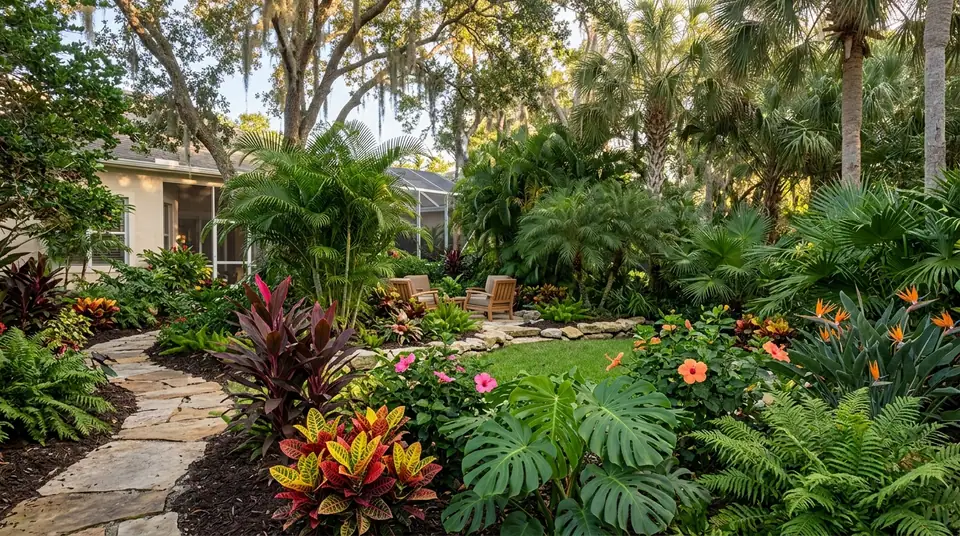
Lush Florida backyard with stone path, tropical plants, palms and flowering shrubs
5. Frequently Asked Questions
What are the best low-maintenance plants for a Florida backyard?
For minimal upkeep, choose native drought-tolerant species that require little to no supplemental water once established. Excellent choices include Cocoplum (Chrysobalanus icaco) for hedges, Muhly Grass (Muhlenbergia capillaris) for soft textural movement, and Firebush (Hamelia patens) to attract hummingbirds and butterflies year-round without demanding heavy pruning or chemical treatments.
How do I stop my Florida backyard from flooding during heavy summer rains?
Flooding is typically caused by soil compaction or incorrect grading that directs roof runoff and neighbor discharge toward your outdoor living spaces. Alleviate this by constructing a rain garden populated with water-loving native perennials like Swamp Sunflower (Helianthus angustifolius) and Blue Porterweed (Stachytarpheta jamaicensis), or by installing a French drain system filled with washed gravel and perforated pipe to channel excess water away from foundations.
Can I grow a traditional green lawn in Florida without using too much water?
Yes, but you must select the correct turfgrass cultivar for your specific light conditions. Floratam St. Augustine grass requires full sun (6+ hours) and regular irrigation, whereas Empire Zoysia or Celebration Bermudagrass offer higher drought tolerance and better wear resistance. Raise your mower blade to a height of 3.5 to 4 inches (8.9 to 10 cm); taller grass blades shade the soil, reduce moisture evaporation, and encourage deeper root growth that resists drought stress.
What landscaping steps should I take to prepare my yard for hurricane season?
Mitigate storm damage by pruning back tree branches that hang within 10 feet (3 m) of your roofline or power lines, focusing on thinning dense canopies so wind can pass through without uprooting the specimen. Avoid using loose gravel or river rock in large open beds where high-velocity winds can turn stones into hazardous projectiles; instead, rely on heavy, interlocking shredded bark mulch mats that knit together and resist washing away during torrential downpours.
Related Guides
- Cheap Diy Backyard Garden Layout Ideas on a Budget
- Arizona Backyard Ideas
- Do Apples Grow in Florida
- Will Kiwi Grow in Florida
- When to Plant Strawberries in North Florida
- Diy Insect Hotel Ideas for Garden Biodiversity
📋 Table of Contents ▼ Click to expand
Tags:
Keep reading
🌿 Related Plants You Might Like


PlantSavvyWorld
Editorial team
PlantSavvyWorld is an independent botanical education project. Articles are drafted with AI assistance, then edited and checked against university extension services, botanical garden collections and other published horticultural sources.