

Will Kiwi Grow in Florida
Written with AI assistance, edited and checked against horticultural sources.
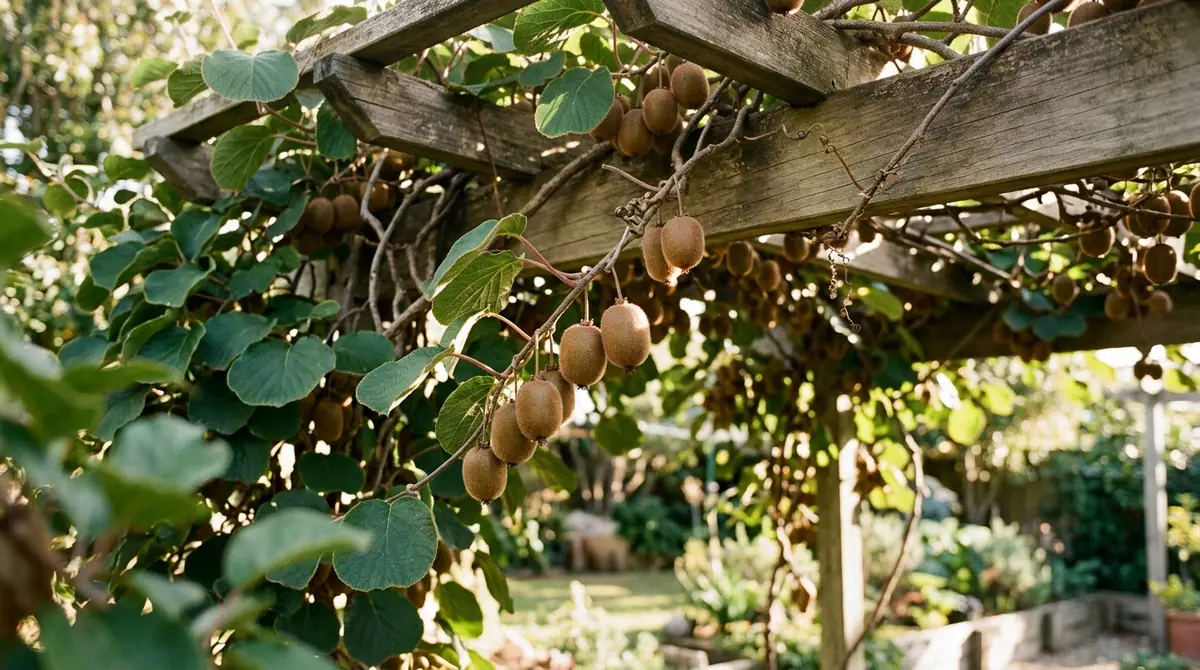
Sweating through a July afternoon in central Florida while desperately trying to keep a fuzzy fuzzy kiwi vine from cooking alive is a humbling experience for any botanist. I stood there staring at scorched, necrotic leaves that looked like they had been held over a blowtorch, and I realized why most local nurseries steer gardeners away from them. But after years of trial, error, and microclimate engineering, I discovered that kiwis can grow in the Sunshine State—if you know exactly which species to plant and how to outsmart the sub-tropical climate. Welcome to PlantSavvyWorld; let's dive into the science of growing kiwis in Florida.
1. Botanical Overview & Natural Habitat

When you attempt to drop a standard fuzzy kiwi into the sandy, nematode-heavy, and blistering climate of Florida, the plant suffers from profound physiological confusion. The primary hurdle is chill hours—the number of hours between 32°F (0°C) and 45°F (7|°C) required to break dormancy and trigger spring flowering. Standard fuzzy varieties need 600 to 900 chill hours, a metric that Florida—even the northern panhandle—rarely achieves consistently anymore.
However, botany is nothing if not adaptable. We have two primary contenders for Florida cultivation: Actinidia chinensis (golden kiwifruit, which require fewer chill hours, typically 300 to 400) and Actinidia arguta (hardy kiwi, which are smaller, smooth-skinned, and handle cold better, though some selections tolerate mild warmth). If you are growing tomatoes nearby, you might apply lessons from How to Grow Huge Tomato Plants: Pruning, Trenching & Heavy Yields regarding heavy feeding, but kiwis are woody perennial vines requiring an entirely different long-term architectural strategy. In Florida, your success hinges entirely on choosing low-chill cultivars like 'Checkmark', 'Soreli', or 'AU Golden' developed specifically for southern latitudes by breeding programs such as Auburn University.
2. Essential Environmental & Care Requirements
Creating an artificial habitat for a temperate vine in a subtropical state requires meticulous microclimate management. Let's break down the exact parameters your kiwis need to survive and fruit in Florida.
| Parameter | Optimal Condition | Common Mistake | Why It Matters |
|---|---|---|---|
| Soil pH | 5.5 to 6.5 (slightly acidic) | Planting in Florida's native alkaline or high-pH soils | High pH induces severe iron chlorosis, halting photosynthesis. |
| Chill Hours | 300–400 hours (32°F to 45°F / 0°C to 7°C) | Buying high-chill varieties requiring 800+ hours | Failure to meet chill hours prevents the vine from breaking dormancy and flowering. |
| Sun Exposure | Morning sun, harsh afternoon shade (filtered light) | Full, unshaded all-day southern Florida exposure | Intense UV and heat scorch leaves and cause rapid moisture stress. |
| Drainage | Well-draining sandy loam amended with organic matter | Planting in heavy, waterlogged flatwoods sand | Kiwi roots suffocate and rot rapidly in anaerobic, saturated soils. |
Water management is arguably your most critical daily task. Kiwis possess massive leaf surface areas that transpire water at staggering rates, yet their root systems are notoriously shallow and lack the fine root hairs needed to scavenge moisture efficiently. In sandy Florida soils, water leaches straight down within hours. You must install a drip irrigation system capable of delivering 2 to 3 inches (5 to 7.5 cm) of water weekly, supplemented heavily during the dry spring months of April and May.
Nutrition is equally demanding. Kiwis are heavy nitrogen and potassium feeders. In Florida's leaching sands, broadcast granular fertilizers wash away before the roots can absorb them. Instead, apply a balanced, slow-release organic fertilizer every 45 to 60 days from March through August.
💡 Pro-Tip: Kiwis are exquisitely sensitive to root-knot nematodes (Meloidogyne spp.), which are ubiquitous in Florida soils. Always graft your low-chill cultivars onto nematode-resistant rootstocks or plant them in raised beds heavily amended with chitin-rich crab meal to naturally suppress nematode populations.
3. Step-by-Step Cultivation, Feeding & Propagation
Establishing a kiwi arbor in Florida is a three-to-five-year commitment that requires precision engineering of your landscape. Follow this chronological protocol to establish a thriving vine system.
- Site Selection and Soil Preparation (Months 1–2): Select a location that receives full morning sun and dappled shade from 1:00 PM to 6:00 PM to protect against the scorching Florida afternoon rays. Excavate a trench 24 inches (60 cm) wide and 18 inches (45 cm) deep. Backfill with a 50/50 blend of native sand, aged pine bark fines, and well-composted manure to drop the pH and boost organic matter.
- Constructing the Support Infrastructure (Month 2): Kiwis are aggressive, heavy woody vines that will easily collapse standard wooden trellises. Install heavy-duty galvanized T-posts sunk at least 36 inches (90 cm) into the ground, strung with high-tensile 12-gauge wire in a T-bar or overhead pergola configuration capable of supporting 500 lbs (226 kg) of biomass and fruit weight.
- Planting the Vines (Month 3 - Spring): Dig a planting hole twice the width of the container. Plant your vines—ensuring you have at least one male pollinator (such as 'Tomuri' or a compatible male selection) for every eight female vines—keeping the root ball 1 inch (2.5 cm) above the surrounding soil grade to prevent crown rot. Space female plants 10 to 15 feet (3 to 4.5 meters) apart.
- Mulching and Irrigation Installation (Month 3): Apply a 4-inch (10 cm) layer of pine straw or aged eucalyptus mulch across the root zone, keeping it 3 inches (7.5 cm) away from the trunk to prevent collar rot. Lay down a dual-line drip emitter grid directly over the root zone.
- Training to a Single Cordone (Year 1): Select the strongest, straightest shoot as your primary trunk. Tie it loosely to a bamboo stake using soft horticultural tape. Pinch off all lateral side shoots until the vine reaches the main overhead support wire, which typically occurs within 180 to 240 days.
- Annual Winter Pruning (Years 2+): Perform intensive structural pruning annually in January while the plant is fully dormant. Remove 70% of the previous year's growth, leaving structural cordons and cutting lateral fruiting canes back to 8 to 12 buds.
For gardeners working with constrained suburban properties, learning how to maximize vertical space through strict pruning and training is essential—techniques similar to those detailed in How to Grow Butternut Squash in Small Spaces: Vertical Trellising Secrets.
4. Common Problems, Pests & Troubleshooting
Growing kiwis outside their native comfort zone invites a predictable suite of regional pests and physiological disorders.
Sunscald is the most immediate threat during Florida's brutal summer months. The broad, soft leaves of Actinidia species cannot handle the combination of high UV radiation, reflective sand heat, and afternoon humidity. When temperatures consistently exceed 95°F (35°C), leaves develop crisp, brown margins and drop prematurely. Mitigate this by erecting 30% black shade cloth over the canopy from June through September.
Root rot caused by Phytophthora fungi is the silent killer of Florida kiwis. Because summer afternoon deluges dump inches of rain in minutes, poorly draining soils become anaerobic swamps. If you notice sudden, irreversible wilting despite moist soil, check the root crown. The bark will appear water-soaked and reddish-brown. Once Phytophthora takes hold, recovery is virtually impossible, which underscores why raised beds are non-negotiable in Florida.
Leafrollers and scale insects also target stressed vines. Inspect the undersides of leaves bi-weekly for webbing or sticky honeydew residue. Introduce beneficial predatory insects like green lacewings and lady beetles early in the spring, or apply horticultural oils during the dormant winter window to smother overwintering scale eggs. For an academic perspective on managing subtropical fruit pest complexes, consult the University of Florida IFAS Extension.
⚠️ Important Caution: Never use copper-based fungicides excessively on kiwis during active hot weather. High temperatures combined with copper sprays can cause severe phytotoxicity, resulting in immediate defoliation and compounding the stress your vines are already experiencing from the heat.

5. Frequently Asked Questions
Can I grow fuzzy supermarket kiwis in South Florida?
No. Standard fuzzy supermarket kiwis (Actinidia deliciosa, such as 'Hayward') require 600 to 800+ chill hours and cannot tolerate the tropical, frost-free winters of South Florida. Furthermore, the intense summer heat and humidity will cause rapid plant decline. If you live south of Orlando, growing kiwis is practically impossible outdoors without artificial chilling chambers.
Do I need a male and female kiwi plant to get fruit?
Yes. Kiwis are dioecious, meaning individual plants bear strictly male or strictly female flowers. Female flowers possess both male and female anatomical parts (pistils and stamens), but the pollen produced is sterile. You must plant a compatible male vine within 15 to 20 feet (4.5 to 6 meters) of your female vines, and bees must be present to transfer the pollen. For comprehensive plant selection data, check the Royal Horticultural Society.
How long does it take for a kiwi vine to produce fruit in Florida?
Grafted low-chill kiwi cultivars typically begin producing their first light harvest in their third growing season. However, you will not reach full, economically viable crop yields until years five through seven. Patience is mandatory when establishing a woody perennial vine in a challenging climate.
Why are my kiwi leaves turning yellow with green veins?
This condition is iron chlorosis, which is extremely common in Florida due to high soil pH or waterlogged roots locking out available iron. Because native Florida soils often trend alkaline or have high calcium carbonate content, the plant cannot uptake micronutrients. Apply chelated iron (Fe-EDDHA) directly to the root zone and incorporate elemental sulfur to steadily lower the soil pH into the optimal 5.5 to 6.5 range.
If you are expanding your edible landscape with other challenging crops, mastering indoor propagation techniques like those found in How to Grow Strawberries Indoors: From Fruit Seeds to Sweet Berries can provide a satisfying indoor gardening counterbalance while your outdoor kiwi vines establish their deep framework.
Related Guides
- Do Apples Grow in Florida
- When to Plant Strawberries in North Florida
- Florida Backyard Landscape Ideas
📋 Table of Contents ▼ Click to expand
Tags:
Keep reading
🌿 Related Plants You Might Like



PlantSavvyWorld
Editorial team
PlantSavvyWorld is an independent botanical education project. Articles are drafted with AI assistance, then edited and checked against university extension services, botanical garden collections and other published horticultural sources.