

When to Plant Strawberries in North Florida
Written with AI assistance, edited and checked against horticultural sources.
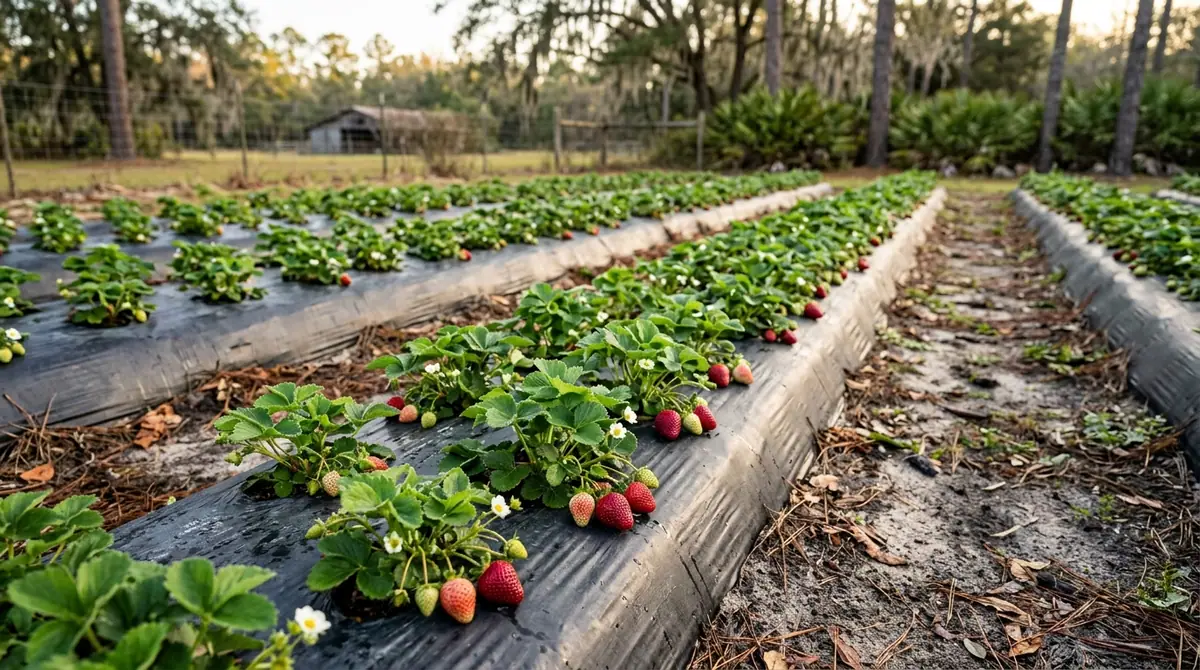
In North Florida (USDA Hardiness Zone 8b to 9a), bare-root 'Sweet Charlie' strawberry crowns should be planted when temperatures drop to 68°F (20°C) after weeks of humidity. Planting too early while lingering September heat remains will rot the crowns before they anchor, while planting too late misses the chill hours required to trigger heavy, sweet spring yields, making regional fruit scheduling essential for a bountiful harvest.
1. Botanical Overview & Natural Habitat

In their natural woodland and meadow habitats, strawberries evolved under a temperate regime marked by cool springs, warm summers, and freezing winters. However, the North Florida climate—spanning USDA zones 8b and 9a—presents a unique twist. We experience mild winters, intense UV radiation, and high humidity, which completely alters how the plant cycles through vegetative growth and reproductive fruiting.
North Florida primarily utilizes an annual hill cultural system rather than the perennial matted-row systems common in colder northern regions. This means we plant fresh bare-root crowns or plug plants in the autumn, harvest a massive flush of fruit from late winter through spring, and pull the plants out when the brutal subtropical summer arrives.
Understanding how your strawberry plants behave requires looking at their physiological triggers:
- Crown Development: The crown is the compressed stem at the soil line from which all leaves, runners, and flower stalks emerge. Keeping this crown precisely level with the soil is vital for survival.
- Photoperiod Sensitivity: Most commercial cultivars grown in North Florida are short-day or day-neutral types. Short-day cultivars initiate flower buds when day lengths drop below 14 hours and temperatures cool down into the 60s°F (15–20°C).
- Root Architecture: Strawberry roots are largely fibrous and shallow, spreading primarily in the top 6 to 12 inches (15 to 30 cm) of soil. For a deeper dive into how shallow root systems compare across different fruiting and vegetable crops, you can reference our guide on How Deep Do Pepper Plant Roots Go? Pot Size & Substrate Depth Guide. If you are transitioning from indoor propagation, reviewing How to Grow Strawberries Indoors: From Fruit Seeds to Sweet Berries offers great insights into root establishment.
2. Essential Environmental & Care Requirements
North Florida growing conditions demand strict attention to light, soil chemistry, and moisture management. If you are comparing regional timing, note that our schedule differs drastically from cooler climates; for instance, growers further north must follow a completely different timeline, as outlined in our guide on When to Plant Strawberries in Kansas: Zone 6a/6b Seasonal Calendar.
| Parameter | Optimal Condition | Common Mistake | Why It Matters |
|---|---|---|---|
| Soil pH | 5.5 to 6.5 | Planting in alkaline soils (pH > 7.0) | High pH locks out iron and manganese, causing severe chlorosis and stunted growth. |
| Sunlight | 8 to 10 hours of direct sun | Shading under pine canopies | Insufficient light reduces photosynthesis, sugar accumulation, and fruit yield. |
| Soil Drainage | Loamy, well-amended raised beds | Heavy, waterlogged clay or raw sand | Standing water invites Phytophthora and Pythium root rots. |
| Temperature | 60°F to 80°F (15°C to 27°C) | Planting during September heat waves | Temperatures consistently above 85°F (29°C) scorch transplants and encourage crown rot. |
Soil preparation in North Florida is rarely optional. Our native soils tend to be either nutrient-leached sandy profiles or heavy, poorly draining clay. Amend your beds generously with well-rotted compost, aged manure, and pine bark fines to lower the pH naturally and improve cation exchange capacity.
Water management is equally critical. Strawberries require about 1 to 1.5 inches (2.5 to 3.8 cm) of water per week, delivered preferably via drip irrigation or soaker hoses. Keeping the foliage dry prevents fungal pathogens like powdery mildew and Botrytis gray mold from taking hold during damp North Florida mornings.
3. Step-by-Step Cultivation, Feeding & Propagation
Planting time in North Florida runs from mid-October through mid-November, once daytime highs consistently drop below 85°F (29°C) and nighttime lows dip into the comfortable 50s and 60s°F (10–20°C). This window allows root systems to establish extensively before the mild winter arrives.
💡 Pro-Tip: Soak your bare-root strawberry crowns in a bucket of plain water for 30 minutes before planting to rehydrate the fibrous roots, but never let them sit longer or they will suffocate.
Here is your exact step-by-step installation protocol:
- Construct and Amend Raised Beds: Build beds 8 to 12 inches (20 to 30 cm) high and 24 to 36 inches (60 to 90 cm) wide to guarantee optimal drainage. Incorporate 3 inches (7.6 cm) of compost into the top 6 inches (15 cm) of soil.
- Apply Black Plastic Mulch: Lay down agricultural-grade black plastic or heavy landscape fabric over the bed. This warms the soil slightly during winter nights, suppresses weeds, and keeps developing fruit clean.
- Punch Planting Holes: Space holes 12 inches (30 cm) apart in a staggered double row configuration.
- Position the Crown: Insert the plant into the hole, ensuring the midpoint of the crown sits precisely level with the soil surface. Burying the crown too deep causes it to rot; planting it too high exposes the roots to desiccation and frost heave.
- Firm the Soil and Water In: Gently press the soil around the roots and deliver a thorough soaking (at least 1 inch / 2.5 cm of water) to settle the soil particles tightly against the root hairs.
- Fertilize on Schedule: Feed with a balanced, slow-release organic fertilizer (such as a 10-10-10 or specialized fruit blend) incorporated at planting, followed by weekly fertigation of low-nitrogen, high-potassium soluble fertilizer once active flowering begins in January.
For official regional planting calendars and commercial insights, consult the University of Florida IFAS Extension, which provides exceptional research-backed guides for Florida gardeners. If you enjoy expanding your edible and ornamental garden footprint, you can also cross-reference layout strategies with techniques used in projects like When to Plant Onions in Southern California (Zone 9 & 10 Planting Calendar).
4. Common Problems, Pests & Troubleshooting
Even with perfect timing, North Florida's unique climate invites specific challenges that can decimate a strawberry patch if left unchecked.
- Spider Mites (Tetranychus urticae): Thriving in dry, warm spring conditions, these tiny arachnids suck plant juices, causing stippling and bronzing of leaves. Introduce predatory mites (Phytoseiulus persimilis) or apply organic horticultural oils early in the season.
- Fruit Rot (Botrytis cinerea): Triggered by heavy morning dew and frequent winter rains. Prevent this by using clean straw or plastic mulch to keep ripening berries off damp soil, and ensure proper plant spacing for air circulation.
- Slugs and Snails: These mollusks love the damp, shaded microclimate beneath strawberry leaves. Apply iron phosphate-based bait around the perimeter of your beds at the first sign of ragged feeding holes.
⚠️ Important Caution: Never use high-nitrogen synthetic fertilizers after flower initiation begins. Excessive nitrogen produces lush, soft foliage that attracts aphids and spider mites while drastically reducing fruit set and sugar content.

5. Frequently Asked Questions
Can I grow strawberries as perennials in North Florida?
While strawberries are technically perennial, North Florida growers typically treat them as annuals. Our intense summer heat, high humidity, and root-knot nematode pressures cause plants to decline sharply by June. Pulling old plants out in late spring and planting fresh disease-free crowns every October guarantees the highest yields and sweetest fruit.
What are the best strawberry varieties for North Florida?
The top-performing short-day cultivars for our region include 'Sweet Charlie' (early ripening, exceptionally sweet, medium-large fruit), 'Camarosa' (firm, high-yielding, excellent disease resistance), and 'Festival' (the commercial standard in Florida, producing glossy, firm berries with a long shelf life).
How do I protect my strawberry blossoms from a North Florida freeze?
While North Florida winters are mild, occasional hard freezes dropping below 28°F (-2°C) will damage open flowers and green fruit. Cover your beds with floating row covers (frost cloth) secured tightly to the ground before temperatures drop. For commercial operations or large home gardens, overhead sprinkler irrigation during the freeze utilizes the latent heat of fusion to protect tissues.
Should I cut off the runners on my strawberry plants?
Yes. For the annual hill system used in North Florida, you should snip off all runners as they appear throughout the fall and winter. Allowing runners to grow forces the mother plant to divert valuable energy away from root establishment and fruit production, ultimately cutting your harvest in half.
Related Guides
- When to Plant Pumpkins in North Carolina
- What Zone is North Dakota for Planting
- Do Apples Grow in Florida
- Will Kiwi Grow in Florida
- Florida Backyard Landscape Ideas
📋 Table of Contents ▼ Click to expand
Tags:
Keep reading
🌿 Related Plants You Might Like
PlantSavvyWorld
Editorial team
PlantSavvyWorld is an independent botanical education project. Articles are drafted with AI assistance, then edited and checked against university extension services, botanical garden collections and other published horticultural sources.