

What Zone is North Dakota for Planting
Written with AI assistance, edited and checked against horticultural sources.
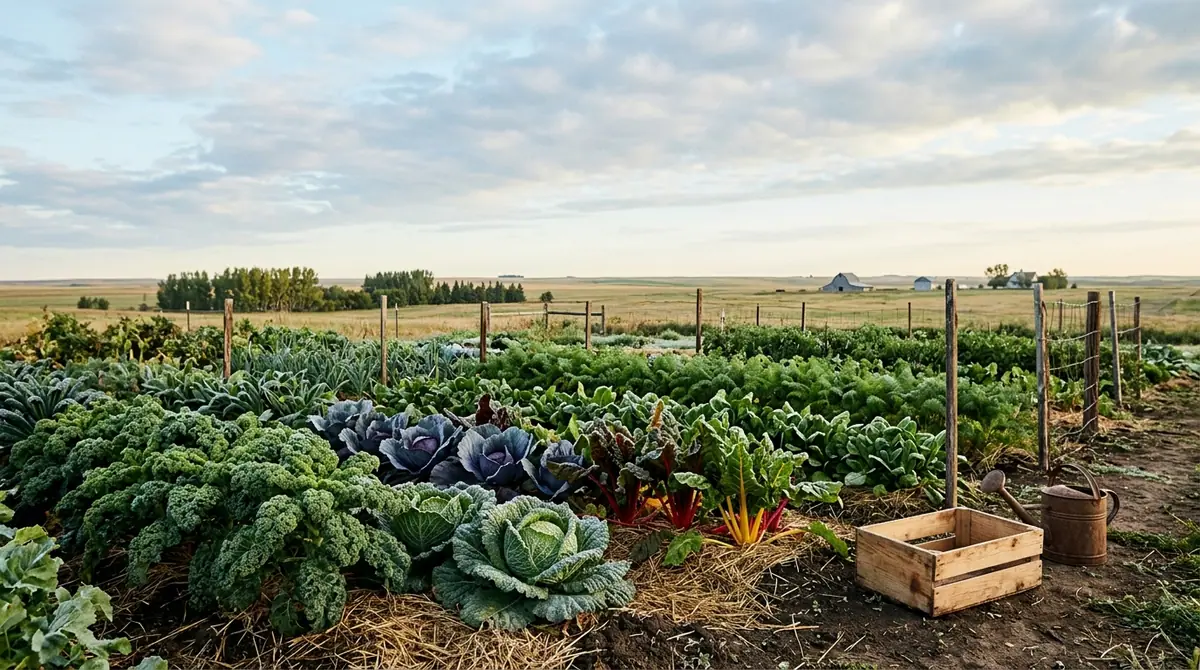
The wind off the prairie hit my face with a sharp, sub-zero bite that trimmed the skin right off my cheeks, even through two layers of wool. I was standing in a trial garden outside of Bismarck, staring at a row of columnar aspens that had split clean down their north-facing bark from a brutal mid-winter temperature swing of −35°F (−37°C). That was the day North Dakota taught me its most humbling botanical lesson: you do not force plants to grow here; you negotiate with the climate. When readers ask me at PlantSavvyWorld about the planting zones of the Peace Garden State, they usually want a simple number. But in a landscape where winter lows can plunge to −50°F (−46°C) and summer highs reach 100°F (38°C), understanding your precise hardiness zone is the single most critical factor separating a flourishing shelterbelt from a graveyard of expensive nursery stock.
1. Botanical Overview & Natural Habitat

The state's native flora evolved to endure extreme continental conditions: short, high-intensity growing summers averaging 110 to 130 frost-free days, paired with long, desiccating winters characterized by minimal snow cover in western counties and heavy drifts in the east. The native biome transitions from the tallgrass prairie remnants of the Red River Valley in the east to the mixed-grass and shortgrass prairies of the western Missouri Coteau and the rugged Badlands.
Soil profiles reflect this history. Eastern soils are primarily deep, fertile mollisols developed under tallgrass, boasting high organic matter and neutral to slightly alkaline pH levels (6.5 to 7.5). Western soils lean more toward entisols and aridisols, often calcareous, highly erodible, and featuring calcic layers near the surface that restrict root penetration for non-native species.
| Parameter | Optimal Condition | Common Mistake | Why It Matters |
|---|---|---|---|
| Soil pH | 6.5 – 7.5 for native species; 6.0 – 6.8 for ericaceous plants | Assuming uniform acidity across the state; ignoring native soil tests | Alkaline soils lock up iron, causing severe chlorosis in vulnerable ornamentals and conifers. |
| Hardiness Zone | Zones 3a through 5a depending on exact county and microclimate | Relying on outdated USDA maps without checking 2023 updates | Planting a Zone 5 perennial in a Zone 3 pocket guarantees winterkill of the crown and root system. |
| Root Depth | Minimum 12 inches (30 cm) of workable topsoil for perennials | Planting in compacted, heavy clay hardpans without amendment | Shallow root zones leave plants vulnerable to both summer drought stress and winter frost heaving. |
| Moisture Retention | Well-drained loam with 5–8% organic matter | Over-amending planting holes with peat moss, creating a bathtub effect | Water pools in amended holes, drowning roots or freezing solid into a block of ice. |
2. Essential Environmental & Care Requirements
Gardening in North Dakota requires rigorous attention to the micro-elements of sun, wind, and moisture. Because the state is one of the windiest in the nation, wind desiccation is often a deadlier enemy to plants than absolute cold.
Sunlight and Photoperiod
North Dakota enjoys exceptionally long daylengths during the peak of summer, stretching up to 16 hours of sunlight at the 49th parallel. Vegetables and sun-loving ornamentals thrive under this high solar radiation, but cool-season crops like spinach and lettuce bolt prematurely by late June if not provided with afternoon shade.
Moisture and Irrigation
Average annual precipitation ranges from 14 inches (35 cm) in the western semi-arid badlands to 22 inches (56 cm) in the southeastern corner. Irrigation is non-negotiable for establishment years. Overhead watering should be avoided in favor of drip systems or soaker hoses running at a rate of 1 inch (2.5 cm) of water per week, applied deeply rather than frequently to encourage deep root anchoring.
💡 Pro-Tip: Always install living or structural windbreaks before establishing tender perennial beds in North Dakota. A simple 3-foot (90 cm) snow fence or a dense row of native chokecherries (Prunus virginiana) can reduce wind velocity by 50%, effectively raising your local microclimate by half a hardiness zone and preventing the catastrophic moisture loss that kills evergreens in January.
3. Step-by-Step Cultivation, Feeding & Propagation
Establishing a resilient garden bed in North Dakota demands strict adherence to timing. Frost dates vary wildly, with the last spring freeze occurring anywhere from May 10 to June 1, and the first autumn freeze arriving between September 1 and September 25.
- Site Selection & Wind Mitigation: Choose a location that receives at least 6 to 8 hours of direct sunlight, positioned away from prevailing northwest winter winds.
- Soil Preparation: Clear all perennial weeds. Test your soil pH. Till or broadfork the top 8 to 12 inches (20 to 30 cm) of soil, incorporating 2 inches (5 cm) of well-aged compost to improve microbial life and moisture retention without creating a textural mismatch with native soil.
- Planting Timing: Wait until all danger of hard frost has passed—typically late May for warm-season annuals. Perennial trees, shrubs, and cold-hardy herbaceous plants are best installed in early autumn (September) to allow root establishment before the ground freezes solid, or in early spring as soon as the soil can be worked.
- Excavation: Dig a hole twice as wide as the root ball but no deeper than the root flare. The top of the root ball must sit 0.5 to 1 inch (1.2 to 2.5 cm) above the surrounding grade to account for settling.
- Backfilling & Initial Watering: Backfill with native soil only—do not fertilize the planting hole. Tamp gently with your hands to remove large air pockets, then deliver a slow, deep soak of 2 gallons (7.5 liters) of water per square foot of root zone.
- Mulching: Apply a 3-inch (7.5 cm) layer of shredded hardwood bark or certified weed-seed-free straw over the root zone, keeping the mulch 2 inches (5 cm) away from woody stems to prevent rodent nesting and collar rot.
⚠️ Important Caution: Never apply high-nitrogen fertilizers to perennial plants, trees, or shrubs after July 1st. Late-season fertilization forces a flush of succulent new growth that cannot harden off before the first hard freeze, resulting in severe dieback or complete plant death.
4. Common Problems, Pests & Troubleshooting
The dramatic seasonal shifts in North Dakota create stress windows that opportunistic pests and pathogens exploit rapidly.
- Winter Sunscald: Common on thin-barked deciduous trees like maples, fruit trees, and ash. The low winter sun warms the bark on the south and southwest sides during the day, prompting cells to break dormancy; when the sun dips below the horizon and temperatures drop by 50°F in minutes, the active cells rupture and die. Solution: Wrap trunks of young trees in white paper tree guards from October through April.
- Frost Heaving: Caused by alternating freeze-thaw cycles in late winter and early spring, which physically pushes newly planted perennials out of the soil, exposing their root crowns to lethal desiccation. Solution: Maintain a consistent 3-inch (7.5 cm) organic mulch layer and step gently on heaved root balls in early spring, re-burying exposed roots.
- Iron Chlorosis: Manifests as yellowing leaves with dark green veins, particularly in high-pH calcareous soils where plants cannot uptake iron. Solution: Apply chelated iron (Fe-EDDHA) as a soil drench in early spring when soils warm to 50°F (10°C).
- Japanese Beetles and Aphids: Summer populations surge during hot, dry spells. Solution: Introduce beneficial nematodes for soil-dwelling grubs and spray systemic or insecticidal soaps only in the evening to protect foraging pollinators. For comprehensive regional pest management strategies, consult the North Dakota State University Extension.

5. Frequently Asked Questions
What exact planting zone is Fargo, North Dakota?
Fargo sits firmly in USDA Hardiness Zone 4a, with average annual extreme minimum temperatures dropping between −30°F and −25°F (−34°C to −32°C). Gardeners in this area should select perennials rated for Zone 4 or colder to ensure reliable overwintering.
Can I grow tomatoes successfully in North Dakota's short season?
Yes, but timing is everything. Because the growing season averages only 115 frost-free days in many parts of the state, you must start tomato seeds indoors 6 to 8 weeks before the last spring frost. Choose early-maturing determinate varieties (such as 'Early Girl' or 'Glacier') that bear fruit in 55 to 65 days rather than long-season indeterminate beefsteaks.
When is the safest time to plant perennial flowers outdoors?
The safest window is early spring (mid-May) after the soil has warmed and thawed completely, or late summer to early autumn (late August through September). Fall planting allows plants to direct all their energy into root growth without the stress of ambient summer heat, provided they are heavily mulched before the ground freezes.
Why do my arborvitaes turn brown every winter in North Dakota?
Arborvitaes suffer from severe winter burn and desiccation because their evergreen scale-like foliage continues to transpire moisture on sunny, windy winter days when the root system is locked in frozen soil. To prevent this, water your evergreens deeply right up until the ground freezes in November, and spray them with an anti-desiccant polymer spray in late autumn. For additional plant hardiness data across the broader northern plains, reference the USDA Plant Hardiness Zone Map.
Related Guides
- When to Plant Strawberries in North Florida
- When to Plant Pumpkins in North Carolina
- What Hardiness Zone is Sacramento
- What Planting Zone is Sacramento Ca
- What Zone is Columbus Ohio
📋 Table of Contents ▼ Click to expand
Tags:
Keep reading
🌿 Related Plants You Might Like
PlantSavvyWorld
Editorial team
PlantSavvyWorld is an independent botanical education project. Articles are drafted with AI assistance, then edited and checked against university extension services, botanical garden collections and other published horticultural sources.