

How to Protect Backyard Fruit Orchard from Winter Frost
Written with AI assistance, edited and checked against horticultural sources.
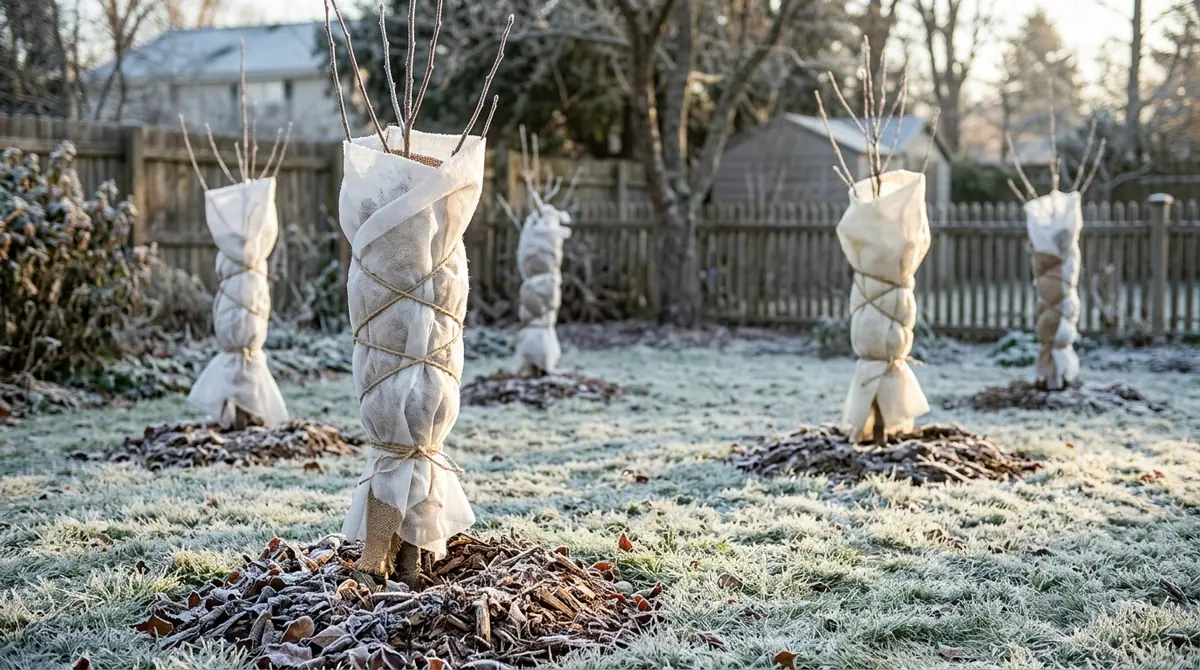
A sudden freeze on the morning of October 14th can drop air temperatures to 27°F (-2.8°C), coating the fuzzy leaves of ‘Harken’ peach trees in a stiff, glittering crust of white frost. At that exact temperature, tender flower buds and late-hanging fruit stand zero chance against cellular rupture. Burlap sacks, string lights, and five-gallon buckets can be used to protect a harvest that takes eleven months to tend.

1. Botanical Overview & Natural Habitat
To protect your backyard fruit orchard from winter frost, you must first understand how fruit-bearing trees—such as apples (Malus domestica), peaches (Prunus persica), pears (Pyrus communis), and citrus varieties—cope with cold stress in their natural evolutionary habitats. Deciduous fruit trees originate from temperate regions where seasonal dormancy is an absolute biological necessity. As day lengths shorten in autumn, trees trigger abscission hormones, seal off their leaf stems, and pull valuable carbohydrates down into their root systems and woody scaffolds.
Citrus trees, conversely, evolved in subtropical understories and lack this deep dormancy mechanism. When temperatures plunge, deciduous trees can withstand sub-freezing conditions by synthesizing sugars and proteins that act as natural antifreezes within their cellular sap. However, this cold hardiness is not static. A tree's vulnerability changes drastically across its phenological cycle. In mid-winter, a dormant apple tree can easily tolerate temperatures dropping to -25°F (-31.7°C). But once spring's warmth coaxes sap to flow and bud scales to break, that same tree can suffer catastrophic vascular damage at a mere 28°F (-2.2°C).
Understanding this distinction dictates your frost protection strategy. Winter protection is not merely about keeping a tree warm; it is about managing its dormancy timeline, preventing premature de-acclimatization during unseasonably warm winter thaws, and shielding fragile, emerging tissues from late spring radiation freezes.
| Parameter | Optimal Condition | Common Mistake | Why It Matters |
|---|---|---|---|
| Critical Freeze Temp (Bud Stage) | 26°F to 30°F (-3.3°C to -1.1°C) | Assuming dormant hardiness applies in spring | Active sap and swelling buds have zero tolerance for sustained sub-freezing air. |
| Mulch Depth & Radius | 3 to 4 inches (7.6 to 10 cm) deep, 3 feet (91 cm) wide | Piling mulch directly against the tree trunk ("volcano mulching") | Traps moisture against the bark, inviting collar rot and subterranean pests. |
| Soil Moisture at Freeze | Field capacity (thoroughly moist) | Leaving soil bone dry before a hard freeze | Dry soil holds significantly less radiant heat than damp soil, dropping orchard ambient temps by 2°F to 4°F (-1.1°C to -2.2°C). |
| Irrigation Timing | Late afternoon before a frost event | Running sprinklers or drip lines during the peak freeze | Afternoon watering allows the soil to absorb and store solar thermal energy for nighttime radiation. |
2. Essential Environmental & Care Requirements
Successful frost mitigation begins long before the first frost advisory flashes across your phone screen. A healthy, stress-free fruit tree possesses thick cell walls, robust energy reserves, and balanced nutrient profiles that naturally resist cold injury better than a starved, drought-stressed specimen.
First, examine your orchard’s microclimate. Cold air is denser than warm air; it cascades down slopes and pools in low-lying backyard depressions, known colloquially as frost pockets. If your orchard sits at the bottom of a slope, you must ensure unobstructed pathways for cold air to drain away, or install physical deflection barriers like solid fences with open bottom gates.
Soil composition dictates how much thermal energy your orchard can store during the day and release at night. Compacted, bare clay or sandy soils radiate heat poorly. Amending your orchard floor with organic matter improves soil structure and heat retention. Furthermore, maintain proper hydration throughout late autumn. Many growers mistakenly withhold water in winter, forgetting that dry soil has a lower specific heat capacity than moist soil.
💡 Pro-Tip: Never apply nitrogen-heavy fertilizers past mid-summer (typically late July in northern climates). Late-season nitrogen flushes force trees to push tender, succulent vegetative growth that cannot harden off before freezing temperatures arrive, acting as an open invitation for severe frost kill.
3. Step-by-Step Cultivation, Feeding & Propagation
When a hard freeze is forecasted, you need a precise, methodical execution plan to safeguard your investment. Follow this step-by-step protocol to winterize and protect your backyard fruit orchard effectively:
- Perform a Late Autumn Sanitization and Mulching (November): Clear away fallen fruit, rotting leaves, and dense weeds within a 4-foot (1.2 m) radius of each tree trunk. Apply a 3-inch (7.6 cm) layer of shredded hardwood bark or straw mulch over the root zone, keeping the mulch strictly pulled 3 inches (7.6 cm) away from direct contact with the trunk.
- Hydrate the Soil Thoroughly (24 Hours Before Frost): Soak the orchard floor deeply using a soaker hose or drip irrigation system. Wet soil absorbs significantly more solar radiation during daylight hours and radiates that heat upward into the tree canopy throughout the freezing night, raising ambient temperatures by several critical degrees.
- Wrap Tender and Young Trunks (Late November): For stone fruits (peaches, plums, apricots) and young trees under three years old, wrap the trunk from the soil line up to the first scaffold branches using commercial-grade tree wrap, burlap, or heavy kraft paper. This prevents frost cracking (south-sun scald), which occurs when winter sun warms the bark during the day and freezing night air splits the wood.
- Erect Overhead Thermal Tents (Evening Before Freeze): For dwarf and semi-dwarf fruit trees, construct temporary frames using PVC pipes or wooden stakes, and drape frost cloth or heavy burlap over the frame. Secure the fabric tightly to the ground using bricks, stones, or soil staples so wind cannot whip the heat away. Ensure the fabric reaches all the way to the soil to trap ground-heat.
- Deploy Passive or Active Heat Sources (During Deep Freezes): If temperatures are forecasted to drop below 20°F (-6.7°C), place C9 incandescent Christmas lights or commercial orchard heaters beneath your frost tents. Avoid modern LED lights, as they emit virtually no thermal energy.
- Remove Covers When Temperatures Rise (Morning After): As soon as morning ambient temperatures climb above 35°F (1.7°C) and the sun hits the orchard, remove or open your frost covers. Leaving plastic or heavy fabric tents on a warming tree can create a greenhouse effect, forcing premature bud break and cooking the foliage.
For those interested in expanding their cold-hardy backyard edible landscape while waiting out the winter chill, consider learning how to grow strawberries indoors: from fruit seeds to sweet berries to keep your gardening hands active year-round.
4. Common Problems, Pests & Troubleshooting
Winter frost protection introduces a unique set of secondary challenges that can compromise your orchard if you are not vigilant.
The most frequent issue is rodent and pest infestation under winter covers. Voles, mice, and rabbits love the cozy, sheltered environment created by heavy mulch rings and low-hanging frost cloth. These critters will girdle the bark of your fruit trees, feeding on the cambium layer and effectively killing the tree from the base up. To mitigate this, install hardware cloth cylinders (1/4-inch or 6 mm mesh) around the base of every trunk, sinking the bottom 2 inches (5 cm) into the soil.
Another common pitfall is premature de-acclimatization. Backyard growers often panic during a warm week in January, over-watering or fertilizing trees, or leaving heavy covers on too long. This tricks the tree into thinking spring has arrived, breaking its dormancy prematurely. Once active sap flows, a subsequent February freeze will devastate the vascular system. Always let natural weather cues dictate dormancy milestones.
Finally, watch for fungal outbreaks under prolonged damp covers. If an unexpected multi-day freezing rain event occurs, trapped moisture combined with restricted airflow underneath synthetic plastic covers can trigger powdery mildew or botrytis blight. Switch strictly to breathable woven frost cloth, and vent your protective structures whenever daytime temperatures rise above freezing.
⚠️ Important Caution: Never use thin plastic sheeting (like painter's drop cloths) directly touching plant foliage as a frost blanket. When plastic touches wet leaves, it conducts cold rapidly and creates microscopic ice crystals directly within the plant tissue, causing more damage than leaving the tree completely uncovered. Always use a frame to keep plastic off foliage, or substitute breathable organic frost cloth entirely.

5. Frequently Asked Questions
When is the exact moment I need to cover my fruit trees for frost?
You should install your protective frost blankets and secure heating elements in the late afternoon—specifically 2 to 3 hours before sunset. This timing traps the maximum amount of daytime solar heat radiating off the soil before ambient temperatures begin their rapid evening plummet.
Can I use old bedsheets to protect my fruit trees?
Yes, cotton bedsheets, drop cloths, and canvas tarps work well in a pinch for short-duration light frosts. However, they absorb atmospheric moisture, become heavy when wet, and lose their insulating value during prolonged sub-freezing spells or freezing rain. Dedicated non-woven polypropylene frost cloth is always superior for deep freezes.
What temperature kills apple and peach blossoms?
Apples and peaches have varying vulnerability thresholds depending on their developmental stage. Fully dormant buds can withstand extreme sub-zero cold. However, when buds swell and show color, 10% of peach blossoms will suffer damage at 25°F (-3.9°C), and 90% will perish at 21°F (-6.1°C). Apples are slightly more resilient, but open blossoms will sustain severe damage at 28°F (-2.2°C).
How do I save a fruit tree that has already suffered severe frost damage?
Patience is your greatest tool here. Do not prune away frost-damaged wood immediately after a freeze, even if the twigs look brittle and brown. Pruning stimulates new growth, which exposes the tree to further vulnerability if subsequent freezes occur. Wait until late spring when the tree naturally breaks dormancy, allowing you to clearly distinguish between live wood and dead, necrotic tissue before making clean pruning cuts.
Related Guides
- Best Plant Covers for Winter Frost
- Best Organic Pest Control Methods for Backyard Fruit Trees
- How to Protect Balcony Plants from Strong Winds and Harsh Sun
- How to Make a Wooden Decoy Bird to Protect your Garden
- How to Create a Small Frog Pond in a Backyard Garden
- Best Bird Nesting Boxes for Backyard Wildlife Conservation
📋 Table of Contents ▼ Click to expand
Tags:
Keep reading
🌿 Related Plants You Might Like



PlantSavvyWorld
Editorial team
PlantSavvyWorld is an independent botanical education project. Articles are drafted with AI assistance, then edited and checked against university extension services, botanical garden collections and other published horticultural sources.