Written with AI assistance, edited and checked against horticultural sources.
A sudden 18°F (-7.8°C) freeze dropping over USDA Hardiness Zone 7b gardens can cause tender landscape specimens entering their final autumn flush to experience ruptured cell walls if unshielded evergreen perennials rely on old bedsheets instead of proper horticultural thermal protection. Saving delicate flora from freezing temperatures isn't about throwing any old fabric over a stem; it is a precise exercise in thermodynamics, plant physiology, and material science.
When searching for the best plant covers for winter frost, you need to look past aesthetic appeal and examine weave density, material weight, and heat-trapping capabilities. Whether you are safeguarding sub-tropical container plants or protecting early spring crops—much like calculating the precise root space needed when checking How Deep Do Pepper Plant Roots Go? Pot Size & Substrate Depth Guide—understanding how to insulate foliage without smothering living tissue is vital for a thriving garden year-round.
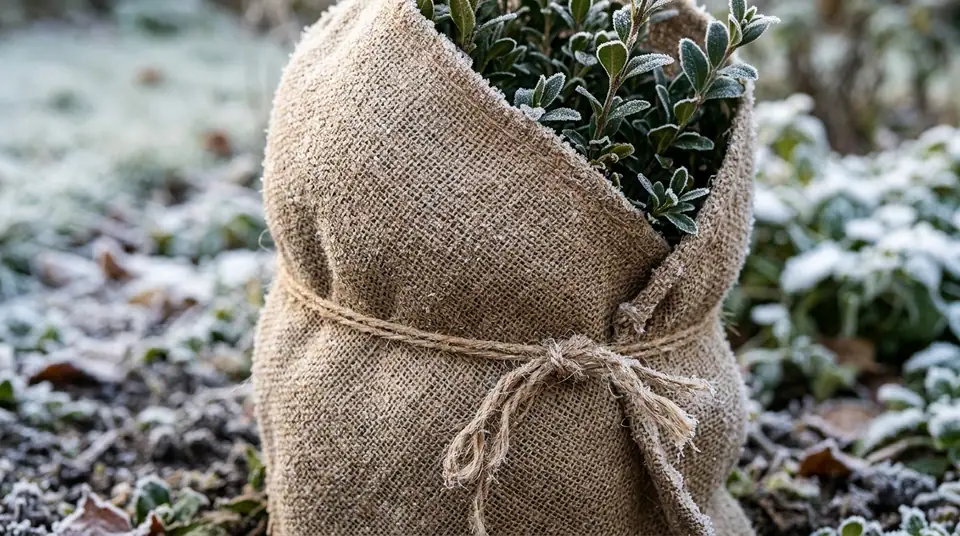
Frost-covered plant wrapped in burlap tied with twine in a winter garden
1. Botanical Overview & Natural Habitat
To understand why plants suffer during a frost, we must first look at how species have evolved across diverse native habitats. Plants native to tropical understories, Mediterranean microclimates, or high-altitude alpine zones possess completely different cellular adaptations for surviving thermal drops.
When ambient temperatures fall below 32°F (0°C)—and specifically past the critical damage threshold of 28°F (-2.2°C) for tender tissue—the water inside and between plant cells (the apoplast and symplast) begins to freeze. As ice crystals form, they pierce cell membranes, causing cell collapse, dehydration, and eventual necrosis.
In nature, plants in cold climates avoid this through cold acclimation, triggered by shortening photoperiods and gradually dropping temperatures down to 40°F (4.4°C). This process increases sugar concentrations in cell sap (acting as a natural antifreeze), thickens cuticles, and drops moisture content within stems. However, exotic landscape specimens, ornamental tropicals, and unacclimated container plants lack these genetic defense mechanisms. When a sudden frost strikes, using specialized winter plant covers artificially recreates a protective microclimate, trapping radiant heat emitted from the soil—which typically retains heat much longer than the night air—and raising the ambient temperature immediately surrounding the plant canopy by 3°F to 8°F (-16.1°C to -13.3°C).
2. Essential Environmental & Care Requirements
Selecting and deploying the correct winter frost cover requires balancing thermal retention, light transmission, and moisture management. If you cover a plant with a material that blocks all sunlight during a multi-week cold snap, the plant suffers from etiolation and starvation. Conversely, using a material that is too thin will allow radiant heat to escape instantly into the night sky.
Parameter
Optimal Condition
Common Mistake
Why It Matters
Material Weight
1.5 to 2.5 oz/sq yd (50–85 g/m²) non-woven polypropylene
Using heavy canvas or thick plastic directly on leaves
Heavy or wet materials crush stems, while unvented plastics cook foliage the moment the sun hits them.
Ground Anchoring
Sealed tightly to the soil using landscape staples or soil mounds
Draping like a tent without sealing the base
Wind sweeps underneath, siphoning off trapped soil heat and freezing the root zone.
Duration of Cover
Removed daily when temperatures rise above 35°F (1.7°C)
Leaving covers on continuously for weeks
Trapped humidity breeds fungal pathogens like Botrytis cinerea (gray mold).
Moisture Level
Deeply watered soil 24 hours prior to a hard freeze
Covering bone-dry soil during a cold front
Moist soil absorbs and radiates significantly more solar thermal energy than dry soil.
💡 Pro-Tip: Always water your garden beds thoroughly the afternoon before a forecasted hard freeze. Water has a high specific heat capacity, meaning wet soil acts as a massive thermal battery, slowly releasing heat upward into your frost-covered canopy all through the night.
Preparing your landscape for winter frost protection is a systematic procedure that should begin well before the first freeze arrives. Follow this proven protocol to safeguard your perennial beds and woody ornamentals:
Clear and Sanitize the Root Zone: Remove fallen leaves, dead debris, and weeds from a 12-inch (30 cm) radius around the base of the plant to eliminate overwintering fungal spores and insect eggs.
Apply Organic Mulch Insulation: Spread a 3-inch (7.6 cm) to 4-inch (10 cm) layer of shredded hardwood bark or straw around the base of the plant, keeping the mulch 2 inches (5 cm) away from the actual woody stems to prevent crown rot.
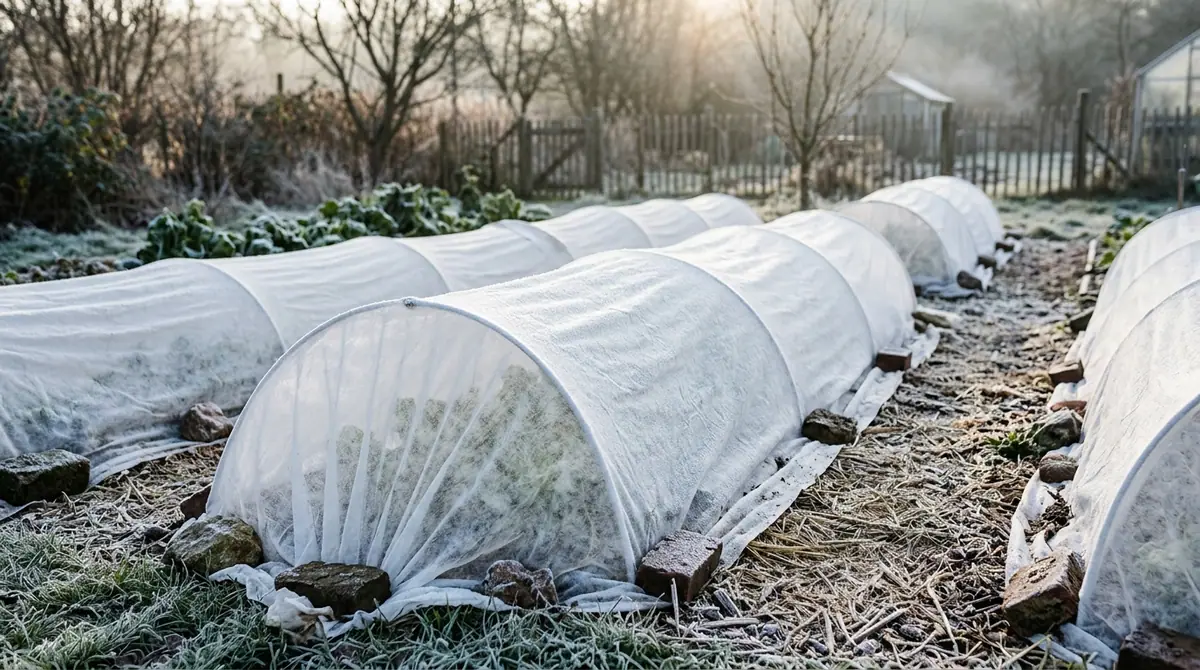
Construct a Rigid Support Framework: Drive 3 or 4 bamboo stakes or PVC hoops into the ground around the plant, ensuring the framework stands at least 2 inches (5 cm) taller and wider than the plant's ultimate canopy width. This prevents the cover fabric from touching and freezing the outer leaves.
Select and Drape the Cover: Choose a commercial-grade, spun-bond polypropylene floating row cover (often rated for down to 20°F [-6.7°C] or lower). Carefully lower the fabric over your support frame, ensuring zero direct contact between the material and the plant foliage.
Secure the Perimeter: Weigh down the bottom edges of the fabric entirely around the base using heavy stones, bricks, or by burying the bottom 4 inches (10 cm) of fabric directly in the garden soil to prevent wind uplift.
Monitor and Vent: Check local weather forecasts daily. As soon as daytime ambient temperatures climb safely above 35°F (1.7°C), peel back or remove the cover to promote air circulation and prevent overheating.
To dive deeper into regional planting schedules and protecting seasonal crops against temperature swings, consult the When to Plant Strawberries in Kansas: Zone 6a/6b Seasonal Calendar. For growers managing urban yards or tight perimeter borders, similar microclimate management principles apply when selecting structural elements like 15 Best Trees for Driveways That Won't Crack Concrete.
4. Common Problems, Pests & Troubleshooting
Even with the best winter covers, issues can arise during prolonged cold snaps or unseasonably damp winters.
Fungal Outbreaks (Powdery Mildew & Gray Mold): Caused by leaving non-breathable covers on during warm, humid winter days. Solution: Immediately strip off the cover when temperatures rise, prune away infected leaves, and apply a copper-based bio-fungicide if necessary.
Stem Breakage from Ice and Snow Load: Heavy wet snow accumulating on top of flimsy frost cloth frames can snap central leaders and scaffold branches. Solution: Build your support frames with a pitched or arched peak so snow slides off naturally, or gently brush off accumulated snow loads with a soft broom every morning.
Rodent and Vole Infestations: Warm, dark spaces created underneath thick frost covers make ideal nesting grounds for mice, voles, and rabbits that will chew through delicate bark for sustenance. Solution: Wrap the lower 6 inches (15 cm) of trunk with hardware cloth before applying your frost blanket, and ensure the outer fabric skirt is tightly pinned to the ground.
⚠️ Important Caution: Never use clear plastic sheeting directly draped over plant foliage as a winter frost cover. While plastic traps heat effectively on a windless night, the greenhouse effect will cause temperatures inside the enclosure to skyrocket past 85°F (29.4°C) the moment direct morning sunlight hits it, literally cooking the plant's leaves to death in hours. If you use plastic, it must serve strictly as an outer layer over a breathable fabric frame, with open bottom ventilation.
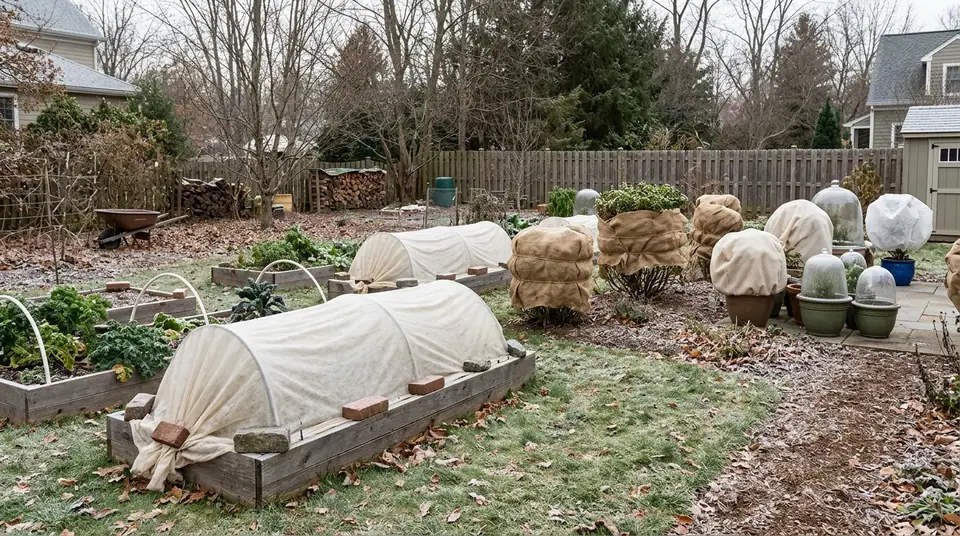
Various plants protected with frost covers, burlap sacks, and cloches in a winter garden
5. Frequently Asked Questions
What is the absolute best material to use for a winter plant cover?
The gold standard in horticulture is spun-bond polypropylene (commonly sold as frost cloth or floating row cover). It is lightweight, UV-stabilized, allows air and 30% to 50% of sunlight to penetrate, and typically provides between 4°F and 8°F (-15.6°C to -13.3°C) of frost protection depending on the fabric weight (measured in ounces per square yard). For further technical insights on plant hardiness ratings, consult the USDA Plant Hardiness Zone Map.
Can I just use old bedsheets to cover my plants during a freeze?
Cotton bedsheets offer minimal frost protection—typically raising the ambient temperature around the plant by only 1°F to 2°F (-17.2°C to -16.7°C). Furthermore, if it rains or snows, cotton absorbs the moisture, becomes heavy, and freezes solid against the leaves, accelerating tissue damage. If you must use bedsheets in an emergency, you must place a plastic layer over them to keep the fabric dry, and remove them promptly by mid-morning.
How low of a temperature can floating row covers protect against?
Standard lightweight row covers (0.5 to 0.9 oz/sq yd) protect down to about 28°F to 32°F (-2.2°C to 0°C). Medium to heavy-weight frost blankets (1.5 to 2.5 oz/sq yd) can protect plants down to 20°F to 24°F (-6.7°C to -4.4°C). For severe Arctic blasts dropping below 15°F (-9.4°C), you will need heavy thermal frost blankets combined with incandescent Christmas lights or a dedicated low-wattage horticultural heating cable threaded through the canopy. To learn more about regional extension recommendations for extreme weather management, visit the Royal Horticultural Society (RHS).
When should I remove my winter plant covers in the spring?
You should permanently remove winter frost covers in early spring only after all danger of hard, sustained freezes has passed and your area's average last frost date has safely arrived. Removing them too early exposes tender, etiolated growth to late-season frost jolts, while leaving them on too long delays necessary hardening-off and starves the plant of vital spring sunlight.
PlantSavvyWorld is an independent botanical education project. Articles are drafted with AI assistance, then edited and checked against university extension services, botanical garden collections and other published horticultural sources.