

Complete Guide to Winter Vegetable Harvesting for Beginners
Written with AI assistance, edited and checked against horticultural sources.
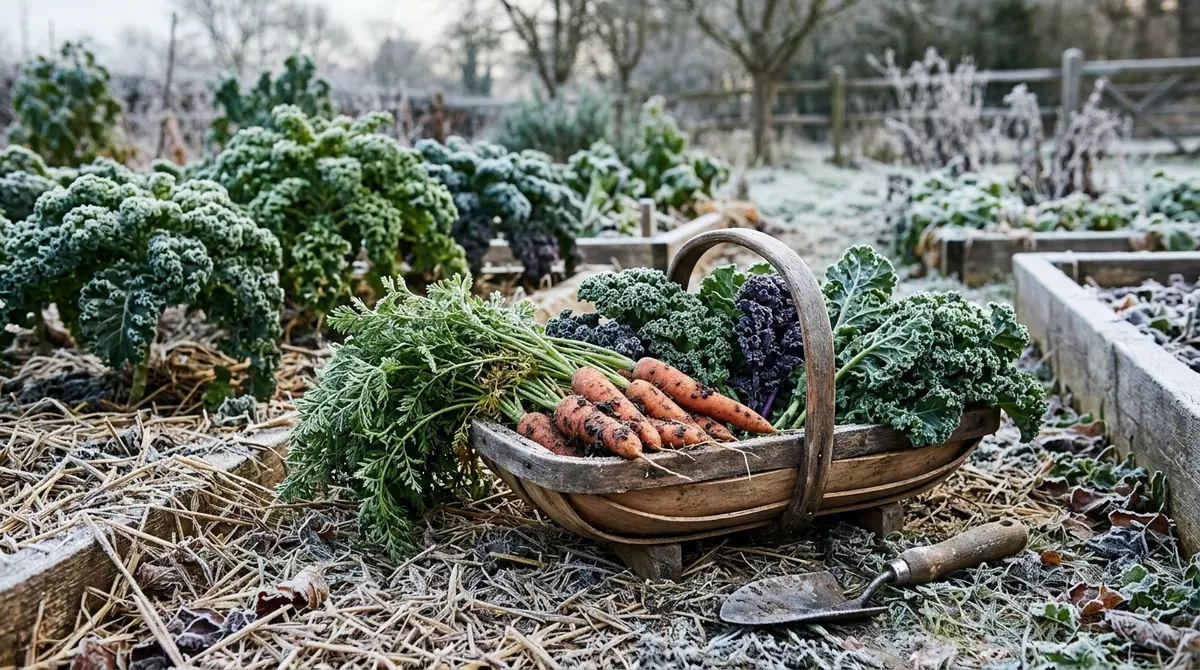
The frost on my 1947 cast-iron garden bench was three millimeters thick when I stepped out into the garden last November at 6:45 AM, gripping a pair of bypass pruners and a steaming mug of black coffee. The soil beneath my heavy rubber boots was frozen solid to a depth of 2 inches (5 cm), crunching like brittle glass underfoot. Yet, tucked under a low-profile hoop house just three yards away, a row of crisp, deep-green 'Winterbor' kale and sweet 'Nantes' carrots were waiting. When I snapped off a terminal kale leaf, the cell walls—stuffed with natural sugars accumulated as a cellular antifreeze response—yielded with a sharp, clean crack. That morning harvest tasted sweeter than anything I picked in the blazing heat of July. If you think the gardening year ends with the first hard freeze, this complete guide to winter vegetable harvesting for beginners is going to change how you feed your household forever.
1. Botanical Overview & Natural Habitat
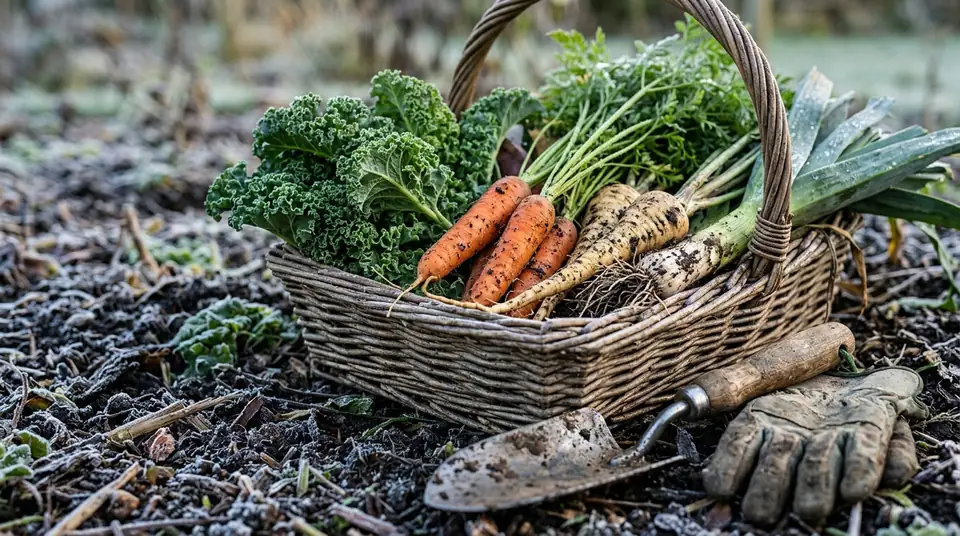
From a botanical standpoint, cold-hardy plants undergo a physiological process known as cold acclimation or hardening off. When ambient temperatures drop consistently below 45°F (7°C) and day lengths shorten, these plants slow their vegetative top growth and redirect metabolic energy downward. They synthesize and accumulate compatible solutes within their cellular cytoplasm—primarily sugars, amino acids like proline, and sugar alcohols. These compounds act as biological antifreeze, lowering the freezing point of the cell sap and stabilizing cell membranes against ice crystal puncture.
For instance, brassicas like Brassica oleracea (kale, collards, Brussels sprouts) and root vegetables like Daucus carota (carrots) convert complex starches into simple sugars when exposed to temperatures hovering near 32°F (0°C) to 28°F (-2.2°C). This is the exact reason why a January parsnip or winter spinach tastes remarkably sweet compared to its summer-harvested counterpart. Understanding this mechanism allows us to work with the plant's natural defense systems rather than fighting the climate.
| Parameter | Optimal Condition | Common Mistake | Why It Matters |
|---|---|---|---|
| Soil Temperature | 35°F to 50°F (1.7°C to 10°C) for active holding | Planting in waterlogged, frozen mud | Anoxic conditions cause root rot before nutrient uptake can occur. |
| Air Temperature | 20°F to 45°F (-6.7°C to 7.2°C) for harvest | Harvesting crops while deeply frozen | Turgid, ice-filled cell walls rupture under pressure, turning leaves to mush. |
| Soil pH | 6.0 to 7.0 for optimal nutrient availability | Ignoring pH adjustments in autumn | Acidic soils lock up phosphorus, which is critical for root and cold resilience. |
| Light Exposure | Minimum 4 to 6 hours of direct winter sun | Shading beds with dense frost blankets all day | Low light halts photosynthesis, starving the plant of necessary sugars. |
2. Essential Environmental & Care Requirements
Managing a winter vegetable garden is fundamentally an exercise in microclimate management and water conservation. While summer growing focuses on cooling plants and maximizing hydration, winter growing is about capturing solar radiation, mitigating wind chill, and preventing destructive freeze-thaw cycles.
Light is your most critical limiting factor. As day lengths plummet below 10 hours in many temperate zones, the angle of the sun drops significantly. Site your winter growing beds against south-facing walls, fences, or slopes where they can capture maximum thermal mass and solar radiation. Brick and stone walls absorb heat during meager daylight hours and slowly radiate it back to nearby plants through the freezing night, often raising the ambient microclimate temperature by 3°F to 5°F (-16°C to -15°C).
Moisture management during winter trips up many beginners. Because transpiration rates drop drastically in cold weather, winter crops require far less water than summer crops. However, they still need moisture. Dry, frozen winds wick away foliar and soil moisture rapidly, leading to a phenomenon known as winter burn or desiccation. Maintain a consistent soil moisture level—aim for dampness equivalent to a wrung-out sponge at a depth of 3 inches (7.6 cm)—by watering deeply on unfreezing mornings when air temperatures rise above 40°F (4.4°C).
Soil structure dictates winter survival. Heavy clay soils that retain excessive water will expand when freezing, physically heaving root systems out of the ground—a destructive process known as frost heaving. To prevent this, amend beds heavily with coarse organic matter, sharp horticultural sand, or aged compost to ensure rapid drainage. Furthermore, applying a 3 to 4-inch (7.6 to 10 cm) layer of clean straw, shredded hardwood bark, or chopped autumn leaves as a mulch blanket stabilizes soil temperatures and cushions root zones against extreme fluctuations. For those also balancing indoor horticulture during the dormant season, reviewing our Holiday Plants Care Guide: How to Force Poinsettias to Rebloom & Holiday Cacti ID offers valuable insights into managing indoor microclimates when outdoor conditions turn severe.
💡 Pro-Tip: Never harvest winter greens or root crops while they are actively frozen solid. If you walk out to your garden at 8:00 AM and your kale leaves feel like stiff porcelain, wait until midday. When the sun hits the leaves and internal temperatures rise above 32°F (0°C), the ice crystals melt, cell turgor pressure normalizes, and you can harvest without bruising or destroying the market quality of the foliage.
3. Step-by-Step Cultivation, Feeding & Propagation
Successful winter harvesting is not executed in December; it is engineered in late summer. Winter crops must be planted 6 to 10 weeks before your region's average first fall frost date so they reach a mature, robust "holding size" before growth stalls out entirely due to diminishing light and plummeting temperatures.
Here is the exact step-by-step protocol for establishing a productive winter harvest system:
- Calculate Planting Timelines: Work backward from your first fall frost date. For cold-hardy crops like spinach (Spinacia oleracea), mâche (Valerianella locusta), winter radishes, and hardy kales, sow seeds in late August through mid-September. This allows them to develop an extensive root system and sturdy frame while soil temperatures remain warm.
- Prepare and Amend the Soil: Clear spent summer crops and incorporate 2 inches (5 cm) of nutrient-dense, finished compost into the top 6 inches (15 cm) of soil. Work in a balanced, slow-release organic fertilizer high in phosphorus and potassium to encourage strong root development and cellular hardiness rather than lush, vulnerable leaf growth.
- Sow at Correct Depths and Spacing: Plant small seeds like spinach and claytonia at a depth of 0.25 to 0.5 inches (0.6 to 1.3 cm). Space brassica seedlings (like 'Purple Sprouting' broccoli or Brussels sprouts) roughly 12 to 18 inches (30 to 45 cm) apart to ensure adequate air circulation once protective covers are deployed.
- Install Passive Protection Structures: As night temperatures consistently dip below 32°F (0°C), erect low tunnels or cold frames. Drive half-inch PVC hoops or rigid metal electrical conduit every 4 feet (1.2 m) over your beds. Drape a medium-weight spun-bonded polypropylene row cover (0.9 oz to 1.5 oz per square yard) or heavy-duty greenhouse-grade polyethylene film over the hoops, burying the edges securely with soil or heavy stones to prevent wind lift.
- Monitor and Ventilate: On sunny winter days when ambient temperatures inside the low tunnel exceed 55°F (12.8°C), prop open the ends of your low tunnels. Trapped, stagnant heat coupled with high humidity will rapidly invite fungal pathogens like powdery mildew or botrytis botrytis.
- Execute the Harvest: Harvest outer leaves of greens continuously to encourage ongoing production from the central growing tip, or harvest entire heads of rosette-forming crops like winter cabbage by slicing them cleanly at the soil line with a sharp, sanitized hori-hori knife. For in-depth regional planting schedules and climate-specific guidelines, consult the comprehensive resources provided by the RHS Vegetable Growing Advice.
⚠️ Important Caution: Do not apply high-nitrogen synthetic fertilizers to your winter vegetables after mid-autumn. Nitrogen stimulates soft, succulent, rapid cell division. These tender, water-laden cells lack the necessary sugars and thick walls to survive freezing temperatures, turning your crop into an instant casualty of the first hard frost.
4. Common Problems, Pests & Troubleshooting
Winter gardening eliminates many common summer pests, but it introduces a distinct suite of challenges that can devastate an unmonitored crop.
Slugs and snails (Deroceras reticulatum) remain active long past the first frost, particularly under the damp, insulating environment of low tunnels and heavy mulch layers. Because cold-hardy greens are growing slowly, even minor slug damage can permanently deform leaves and introduce secondary bacterial rots. Hand-pick slugs at dusk using a flashlight, or apply iron phosphate-based bait sparingly around the perimeter of your cold frames.
Volines and mice (Microtus species) frequently seek refuge in winter garden beds, especially once the surrounding landscape dies back. These rodents tunnel beneath straw mulch and chew through the sweet, sugary taproots of carrots, parsnips, and beets, or girdle the main stems of brassicas just below the soil line. To combat this, maintain a 12-inch (30.5 cm) weed-free, mulch-free perimeter around your raised beds or low tunnels, and sink hardware cloth with a 0.25-inch (0.6 cm) mesh 6 inches (15 cm) underground if rodent pressure is severe.
5. Frequently Asked Questions
Which vegetables taste sweeter after a hard frost?
Crops belonging to the brassica family (such as kale, collards, Brussels sprouts, cabbage, and tatsoi) and certain root vegetables (parsnips, carrots, rutabagas, and winter radishes) undergo a process called cryoprotection. When exposed to temperatures below 32°F (0°C), they break down starches into soluble sugars. These sugars act as a natural antifreeze inside the plant's cells, significantly enhancing their culinary sweetness and flavor complexity.
How do I keep my winter vegetables from freezing solid into mush?
The key is preventing sudden, violent freeze-thaw cycles and avoiding harvesting while tissue is frozen. Use low tunnels, cold frames, or heavy frost blankets to buffer extreme temperature drops. Furthermore, ensure your soil is well-drained so roots do not sit in expanding, ice-laden mud. If plants do freeze, leave them completely undisturbed until the afternoon sun naturally thaws the cell walls.
Do winter vegetables need fertilizer during the dormant season?
No. Once ambient temperatures consistently drop below 45°F (7°C) and day lengths shorten, winter vegetables enter a state of physiological dormancy or slow holding. Their metabolic processes slow down dramatically, meaning they cannot process or utilize nutrients. Applying fertilizer during this period is useless at best and harmful at worst, as it can burn dormant roots or stimulate weak, frost-vulnerable growth.
Can I grow winter vegetables in containers on a balcony?
Yes, absolutely. Growing in containers is an excellent way to harvest fresh winter greens if you lack in-ground garden space. However, container soil freezes much faster and deeper than in-ground garden beds because root zones are exposed on all sides. Select frost-proof containers made of heavy resin, thick wood, or fiberglass (avoiding brittle ceramic or unsealed terracotta that cracks when wet soil expands), and insulate the outer walls of the pots with burlap or bubble wrap to protect the root systems from fatal deep freezes.
Related Guides
- Best Vegetable Gardening Books for Beginners
- How Long Does It Take for Tomatoes to Grow Tomato Growing and Harvesting Guide
- Growing Harvesting Spaghetti Squash
- Best Gardening Apron with Pockets for Harvesting Tools 2020
- Complete Garden Tool Maintenance Checklist for Winter
📋 Table of Contents ▼ Click to expand
Tags:
Keep reading
🌿 Related Plants You Might Like






PlantSavvyWorld
Editorial team
PlantSavvyWorld is an independent botanical education project. Articles are drafted with AI assistance, then edited and checked against university extension services, botanical garden collections and other published horticultural sources.