

Best Gardening Apron with Pockets for Harvesting Tools 2020
Written with AI assistance, edited and checked against horticultural sources.
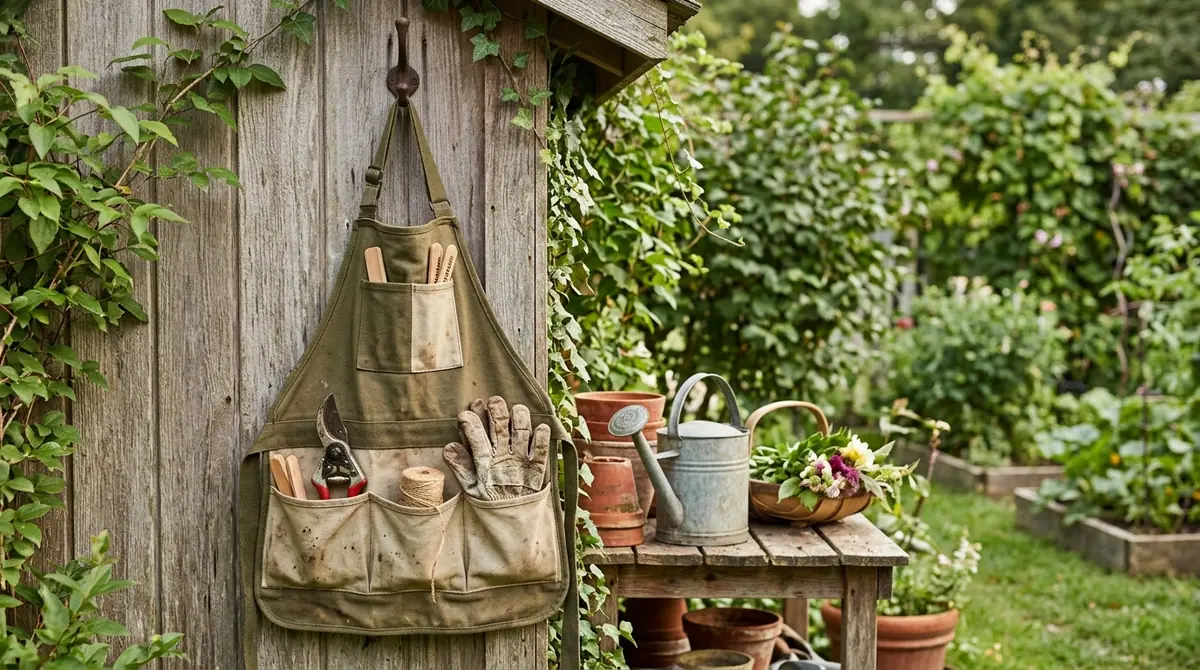
In Zone 6b gardens, harvesting tools and aprons are essential when working up to 10 hours a day crouched, bending, reaching, and collecting everything from delicate microgreens to heavy, 3 lb (1.4 kg) Cucurbita moschata winter squash. When moving down a 100-foot (30.5 m) row of indeterminate cherry tomatoes, the difference between a poorly balanced waist wrap and a structurally sound, pocket-engineered harvesting apron is the difference between effortless production and chronic lumbar fatigue. This is a definitive, field-tested guide to selecting and utilizing the absolute best gardening apron with pockets for harvesting tools.
1. Botanical Overview & Natural Habitat
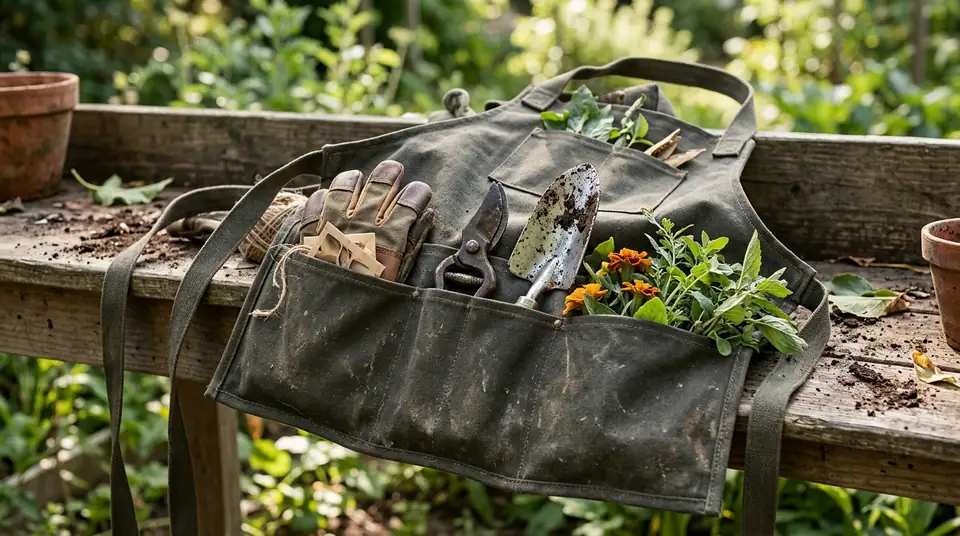
In natural ecosystems, plants have evolved complex defensive structures to prevent herbivory. Thorns, trichomes, and lateral branch angles create a hostile physical environment for the harvester. A proper harvesting apron acts as an ergonomic extension of the gardener's anatomy, creating a centralized depot for cutting tools, twine, labels, and harvested produce.
+-----------------------------------------------------------------+
| ANATOMY OF AN ERGONOMIC HARVESTING APRON |
+-----------------------------------------------------------------+
| |
| [X-Back Straps] <--- Distributes weight evenly |
| \ |
| \ |
| +--------------------------+ |
| | Reinforced Chest Pocket | <--- For markers, phones, seed |
| +--------------------------+ packets |
| | |
| +------------------+ |
| | Hori Hori Holster| <--- Molded sheath for sharp steel |
| +------------------+ |
| | |
| +------------------------------------------+ |
| | Deep Kangaroo Harvesting Pouch (Drop-Out)| |
| | [Bottom-Release Zippers/Snaps] | |
| +------------------------------------------+ |
| | |
| [Waist Belt & Quick-Release Buckle] |
| |
+-----------------------------------------------------------------+
From a plant-health perspective, using dedicated pockets for harvesting tools prevents cross-contamination of pathogens. Plant viruses like Tobacco Mosaic Virus (TMV) or fungal spores like Botrytis cinerea can easily hitchhike on dirty tool blades or fingers. A well-designed apron keeps your secateurs, pruners, and micro-snips segregated from weed debris, soil, and diseased tissue. Furthermore, when working around structural landscape elements—such as installing or maintaining structural layouts near driveways, akin to managing the root zones outlined in our guide on 15 Best Trees for Driveways That Won't Crack Concrete—having secure, puncture-proof tool housing ensures your gear stays intact while you navigate tight spaces.
2. Essential Environmental & Care Requirements
A harvesting apron is a wearable tool that operates in hostile microclimates: high humidity, fluctuating temperatures ranging from freezing early spring mornings to 95°F (35°C) summer afternoons, abrasive soils, and caustic plant sap. Maintaining your apron is just as critical as maintaining your bypass pruners.
| Parameter | Optimal Condition | Common Mistake | Why It Matters |
|---|---|---|---|
| Fabric Weight | 10 oz to 16 oz waxed canvas or heavy Cordura nylon | Choosing lightweight cotton or decorative linen | Heavy fabrics resist punctures from thorns and sharp tool tips, preventing wear-through. |
| Stitching Density | 8 to 10 stitches per inch with bonded nylon thread | Single-stitch hems and polyester thread | High-stress zones (pocket corners) will tear under the weight of 5 lbs (2.3 kg) of produce without bar-tack reinforcement. |
| Cleaning Frequency | Brush out debris weekly; wash in cold water monthly | Machine drying on high heat | High heat melts synthetic water-resistant coatings and shrinks natural cotton fibers, warping pockets. |
| Hardware Material | Solid brass, nickel-plated steel, or industrial acetal buckles | Cheap plated alloy or plastic snap hooks | Sub-standard metals corrode rapidly when exposed to acidic plant saps and damp garden soils. |
When selecting an apron for harvesting tools, look for reinforced stress points. The bottom corners of tool pockets bear the brunt of heavy steel blades moving dynamically as you bend down to harvest low-growing crops like bush beans (Phaseolus vulgaris) or strawberries.
💡 Pro-Tip: Rub a block of natural beeswax into the canvas seams of your harvesting apron twice a year and hit it with a handheld hair dryer to melt it in. This creates an impermeable, self-healing barrier against sticky tomato sap, squash vine exudate, and morning dew, extending the working life of your apron by at least five years.
3. Step-by-Step Cultivation, Feeding & Propagation
While you don't "grow" a harvesting apron, adopting a rigorous operational protocol for how you pack, wear, and unload your apron will transform your harvesting efficiency. Follow this step-by-step workflow when heading out into the garden:
- Perform a Pre-Flight Inventory Check: Before donning your apron, inspect the tool pockets for residual debris, dead insects, or damp organic matter from the previous harvest. Empty all pockets to prevent the accumulation of fungal spores that can transfer to fresh produce.
- Secure the Weight Distribution System: Fasten the waist belt first, adjusting it snugly around your hips (not your true waist) to transfer weight off your lumbar spine. If your apron features an X-back strap configuration, pull the shoulder cross-straps tight enough to lift the sagging weight of the front harvesting pouch.
- Load Cutting Implements into Dedicated Holsters: Slide your sharpest implements—such as Japanese hori hori knives, curved harvesting knives, and bypass pruners—into leather or reinforced-canvas scabbards. Never drop naked steel blades loosely into open cloth pockets where they can puncture the fabric or cause personal injury when you bend over.
- Designate Harvesting Sectors: Assign specific pockets for specific tasks. Keep your flagging tape, plant markers, and seed-saving envelopes in the upper chest pockets. Reserve the deep lower kangaroo pouch strictly for harvested produce, keeping soft fruits separated from heavy root vegetables.
- Execute the Bottom-Release Unload: When your lower harvesting pouch reaches capacity (typically 8 to 12 lbs / 3.6 to 5.4 kg of produce), approach your processing station. If your apron features a bottom-release zipper or snap-flap system, unclip it directly over your collection lug or washing basin to drop the harvest downward without bruising delicate skins.
- Post-Harvest Sanitization: Wipe down all tool blades with a 10% bleach solution or isopropyl alcohol before returning them to their holsters. Hang your apron in a well-ventilated, dry shed to prevent mildew development.
⚠️ Important Caution: Never carry open-flame weed torches, concentrated systemic herbicides, or unshielded grafting razors in soft-sided fabric apron pockets. A single misstep can result in chemical burns, systemic garden contamination, or severe lacerations. Always store hazardous chemicals in dedicated, locked utility cabinets rather than on your person.
4. Common Problems, Pests & Troubleshooting
Even the best-engineered gardening apron will encounter environmental stress and field degradation. Here is how to diagnose and resolve common issues:
- Symptom: Rips forming at the upper corners of tool pockets.
- Cause: The dynamic weight of heavy pruning shears combined with the leverage of kneeling and standing creates excessive shear stress on standard single-needle stitching.
- Solution: Repair using a heavy-duty sewing awl and waxed sailmaker's thread, executing a triangular bar-tack or reinforcement patch over the tear. For future prevention, consult the University of Illinois Extension Gardener's Toolbox Resources for equipment modification guides.
- Symptom: Persistent mold growth or mildew staining on the interior of the lower harvesting pouch.
- Cause: Storing damp produce or harvesting immediately after overhead irrigation without allowing the apron to air-dry.
- Solution: Scrub the affected area with a 1:1 solution of white vinegar and water, rinse thoroughly, and bake in direct sunlight for 4 hours to UV-sterilize the fibers.
- Symptom: Lower back strain and shoulder fatigue after two hours of harvesting.
- Cause: Improper weight distribution where the entire load is anchored around the soft tissue of the waist rather than suspended across the skeletal frame.
- Solution: Upgrade to a cross-back harness apron design. Distributing weight across the trapezius muscles and shoulders eliminates lower back torque. For deeper botanical insights on ergonomic body mechanics, review the research published by the Royal Botanic Gardens, Kew.
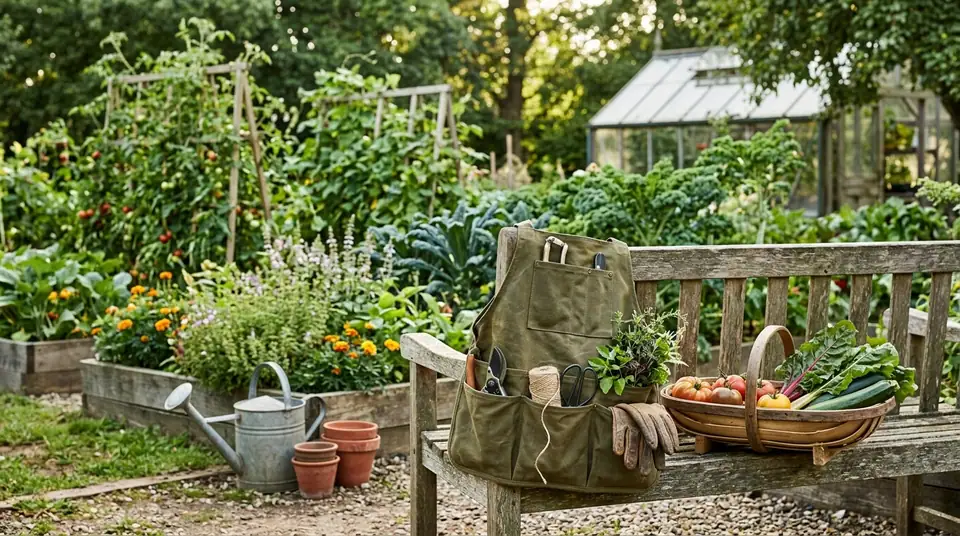
Green canvas apron with gardening tools and harvest basket on a wooden bench in a garden
5. Frequently Asked Questions
What is the best material for a heavy-duty harvesting apron?
Waxed canvas (ranging from 12 oz to 16 oz) or heavy-duty Cordura nylon are the gold standards. Waxed canvas offers superior puncture resistance against thorns, repels moisture and plant sap naturally, and develops a durable patina over years of heavy use without degrading under UV exposure.
Should I choose a waist-tie half apron or a full cross-back apron for harvesting?
For serious harvesting work involving heavy produce like winter squash or large quantities of tomatoes, a full cross-back apron is vastly superior. Half aprons tie around the waist, placing the entire load on your lumbar vertebrae, which leads to fatigue. Cross-back straps distribute the weight evenly across your shoulders and back.
How do I clean sticky tomato and squash sap off canvas apron pockets?
Scrape away dried crusts with a dull butter knife first. Rub the affected area with pure liquid castile soap or a citrus-based degreaser, let it sit for 15 minutes, and scrub gently with a stiff-bristled nylon brush. Rinse thoroughly with cold water and air dry. Never use hot water or machine drying on waxed canvas, as it will strip the protective wax coating.
Can a harvesting apron safely hold sharp tools like hori hori knives and pruners?
Yes, provided the apron features dedicated, reinforced scabbards or holsters constructed from thick leather, heavy webbing, or multi-layer canvas. Never place unprotected sharp steel blades directly into standard cloth pockets, as the tips will rapidly puncture the fabric and create a safety hazard.
Related Guides
- How to Sharpen Garden Tools Properly at Home
- Best Tools for Removing Deep Rooted Garden Weeds
- How Long Does It Take for Tomatoes to Grow Tomato Growing and Harvesting Guide
- Growing Harvesting Spaghetti Squash
- Complete Guide to Winter Vegetable Harvesting for Beginners
📋 Table of Contents ▼ Click to expand
Tags:
Keep reading
🌿 Related Plants You Might Like






PlantSavvyWorld
Editorial team
PlantSavvyWorld is an independent botanical education project. Articles are drafted with AI assistance, then edited and checked against university extension services, botanical garden collections and other published horticultural sources.