

Growing Harvesting Spaghetti Squash
Written with AI assistance, edited and checked against horticultural sources.
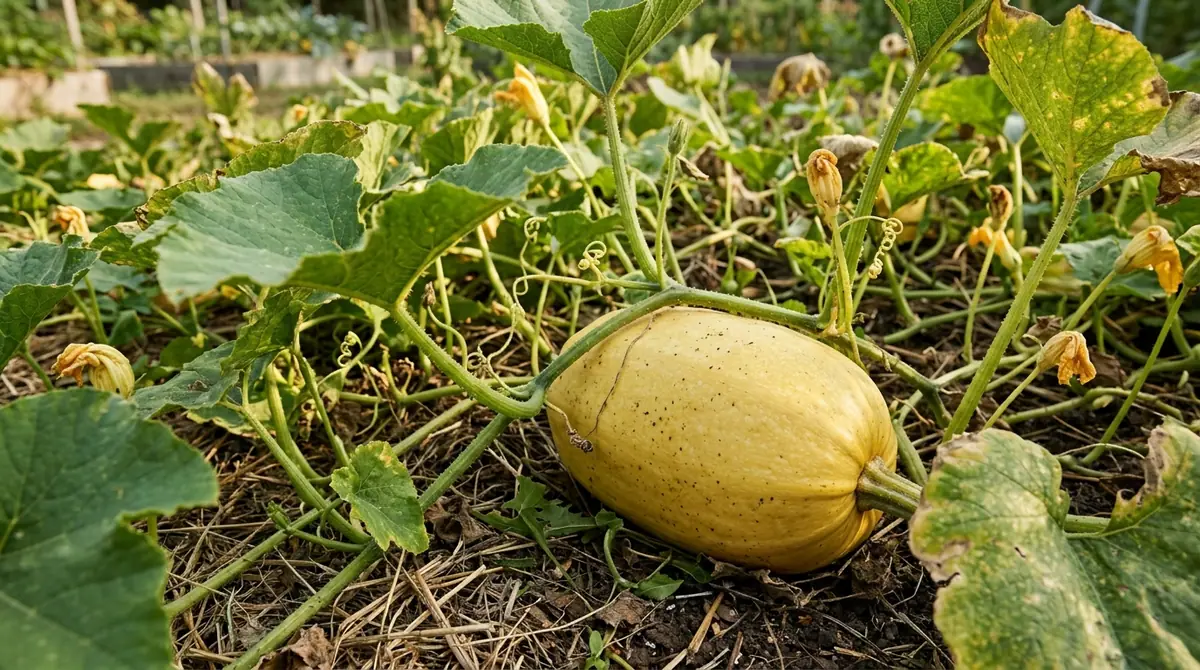
When a heavy, pale-yellow spaghetti squash (Cucurbita pepo) snaps its stem under its own weight, slicing it open reveals a wet seed mass that, when scraped away, leaves translucent, golden strands that separate effortlessly and tumble out like angel hair pasta. That moment of tactile satisfaction comes from planting at least six hills of Cucurbita pepo 'Vegetable Spaghetti' every single season, offering a combination of effortless kitchen versatility and high-yield garden performance. Mastering growing and harvesting spaghetti squash requires understanding exact biological triggers, soil chemistry, and structural requirements.
1. Botanical Overview & Natural Habitat

The most fascinating physiological feature of spaghetti squash is the unique structure of its endocarp (fruit flesh). Unlike the smooth, dense flesh of a butternut or acorn squash, spaghetti squash mesocarp and endocarp cells elongate and separate into rigid, stringy vascular strands upon cooking due to the unique orientation of cellulose microfibrils and the breakdown of pectic substances in the cell walls.
Wild ancestors of Cucurbita pepo originated in Mesoamerica, specifically the valleys of Oaxaca, Mexico, and the eastern woodlands of North America, where they adapted to warm, frost-free growing seasons with consistent moisture followed by dry periods. Understanding this evolutionary history dictates how we treat them in modern gardens: they demand high thermal units, intense solar radiation, and deep, well-draining soils rich in organic matter. They are monoecious plants, meaning individual vines bear separate male and female flowers on the same plant, relying heavily on native pollinators and honeybees for successful fertilization of the inferior ovary clearly visible beneath the female blooms.
2. Essential Environmental & Care Requirements
To produce a heavy harvest of uniform, sweet-fleshed squashes, you must optimize four core environmental parameters: temperature, light, soil composition, and hydration.
Temperature is the primary driver of growth velocity. Spaghetti squash seeds require a soil temperature of 70°F to 85°F (21°C to 29°C) for rapid germination, which typically takes 4 to 8 days. Ambient air temperatures should consistently range between 75°F and 90°F (24°C to 32°C) during the day and should not drop below 60°F (15°C) at night. Frost will instantly kill the plants, as the high water content in their cellular structure ruptures when ice crystals form.
Light exposure is non-negotiable. Select a site that receives a minimum of 8 to 10 hours of direct, unobstructed sunlight daily. Shaded vines will leg out, produce predominantly male flowers, and suffer from poor fruit set and high susceptibility to fungal pathogens like powdery mildew.
Soil must be fertile, loose, and biologically active. The ideal pH range is 6.0 to 6.8, which maximizes nutrient availability—particularly phosphorus and calcium, which prevent blossom-end rot. Because these vines produce massive vegetative mass and heavy fruits, the root zone must be rich in decomposed compost, retaining moisture without becoming waterlogged.
For gardeners dealing with limited ground footprints, you can easily adapt these requirements by utilizing vertical structures, much like what I outlined in my guide on How to Grow Butternut Squash in Small Spaces: Vertical Trellising Secrets.
| Parameter | Optimal Condition | Common Mistake | Why It Matters |
|---|---|---|---|
| Soil Temperature | 70°F–85°F (21°C–29°C) | Planting too early in cold, wet soil | Seeds rot before germinating; roots fail to establish. |
| Sunlight | 8–10 hours direct sun | Planting in partial shade | Reduces photosynthesis, lowers yield, and invites fungal diseases. |
| Soil pH | 6.0 to 6.8 | Ignoring soil testing (pH < 5.5 or > 7.5) | Locks out essential micronutrients, causing stunted growth. |
| Watering Volume | 1 to 2 inches (2.5 to 5 cm) per week | Frequent, shallow surface sprinkling | Encourages shallow root development vulnerable to drought. |
3. Step-by-Step Cultivation, Feeding & Propagation
Growing exceptional spaghetti squash requires a disciplined sequence of horticultural operations, from seed selection to final curing. Follow this exact step-by-step protocol.
- Site Selection and Soil Preparation: Choose your garden plot in early spring. Clear all perennial weeds and incorporate a 3-inch (7.5 cm) layer of aged manure or compost into the top 8 to 12 inches (20 to 30 cm) of soil to ensure high organic fertility.
- Sowing Seeds or Transplanting: Direct sow seeds 3 to 4 weeks after your last expected spring frost once soil hits 70°F (21°C). Plant seeds 1 inch (2.5 cm) deep in groups of 3 seeds per hill, spacing hills 4 to 6 feet (1.2 to 1.8 meters) apart in all directions. If starting indoors in biodegradable peat pots, sow 3 weeks before your frost-free date and transplant carefully to avoid disturbing the fragile taproot system.
- Thinning the Seedlings: When seedlings reach 3 inches (7.5 cm) tall and exhibit their first true leaves, use clean snips to cut away the two weakest seedlings per hill, leaving only the single strongest plant to dominate the nutrient pool.
- Targeted Irrigation and Mulching: Apply a thick 3-inch (7.5 cm) layer of clean straw or shredded hardwood bark around the base of the plants to suppress weed germination and prevent soil-borne pathogens from splashing onto lower leaves. Water deeply at the base of the plant—delivering 1.5 to 2 inches (3.8 to 5 cm) of water weekly—rather than overhead wetting. For deeper regional guidelines on cucurbit management, consult resources from the University of Minnesota Extension.
- Fertilization Schedule: Side-dress the plants with a balanced, slow-release organic vegetable fertilizer (such as a 5-10-10 blend) when vines begin to run. Apply a second dose when female flowers first appear, avoiding excessive nitrogen which triggers rampant green foliage at the expense of fruit production.
- Pollination Management: If your garden lacks native bees, hand-pollinate by taking a freshly opened male flower, stripping away its yellow petals to expose the pollen-laden anther, and gently brushing it against the sticky stigma inside the center of the female flower (identified by the miniature swellings at its base).
💡 Pro-Tip: Slide a small piece of cedar shingle, a plastic plant saucer, or a thick square of cardboard underneath developing spaghetti squash fruits once they reach softball size. This simple barrier breaks the moisture bridge between the damp garden soil and the fruit's rind, drastically reducing belly rot and discouraging cutworms.
4. Common Problems, Pests & Troubleshooting
Even with meticulous care, spaghetti squash faces several well-documented biotic and abiotic challenges. Recognizing symptoms early is the key to intervention.
Powdery mildew (Podosphaera xanthii) is the most prevalent fungal adversary. It manifests as white, talcum-powder-like spots on the upper and lower surfaces of leaves, eventually causing them to yellow and wither prematurely. Prevent this by ensuring wide spacing for maximum air circulation, watering only at the base, and spraying preventatively with a solution of potassium bicarbonate or bio-fungicides containing Bacillus subtilis at the first sign of humidity stress.
Squash vine borer (Melittia cucurbitae) larvae present a catastrophic threat. The adult moth lays tiny, reddish-brown eggs at the base of the stem in early summer. Once hatched, the larvae bore directly into the vine interior, feeding on vascular tissue and causing sudden, inexplicable wilting of the entire plant branch. Look for small entry holes accompanied by wet, sawdust-like frass (excrement) at the base of the vine. If detected, use a sterile razor blade to make a vertical slit in the stem, extract the borer larva, and immediately mound moist soil over the wounded stem to encourage adventitious rooting.
⚠️ Important Caution: Never apply synthetic pyrethroid insecticides or broad-spectrum chemical sprays during peak daylight hours when honeybees and native pollinators are actively foraging on male and female squash blossoms. Always apply treatments at dusk if intervention is strictly necessary, and prioritize targeted biological controls.

5. Frequently Asked Questions
How do you know when spaghetti squash is ready to harvest?
You know spaghetti squash is mature when the fruit rind turns a deep, solid golden-yellow or straw-yellow color, changing from its glossy green immature phase. Test the rind with your fingernail; if it resists puncturing easily, the squash has reached full maturity. Additionally, check the stem (peduncle)—it should be dry, woody, and corky rather than green and fleshy.
Should you cut the vine off spaghetti squash before harvesting?
Yes, always use clean, sharp bypass pruners or garden shears to cut the stem, leaving a 2-to-3-inch (5-to-7.5 cm) stem attached to the fruit. Never pull, twist, or tear the squash from the vine, as ripping the stem flush with the fruit creates an open wound where bacteria and fungi can rapidly enter, causing total post-harvest rot during storage.
How long does harvested spaghetti squash last in storage?
Properly cured spaghetti squash stored in a cool, dry, well-ventilated space with an ambient temperature of 50°F to 55°F (10°C to 13°C) and 50% to 60% relative humidity will last anywhere from 3 to 6 months. Inspect your stored squashes every two weeks, immediately removing any specimens that show soft spots, mold, or weeping rinds to protect the rest of your harvest. For comprehensive storage protocols, reference guidelines provided by the Royal Horticultural Society.
Can you eat spaghetti squash if it is still green?
While technically edible when harvested prematurely as a summer squash, green spaghetti squash will not yield the distinct, noodle-like strands for which the cultivar is famous. The characteristic stringy endocarp only develops and hardens during the final stages of sugar accumulation and starch conversion as the fruit skin cures to its mature yellow hue. Leave them on the vine until full color transition occurs.
Related Guides
- How Long Does It Take for Tomatoes to Grow Tomato Growing and Harvesting Guide
- Complete Guide to Winter Vegetable Harvesting for Beginners
- Best Gardening Apron with Pockets for Harvesting Tools 2020
- When Plant Squash Seeds
- When to Start Squash Seeds Indoors
📋 Table of Contents ▼ Click to expand
Tags:
Keep reading
🌿 Related Plants You Might Like






PlantSavvyWorld
Editorial team
PlantSavvyWorld is an independent botanical education project. Articles are drafted with AI assistance, then edited and checked against university extension services, botanical garden collections and other published horticultural sources.