

Best Organic Pest Control Methods for Backyard Fruit Trees
Written with AI assistance, edited and checked against horticultural sources.
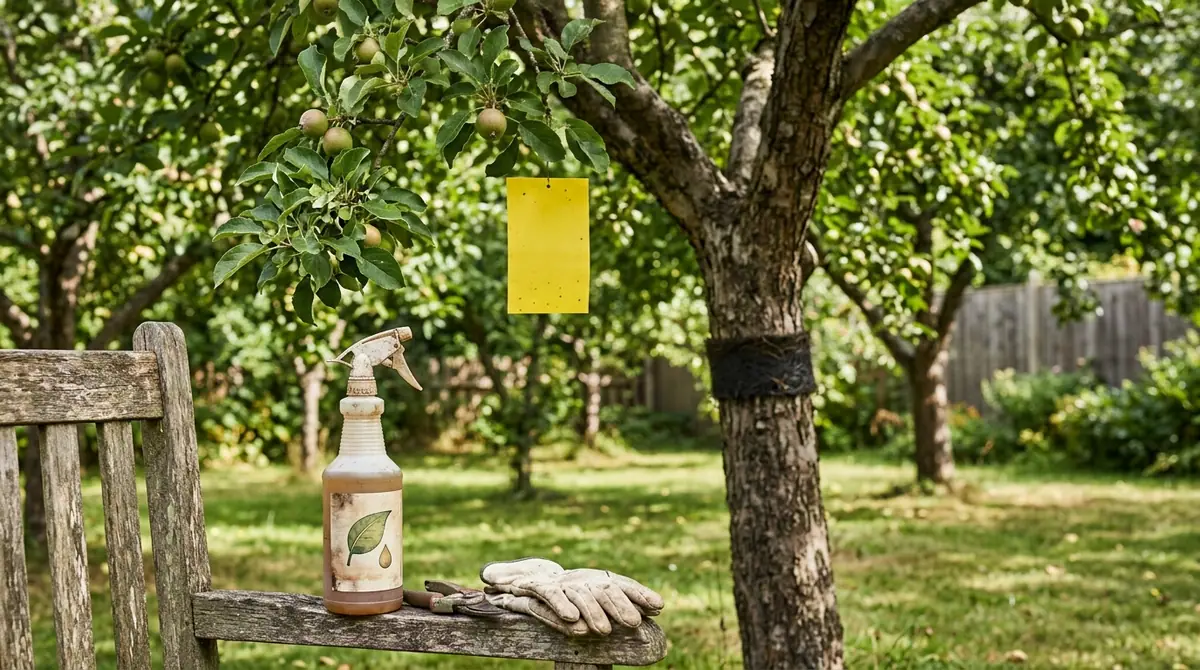
I stood in my orchard one damp April morning at 6:15 AM, watching a colony of woolly apple aphids systematically colonize the tender new growth of my heirloom 'Honeycrisp' tree. The temperature hovered at 48°F (9°C), the relative humidity was sitting at a soggy 85%, and my first instinct as a younger, panicked gardener was to reach for a bottle of heavy-duty synthetic pesticide. Instead, I took a deep breath, set my pruning shears down in the damp mulch, and remembered what decades of botanical research and hands-on landscape design have taught me: fruit trees are not isolated botanical specimens; they are living ecosystems. When you wage chemical warfare on your backyard orchard, you destroy the complex web of predatory insects, beneficial fungi, and soil microbes that keep pest populations naturally regulated. Today, I want to share the exact organic pest control methods I use in my own design practice to keep backyard fruit trees thriving, productive, and entirely free of synthetic poisons.
1. Botanical Overview & Natural Habitat
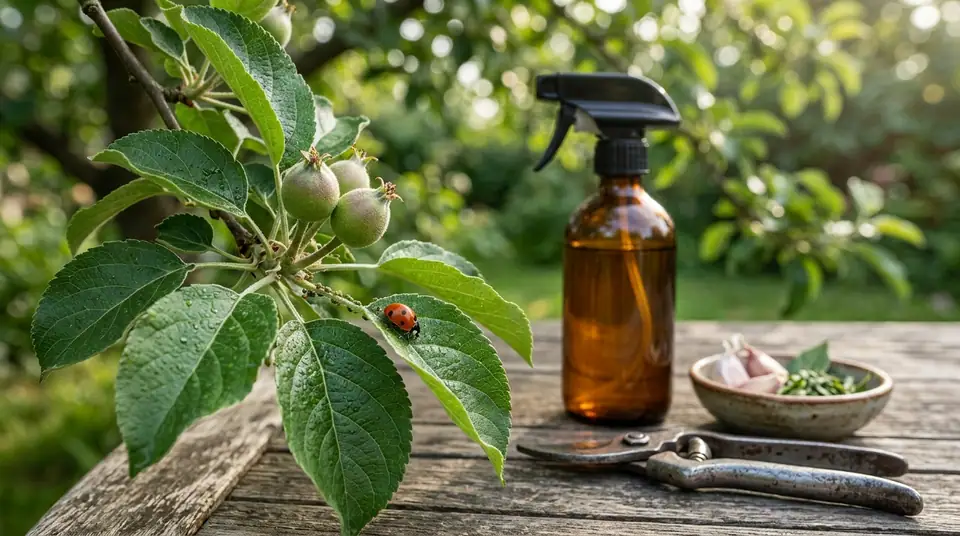
When we transplant these trees into our backyards as monoculture specimens surrounded by expanses of turfgrass, we inadvertently strip away their evolutionary support systems. Pests like the codling moth (Cydia pomonella), San Jose scale (Quadraspidiotus perniciosus), and peach tree borer (Synanthedon exitiosa) encounter a simplified landscape where their preferred food sources are concentrated and their natural predators are absent. Replicating the structural complexity of a wild forest edge within an urban or suburban landscape is the foundational pillar of organic pest management. This means integrating multi-layered plantings beneath your fruit trees, utilizing physical barriers before populations reach economic injury levels, and employing biological controls that target specific pest life cycles without harming beneficial pollinators.
2. Essential Environmental & Care Requirements
Preventing pest infestations begins long before you see the first chewed leaf or sticky aphid residue. Stressed fruit trees emit volatile organic compounds that signal distress to feeding insects, effectively broadcasting an invitation to every pest within a half-mile radius. Optimizing environmental conditions ensures robust cellular walls, vigorous sap flow, and natural chemical defenses (such as secondary metabolites and phytoalexins) that repel unwanted visitors naturally.
| Parameter | Optimal Condition | Common Mistake | Why It Matters |
|---|---|---|---|
| Sunlight | Full sun: 6–8 hours daily | Planting in partial shade | Reduced photosynthesis weakens natural sap production and defense compounds. |
| Soil Drainage | Loamy, well-draining, pH 6.0–7.0 | Heavy clay sitting in standing water | Waterlogged roots cause nutrient lockout and environmental stress, inviting borers. |
| Air Circulation | Spaced 15–20 feet (4.5–6 m) apart | Crowding trees in tight corners | Stagnant air and high humidity foster fungal spores and soft aphid-friendly growth. |
| Irrigation | Deep watering: 1–2 inches (2.5–5 cm) weekly | Frequent shallow sprinkling | Shallow watering keeps feeder roots near the surface and creates drought stress cycles. |
To dive deeper into how structural plantings and root management interact with surrounding landscape features, you can explore our guide on 15 Best Trees for Driveways That Won't Crack Concrete, which outlines similar principles of root zone preservation and spatial design.
💡 Pro-Tip: Never apply high-nitrogen synthetic fertilizers to boost fruit tree growth. Excess nitrogen produces a flush of tender, succulent green shoots with thin cell walls, which acts as an all-you-can-eat buffet for aphids and spider mites. Instead, feed the soil food web with aged compost and organic kelp meal to encourage steady, resilient cellular development.
3. Step-by-Step Cultivation, Feeding & Propagation
Implementing a proactive organic pest management protocol requires following a disciplined, seasonal sequence. Rather than reacting to pest explosions mid-season, you must intervene at vulnerable points in the pest life cycle—typically during late winter dormancy and early spring bud break.
- Perform Late-Winter Dormant Pruning: When temperatures are consistently above 32°F (0°C) but before bud swell in February, prune out all dead, diseased, crossing, and water-sprout branches. This opens the canopy to sunlight and maximizes air circulation, drastically reducing fungal spore germination and overwintering insect egg sites.
- Apply Horticultural Dormant Oil: Spray all bark surfaces thoroughly with a certified organic horticultural mineral oil when temperatures are between 40°F (4°C) and 70°F (21°C). This coats overwintering insect eggs—such as scale, aphid, and mite eggs—in a thin film that suffocates them by blocking their respiratory spiracles.
- Establish Physical Barriers at Bud Break: Wrap trunk bases with sticky barrier bands (such as Tanglefoot) at a height of 24 to 36 inches (60 to 90 cm) above the soil line just as green tissue emerges. This stops crawling insects like ants (which farm aphids) and winter moths from ascending the trunk.
- Hang Pheromone Traps for Moths: Install species-specific pheromone traps in the upper third of the canopy when night temperatures reach 60°F (15°C) for five consecutive days. These traps disrupt mating cycles for codling moths and oriental fruit moths, drastically reducing the number of larvae that burrow into developing fruit.
- Release Beneficial Insects in Spring: Introduce predatory mites (Phytoseiulus persimilis) and green lacewing larvae (Chrysoperla carnea) when early pest populations appear on foliage. Release them at dusk or dawn when temperatures are moderate (65°F–80°F / 18°C–27°C) to ensure high initial establishment rates.
- Apply Targeted Bio-Pesticides Intermittently: If caterpillar pests or flea beetles breach your defenses, apply Bacillus thuringiensis (Bt)—a naturally occurring soil bacterium—directly to foliage in the late evening. Bt paralyzes the digestive tracts of chewing caterpillars within 24 to 72 hours without harming bees or predatory insects.
⚠️ Important Caution: Never apply horticultural oils or sulfur sprays within 30 days of applying any copper-based fungicide, and strictly avoid spraying oils when ambient temperatures exceed 85°F (29°C). High heat combined with oil applications causes severe phytotoxicity, burning foliage and fruit surfaces beyond recovery.
4. Common Problems, Pests & Troubleshooting
Even with rigorous preventative care, backyard fruit trees occasionally face acute pest pressures. Accurately diagnosing the root cause is essential before applying any organic treatment, as misapplication can damage beneficial populations.
- Aphids (Woolly, Green, and Rosy Apple Aphids):
- Symptoms: Curled, puckered leaves, sticky honeydew dripping onto lower branches, and white cottony masses on branch scars (woolly aphids).
- Intervention: Blast colonies off with a strong stream of water from a garden hose in the morning, allowing foliage to dry quickly. Follow up with potassium salts of fatty acids (insecticidal soap) applied directly to the underside of leaves. For official recommendations on managing stubborn orchard pests, consult the UC Statewide Integrated Pest Management Program.
- Codling Moth Larvae:
- Symptoms: Premature fruit drop, visible entry holes surrounded by frass (brown, sawdust-like caterpillar excrement) on apples and pears.
- Intervention: Thin out and destroy all damaged fruit immediately. Wrap corrugated cardboard bands around the lower trunk in early June; caterpillars will crawl inside to pupate, allowing you to remove and destroy the bands every 14 days.
- Apple Scab and Fungal Leaf Spot:
- Symptoms: Velvety olive-green spots on leaves and fruit that turn brown and corky over time, leading to premature defoliation.
- Intervention: Rake and destroy all fallen leaves in autumn to eliminate overwintering fungal spores. Apply liquid copper fungicide or wettable sulfur strictly according to label instructions during the green-tip phase of spring bud development. For comprehensive guidelines on disease life cycles, reference the Royal Horticultural Society Pest and Disease Advice.
- San Jose Scale:
- Symptoms: Tiny, circular, gray bumps encrusting twigs and branches, causing branch dieback and mottled fruit surfaces.
- Intervention: Scrub encrusted branches with a soft brass-bristle brush dipped in soapy water during dormancy, followed by a heavy application of dormant horticultural oil.
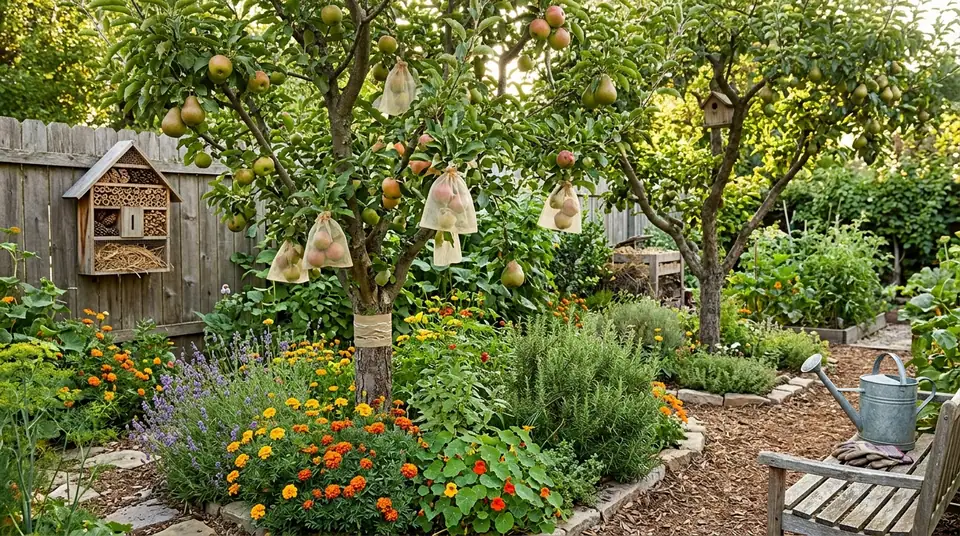
Fruit trees protected with mesh bags in a backyard garden with companion flowers
5. Frequently Asked Questions
What is the single best organic spray for backyard fruit trees?
There is no single "magic bullet" spray in organic gardening; rather, success relies on a seasonal rotation. However, horticultural mineral oil applied during the dormant winter season provides the highest return on investment by wiping out overwintering pests before they ever hatch.
When should I apply organic pest controls in the spring?
Timing is tied directly to phenological stages rather than calendar dates. The most critical window is between late winter dormancy (bud swell) and petal fall. Spraying during full bloom is strictly prohibited to protect honeybees and native pollinators.
Are homemade dish soap sprays safe to use on fruit trees?
Commercial insecticidal soaps use potassium salts of fatty acids formulated specifically for plant safety. Household dish soaps contain harsh detergents, degreasers, and synthetic fragrances that strip the protective cuticular wax off fruit tree leaves, causing severe leaf burn and drop. Always use dedicated horticultural soaps.
How do I stop birds and squirrels from eating my fruit before harvest?
Vertebrate pests require physical exclusion rather than chemical deterrents. Install lightweight, UV-stabilized polypropylene netting over the entire tree canopy as soon as fruits reach stone size (about 1 inch / 2.5 cm in diameter), securing the edges tightly around the trunk to prevent entry.
Related Guides
- How to Protect Backyard Fruit Orchard from Winter Frost
- Step By Step Guide to Grafting Fruit Trees for Beginners
- How to Prune Apple Trees for Maximum Fruit Yield
- Best Dwarf Fruit Trees to Grow in Small Backyards
- How to Use Coffee Grounds As Organic Fertilizer for Tomatoes
📋 Table of Contents ▼ Click to expand
Tags:
Keep reading
🌿 Related Plants You Might Like


PlantSavvyWorld
Editorial team
PlantSavvyWorld is an independent botanical education project. Articles are drafted with AI assistance, then edited and checked against university extension services, botanical garden collections and other published horticultural sources.