

How to Make a Wooden Decoy Bird to Protect your Garden
Written with AI assistance, edited and checked against horticultural sources.
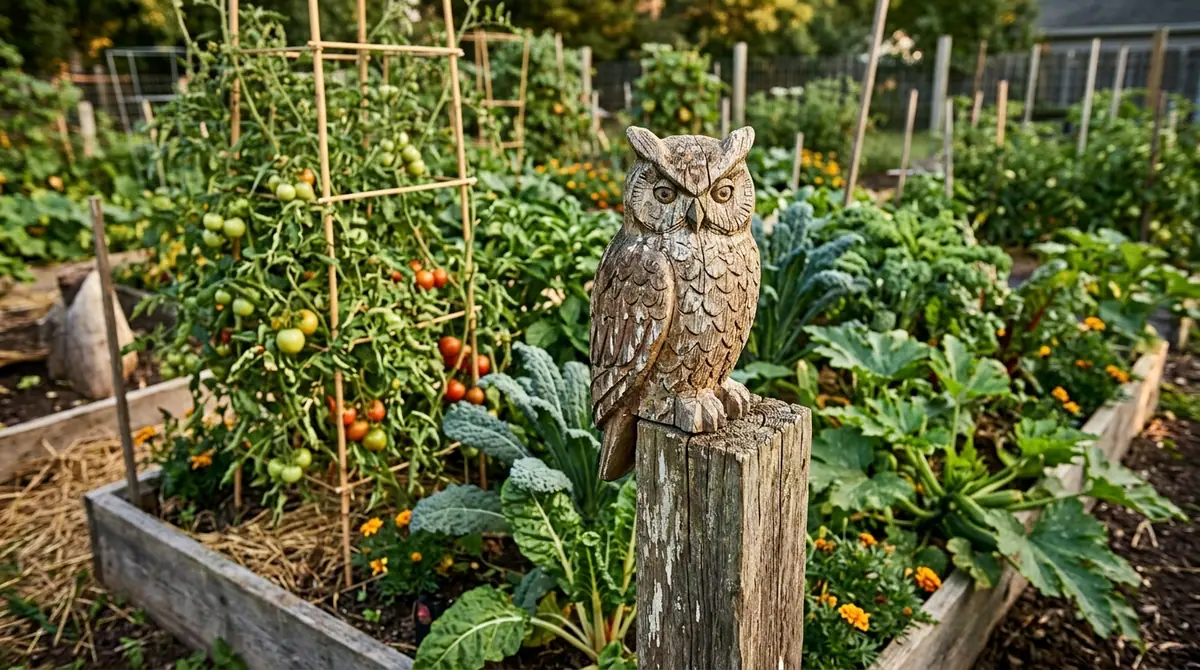
The morning the flock of cedar waxwings descended on my trial plot and stripped every single ripening fruit from my heritage Haskaps in under fifteen minutes, I knew I had to stop relying on flimsy plastic netting. My instinct is always to look toward ecological mimicry before turning to harsh deterrents. That afternoon at my workbench, I carved my first wooden decoy bird—a crude, blocky sentinel painted in stark, high-contrast black and white, patterned after a local European magpie. When I mounted it securely on a 6-foot (1.8-meter) stake above the canopy, the feeding pressure ceased almost instantly. Integrating functional woodworking into your garden management allows you to blend aesthetic landscape structures with proven pest-deterrence strategies. Let us examine how to craft and deploy your own wooden avian guardian.
1. Botanical Overview & Natural Habitat

Most garden pests, particularly foraging songbirds, squirrels, and voles (which rely on visual safety cues), are hyper-vigilant. They constantly scan the upper 3 to 10 feet (0.9 to 3.0 meters) of the vertical plane for predators. A static silhouette of a hawk, owl, or aggressive territorial rival disrupts their sense of security. The wood itself—typically sourced from dense, weather-resistant species like Western Red Cedar (Thuja plicata) or White Oak (Quercus alba)—plays a dual role. It provides the structural mass needed to withstand winds up to 45 mph (72 km/h) without fracturing, while its natural tannins resist fungal decay in high-humidity microclimates where ambient relative humidity routinely exceeds 80%.
2. Essential Environmental & Care Requirements
Creating a durable wooden decoy requires strict adherence to environmental preparation, woodworking tolerances, and seasonal maintenance protocols. Because the object lives outdoors exposed to fluctuating elements, you must treat the wood to prevent warping, checking, and structural degradation.
| Parameter | Optimal Condition | Common Mistake | Why It Matters |
|---|---|---|---|
| Wood Species | Western Red Cedar or White Oak | Using soft, unsealed pine | Dense woods resist moisture absorption and insect boring, extending decoy lifespan from months to decades. |
| Moisture Content | Below 12% internal moisture before sealing | Carving green or wet wood | Wet wood cracks, splits, and warps as it dries outdoors, distorting the silhouette and ruining paint adhesion. |
| Mounting Height | 4 to 8 feet (1.2 to 2.4 meters) above ground | Mounting flush with the soil | Decoys must rise above the foliage canopy to be visible from a distance as a credible territorial threat. |
| Finishing Sealant | UV-resistant exterior spar urethane | Applying interior-grade varnish | Exterior UV sealers prevent solar degradation, chalking, and paint flaking under intense sunlight. |
To ensure your decoy remains effective and structurally sound, monitor local weather patterns. During winter freezes where temperatures drop below 32°F (0°C), unprotected microscopic pores in the wood can expand with ice crystals, causing surface splintering. Applying a fresh coat of breathable exterior sealer every 12 to 18 months prevents this moisture infiltration. Furthermore, position the decoy where it receives adequate airflow; stagnant, damp conditions foster lichen and algae growth on the wooden surface, which diminishes the stark, high-contrast visual signal required to frighten pests. For comprehensive guidance on managing vertebrate wildlife interactions sustainably, consult the USDA National Wildlife Research Center.
3. Step-by-Step Cultivation, Feeding & Propagation
Building a functional garden decoy requires precision woodworking rather than horticulture, but the process follows a strict, step-by-step developmental sequence. Follow these instructions to shape, seal, and position your avian guardian.
- Select and Prep the Stock: Acquire a block of Western Red Cedar measuring at least 8 inches long, 4 inches wide, and 4 inches thick (20.3 cm × 10.2 cm × 10.2 cm). Ensure the lumber has an internal moisture content under 12% verified via a digital moisture meter.
- Trace the Silhouette: Sketch the profile of a predatory bird—such as a Cooper's Hawk (Accipiter cooperii) or a Great Horned Owl (Bubo virginianus)—onto the face of the wood block using a graphite pencil. Emphasize sharp beak contours and an aggressive eye ridge, as these are the primary visual cues recognized by pest species.
- Rough-Cut the Shape: Using a bandsaw or a heavy-duty coping saw, cut along the exterior pencil lines to remove excess material. Maintain a steady feed rate of approximately 2 inches (5 cm) per second to prevent blade burning.
- Detail and Carve: Utilize a chisel, gouge, or rotary carving tool to round the body, define the wing junctions, and create a three-dimensional form. Sand all surfaces progressively with 80-grit, 120-grit, and finally 220-grit sandpaper to achieve a smooth, splinter-free finish.
- Drill the Mounting Port: On the ventral (bottom) side of the decoy, drill a 0.75-inch (1.9 cm) wide hole to a depth of 2.0 inches (5.1 cm) using a Forstner bit. This hole will receive your garden mounting rod.
- Apply Weatherproofing and Paint: Apply two coats of exterior-grade, low-VOC exterior primer. Once cured for 24 hours at 65°F to 75°F (18°C to 24°C), paint the decoy using matte acrylic exterior paints. Use stark blacks, bright yellows for eyes, and stark whites to maximize visual contrast. Finish the entire piece with two coats of UV-resistant spar urethane.
- Deploy in the Garden: Mount the finished decoy onto a rigid 0.5-inch (1.3 cm) steel rebar or thick wooden dowel secured firmly into the soil, placing it directly adjacent to vulnerable crops like brassicas, berries, or newly seeded beds.
💡 Pro-Tip: Pests quickly adapt to static decoys if they never move. To maintain psychological deterrence, relocate your wooden decoy by 10 to 15 feet (3.0 to 4.6 meters) every 4 to 7 days, and occasionally alter its angle of tilt to simulate a hunting posture.
4. Common Problems, Pests & Troubleshooting
Even well-crafted wooden decoys can fail if environmental variables or habituation set in. Below are the most frequent issues encountered when using wooden decoys in garden settings.
- Pest Habituation: After 14 to 21 days of continuous exposure without movement, intelligent pests like crows and squirrels realize the decoy is harmless. Solution: Rotate the decoy's position weekly, and pair it intermittently with auditory deterrents or physical netting during peak harvest weeks.
- Paint Fading and Chalking: Intense solar radiation breaks down standard craft paints within a single growing season. Solution: Always use lightfast, high-pigment exterior mineral or acrylic paints sealed under marine spar varnish.
- Rot and Split Lines at the Mounting Base: Water pools inside the drilled mounting port, causing localized wood rot and loosening the decoy from its stake. Solution: Coat the interior of the mounting hole thoroughly with epoxy resin before final assembly, and drill a tiny 0.125-inch (0.3 cm) drain hole at an angle from the base to the exterior to prevent water accumulation.
⚠️ Important Caution: Never use toxic lead-based paints or heavy chemical wood preservatives that can leach into surrounding soil and be absorbed by edible root crops or perennial fruit bushes. Always opt for food-safe, low-toxicity exterior sealers when placing structures near edible garden zones. For additional insights on safe material handling in horticultural designs, review the guidelines provided by the Royal Horticultural Society.

5. Frequently Asked Questions
What type of bird decoy works best to scare away squirrels and chipmunks?
Hawks and owls are the most effective silhouettes for deterring ground-dwelling and arboreal rodents like squirrels and chipmunks. Because these mammals are natural prey for raptors, a sharply carved wooden hawk or owl triggers an immediate flight response, keeping them away from your bulbs, fruit trees, and seedbeds.
How often should I move my wooden decoy bird so pests don't get used to it?
You should relocate your decoy every 4 to 7 days. Pests possess strong observational learning capabilities; if a predator remains in the exact same spot and pose for weeks without hunting, wildlife quickly recognizes it as a harmless object.
Can I leave my wooden decoy bird outside during freezing winter weather?
Yes, provided the wood was properly sealed with a marine-grade exterior spar urethane and the mounting hole is free of standing water. Bringing the decoy indoors during prolonged sub-freezing spells (below 20°F / -6°C) can further extend its lifespan by preventing freeze-thaw grain stress.
What is the best wood to use if I don't have access to cedar or oak?
If Western Red Cedar or White Oak are unavailable, exterior-grade pressure-treated southern yellow pine or cypress are acceptable alternatives. Ensure any pressure-treated lumber has fully dried and off-gassed before you apply paint and sealers.
Related Guides
- Best Bird Nesting Boxes for Backyard Wildlife Conservation
- How to Protect Balcony Plants from Strong Winds and Harsh Sun
- How to Protect Backyard Fruit Orchard from Winter Frost
📋 Table of Contents ▼ Click to expand
Tags:
Keep reading
🌿 Related Plants You Might Like





PlantSavvyWorld
Editorial team
PlantSavvyWorld is an independent botanical education project. Articles are drafted with AI assistance, then edited and checked against university extension services, botanical garden collections and other published horticultural sources.