
How to Create a Pollinator Garden to Attract Bees and Hummingbirds
Written with AI assistance, edited and checked against horticultural sources.
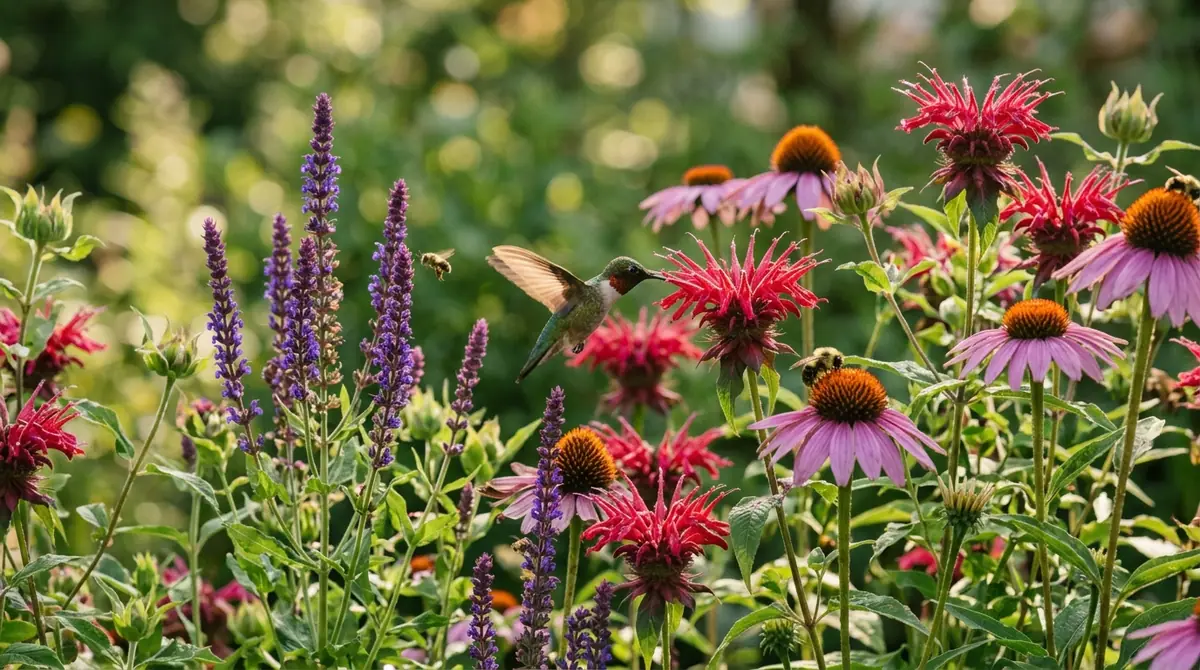
When the ambient air temperature hits 92°F (33.3°C), sterile double-flowered coneflower cultivars offer zero nectar for hummingbirds, turning landscapes into green deserts unless biological utility is prioritized. Landscapes should function as living ecosystems. When you figure out how to create a pollinator garden to attract bees and hummingbirds, you are not just planting flowers; you are engineering a dynamic, high-energy biological refueling station.
1. Botanical Overview & Natural Habitat

Natural habitats for these dual pollinators typically occur in edge-of-woodland ecosystems, transitional prairies, and chaparral biomes where layered vertical structures provide varied forage. In your garden, this translates to combining tubular, nectar-rich flowers with flat-topped landing pads. Native perennials such as Monarda didyma (Bee Balm), Penstemon digitalis (Foxglove Beardtongue), Echinacea purpurea (Purple Coneflower), and Salvia lyrata (Lyreleaf Sage) form the backbone of this habitat.
Bees require high-protein pollen alongside carbohydrate-rich nectar to feed their brood, whereas hummingbirds need almost pure sucrose solutions to sustain metabolisms that feature heart rates up to 1,260 beats per minute. By incorporating plants that bloom sequentially from early spring through late autumn, you bridge seasonal food gaps. This botanical diversity ensures native solitary bees, bumblebees (Bombus spp.), honeybees, and migratory hummingbirds find continuous sustenance across all 365 days of the ecological calendar.
2. Essential Environmental & Care Requirements
Establishing a thriving pollinator corridor demands precise control over soil, light, and moisture parameters. Most high-performing pollinator plants evolved in open meadows and woodland edges, meaning they demand rigorous solar exposure and well-draining substrate to prevent root rot caused by pathogens like Phytophthora.
| Parameter | Optimal Condition | Common Mistake | Why It Matters |
|---|---|---|---|
| Sunlight | 6 to 8 hours of direct daily sunlight | Planting in deep shade | Solar energy drives high nectar production and flower opening. |
| Soil pH | 6.2 to 6.8 (slightly acidic to neutral) | Ignoring soil tests | Nutrient lock-up halts root development and bloom output. |
| Drainage | Porous loamy or sandy loam (percolation rate 1-2 inches/hour) | Heavy clay retaining standing water | Waterlogged roots suffocate and succumb to fungal collar rot. |
| Irrigation | 1 inch (2.5 cm) of water weekly via drip lines | Frequent shallow overhead sprinkling | Deep soaking encourages robust taproot and deep root system expansion. |
💡 Pro-Tip: Skip the overhead sprinkler systems entirely. Install low-profile drip irrigation or soaker hoses buried 2 inches (5 cm) beneath the mulch layer. This targets the root zone directly, prevents wet foliage from developing powdery mildew, and leaves tiny, water-gathering mud puddles on the soil surface for mason bees seeking nesting clay.
3. Step-by-Step Cultivation, Feeding & Propagation
Designing and planting a pollinator ecosystem requires deliberate staging. Follow this methodical sequence to build a resilient, self-sustaining garden from scratch.
- Site Assessment & Soil Remediation: Select a location receiving at least 6 hours of unobstructed sunlight daily. Clear all existing turfgrass within a 10-foot (3-meter) radius. Test your soil composition; amend heavy clay or sandy soils by incorporating 3 inches (7.6 cm) of aged leaf mold or organic compost, working it into the top 8 inches (20 cm) of earth to improve soil structure and microbial life.
- Layered Design Layout: Map your garden using a tiered vertical structure. Place taller species like Vernonia noveboracensis (New York Ironweed) and Helianthus maximiliani (Maximilian Sunflower) at the northern or rear boundary to reach mature heights of 4 to 6 feet (1.2 to 1.8 meters) without casting shade on shorter neighbors. Position mid-layer shrubs and perennials like Agastache foeniculum (Anise Hyssop) in the center, and anchor borders with low-growing creepers like Thymus serpyllum (Creeping Thyme).
- Planting Execution: Dig planting holes twice as wide as the nursery container but exact in depth. Gently tease root balls bound in circling patterns to stimulate outward root growth. Space perennials 12 to 18 inches (30 to 45 cm) apart to allow for mature canopy spread while minimizing weed competition.
- Initial Irrigation & Mulching: Water newly installed plants immediately with a volume equivalent to 1 inch (2.5 cm) of precipitation. Apply a 2-inch (5 cm) layer of shredded hardwood mulch across the bed, maintaining a 1-inch (2.5 cm) clearance around all plant stems to prevent crown rot and fungal infestations.
- Establishment Phase Feeding: Avoid synthetic, high-nitrogen chemical fertilizers, which force lush, succulent green growth that attracts aphids and deters pollinators. Instead, apply a single annual spring top-dressing of organic worm castings or composted manure to provide slow-release micronutrients.
- Seasonal Propagation & Maintenance: Propagate your core perennial stock every 3 to 4 years by lifting and dividing clumps in early spring when shoots reach 3 inches (7.6 cm) in height. Leave dead flower heads and hollow stems standing through the winter freeze to provide over-wintering chambers for native cavity-nesting bees.
⚠️ Important Caution: Never use systemic insecticides, particularly neonicotinoids, anywhere near your pollinator garden. These chemicals permeate plant vascular systems, contaminating pollen and nectar, which directly poisons foraging bees and accumulates up the food chain to threaten insectivorous birds. For deeper guidance on chemical-free landscaping, consult the Xerces Society Pollinator Conservation Program.
4. Common Problems, Pests & Troubleshooting
Even well-designed pollinator habitats face ecological imbalances. When issues arise, rely on targeted, non-chemical interventions that preserve insect life.
- Aphid Outbreaks on Asclepias (Milkweed): Yellow or oleander aphids frequently blanket the tender new growth of milkweeds in late spring. Do not spray broad-spectrum insecticides. Instead, blast colonies with a sharp stream of water from a garden hose every 3 days for 9 days, or introduce natural predators like lady beetle larvae (Coccinellidae) and lacewings.
- Fungal Powdery Mildew: Humid nights followed by warm, dry days often trigger white powdery patches on the leaves of Monarda and Phlox. Thin out overcrowded plant stems to increase internal air circulation, water exclusively at the base in the morning hours, and apply a preventative spray of diluted horticultural neem oil if infections exceed 20% foliage coverage.
- Stunted Growth and Chlorosis: If perennial foliage turns pale yellow while veins remain green, your soil pH may have drifted above 7.2, locking up iron availability. Lower pH and restore micronutrient uptake by working elemental sulfur or acidic peat moss into the root zone at a rate of 1 pound per 100 square feet (0.5 kg per 9.3 square meters).

5. Frequently Asked Questions
What flowers attract both bees and hummingbirds at the same time?
Plants featuring tubular, brightly colored blooms with high nectar volumes bridge both species' needs. Outstanding choices include Agastache (Hummingbird Mint), Lonicera sempervirens (Coral Honeysuckle), Penstemon species, and Monarda didyma. Bees harvest the pollen while hummingbirds sip the deep nectar stores using their specialized extended tongues.
How do I provide a water source for bees and hummingbirds?
Hummingbirds prefer moving water and are attracted to shallow, misting fountains or drippers suspended above foliage. Bees require safe landing spots to drink without drowning. Fill a shallow ceramic saucer with clean gravel or flat river stones, and pour water in until it rests just below the surface of the stones, giving bees a dry platform to stand on while they hydrate.
Should I cut back my pollinator garden in the fall?
No. Resist the urge to perform a complete autumn cleanup. Leaving dead flower stalks, seed heads, and hollow stems standing through winter provides crucial food for goldfinches and over-wintering sites for native tunnel-nesting bees like leafcutters and mason bees. Wait until ambient spring temperatures consistently exceed 55°F (12.8°C) before cutting old growth back to 6 inches (15 cm).
Do I need native plants, or will non-native flowers work too?
While honeybees and some generalist pollinators visit non-native ornamentals, specialized native bees and hummingbirds co-evolved with native flora and rely on them for survival. Native plants produce higher-quality nectar and more protein-dense pollen. Aim for a landscape composition consisting of at least 70% native species to maximize ecological impact and support local biodiversity.
Related Guides
- How to Attract Bees to your Garden
- Carpenter Bees Versus Honey Bees
- How to Create a Small Frog Pond in a Backyard Garden
- How to Attract Beneficial Insects to your Vegetable Garden
📋 Table of Contents ▼ Click to expand
Tags:
Keep reading
🌿 Related Plants You Might Like
PlantSavvyWorld
Editorial team
PlantSavvyWorld is an independent botanical education project. Articles are drafted with AI assistance, then edited and checked against university extension services, botanical garden collections and other published horticultural sources.