

How to Attract Bees to your Garden
Written with AI assistance, edited and checked against horticultural sources.
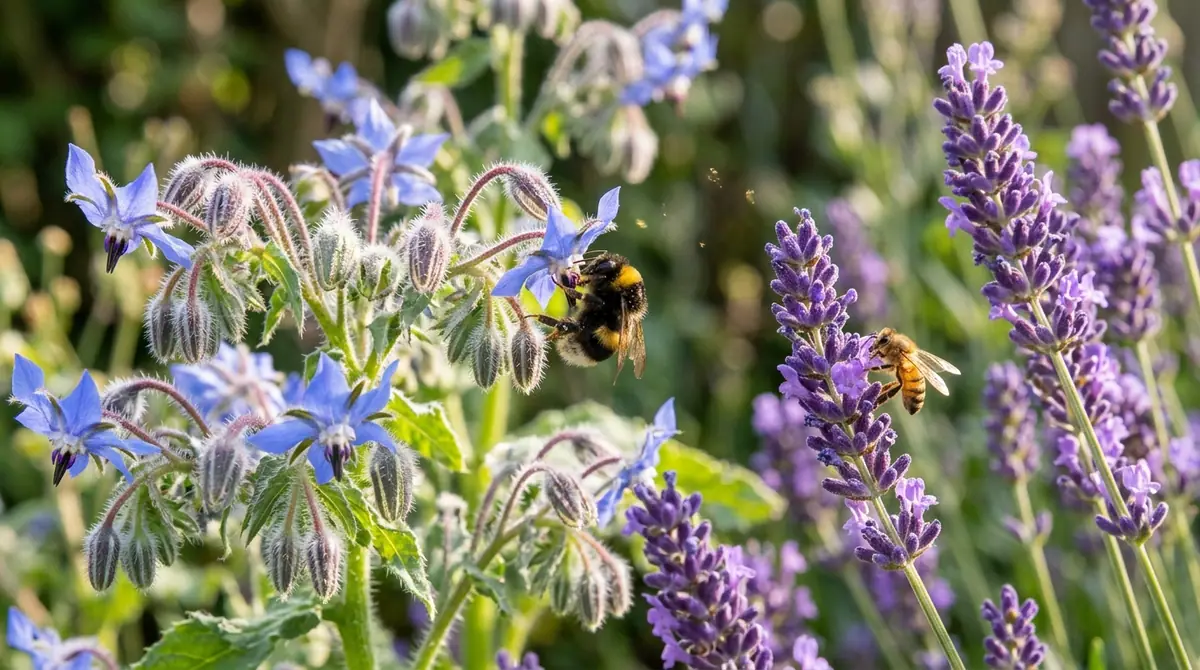
I was standing knee-deep in a sea of purple coneflowers (Echinacea purpurea) last July, watching a tired-looking bumblebee collapse in exhaustion onto a golden disk floret, when it hit me: we have spent decades designing gardens that look like living art galleries for humans while starving the very pollinators that make them bloom. The bee did not care about my color palette; it needed fuel, and my sterile turfgrass and double-petaled hybrid roses were offering it an empty menu. I have spent the last fifteen years transforming desolate suburban plots into high-biodiversity sanctuaries. When you learn how to attract bees to your garden, you stop fighting nature and start orchestrating it.
1. Botanical Overview & Natural Habitat

In their native habitats—ranging from arid scrublands to damp deciduous woodlands—bees navigate ecosystems defined by diversity rather than monoculture. Unlike honeybees (Apis mellifera), which live in massive colonies of up to 60,000 workers, approximately 90% of native bee species (such as leafcutters, mason bees, and mining bees) are solitary. They do not have a central queen to provision year-round; instead, a single female works tirelessly during her 4-to-6-week adult life span to gather pollen and nectar, constructing individual brood cells in pithy stems, bare soil, or existing cavities.
Floral morphology dictates everything. Tubular flowers like penstemons and foxgloves are engineered for long-tongued bumblebees, while open, composite disk flowers like asters, coneflowers, and sunflowers provide easy landing platforms and immediate nectar access for short-tongued species like sweat bees and furrow bees. Double-petaled cultivars—bred for showy, dense petals—are botanical dead ends. They have had their reproductive organs mutated into sterile extra petals, locking out nectar and making pollen inaccessible.
Beyond food, bees require structural shelter. Ground-nesting bees (which make up roughly 70% of native species) need patches of undisturbed, well-draining soil exposed to the morning sun. Cavity-nesters require hollow stems left standing through the winter or dead wood left untouched. When designing a pollinator-friendly landscape, your botanical selections must bridge early spring ephemerals with late-autumn asters, ensuring a continuous caloric flow when temperatures fluctuate.
| Parameter | Optimal Condition | Common Mistake | Why It Matters |
|---|---|---|---|
| Floral Variety | Minimum 15–20 native plant species | Planting large monotypic blocks of a single cultivar | Solitary bees have short flight windows and specialized diets; diversity ensures food availability across species. |
| Bloom Continuity | Unbroken blooms from early March to late October | Relying solely on mid-summer annuals that die at the first frost | Bees emerge on warm spring days (above 55°F / 13°C) and need immediate forage sources to survive. |
| Nesting Habitat | Bare earth patches & hollow, unpruned perennial stems | Applying a 3-inch layer of landscape fabric and thick wood mulch everywhere | 70% of native bees nest underground; thick synthetic barriers physically block their emergence and nesting. |
| Water Source | Shallow basin with landing stones (pebbles or marbles) | Deep birdbaths with vertical, slick sides | Bees cannot swim and will drown in deep water without adequate, emergent landing platforms. |
2. Essential Environmental & Care Requirements
Creating a thriving bee habitat requires balancing microclimates, water availability, and strict chemical abstinence. Bees are ectothermic; their internal body temperature depends on the ambient air. They cannot fly efficiently if morning temperatures drop below 55°F (13°C). Therefore, positioning your pollinator garden in a location that receives at least 6 to 8 hours of direct daily sunlight is non-negotiable. Sunlight warms the soil early in the day, waking ground-nesting bees and driving nectar production in nearby flowers.
Soil composition directly impacts the 70% of native bees that burrow underground. These species require loose, well-draining loam or sandy loam with a pH between 6.0 and 7.5. Compacted clay or perpetually waterlogged soils prevent females from excavating subterranean tunnels safely.
Water is another critical vector often overlooked. Bees do not just drink; nurse bees use water to dilute concentrated honey and cool the hive on blistering afternoons when temperatures exceed 85°F (29°C). Provide a dedicated water station using a shallow terracotta saucer filled with clean gravel or stones, maintaining the water level just below the surface of the stones so bees can stand safely while drinking.
⚠️ Important Caution: Never apply systemic insecticides—specifically neonicotinoids—anywhere near a garden designed to attract bees. Unlike topical sprays that dissipate, systemic chemicals are absorbed into the plant's vascular system, actively poisoning the pollen and nectar for up to several months. Always check plant nursery tags or source stock from suppliers who explicitly guarantee neonicotinoid-free propagation.
Wind protection is equally vital. High-velocity winds above 15 miles per hour ground smaller bees, draining their energy reserves before they can reach nectar sources. Integrate structural windbreaks using native shrubs like serviceberry (Amelanchier) or dense ornamental grasses to create sheltered microclimates.
3. Step-by-Step Cultivation, Feeding & Propagation
Transforming a sterile landscape into a buzzing haven requires a methodical approach. Follow this step-by-step protocol to establish your bee-centric garden from scratch.
- Site Assessment and Soil Preparation: Select a south- or east-facing plot receiving 6+ hours of sun. Test the soil percolation by digging a hole 12 inches (30 cm) deep, filling it with water, and timing the drain rate. If water drains at a rate of 1 to 3 inches (2.5 to 7.6 cm) per hour, your soil is well-suited for both plants and ground-nesting bees. If it pools longer, amend with coarse horticultural sand and well-rotted leaf mold.
- Eradicate Synthetic Inputs: Cease all applications of synthetic fertilizers and broad-spectrum herbicides immediately. Transition to organic soil building by top-dressing beds with a 0.5-inch (1.3 cm) layer of organic compost each autumn.
- Select and Map Native Plant Guilds: Group plants by water and sunlight requirements, ensuring at least three distinct species are in bloom during every seasonal phase (spring, summer, and autumn). Include heavy-hitter genera such as Echinacea, Monarda, Solidago, and Asclepias.
- Planting and Spacing: Dig planting holes twice as wide as the nursery pot root ball but at the exact same depth. Space perennials 12 to 18 inches (30 to 45 cm) apart; leaving some bare soil patches between young plants gives ground-nesting bees immediate access before the canopy fills in.
- Establish Irrigation Infrastructure: Install drip irrigation or soaker hoses beneath the soil surface to water plants at the root zone without wetting the foliage or washing away developing nesting sites. Keep soil consistently moist for the first 21 days post-planting to establish deep root systems.
- Construct Nesting and Water Stations: Place your shallow pebble-filled water basin within 15 feet (4.5 meters) of the main floral patches. Leave a 3-by-3-foot (0.9-by-0.9-meter) square of bare earth completely unmulched, and designate a back corner of the garden where hollow-stemmed perennials (like coneflowers and sunflowers) are left standing 12 to 18 inches (30 to 45 cm) high through the winter months.
💡 Pro-Tip: When cutting back your perennial garden in late winter, never shear your hollow-stemmed plants down to the ground. Cut them at staggered heights between 8 and 24 inches (20 to 60 cm). Overwintering solitary bee larvae—such as masked bees (Hylaeus)—seal themselves inside these hollow pithy stems, and cutting them too low or throwing them in the yard waste bin destroys the next generation before they even hatch.
For deeper insights into regional plant selection tailored to native pollinators, consult the Xerces Society Pollinator Conservation Program, which provides exhaustive, region-specific lists of high-value native flora.
4. Common Problems, Pests & Troubleshooting
Even the most thoughtfully designed bee garden will occasionally encounter environmental or biological imbalances. Diagnosing these issues correctly ensures you do not inadvertently harm the pollinators you are trying to protect.
- Symptom: Complete absence of bees despite abundant flowers.
- Diagnosis: The plants may be sterile cultivars, or local populations have been decimated by chemical drift from neighboring properties. Alternatively, your garden lacks a nearby water source or adequate nesting sites.
- Correction: Audit your plant tags to replace hybrid sterile flowers with straight native species. Add a reliable pebble-water station and stop all localized pesticide use within a 500-foot (152-meter) radius.
- Symptom: Ragged, semi-circular cuts appearing along the edges of rose or redbud leaves.
- Diagnosis: This is not a destructive pest infestation; it is the handiwork of beneficial leafcutter bees (Megachile spp.). Females slice precise leaf fragments to line their cylindrical brood cells.
- Correction: Celebrate this damage! It is definitive proof that your garden is supporting active native reproduction. No intervention or spraying is required, as the cosmetic leaf loss does not harm the health of the woody plant.
- Symptom: Powdery mildew coating the foliage of bee balms (Monarda).
- Diagnosis: High humidity combined with poor air circulation and overcrowding. While bees will still visit mildly infected flowers, severe outbreaks weaken the plant's overall photosynthetic capacity.
- Correction: Thin out overcrowded stems to improve airflow, water exclusively at the base of the plant in the early morning, and apply a preventative spray of organic horticultural oil or milk-and-water solution (1 part milk to 9 parts water) if outbreaks persist.

5. Frequently Asked Questions
What are the absolute best flowers to attract bees to a small garden?
Focus on native perennials with high nectar and pollen yields that fit tightly into compact spaces. Excellent choices include Purple Coneflower (Echinacea purpurea), Anise Hyssop (Agastache foeniculum), Catmint (Nepeta faassenii), and Blazing Star (Liatris spicata). These species offer extended bloom times and rich floral resources without overtaking a small urban plot.
Do bee hotels actually work, and how do I maintain them?
Yes, commercially available or DIY bee hotels work exceptionally well for cavity-nesting solitary bees like mason and leafcutter bees, but they require strict maintenance. If left unmanaged, they can become breeding grounds for parasitic wasps and fungi. Clean or replace cardboard nesting inserts every autumn, and store wooden blocks in an unheated garage or shed over winter to protect developing larvae from predators, returning them to the garden in early spring when temperatures consistently exceed 55°F (13°C).
How do I provide water for bees without breeding mosquitoes?
Bees require a shallow landing surface to drink safely without drowning. Fill a shallow dish, saucer, or birdbath with clean pebbles, flat stones, or glass marbles, then add water until it sits just below the top surface of the stones. To prevent mosquitoes—which require standing water undisturbed for 7 to 10 days to complete their life cycle—simply empty, scrub, and refill the water basin every 2 to 3 days.
Why are honeybees ignoring my native flowers?
Honeybees (Apis mellifera) are generalist livestock managed by humans, and they often prioritize massive agricultural monocultures or dense patches of non-native garden plants over scattered native perennials. If your garden is populated by native plants, you are primarily feeding wild, solitary native bees (like bumblebees, mason bees, and mining bees) rather than honeybees. This is actually an ecological victory, as native bees are significantly more efficient pollinators of native flora than honeybees.
Can I attract bees to a shaded balcony or patio garden?
While most heavy-foraging bee species prefer full sun, you can still attract shade-tolerant pollinators by utilizing native woodland understory plants. Incorporate species like Wild Bleeding Heart (Dicentra eximia), Jacob's Ladder (Polemonium reptans), Foamflower (Tiarella cordifolia), and Columbine (Aquilegia canadensis). Pair these potted shade-lovers with a small, shallow container water station placed in the brightest available corner of your balcony.
Related Guides
- How to Create a Pollinator Garden to Attract Bees and Hummingbirds
- Carpenter Bees Versus Honey Bees
- How to Attract Beneficial Insects to your Vegetable Garden
📋 Table of Contents ▼ Click to expand
Tags:
Keep reading
🌿 Related Plants You Might Like






PlantSavvyWorld
Editorial team
PlantSavvyWorld is an independent botanical education project. Articles are drafted with AI assistance, then edited and checked against university extension services, botanical garden collections and other published horticultural sources.