

How to Attract Beneficial Insects to your Vegetable Garden
Written with AI assistance, edited and checked against horticultural sources.
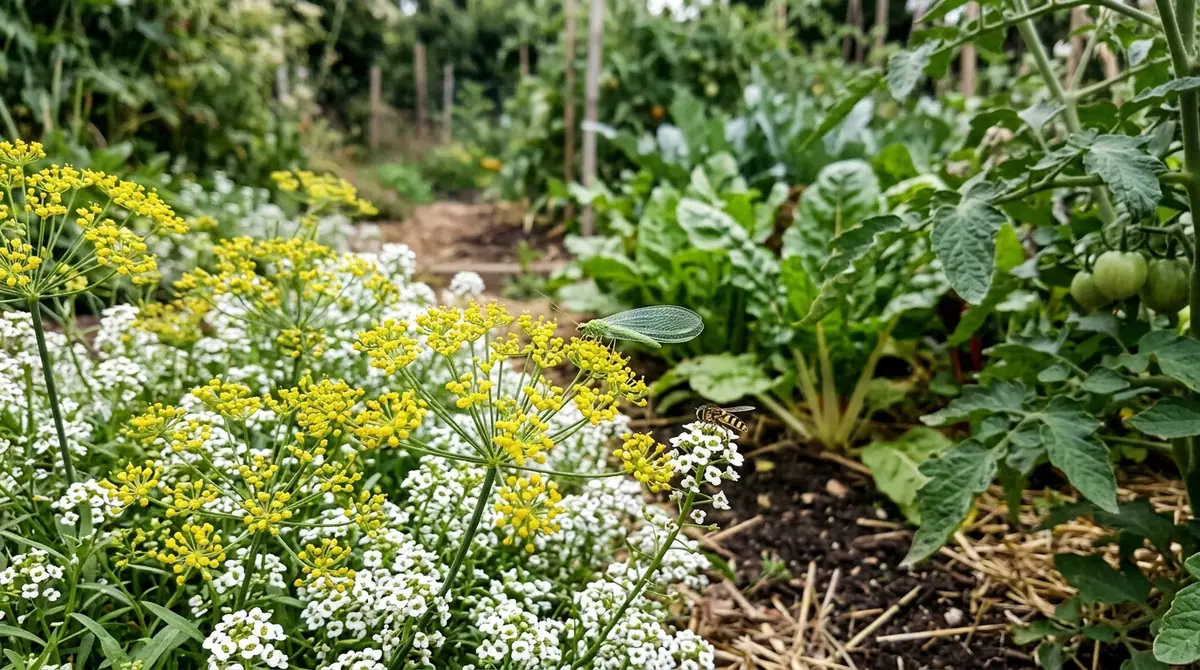
When an aphid colony on heirloom Cherokee Purple tomatoes reaches critical mass—with stems black with pests, sticky with honeydew, and leaves curling inward at 85°F (29.4°C) under an afternoon sun—beneficial insects can naturally resolve the issue. A female hoverfly (Syrphidae) arrives, lays a single translucent egg in the center of the aphid herd, and three days later, her voracious, legless larva hatches and begins consuming up to 60 aphids a day, showcasing the power of designing a garden that invites, feeds, and houses beneficial insects rather than waging a perpetual chemical war against the soil ecosystem.
1. Botanical Overview & Natural Habitat

In their natural habitats along forest edges, prairies, and uncultivated meadows, these insects rely on a continuous, uninterrupted succession of floral resources spanning the entire frost-free season, typically from early spring soil temperatures of 50°F (10°C) through autumn frosts at 32°F (0°C). When you cultivate a modern vegetable garden, you often create a monoculture of leafy greens and fruiting vines that lack structural diversity. To bridge this gap, you must integrate native perennial and annual plants featuring specific botanical architectures. Insects with short mouthparts, such as hoverflies and tiny parasitoid wasps, cannot access nectar from deep-throated tubular blossoms. They require flat-topped, umbelliferous flower clusters (umbels) and open-faced composite flowers laden with easily accessible pollen.
Plant families like Apiaceae (parsley, dill, fennel, carrots allowed to bolt) and Asteraceae (coneflowers, daisies, yarrow) serve as foundational nutritional anchors. Furthermore, beneficial insects need micro-habitats for overwintering and escaping mid-summer heatwaves exceeding 90°F (32.2°C). Leaf litter, hollow plant stems left standing 12 to 18 inches (30 to 45 cm) above the soil line, and undisturbed patches of bare ground for ground-nesting bees (Andrenidae) are just as critical as the flowers themselves. By mimicking the structural layering of a natural woodland edge—combining canopy, shrub, herbaceous, and ground layers—you transform a sterile patch of dirt into a self-regulating ecological powerhouse.
2. Essential Environmental & Care Requirements
Creating a sustainable insectary habitat requires balancing biological diversity with practical vegetable production. You cannot simply scatter seed packets and walk away; beneficial insects require precise environmental parameters to thrive, reproduce, and stay stationed near your high-value crops like peppers, squash, and brassicas.
| Parameter | Optimal Condition | Common Mistake | Why It Matters |
|---|---|---|---|
| Soil Moisture | 40% to 60% volumetric water content; evenly moist root zones (1 to 2 inches / 2.5 to 5 cm deep) | Allowing soil to swing between extreme waterlogged mud and dust-dry drought | Fluctuating moisture stresses plants, releasing volatile organic compounds that attract sap-sucking pests faster than beneficials can control them. |
| Pesticide Threshold | Zero broad-spectrum synthetic or organic neurotoxins (no pyrethrins, neonicotinoids, or spinosad) | Spot-treating minor pest flare-ups with systemic or heavy-knockdown sprays | Broad-spectrum insecticides kill predatory insects 10 times faster than target pests, triggering rebound infestations and destroying your biological safety net. |
| Floral Succession | At least 3 different plant families blooming simultaneously across 180 frost-free days | Planting a single massive wave of flowers that blooms for only 3 weeks in June | Beneficial adults starve during shoulder seasons (early spring and late autumn), causing them to migrate out of your vegetable plots. |
| Shelter & Cover | Multi-tiered plantings with undisturbed leaf litter, brush piles, and unmulched soil patches | Maintaining a sterile, bark-mulched garden bed with zero bare earth or hollow stems | Ground beetles and solitary wasps require safe overwintering sites and nesting cavities within 20 feet (6 meters) of the vegetable beds. |
💡 Pro-Tip: When planning your vegetable layout, never group your beneficial insect plants into a single "bug block" in the far corner of the plot. Interplant your insectary species—such as sweet alyssum (Lobularia maritima) and dwarf coriander—directly inside your brassica and tomato rows at a ratio of one flowering plant for every three vegetable plants. This forces predatory wasps and hoverflies to constantly patrol your harvest zone while hunting for prey.
3. Step-by-Step Cultivation, Feeding & Propagation
Establishing a functional insectary network within your vegetable garden is a deliberate, multi-stage horticultural process. Follow this sequence to transition your plot from a high-maintenance vegetable patch to a resilient, self-policing ecosystem.
- Map Your Micro-Climates and Bloom Gaps: Assess your vegetable garden layout and record historical temperature ranges. Identify your primary frost-free window (e.g., April 15 to October 30) and list the weeks where your vegetable crops produce few flowers. Your goal is to plant species that fill these specific temporal gaps.
- Select and Source High-Reward Insectary Genera: Purchase open-pollinated, non-hybrid seeds from trustworthy suppliers. Prioritize plants from the Apiaceae, Asteraceae, and Fabaceae families. Excellent performers include dill (Anethum graveolens), fennel (Foeniculum vulgare), basket flower (Centaurea americana), cosmos (Cosmos bipinnatus), and crimson clover (Trifolium incarnatum).
- Prepare the Soil Bed: Clear a 12-inch (30 cm) band around your vegetable blocks or dedicate specific 3-foot (91 cm) wide border strips. Incorporate 2 inches (5 cm) of finished compost into the top 6 inches (15 cm) of soil to ensure a crumbly tilth with a pH between 6.2 and 6.8.
- Direct Sow Fine Seeds at the Correct Depth: Because many beneficial insect plants (like dill, sweet alyssum, and California poppies) require light for germination, press seeds firmly into the soil surface rather than burying them deep. Cover tiny seeds with no more than 1/8 inch (3 mm) of sifted vermiculite or fine compost.
- Manage Irrigation During Establishment: Keep the seedbed evenly moist using a fine-mist nozzle twice daily for the first 14 days. Once seedlings reach a height of 3 inches (7.6 cm), transition to deep, infrequent root watering (1 inch / 2.5 cm of water per week) to encourage deep taproot development.
- Stagger Plantings for Continuous Bloom: Sow seeds every 21 days from early spring until mid-summer. This succession planting ensures that plants like cilantro and dill do not bolt, flower, and die all at once, guaranteeing a continuous supply of pollen and nectar.
- Provide Supplemental Water Stations: Place shallow ceramic saucers filled with clean water and flat river rocks throughout the garden beds. Beneficial insects like bees, tachinid flies, and predatory wasps need a safe landing platform to drink without drowning during scorching summer afternoons when temperatures exceed 85°F (29.4°C).
- Delay Autumn Cleanup: Leave all hollow plant stalks, seed heads, and leaf litter intact through the winter months. Cut stems back in spring only after daytime temperatures consistently exceed 55°F (12.8°C), allowing overwintering beneficial insect larvae and native bees time to emerge safely.
⚠️ Important Caution: Never use systemic insecticides, including soil-drench neonicotinoids or even organic spinosad and neem oil, when plants are in active bloom. Systemic toxins travel directly through the plant's vascular system into the pollen and nectar, poisoning visiting pollinators and beneficial predators within hours of exposure. If pest pressure demands intervention, use targeted horticultural oils only at dusk when pollinators have retreated, or employ physical barriers like insect netting. For comprehensive guidelines on safe pesticide management, consult the Xerces Society for Invertebrate Conservation.
4. Common Problems, Pests & Troubleshooting
Even experienced gardeners encounter imbalances when first attempting to shift toward biological pest control. Below are the most common challenges you will face and how to correct them scientifically.
-
Symptom: Aphid populations explode on your vegetables before beneficial insects arrive.
-
Diagnosis: You have a temporal bloom gap. Your vegetable plants are producing lush nitrogen-driven growth, but your insectary plants have not yet flowered.
-
Correction: Immediately stop all high-nitrogen synthetic or organic fertilizers. Hand-squish dense aphid clusters to reduce population pressure. Broadcast fast-maturing insectary seeds like arugula or mustard and allow them to bolt immediately to bridge the nutritional gap. For additional reading on biological control dynamics, reference the University of California Integrated Pest Management Program.
-
Symptom: Ladybugs congregate in your yard for two weeks and then completely disappear.
-
Diagnosis: Purchased commercial lady beetles (Convergent lady beetle) have a genetic instinct to disperse upon release, regardless of food availability. Furthermore, adults lack permanent shelter.
-
Correction: Stop purchasing commercial ladybugs. Instead, attract wild, native lady beetles and lacewings by establishing dense patches of tansy (Tanacetum vulgare), yarrow (Achillea millefolium), and angelica. Wild populations stay where permanent nectar sources and overwintering sites exist.
-
Symptom: Ants are farming aphids on your pepper plants and chasing away predatory hoverfly larvae.
-
Diagnosis: Common pavement ants (Tetramorium caespitum) protect aphids in exchange for sugary honeydew, actively attacking beneficial insect eggs and larvae.
-
Correction: Apply sticky tanglefoot barriers around the stems of affected woody or sturdy vegetable plants to block ant traffic. Simultaneously, wash aphids off the foliage with a sharp blast of water from a garden hose to break the honeydew supply chain.
-
Symptom: Parasitized hornworms or caterpillars are present, but your overall crop damage remains unacceptably high.
-
Diagnosis: The ratio of beneficial predators to pest insects is temporarily out of balance due to an overly clean, manicured garden environment lacking structural complexity.
-
Correction: Introduce physical intercropping. Plant tall sunflowers (Helianthus annuus) and umbelliferous herbs directly among your solanaceous crops to provide immediate patrol routes and shaded resting spots for predatory paper wasps and braconid wasps.

5. Frequently Asked Questions
What are the absolute best plants to attract beneficial insects to a vegetable garden?
The top performers are plants featuring umbrella-shaped flower clusters (Apiaceae) and daisy-like composite flowers (Asteraceae). Specifically, dill, fennel, yarrow, sweet alyssum, cosmos, lemon balm, and coreopsis provide the highest concentrations of accessible nectar and pollen for predatory wasps, hoverflies, and tachinid flies.
Do I need to buy beneficial insects online and release them?
No. Purchasing and releasing beneficial insects—such as ladybugs or praying mantises—is generally ineffective. Commercially collected ladybugs are wild-harvested and hardwired to fly away upon release. Creating a diverse, pesticide-free habitat will naturally draw native beneficial insects to your garden for free and keep them there permanently.
How do I stop accidentally killing beneficial insects with organic sprays?
Even organic sprays like neem oil, horticultural soaps, and spinosad are non-selective killers. They suffocate or poison beneficial predatory insects on contact. Only apply sprays as a last resort, spot-treat affected leaves rather than blanketing the whole garden, and always spray at dusk after bees and predatory wasps have finished foraging for the day.
Will attracting beneficial insects invite stinging pests like hornets and yellowjackets?
No. Most beneficial insects in a vegetable garden are solitary wasps (such as braconid and ichneumonid wasps), hoverflies, tachinid flies, and pirate bugs. Solitary wasps do not have colonies to defend and are remarkably docile, rarely stinging unless trapped directly against human skin. Social wasps and hornets are drawn to meat and garbage, not the nectar-rich flowers and aphids found in a well-managed vegetable insectary.
Related Guides
- Red Insects on Plants
- How to Create a Pollinator Garden to Attract Bees and Hummingbirds
- How to Attract Bees to your Garden
- Total Guide to Moringa Why You Should Grow the Miracle Tree or Drumstick Vegetable
- How to Make Organic Compost for Vegetable Gardens at Home
📋 Table of Contents ▼ Click to expand
Tags:
Keep reading
🌿 Related Plants You Might Like

PlantSavvyWorld
Editorial team
PlantSavvyWorld is an independent botanical education project. Articles are drafted with AI assistance, then edited and checked against university extension services, botanical garden collections and other published horticultural sources.