

Why Are My Potatoes So Small
Written with AI assistance, edited and checked against horticultural sources.
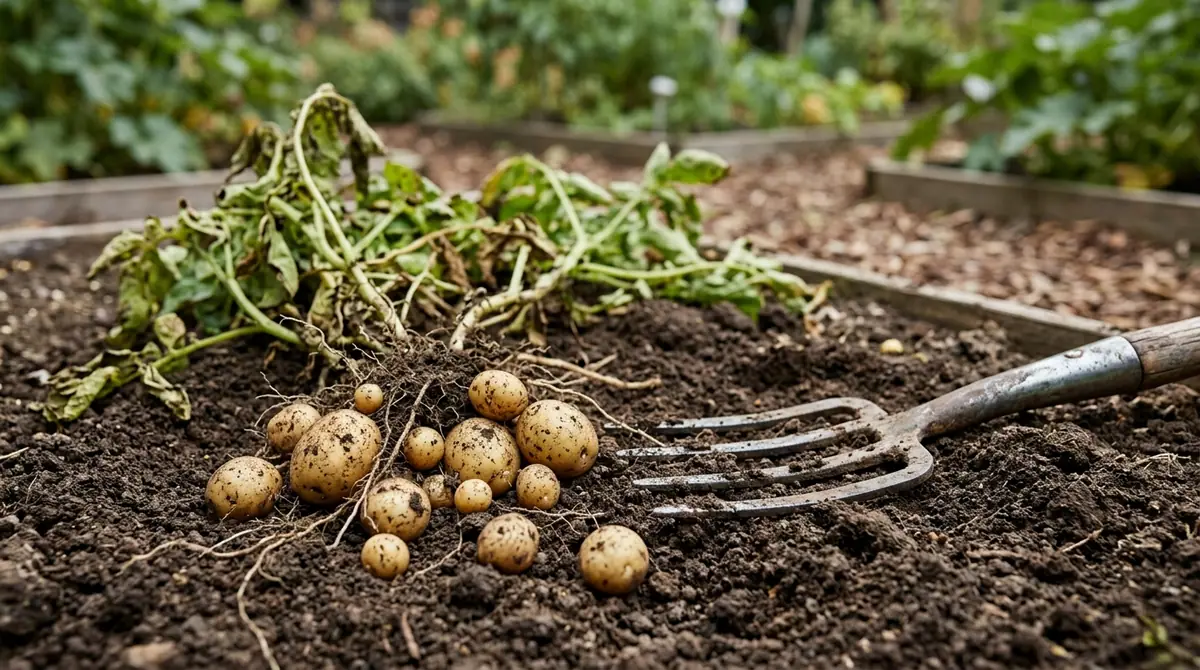
I stood in trial gardens last July, gently pulling back the loose, crumbly soil of my 'Yukon Gold' hilling rows, expecting a bountiful harvest of heavy, uniform tubers. Instead, my fingers brushed against dozens of hard, marble-sized spheres no larger than a fifty-cent piece. It is a heartbreaking moment every gardener dreads after months of watering, weeding, and anticipation. I get asked this question more than almost any other: "Why are my potatoes so small?" The answer rarely comes down to a single catastrophic failure; rather, it is usually a subtle clash between plant physiology and environmental stress. Potatoes (Solanum tuberoson) are sensitive crops that require precise alignment of temperature, photoperiod, and nutrient availability to swell beneath the soil.
1. Botanical Overview & Natural Habitat

Importantly, a potato is not a root; it is a modified stem known as a tuber. Underground stems called stolons emerge from the buried main stem. When exposed to darkness and specific hormonal cues, the tips of these stolons swell, accumulating starch and water. If you are timing your planting correctly, you may already be familiar with guidelines like those detailed in our guide on When Can You Plant Seed Potatoes, but timing is only the first variable.
The botanical triggers for tuber bulking rely heavily on temperature and day length. Potatoes are cool-season crops. Optimum vegetative growth happens when daytime temperatures hover between 60°F and 70°F (15°C to 21°C). When soil temperatures consistently exceed 80°F (26°C), the plant halts tuber initiation entirely. Instead, it shifts its metabolic energy into maintaining above-ground respiration and survival. Furthermore, if you are expanding your garden repertoire to warmer-climate root crops, comparing these needs against advice found in When to Plant Sweet Potatoes in Kansas will highlight just how distinct Solanum tuberosum requirements truly are.
| Parameter | Optimal Condition | Common Mistake | Why It Matters |
|---|---|---|---|
| Soil Temperature | 60°F–70°F (15°C–21°C) | Planting too late into summer heat | High soil temps signal the plant to stop expanding tubers. |
| Soil pH | 5.2 to 6.0 | Alkaline soil (pH > 7.0) | Acidic conditions improve nutrient availability and deter scab. |
| Watering | 1 to 2 inches (2.5 to 5 cm) weekly | Erratic watering cycles | Inconsistent moisture causes malformation and stunted growth. |
| Nitrogen Levels | Moderate, balanced N-P-K | Over-fertilizing with high nitrogen | Stimulates lush foliage while suppressing tuber development. |
2. Essential Environmental & Care Requirements
Growing potatoes that reach full, culinary-grade size requires strict adherence to their environmental tolerances. When any single factor falls out of range, the plant reacts by prematurely shutting down carbohydrate translocation to the underground stolons.
Soil structure stands as the primary physical requirement. Because tubers expand outward by pushing soil particles aside, heavy clay or compacted earth acts as a physical prison, resulting in stunted, misshapen specimens. Your planting medium must be loose, friable, and rich in organic matter. According to the Royal Horticultural Society (RHS) potato cultivation guidelines, incorporating well-rotted garden compost creates the ideal crumb structure that allows stolons to easily penetrate and expand.
Water management is equally unforgiving. Potatoes are roughly 80% water, and their shallow root systems (mostly confined to the top 12 inches or 30 cm of soil) cannot forage deeply during drought. If your soil swings wildly from bone-dry to saturated, the plant experiences physiological shock. A dry spell causes the tubers to stop growing and set their skin. When water suddenly returns, the tubers attempt to resume growth, often resulting in secondary growth, cracks, or marble-sized yields.
Sunlight exposure dictates the energy engine of the plant. Potatoes need a minimum of 6 to 8 hours of direct, unfiltered sunlight daily. Shaded plants produce smaller leaves, synthesize less glucose via photosynthesis, and consequently ship far fewer sugars down to the developing tubers.
💡 Pro-Tip: Install a simple soil thermometer 4 inches (10 cm) deep in your patch. Do not plant your seed potatoes until that thermometer reads a steady 45°F (7°C) for three consecutive days. Planting into cold, wet soil invites rot, while planting into hot soil triggers early senescence.
3. Step-by-Step Cultivation, Feeding & Propagation
To bypass the frustration of miniature harvests, follow this disciplined, multi-stage cultivation protocol designed to maximize tuber size and quality.
- Select and Chitted Certified Seed: Source certified disease-free seed potatoes. Four weeks before planting, place them in a bright, cool location (50°F / 10°C) to encourage short, thick, dark green sprouts—a process known as chitting.
- Prepare the Trench: Dig trenches 6 to 8 inches (15 to 20 cm) deep in full sun. Work in aged compost and a balanced organic fertilizer low in nitrogen and high in phosphorus and potassium (such as a 5-10-10 blend).
- Plant at Correct Spacing: Place seed potato pieces (each containing at least one strong "eye") 12 inches (30 cm) apart in the trench, facing the sprouts upward. Cover them with 3 inches (7.5 cm) of soil.
- Execute Progressive Hilling: As the green shoots reach 8 inches (20 cm) in height, use a hoe or rake to pull soil up around the stems, burying the bottom half. Repeat this hilling process every 2 to 3 weeks until your mounds reach 12 inches (30 cm) high. This prevents greening from sun exposure and provides a larger underground volume for stolons to form tubers.
- Manage Irrigation Rigorously: Deliver a consistent 1 inch (2.5 cm) of water per week via drip irrigation or soaker hoses, increasing to 2 inches (5 cm) during the critical bulking phase when flowers begin to drop.
- Time the Harvest Precisely: For new potatoes, harvest gently 70 to 90 days after planting, just as blossoms appear. For full-sized storage potatoes, wait until 120 to 140 days, allowing the foliage to yellow and die back naturally before cutting the water supply for 10 days to set the skins.
⚠️ Important Caution: Never use grocery store potatoes for seed stock. They are frequently treated with chemical sprout inhibitors and often carry latent fungal, bacterial, or viral pathogens like Potato Virus Y (PVY) that will devastate your harvest and contaminate your garden soil for years.
4. Common Problems, Pests & Troubleshooting
When potatoes remain stubbornly small, the culprit is usually found hiding beneath the soil line or traced back to a specific cultural stressor.
- Foliage Diseases (Early and Late Blight): Fungal pathogens such as Alternaria solani (Early Blight) and Phytophthora infestans (Late Blight) attack the leaves, causing dark spots and rapid defoliation. When the leaves die prematurely, photosynthesis ceases, starving the underground tubers before they can reach full size. Combat this by ensuring adequate plant spacing for air circulation and applying copper-fungicide sprays preventatively during humid weather. For broader insight into managing soilborne vectors, university resources like the University of Minnesota Extension potato production guides offer invaluable regional diagnostic tools.
- Insect Pressure (Potato Psyllids and Colorado Potato Beetles): Defoliating insects reduce the leaf surface area available to manufacture food. Furthermore, piercing-sucking insects like psyllids inject toxins that cause "psyllid yellows," a condition that halts tuber growth entirely and yields clusters of tiny, worthless marble tubers. Hand-pick beetles early in the season, apply Bacillus thuringiensis (Bt) to larvae, and use floating row covers on young plants.
- Nutritional Imbalances: Excessive nitrogen application is a classic self-inflicted wound. If you feed your potatoes high-nitrogen lawn fertilizers or fresh manure, the plant channels all its energy into massive, lush, dark green vines. The subterranean hormonal signals that trigger tuber bulking are suppressed, leaving you with gorgeous foliage and microscopic potatoes at harvest time.
- Premature Harvesting: Gardeners often dig up plants too early out of impatience. If you harvest while the vines are still lush and vigorous, the tubers have simply not had time to accumulate dry matter and expand. Always wait for natural vine senescence.

5. Frequently Asked Questions
Why are my potato plants flowering, but the potatoes are still tiny?
Flowering is a normal physiological milestone that indicates the plant has transitioned from vegetative growth to reproductive development, which coincides with tuber initiation. However, flowering does not mean the potatoes are mature. Tubers undergo the vast majority of their sizing-up phase after the flowers fade and the plant begins to direct carbohydrates downward. If you dig them up right at flowering, you will only find small new potatoes.
Does cutting back potato vines make potatoes bigger?
Yes, but only at the very end of the growing season. Trashing or mowing down the top foliage (known as "vining" or "desiccation") about 10 to 14 days before harvest stops top growth, forces the potato skins to set, and prevents the spread of late blight spores down into the tubers. Doing this mid-season, however, will stunt your crop and permanently keep your potatoes small by cutting off their energy supply.
Can I leave small potatoes in the ground to grow larger next year?
Leaving small potatoes in the ground over winter is generally counterproductive and risky. In mild climates, they will attempt to sprout prematurely, depleting their energy reserves. In colder regions, they freeze and rot. Furthermore, leaving tubers behind creates a volunteer crop next season that breaks your crop rotation cycle and harbors overwintering pests and diseases like wireworms and scab.
How does soil compaction stop potatoes from growing?
Potatoes expand outward by exerting physical pressure against the surrounding soil matrix. If your garden has heavy clay or has been compacted by foot traffic or heavy tools, the soil acts like concrete. The stolons cannot push through the dense particles, restricting the physical volume available for the tubers to swell. This forces them to remain tiny or grow into bizarre, flattened shapes.
Related Guides
- How to Create a Small Frog Pond in a Backyard Garden
- How to Build Vertical Gardens for Small Urban Balconies
- Best Dwarf Fruit Trees to Grow in Small Backyards
- 10 Best Low Maintenance Front Yard Landscaping Ideas for Small Spaces
- When to Harvest Fingerling Potatoes
📋 Table of Contents ▼ Click to expand
Tags:
Keep reading
🌿 Related Plants You Might Like

PlantSavvyWorld
Editorial team
PlantSavvyWorld is an independent botanical education project. Articles are drafted with AI assistance, then edited and checked against university extension services, botanical garden collections and other published horticultural sources.