

When to Harvest Fingerling Potatoes
Written with AI assistance, edited and checked against horticultural sources.
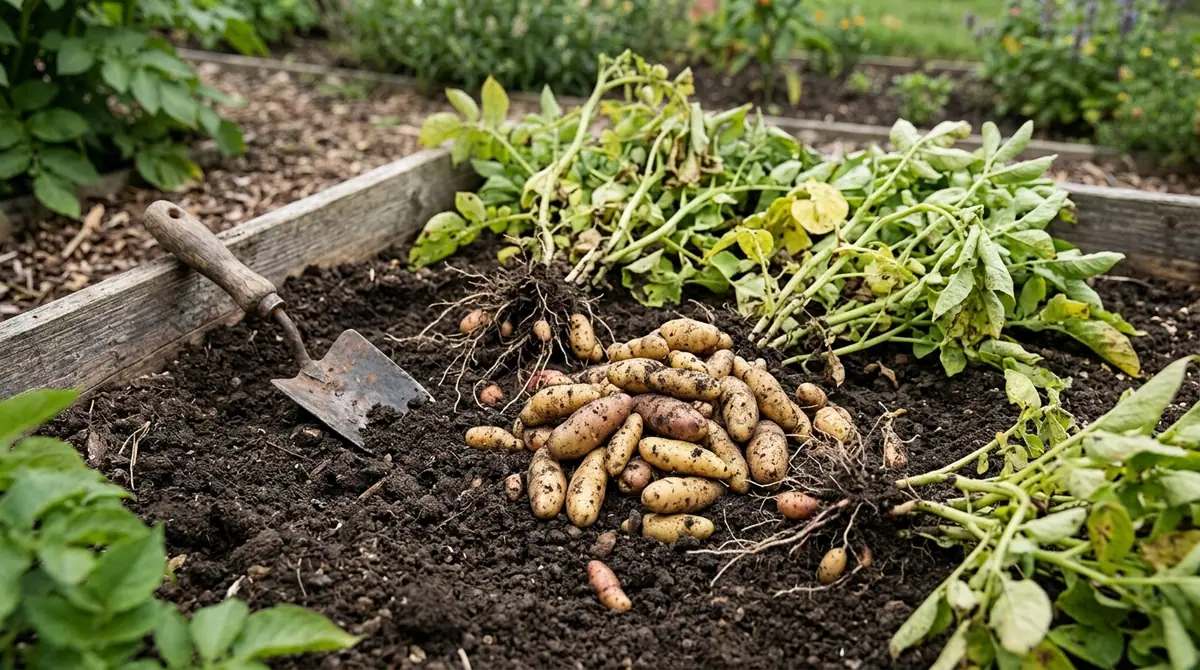
I was on my knees in trial gardens last July, brushing warm soil away from the base of a 'Russian Banana' fingerling potato plant, when I realized a beginner gardener was watching me from across the fence. They wanted to know if the yellowing foliage meant disease or a dead plant. I smiled, pulled back a few inches of mulch, and revealed a clutch of firm, golden tubers no thicker than my thumb. That moment of discovery—knowing precisely when the subterranean clock has run out and the harvest is ready—is what separates a guessing gardener from an intuitive horticulturist.

1. Botanical Overview & Natural Habitat
Fingerling potatoes (Solanum tuberosum) are distinct from standard round or blocky maincrop potatoes. Botanically, they are herbaceous perennials grown as annuals, producing elongated, cylindrical tubers that taper at both ends, resembling fingers. Unlike modern high-starch cultivars bred for mass production, heirloom fingerlings—such as 'French Fingerling', 'Purple Peruvian', and 'Ruby Crescent'—retain genetic traits from wild Andean progenitors. These ancestors evolved in high-altitude, short-day environments where cool temperatures and sharply drained soils dictated tuber initiation.
In the wild, these plants set stolons—modified underground stems—that swell at the tips under the stimulus of shortening autumn days and cool soil temperatures ranging between 55°F to 65°F (13°C to 18°C). The canopy above ground consists of compound leaves and delicate, star-shaped flowers that range from white to pale purple, depending on the cultivar. While standard potato production prioritizes sheer starch accumulation, fingerlings invest heavily in dense, waxy flesh textures characterized by low sugar-to-starch conversion rates, making them exceptionally creamy when cooked.
Understanding this botanical heritage helps us read the plant's cues. The elongation of the tuber is governed by soil density and moisture consistency; heavy, compacted clay forces deformed shapes, while loose, friable loam allows the classic finger-like symmetry to develop. For a deeper botanical breakdown of potato tuber development, consult the University of Minnesota Extension Potato Production Guide.
2. Essential Environmental & Care Requirements
To bring fingerling potatoes to a successful harvest, you must manage their subterranean microclimate with precision. They demand loose, well-draining soil with a slightly acidic pH between 5.5 and 6.5. Alkaline soils invite common scab (Streptomyces scabies), a bacterial blemish that ruins the smooth skin of fingerling varieties.
Water management is equally critical. Potatoes require roughly 1 inch to 2 inches (2.5 cm to 5 cm) of water per week, delivered consistently. Erratic watering—letting beds dry out completely followed by heavy irrigation—causes uneven expansion, leading to cracked, malformed tubers or internal hollow heart.
| Parameter | Optimal Condition | Common Mistake | Why It Matters |
|---|---|---|---|
| Soil pH | 5.5 to 6.5 | Planting in alkaline soil (>7.0) | High pH dramatically increases susceptibility to disfiguring common scab. |
| Soil Temp | 60°F–70°F (15°C–21°C) for growth | Planting in freezing or heat-stressed soil | Extreme temperatures stall tuber set and rot seed pieces before germination. |
| Watering | 1–2 inches (2.5–5 cm) weekly | Inconsistent moisture swings | Irregular watering causes knobby, cracked tubers and second growth. |
| Sunlight | 6–8 hours full sun daily | Shaded microclimates | Insufficient light reduces photosynthetic yield, stunting tuber bulking. |
💡 Pro-Tip: When your fingerling potato vines reach about 8 inches (20 cm) tall, begin "hilling"—mouthing soil or straw 4 inches (10 cm) up around the stems. This prevents developing tubers near the surface from being exposed to sunlight, which turns them green and toxic with solanine.
3. Step-by-Step Cultivation, Feeding & Propagation
Growing exceptional fingerlings requires a disciplined timeline from seed tuber to curing. Just as you would carefully plan when to start tomato seeds indoors zone 6, timing your potato planting 2 to 4 weeks before your last spring frost date sets the foundation for a robust harvest.
Follow this systematic cultivation protocol:
- Select and Chit Seed Potatoes: Obtain certified disease-free fingerling seed tubers 4 weeks before planting. Place them in a single layer in a bright, cool location (50°F–60°F / 10°C–15°C) to encourage short, sturdy, dark green sprouts (chitting).
- Prepare the Trench: Dig trenches 6 inches to 8 inches (15 cm to 20 cm) deep in full sun. Work in a balanced organic fertilizer or aged compost rich in phosphorus and potassium.
- Plant the Tubers: Place whole small seed tubers, or cut pieces weighing at least 1.5 ounces (42 grams) with at least two visible "eyes," spaced 10 inches to 12 inches (25 cm to 30 cm) apart in the trench. Cover with 3 inches (7.5 cm) of soil.
- Execute Progressive Hilling: As shoots emerge and grow to 8 inches (20 cm) tall, bury the lower half of the stems with soil or clean straw. Repeat this hilling process every 2 to 3 weeks until the plants begin to flower.
- Monitor Canopy Health: Keep beds weed-free and evenly watered. Watch foliage carefully—much like monitoring tender crops such as when to transplant cilantro seedlings, sudden weather shifts can invite disease.
- Initiate the Harvest Countdown:
- For New Potatoes: Harvest 70 to 80 days after planting, gently robbing the root zone while the plant is still in full green flower.
- For Maincrop/Storage Fingerlings: Stop watering 10 to 14 days after the plant vines turn completely yellow and die back naturally. This vine death (senescence) signals the skin to set.
- Dig and Cure: Carefully lift the tubers using a spading fork, keeping the tines 12 inches (30 cm) away from the stem base to avoid piercing the elongated tubers. Brush off loose soil and cure them in a dark, well-ventilated space at 55°F to 60°F (13°C to 15°C) for 10 to 14 days to toughen their skins for long-term storage.
For authoritative guidelines on organic vegetable cultivation practices, reference the Royal Horticultural Society (RHS) Potato Growing Guide.
⚠️ Important Caution: Never harvest or consume potato tubers that have been exposed to sunlight and turned green. The green pigmentation indicates high concentrations of solanine, a glycoalkaloid neurotoxin that causes severe gastrointestinal distress and illness when ingested.
4. Common Problems, Pests & Troubleshooting
Fingerling potatoes are resilient, but their long subterranean residency makes them vulnerable to specific biological pressures.
Late Blight (Phytophthora infestans) This devastating oomycete pathogen thrives in cool, wet weather, causing dark, water-soaked lesions on leaves and stems that can destroy a crop in days. Preventative copper-based bio-fungicides applied during humid spells help, but destroying infected plant debris is vital. Avoid planting uncertified tubers that may carry fungal spores over from previous seasons.
Wireworms and Potato Tubermoths Wireworms—the click beetle larvae—bore straight, clean holes through fingerling tubers, ruining their market value. Maintain soil health with beneficial nematodes and avoid planting potatoes in freshly turned sod where wireworm populations peak. Crop rotation on a strict 3-to-4-year cycle is your best defense against soil-dwelling insects.

5. Frequently Asked Questions
Can you harvest fingerling potatoes while the plant is still flowering?
Yes. You can harvest "new" fingerling potatoes 70 to 80 days after planting, right around peak flowering time. Gently reach your hands or a trowel into the top layer of soil to pull out a few small, tender tubers while leaving the plant intact to continue growing the remaining crop until the vines die back entirely in autumn.
How do you know when fingerling potatoes are ready to dig up for storage?
Maincrop fingerlings are ready for long-term storage when the above-ground foliage turns completely yellow, dries up, and dies back naturally. Once the vines are dead, wait 10 to 14 days before digging to allow the skins of the tubers to thicken and set, which prevents bruising and peeling during harvest and curing.
Should I cut the green vines down before harvesting?
Yes, if your vines remain stubbornly green into early autumn and frost threatens, you can cut the foliage down to ground level using shears. Wait 10 to 14 days after cutting the vines before digging up the tubers so the skins can cure and set properly in the ground.
What is the best tool to use when harvesting fingerlings without damaging them?
A garden spading fork or a blunt-tined potato fork is vastly superior to a sharp spade or shovel. Insert the fork straight down into the soil about 12 inches (30 cm) away from the main stem base, then gently lever the soil upward to loosen the root ball without slicing into the slender finger-shaped tubers.
Related Guides
- When to Harvest Garden Peas
- When Can You Harvest Peas
- When Are Peas Ready to Harvest
- 5 Ways to Harvest Dill Without Killing the Plant
- Why Are My Potatoes So Small
📋 Table of Contents ▼ Click to expand
Tags:
Keep reading
🌿 Related Plants You Might Like



PlantSavvyWorld
Editorial team
PlantSavvyWorld is an independent botanical education project. Articles are drafted with AI assistance, then edited and checked against university extension services, botanical garden collections and other published horticultural sources.