

Tree Peony Seeds
Written with AI assistance, edited and checked against horticultural sources.
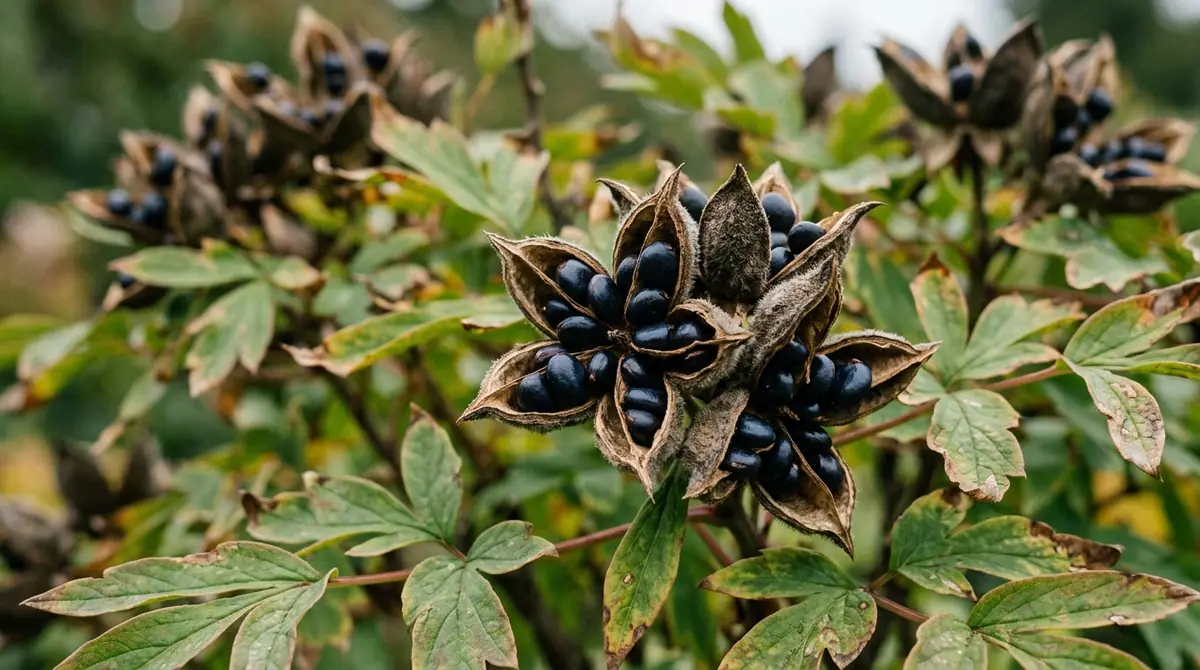
Kneeling in the cold mud behind my experimental nursery block seven years ago, I held a handful of wrinkled, leather-brown tree peony seeds that looked more like dried peppercorns than the woody shrubs they would eventually become. Most gardeners are told that growing tree peonies from seed is a multi-year gamble best left to geneticists, but watching that first stubborn radicle split the seed coat after months of complex temperature manipulation remains one of the most rewarding milestones of horticultural practice. Unlike herbaceous perennials that reset every winter, woody tree peonies (Paeonia suffruticosa and related species) carry a rich genetic heritage shaped by cold mountain winters and prolonged dry seasons. If you have ever wondered how to transition from traditional propagation methods—like calculating when to start seeds outdoors for seasonal vegetables—into the patient art of woody perennial cultivation, tree peony seeds offer a masterclass in botanical persistence.
1. Botanical Overview & Natural Habitat

Botanically classified within the family Paeoniaceae, tree peonies produce seeds inside follicle fruits that split open in late summer, revealing large, round seeds that transition from creamy green to a deep, lustrous purple-black as they mature. In their native limestone habitats, these plants experience a very specific evolutionary cycle: seeds drop onto the soil surface in late summer, where high ambient temperatures trigger root development (hypocotyl elongation) without shooting leaves, followed by freezing winter temperatures that break epicotyl dormancy.
Understanding this natural habitat is crucial for anyone attempting to germinate tree peony seeds at home. Because they are woody perennials with deep taproots, their germination schedule is governed by a two-step dormancy mechanism. The first barrier is morphological and physiological dormancy in the root (radicle), which requires warm, moist conditions. The second barrier is dormancy in the upper shoot (epicotyl), which requires a prolonged period of chilling. This complex dual dormancy is entirely different from the straightforward timelines you might use when planning when to start seeds indoors zone 7a or scheduling vegetable crops like when to start squash seeds indoors. For authoritative insights into perennial plant taxonomy and regional adaptation, consult the Royal Horticultural Society guidelines on woody plant propagation.
2. Essential Environmental & Care Requirements
Replicating the native mountain environment of tree peonies requires meticulous control over temperature, moisture, and soil composition. Tree peony seeds and young seedlings demand sharp drainage, strict fungal prevention, and precise temperature staging to navigate their dual dormancy phases successfully.
| Parameter | Optimal Condition | Common Mistake | Why It Matters |
|---|---|---|---|
| Warm Stratification Temp | 70°F to 85°F (21°C to 29°C) | Keeping seeds in a cold refrigerator immediately | Warm temperatures are required to stimulate root (radicle) emergence before the shoot can develop. |
| Cold Stratification Temp | 35°F to 40°F (1.7°C to 4.4°C) | Skipping cold exposure or exposing to freezing cycles | A chilling period is mandatory to break epicotyl dormancy and prompt the first true leaves to push upward. |
| Sowing Depth | 1.0 to 1.5 inches (2.5 to 3.8 cm) | Surface sowing or burying deeper than 2.0 inches | Proper depth ensures moisture retention for the developing hypocotyl while preventing fungal rot. |
| Soil pH | 6.5 to 7.0 (neutral to slightly alkaline) | Highly acidic peat-heavy potting mixes | Tree peonies originate on limestone soils and struggle to take up calcium and magnesium in sour mixes. |
Soil structure is perhaps the most critical environmental factor. Heavy clay suffocates the nascent root, while standard potting soils retain too much moisture, inviting Phytophthora and damping-off fungi. I recommend a bespoke mix composed of 40% coarse horticultural perlite or pumice, 40% screened organic compost, and 20% garden loam amended with agricultural lime to maintain a neutral pH.
Light requirements change dramatically across the lifecycle of the plant. While germinating seeds and young seedlings require bright, indirect light or filtered shade to prevent heat stress, mature established plants thrive best in full sun to partial afternoon shade. In hotter southern climates, protecting the root zone with a thick layer of organic mulch is non-negotiable for preserving surface moisture during peak summer months. If you are balancing your garden timeline across multiple plant families, the meticulous planning required here is comparable to timing when to start stock seeds indoors or calculating the exact frost windows for crops like when to start tomato seeds indoors zone 6.
3. Step-by-Step Cultivation, Feeding & Propagation
Growing tree peonies from seed requires a long-term commitment. Because of their dual dormancy, expect a 6 to 18-month timeline from the day you collect or purchase the seed to the emergence of the first true leaves above the soil line.
💡 Pro-Tip: Never let fresh tree peony seeds dry out completely. If seed coats become bone-dry and hard, their internal moisture drops, and dormancy deepens exponentially. Always source seeds harvested within the current season, or store them in slightly damp perlite inside a sealed baggie if planting must be delayed by a few weeks.
Step-by-Step Germination and Planting Sequence
- Procure and Inspect Fresh Seeds: Collect seeds in late summer when the pods split open naturally. Select plump, heavy seeds that sink in water; discard floaters, as they are unfertilized or hollow.
- Soak and Sterilize: Soak the viable seeds in lukewarm water for 24 to 48 hours to soften the hard seed coat. Drain and rinse them in a weak 10% hydrogen peroxide solution to eliminate surface fungal spores.
- Initiate Warm Stratification (Root Phase): Place the soaked seeds into a sealed plastic bag containing a handful of slightly damp (not dripping) long-fiber sphagnum moss or perlite. Keep the bag in a warm dark location maintained at 70°F to 80°F (21°C to 27°C) for 60 to 90 days. Check weekly for moisture and root (radicle) emergence.
- Plant the Rooted Seeds: Once white radicles measuring 0.5 to 1.5 inches (1.3 to 3.8 cm) emerge from the seeds, carefully plant them individually into deep tree-band pots or root-trainer containers filled with your alkaline, fast-draining soil mix at a depth of 1.0 inch (2.5 cm).
- Initiate Cold Stratification (Shoot Phase): Move the potted seedlings into a cold frame, unheated garage, or refrigerator set to 35°F to 40°F (1.7°C to 4.4°C) for 90 to 120 days. Keep the soil barely moist. This chilling period breaks the upper-shoot dormancy.
- Provide Spring Awakening and Light: In early spring, move the pots out into bright, indirect sunlight outdoors or under grow lights. Maintain consistent moisture levels without waterlogging. The first true leaf will push through the soil surface approximately 30 to 60 days after returning to warm temperatures.
- First-Year Feeding and Maintenance: Once true leaves harden off, begin a very weak, balanced liquid organic fertilizer regimen (half-strength 10-10-10 or a liquid fish emulsion) every 4 weeks throughout the active growing season. Do not let young seedlings dry out completely during their first summer.
- Transplanting to Permanent Positions: Allow the seedlings to grow undisturbed in their deep pots for a full year. Transplant them into their permanent garden location in early autumn, ensuring the crown is planted 1 to 2 inches (2.5 to 5.0 cm) below the soil surface to encourage robust woody branching. For broader seasonal planting strategies, refer to agricultural insights from the USDA National Agricultural Library.
4. Common Problems, Pests & Troubleshooting
Tree peony seedlings are notoriously sensitive during their first eighteen months of life. Identifying problems early can save a batch of rare cultivars from total failure.
- Damping-Off and Stem Rot: This fungal collapse occurs when seedlings are kept in stagnant, overly wet soil with poor air circulation. Prevent this by using sterile seed-starting media, watering only when the top 0.5 inches (1.3 cm) of soil is dry, and dusting seeds with a bio-fungicide like Trichoderma prior to planting.
- Failure to Push Top Growth: If you provided warm stratification and planted the seeds, but no leaves appear after spring arrives, the cold stratification period was likely too short or insufficiently cold. Move the pots back into a 35°F to 40°F (1.7°C to 4.4°C) environment for another 8 weeks to satisfy the chill requirement.
- Botrytis Blight (Gray Mold): Mature plants and older seedlings can succumb to Botrytis paeoniae during wet, humid springs, showing brown spots on leaves and sudden stem collapse. Prune out infected tissue immediately, dispose of debris away from the garden, and ensure plants have at least 4 feet (1.2 meters) of spacing for optimal airflow.
- Root-Feeding Pests: Voles and mice find the fleshy roots of young tree peonies irresistible over winter. Protect container-grown seedlings by elevating them off the ground or lining in-ground nursery beds with fine galvanized hardware cloth.
⚠️ Important Caution: Never apply high-nitrogen synthetic lawn fertilizers around young tree peonies or fresh seedlings. Excess nitrogen triggers soft, succulent stem growth that is highly vulnerable to fungal pathogens and winter dieback. Stick to slow-release, low-nitrogen organic amendments rich in potassium and phosphorus.

5. Frequently Asked Questions
How long does it take for tree peony seeds to flower?
Grown from seed, tree peonies typically take anywhere from 3 to 5 years to produce their very first flower. The first blooms are often single-petaled and may not display the full color saturation or double form of the parent plant until the shrub reaches its fifth or sixth year of establishment.
Can I plant tree peony seeds directly in the ground outdoors?
Yes, you can direct-sow fresh seeds outdoors in late summer or early autumn immediately after harvest. Plant them 1.5 inches (3.8 cm) deep in a well-drained bed. Nature will handle the warm and cold stratification cycles automatically, though germination rates are often lower and harder to track compared to controlled indoor stratification.
Why do my tree peony seeds have roots but no leaves?
This is a classic symptom of incomplete chilling. Tree peony seeds develop their root system during warm autumn conditions, but the upper shoot (epicotyl) requires a distinct period of winter cold (35°F to 40°F / 1.7°C to 4.4°C) to break dormancy. If your seeds have roots but no leaves, they have not experienced enough cold hours to trigger top growth.
Do tree peony seeds need light to germinate?
No, tree peony seeds do not require light for their initial root germination phase. In fact, they should be buried 1.0 to 1.5 inches (2.5 to 3.8 cm) deep to maintain the constant moisture required by the expanding hypocotyl and to protect the emerging radicle from drying out or exposure to light-induced stress. Light only becomes necessary once the green shoot pushes above the soil line.
Related Guides
- Peony in Containers
- Can Peony Be Planted in Pots
- How to Grow Peony Seeds
- What Does a Peony Seed Look Like
- How Do You Plant Peony Roots
📋 Table of Contents ▼ Click to expand
Tags:
Keep reading
🌿 Related Plants You Might Like




PlantSavvyWorld
Editorial team
PlantSavvyWorld is an independent botanical education project. Articles are drafted with AI assistance, then edited and checked against university extension services, botanical garden collections and other published horticultural sources.