

How to Grow Peony Seeds
Written with AI assistance, edited and checked against horticultural sources.

1. Botanical Overview & Natural Habitat
Peonies belong to the family Paeoniaceae, comprising roughly 30 to 40 species of herbaceous perennials and woody deciduous shrubs native to the temperate regions of Asia, Southern Europe, and Western North America. In their natural habitat, peonies experience cold, snowy winters and warm, dry summers. This evolutionary history dictates every aspect of how their seeds germinate and grow.
Unlike many annual vegetables—such as those you might monitor using a When to Start Tomato Seeds Indoors Zone 6 calendar or calculate harvest timelines for using a How Long Does It Take for Tomatoes to Grow Tomato Growing and Harvesting Guide—peony seeds possess a complex physiological mechanism known as epicotyl dormancy coupled with a hard seed coat.
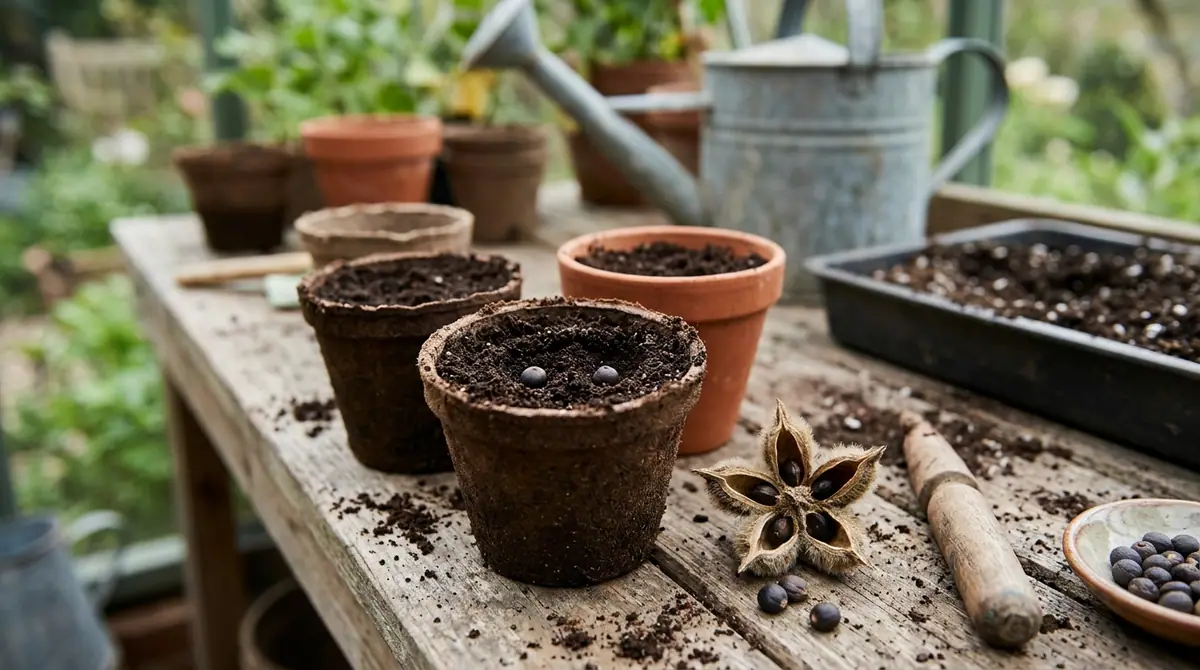
When a peony seed falls to the ground in late summer, it first undergoes root germination. This phase, known as radicle emergence, requires warm soil temperatures—typically between 60°F and 70°F (15°C to 21°C). Once the primary root system establishes, the seed requires a distinct chilling period, or cold stratification, ranging from 34°F to 40°F (1°C to 4°C) for 60 to 90 days. Only after this cold period will the epicotyl (the shoot) break dormancy and send up true foliage leaves.
Understanding this sequence is vital. If you rush the process or skip the cold treatment, the root may grow without ever producing a stem, leaving you wondering why your container looks dead. For broader botanical documentation on temperate perennial propagation, you can consult the Royal Horticultural Society propagation guidelines.
2. Essential Environmental & Care Requirements
To successfully take peony seeds from germination to a thriving landscape specimen, you must replicate their native environmental preferences.
Soil composition is your first priority. Peonies demand exceptionally well-draining soil rich in organic matter. Heavy clay will suffocate the developing roots and invite fungal pathogens, while pure sand lacks the nutrient retention required for long-term perennial health. Aim for a loamy soil mix with a neutral to slightly alkaline pH between 6.5 and 7.0.
Light exposure shifts as the plant matures. Freshly sown seeds and young seedlings prefer bright, indirect light or dappled shade to prevent the delicate root zone from drying out in containers. Once established in the open landscape, mature peony plants require full sun—at least 6 to 8 hours of direct sunlight daily—to promote robust structural integrity and heavy floral bud formation.
Moisture management is a delicate balance. The growing medium must remain consistently moist during the initial root development phase, but never waterlogged. Overwatering is the single most common cause of failure, frequently leading to root rot driven by Pythium or Rhizoctonia species.
| Parameter | Optimal Condition | Common Mistake | Why It Matters |
|---|---|---|---|
| Soil pH | 6.5 – 7.0 | Highly acidic soil (< 6.0) | Acidic soils stunt nutrient uptake and favor fungal diseases. |
| Germination Temp | 60°F – 70°F (15°C – 21°C) | Exposing fresh seeds to freezing temperatures immediately | Freezing prevents the initial root (radicle) from forming. |
| Stratification Temp | 34°F – 40°F (1°C – 4°C) | Skipping the cold period entirely | Without chilling, the shoot bud (epicotyl) will not break dormancy. |
| Planting Depth | 1.5 to 2 inches (3.8 to 5 cm) | Surface sowing or burying too deep (> 4 inches) | Proper depth protects developing nodes from thermal shock and desiccation. |
💡 Pro-Tip: When collecting your own seeds from garden specimens, harvest them in late summer when the pods (follicles) turn brown and begin to split open naturally. Do not wait for the pods to open completely and spill seeds onto the ground, as fully dried seeds enter a deeper state of dormancy that takes much longer to break. Plant them immediately while they are still "green" and plump for the highest germination rates.
3. Step-by-Step Cultivation, Feeding & Propagation
Growing peonies from seed is a multi-year commitment. Because hybrid peony seeds rarely come true to the parent plant, you are essentially breeding a completely new cultivar. Follow this exact protocol to maximize your success rate.
- Harvest and Inspect: Collect mature seeds in late August or September. Discard any seeds that float in a water test, as floating indicates hollow or unviable embryos. Soak the viable seeds in lukewarm water for 24 hours to soften the hard outer seed coat.
- Prepare the Warm Phase Medium: Fill clean nursery flats or deep tree-band pots with a sterile, well-draining propagation mix consisting of 50% perlite and 50% peat-free organic compost.
- Sow the Seeds: Plant each seed 1.5 to 2 inches (3.8 to 5 cm) deep. Space them roughly 2 to 3 inches (5 to 7.5 cm) apart if using flats, or place one seed per deep band pot.
- Initiate Root Growth: Keep the containers in a warm location where ambient temperatures remain between 65°F and 72°F (18°C to 22°C) for approximately 90 days. Keep the medium evenly moist. During this phase, root systems will develop below ground, though you will see no above-ground growth.
- Provide Cold Stratification: After the warm phase, move the containers into a refrigerator or an unheated cold frame where temperatures stay between 34°F and 40°F (1°C to 4°C) for 90 to 120 days. Ensure the soil does not dry out entirely during this cold period.
- Encourage Shoot Emergence: Bring the containers back out to a bright, cool indoor area or a protected spring frame with temperatures around 50°F to 60°F (10°C to 15°C). Within 30 to 45 days of warming up after stratification, the first burgundy or green shoots will emerge.
- Feed and Grow On: Once true leaves unfurl, apply a weak, half-strength balanced organic liquid fertilizer (such as a 5-5-5 fish emulsion blend) every 3 to 4 weeks. Avoid high-nitrogen synthetic fertilizers, which produce soft, succulent growth vulnerable to pests.
- Transplant to the Garden: In late summer or early autumn of their second year, transplant the young seedlings into their permanent garden positions. Space them 3 to 4 feet (90 to 120 cm) apart to accommodate their mature spread. For regional performance data, cross-reference your planting strategy with resources like the USDA Plant Hardiness Zone Map.
⚠️ Important Caution: Never let your peony seedlings sit in standing water. Because young root systems are exceptionally sensitive to fungal rot, ensure your containers or garden beds feature excellent drainage. Once rot sets in at the collar, the seedling cannot be saved.
4. Common Problems, Pests & Troubleshooting
Even with meticulous care, growing peonies from seed presents hurdles. Identifying symptoms early saves your crop from total loss.
Botrytis Blight (Botrytis paeoniae): This is the most common fungal disease affecting young peonies and mature plants alike. You will notice young emerging shoots turning brown, wilting suddenly, and developing a fuzzy gray mold during damp, cool spring weather. Prevent this by ensuring maximum air circulation around your plants, watering only at the base early in the day, and immediately removing infected plant tissue. Never compost diseased material.
Root Rot (Pythium and Phytophthora): If your seedlings suddenly collapse at the soil line with water-soaked stems, root rot is the culprit. This is almost exclusively triggered by overwatering or compacted, poorly draining soil. Discard infected seedlings and sterilize your containers with a 10% bleach solution before reusing them.

5. Frequently Asked Questions
How long does it take for peony seeds to flower?
From the moment you plant the seed to the opening of the first flower, expect a wait of 3 to 5 years. The first year focuses entirely on root establishment, the second year produces initial foliage, and floral buds typically form by years three through five as the root system gains sufficient maturity.
Do peony seeds need to be soaked before planting?
Yes. Soaking peony seeds in lukewarm water for 24 to 48 hours before sowing helps soften their exceptionally hard seed coats, allowing moisture to penetrate the embryo and significantly accelerating the germination process.
Can I plant peony seeds directly in the ground outdoors?
Yes, you can direct sow fresh seeds in your garden in late summer or early autumn. Mother Nature will naturally provide the warm phase in late summer followed by the winter cold stratification. However, germination rates are often lower outdoors due to seed predation by rodents, soil compaction, and moisture fluctuations.
Why are my peony seeds growing roots but no leaves?
This is a normal physiological stage caused by epicotyl dormancy. Peony seeds always grow their root system first during the warm phase. They will not produce shoots or leaves until they have experienced a subsequent cold stratification period of 60 to 90 days at temperatures below 40°F (4°C).
Related Guides
- Peony in Containers
- Can Peony Be Planted in Pots
- Tree Peony Seeds
- What Does a Peony Seed Look Like
- How Do You Plant Peony Roots
📋 Table of Contents ▼ Click to expand
Tags:
Keep reading
🌿 Related Plants You Might Like




PlantSavvyWorld
Editorial team
PlantSavvyWorld is an independent botanical education project. Articles are drafted with AI assistance, then edited and checked against university extension services, botanical garden collections and other published horticultural sources.