

Peony in Containers
Written with AI assistance, edited and checked against horticultural sources.
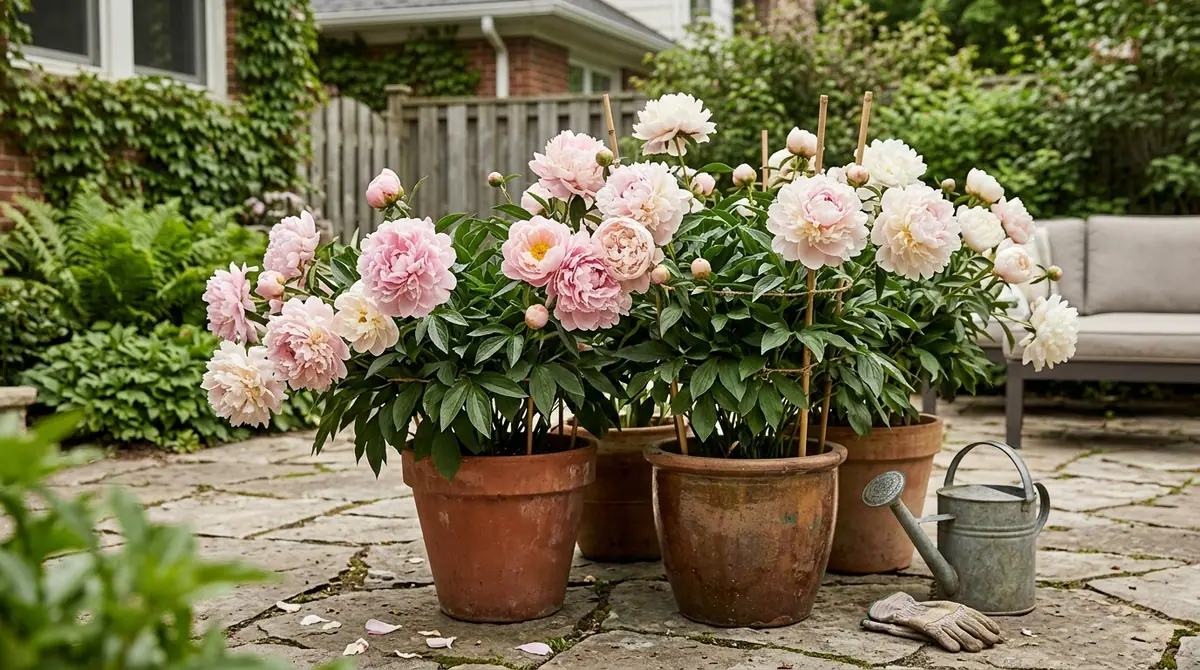
A struggling Paeonia lactiflora 'Sarah Bernhardt' in a five-gallon nursery pot with cramped leaves and zero blossoms usually results from heavy topsoil, lack of sunlight, and a drowned crown. Separating its fleshy roots, upgrading it to a frost-proof terracotta vessel with a bespoke soil blend, and exposing it to the required chill hours allows the stems to erupt into heavy, fragrant, blush-pink globes.
1. Botanical Overview & Natural Habitat

In their native habitats across temperate regions of Asia, Southern Europe, and Western North America, peonies evolve in well-drained, nutrient-rich meadows and woodland edges. They are adapted to cold winters, surviving subterranean freezing temperatures down to -40°F (-40°C). This deep freeze is not merely tolerated; it is a physiological necessity. Peonies require a specific period of winter chilling—typically 500 to 1,000 hours below 45°F (7°C)—to break endodormancy in their underground buds (commonly called "eyes"). Without this thermal reset, the plant will fail to produce flowering stems in spring.
Unlike shallow-rooted annuals or many vegetables you might cultivate using our How to Grow Tomatoes in Containers Step By Step Guide, peonies develop massive, fleshy, tuberous root systems. These roots store the starches and sugars required to fuel explosive spring growth and massive, ruffled blooms. Because these roots grow vertically and laterally, container selection is critical. A standard 10-inch pot will stunt a peony within a single season. You must provide a container with a minimum volume of 10 to 15 gallons (approx. 38 to 57 liters), measuring at least 18 to 24 inches (45 to 60 cm) across and equally deep. Porous materials like unsealed terracotta, heavy-duty resin, or fiber-reinforced concrete work best because they allow gaseous exchange at the root zone and insulate the soil against extreme temperature fluctuations.
2. Essential Environmental & Care Requirements
To successfully cultivate peonies on a patio, balcony, or deck, you must replicate the optimal field conditions of a perennial farm within the constraints of a pot.
Sunlight is non-negotiable. Peonies require a minimum of 6 to 8 hours of direct, unhindered sunlight daily. Place your containers on a southern or western exposure. Insufficient light results in weak, leggy stems that collapse under the weight of rain, and a total absence of flower buds.
| Parameter | Optimal Condition | Common Mistake | Why It Matters |
|---|---|---|---|
| Container Size | 15+ gallons (57L), 20" (50cm) deep | Planting in 5-gallon nursery pots | Restricts deep fleshy roots, causing stunted growth and starvation. |
| Soil pH | 6.5 to 7.0 (Neutral) | Using highly acidic peat-heavy mixes | Low pH locks out essential nutrient uptake, causing chlorosis. |
| Watering Depth | Soak thoroughly until water drains | Frequent, shallow surface watering | Encourages surface roots instead of deep, drought-resilient root networks. |
| Winter Chill | 500–1000 hours below 45°F (7°C) | Keeping pots in warm indoor garages | Prevents the fulfillment of chill hours required to break bud dormancy. |
Water management in containers differs drastically from in-ground cultivation. While established garden peonies can tolerate short dry spells thanks to their deep taproots, container-grown plants rely entirely on you. Water deeply whenever the top 2 inches (5 cm) of soil feel dry to the touch. During the peak growth phase in late spring, this may mean soaking the pot every 3 to 5 days, depending on ambient temperatures and wind exposure. Always ensure your pot features multiple drainage holes measuring at least 1 inch (2.5 cm) across; standing water triggers root rot within 48 hours.
Soil composition dictates long-term success. Never use straight garden soil, which compacts into a brick inside confined containers, suffocating the roots. Instead, formulate a heavy, nutrient-dense potting matrix: 50% high-quality compost, 30% loamy topsoil or sterilized garden loam, and 20% coarse horticultural grit, perlite, or expanded clay to maximize drainage. Maintain a soil pH between 6.5 and 7.0. If you are selecting companion plants or smaller crops like the Best Tomatoes for Containers and Grow in Pots, remember that peonies are heavy prima donnas and perform best when given their own dedicated vessel without root competition.
3. Step-by-Step Cultivation, Feeding & Propagation
Planting a bare-root peony in a container requires precision. The single most common failure point is planting the eyes too deep, which prevents blooming entirely. Follow this rigorous step-by-step protocol in early autumn (September through November) for optimal root establishment before winter freeze.
- Sanitize and Prepare the Container: Select your 15-gallon container and clean it with a 10% household bleach solution to eliminate lingering fungal spores. Cover the bottom drainage holes with porous landscape fabric or broken terracotta shards to prevent soil loss while maintaining maximum permeability.
- Mix and Fill the Pot: Combine your heavy loam, compost, and perlite blend. Fill the container until the soil surface sits roughly 6 inches (15 cm) below the rim, tamping it down gently to eliminate massive air pockets.
- Inspect the Bare Root: Examine your dormant peony root division. It should feature 3 to 5 plump, pinkish-red growth buds (eyes) and several firm, fleshy storage roots. Trim away any mushy, blackened, or fractured sections with sterilized shears.
- Position the Plant: Place the root in the center of the pot. Spread the storage roots outward and downward like the spokes of a wheel.
- Set the Crown Depth (Crucial): Adjust the soil level so that the uppermost growth buds sit precisely 1.5 to 2 inches (3.8 to 5 cm) below the final soil surface. If you bury them deeper than 3 inches (7.6 cm), the plant will produce lush foliage but refuse to flower.
- Backfill and Settle: Fill in the remaining soil around the roots, pressing down firmly with your hands to secure the crown. Do not compact it so hard that you bruise the fragile tubers.
- Water In and Mulch: Soak the soil thoroughly until water flushes freely from the base drainage holes. Apply a 2-inch (5 cm) layer of shredded hardwood bark mulch across the top, keeping the mulch 1 inch away from direct contact with the stems to prevent collar rot.
💡 Pro-Tip: When feeding container peonies, avoid high-nitrogen lawn fertilizers that trigger a massive flush of weak, disease-prone leaves at the expense of blossoms. Instead, top-dress your pot every early spring with a cup of organic bone meal or a balanced, slow-release granular organic fertilizer (such as a 5-10-10 formulation) scratched gently into the top inch of soil.
Propagation of container peonies is achieved exclusively through division in autumn. Tip your 3-to-4-year-old container upside down, gently slide out the root mass, and hose off the old soil. Using a sharp, sterilized hori-hori knife, slice through the crown, ensuring every divided section retains at least 3 to 5 healthy eyes and a robust section of tuberous root. Replant each division immediately into its own dedicated container following the 7-step protocol above.
4. Common Problems, Pests & Troubleshooting
Container plants experience localized environmental stressors that field-grown specimens rarely face. Recognizing early warning signs saves your harvest of blooms.
Botrytis blight (Botrytis paeoniae) is the primary fungal adversary of the container peony. Triggered by cool, damp spring weather (temperatures consistently between 50°F and 65°F / 10°C to 18°C combined with high humidity), it causes young stems to suddenly turn black and rot at the soil line, or produces brown, blighted patches on developing flower buds. Prune out infected tissue immediately, sterilizing your shears between cuts, and move the container to a breezier, sunnier location to accelerate surface evaporation. For comprehensive reference on managing persistent fungal pathogens in controlled growing environments, consult the Royal Horticultural Society guidelines on peony diseases.
Ants are frequently seen crawling over peony buds. Do not panic or spray them with harsh insecticides; they are simply feeding on the sugary nectar secreted by the developing sepals and do zero structural damage to the plant. Conversely, keep a sharp eye out for aphids and thrips clustering on tender new shoot tips in May. Blast them off with a strong jet of water from your garden hose, or apply insecticidal soap directly to the affected surfaces during the cooler morning hours.
Leaf scorch and marginal browning occur when July and August heatwaves bake the container's root zone, or when watering is erratic. If daytime temperatures exceed 90°F (32°C) for consecutive weeks, shift your massive container into bright, dappled afternoon shade to protect the foliage from ultraviolet frying, while maintaining consistent, deep soil moisture. For additional regional diagnostics and localized extension data on soil-borne plant health, review the University of Minnesota Extension resources on herbaceous peonies.
⚠️ Important Caution: Never bring your container peony indoors during the winter months to "protect" it from freezing temperatures. Indoor conditions lack the sustained chilling hours required to break dormancy, and indoor central heating will rapidly dry out and kill the subterranean root system. Leave the pot outdoors year-round, even in USDA Hardiness Zone 3.

5. Frequently Asked Questions
Can I grow peonies in a pot on a balcony permanently?
Yes, absolutely, provided the container holds at least 15 gallons of soil and provides adequate depth for the tuberous root system. Because pots expose roots to freezing winter temperatures that ground-planted peonies never experience, ensure your container material is frost-proof (such as heavy fiberglass, thick resin, or frost-resistant terracotta) to prevent cracking when the wet soil freezes solid in winter.
Why do my container peony buds turn black and fail to open?
This is almost universally caused by Botrytis blight, a fungal disease favored by cool, wet spring weather and stagnant air circulation around the plant. Cut away all infected stems down to healthy tissue, clear away any rotting debris from the top of the potting mix, and relocate the container to an open, sun-drenched spot that maximizes air movement.
Do I need to bring my potted peony indoors for the winter?
No. Peonies require a sustained winter dormancy period characterized by 500 to 1,000 chilling hours below 45°F (7°C) to reset their internal biological clocks for spring flowering. Moving the container inside a warm house or garage will disrupt this cycle, resulting in weak foliage and a total lack of blooms the following season.
How often should I fertilize a peony in a container?
Container soils leach nutrients far faster than garden beds due to frequent watering. Apply a granular, low-nitrogen, high-phosphorus organic fertilizer (such as bone meal) once in early spring as new red shoots emerge, and a second light dose immediately after the flowering cycle concludes in early summer to replenish the energy drained by the blooms.
Related Guides
- Can Peony Be Planted in Pots
- Tree Peony Seeds
- How to Grow Peony Seeds
- What Does a Peony Seed Look Like
- How Do You Plant Peony Roots
📋 Table of Contents ▼ Click to expand
Tags:
Keep reading
🌿 Related Plants You Might Like






PlantSavvyWorld
Editorial team
PlantSavvyWorld is an independent botanical education project. Articles are drafted with AI assistance, then edited and checked against university extension services, botanical garden collections and other published horticultural sources.