

How to Grow Tomatoes in Containers Step By Step Guide
Written with AI assistance, edited and checked against horticultural sources.
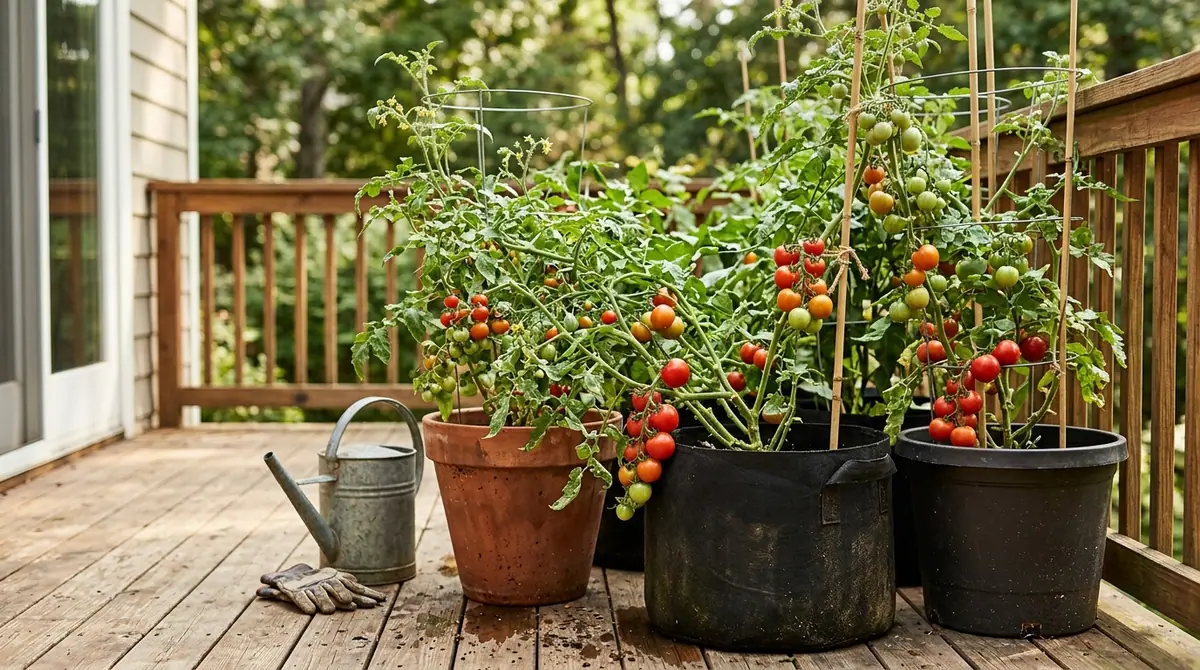
A 5-gallon fabric pot holding a 'Sungold' cherry tomato plant will completely collapse under the weight of an unchecked jungle of vines and heavy fruit clusters if grown in a pot half the size it actually requires. Tomatoes are greedy, thirsty, resilient opportunists, and growing them successfully in containers is less about luck and entirely about mastering their aggressive botanical requirements within strict artificial boundaries.

1. Botanical Overview & Natural Habitat
Tomatoes (Solanum lycopersicum, formerly Lycopersicon esculentum) are native to the high-altitude western slopes of the Andes mountain range in South America, stretching through Peru, Ecuador, and Chile. In their wild habitat, they grow as short-lived, herbaceous, sprawling perennials scrambling across rocky, well-draining soils under intense, equatorial sun.
Evolutionarily, the tomato plant developed an extensive root system capable of plunging 4 feet (120 cm) or more into the earth to hunt for moisture during dry mountain summers. This evolutionary heritage explains why stuffing a modern hybrid tomato into a shallow 8-inch (20 cm) window box triggers immediate physiological stress. Furthermore, tomatoes are technically vining perennial vines, though we treat them as annuals in most cultivation zones.
When you confine a plant built for deep exploration into a pot, you must replicate its native conditions artificially. They require absolute stability in soil temperatures, high rates of transpiration, and deep gas exchange at the root zone. Understanding this heritage is also the secret behind advanced techniques like those detailed in our guide on How to Grow Huge Tomato Plants: Pruning, Trenching & Heavy Yields.
| Parameter | Optimal Condition | Common Mistake | Why It Matters |
|---|---|---|---|
| Container Volume | 5 to 15 gallons (19 to 57 L) per plant | Using 1 to 2-gallon pots | Restricts root expansion, causing premature stunting and drought stress |
| Soil Temperature | 65°F to 75°F (18°C to 24°C) | Planting when soil is below 55°F (13°C) | Cold soil halts phosphorus uptake and prevents root establishment |
| Daily Sunlight | Minimum 6 to 8 hours of direct sun | Placing in partial shade or northern exposures | Insufficient light drops blossoms and halts sugar production in fruit |
| Soil pH | 6.2 to 6.8 (slightly acidic) | Using dense, unamended native garden dirt | Compacted garden soil suffocates roots and breeds soil-borne pathogens |
2. Essential Environmental & Care Requirements
To produce a heavy yield in a container, you must manage light, water, and nutrients with absolute precision. Because container soil volume is finite, buffering capacity is low, meaning small mistakes compound rapidly into major physiological crises.
Light and Temperature Dynamics
Tomatoes are absolute sun-worshippers. They require a minimum of 6 to 8 hours of direct, unfiltered sunlight daily. Anything less results in leggy, weak stems, sparse foliage, and poor pollination. Ambient air temperatures should ideally hover between 70°F and 85°F (21°C to 29°C) during the day and drop to 60°F to 65°F (15°C to 18°C) at night. When temperatures consistently spike above 90°F (32°C), pollen becomes sterile, and the plant drops its blossoms to conserve energy.
Watering and Moisture Management
Container tomatoes dry out exponentially faster than in-ground plants. During peak summer heatwaves, a mature indeterminate tomato in a 10-gallon (38 L) pot will transpire its entire water supply within 24 hours. Your goal is to keep the growing medium evenly moist—like a wrung-out sponge—without turning it into a swamp. Inconsistent watering is the primary trigger for blossom end rot and fruit splitting. For additional tips on moisture retention in confined spaces, consult the cultivation advice found in How to Grow Butternut Squash in Small Spaces: Vertical Trellising Secrets.
Nutrient Architecture
Because frequent watering leaches essential minerals out of container soil, you cannot rely solely on the initial potting mix. Tomatoes are heavy feeders requiring a balanced supply of nitrogen (N) for vegetative growth, phosphorus (P) for root development and heavy flowering, and potassium (K) for fruit sizing and disease resistance.
💡 Pro-Tip: Always mix a slow-release, organic granular fertilizer containing calcium and magnesium directly into the bottom third of your container soil at planting time. This ensures calcium is readily available at the root zone right as the first fruit sets, preventing blossom end rot before it can start.
3. Step-by-Step Cultivation, Feeding & Propagation
Growing container tomatoes successfully is an engineering task. Follow this step-by-step framework to transition from a tiny seedling to a heavy-yielding powerhouse.
- Select the Right Cultivar: Choose determinate (bush-type, topping out at 3 to 4 feet / 90 to 120 cm) varieties like 'Patio Princess' or 'Roma VF' for smaller pots, or indeterminate varieties like 'Early Girl' or 'Sweet Million' for containers holding 10+ gallons (38+ L).
- Choose and Prep the Container: Secure a pot holding at least 5 gallons (19 L) for bush types and 10 to 15 gallons (38 to 57 L) for vining types. Ensure the pot features multiple drainage holes measuring at least 0.5 inches (1.2 cm) across.
- Mix the Ideal Substrate: Never use heavy garden soil. Fill the container with a sterile, high-aeration potting mix composed of 60% sphagnum peat moss or coco coir, 20% perlite or vermiculite, and 20% aged compost or worm castings.
- Plant Deeply: Strip off all lower leaves from your tomato transplant, leaving only the top tuft of foliage. Dig a vertical hole or trench and bury the stem up to two-thirds of its height. Tomatoes will sprout adventitious roots all along the buried stem, building a massive, anchor-like root system within 14 days.
- Install Support Structures Immediately: Drive a sturdy tomato cage, stakes, or a patio obelisk into the pot at the time of planting. Installing supports later will inevitably puncture the root ball and snap main stems.
- Establish the Watering Protocol: Water deeply until runoff flows from the bottom drainage holes. For the first 21 days, let the top 1 inch (2.5 cm) of soil dry out between waterings to encourage deep root-seeking behavior.
- Initiate the Feeding Schedule: Begin feeding with a water-soluble, tomato-specific fertilizer (high in potassium and phosphorus, lower in nitrogen) every 14 days once the first flowers appear.
- Prune and Train: For indeterminate varieties, pinch out the "suckers"—the aggressive shoots emerging in the 45-degree angle between the main stem and leaf branches—to maintain airflow and direct energy into fruit production.
⚠️ Important Caution: Never let your container tomato pots sit directly on a flat concrete balcony or patio floor without pot feet or risers. Trapped water will block the drainage holes, causing anaerobic conditions, root rot, and sudden plant collapse within 48 hours.
For comprehensive regional data on soil testing and local disease pressures, review the guidelines published by the University of Illinois Extension Tomatoes Guide and the botanical insights at the Royal Horticultural Society Growing Tomatoes.
4. Common Problems, Pests & Troubleshooting
Container gardening creates a microclimate that can occasionally attract pests or physiological disorders. Here is how to diagnose and correct them before they destroy your harvest.
Blossom End Rot
- Symptom: A sunken, leathery, dark brown or black patch forms on the bottom (blossom end) of developing green fruit.
- Cause: Fluctuating soil moisture levels that temporarily halt the plant's ability to take up calcium, even if calcium is present in the soil.
- Correction: Establish a strict, consistent watering schedule. Supplement with a foliar calcium spray if necessary, but focus primarily on even soil moisture.
Aphids and Whiteflies
- Symptom: Sticky residue (honeydew) on leaves, curled new growth, and clusters of tiny green, black, or white flying insects under the leaves.
- Cause: Warm container microclimates and excess nitrogen fertilizer that promotes soft, succulent new growth.
- Correction: Blast the undersides of the leaves with a sharp stream of water from a hose every morning for 3 consecutive days. For heavy infestations, apply organic insecticidal soap or neem oil formulation strictly at dusk to prevent leaf scorch.
Early Blight (Alternaria solani)
- Symptom: Dark brown spots with concentric rings (target-board pattern) appearing on the older, lower leaves, eventually causing leaves to yellow and drop off.
- Cause: Water splashing soil-borne fungal spores up onto the lower foliage, combined with high humidity and poor air circulation.
- Correction: Prune off all lower leaves within 12 inches (30 cm) of the soil line. Mulch the top of the container soil with straw or wood chips to prevent soil splash during watering.

5. Frequently Asked Questions
What is the absolute minimum pot size for a tomato plant?
The absolute minimum container size for a micro-dwarf or determinate bush tomato is 3 gallons (11 L), but a 5-gallon (19 L) container is the gold standard for reliable yields. Indeterminate vining tomatoes require a minimum of 10 to 15 gallons (38 to 57 L) of soil volume to support their massive root and canopy architecture throughout a full growing season.
Can I grow indeterminate tomatoes in a container?
Yes, absolutely. While determinate varieties are naturally compact, indeterminate tomatoes thrive in containers provided they are planted in a vessel holding at least 10 gallons (38 L). You must provide a heavy-duty staking system, such as a tall patio obelisk or cattle-panel cage, and practice rigorous pruning to keep the massive vines manageable.
How often should I water container tomatoes in the summer?
During peak summer heat when temperatures exceed 85°F (29°C), container tomatoes generally require daily watering. In extreme heatwaves above 95°F (35°C), large plants in 10-gallon pots may require deep watering twice a day—once in the early morning and a supplemental drink in the late afternoon. Always check the soil moisture 2 inches (5 cm) deep with your finger before applying water.
Why are the lower leaves of my container tomato turning yellow?
Lower leaf yellowing is frequently caused by natural aging and shading as the upper canopy expands. However, it can also signal nitrogen deficiency, overwatering, or early blight fungus. If the yellowing is accompanied by brown spots or wilting, prune the affected leaves immediately, check your container's drainage holes, and adjust your watering and fertilizing cadence.
Related Guides
- Best Tomatoes for Containers and Grow in Pots
- Step By Step Guide to Grafting Fruit Trees for Beginners
- No Till Gardening Method Step By Step Guide
- Peony in Containers
- Growing Peonies in Containers
📋 Table of Contents ▼ Click to expand
Tags:
Keep reading
🌿 Related Plants You Might Like






PlantSavvyWorld
Editorial team
PlantSavvyWorld is an independent botanical education project. Articles are drafted with AI assistance, then edited and checked against university extension services, botanical garden collections and other published horticultural sources.