

When to Start Planting Seeds Outdoors
Written with AI assistance, edited and checked against horticultural sources.
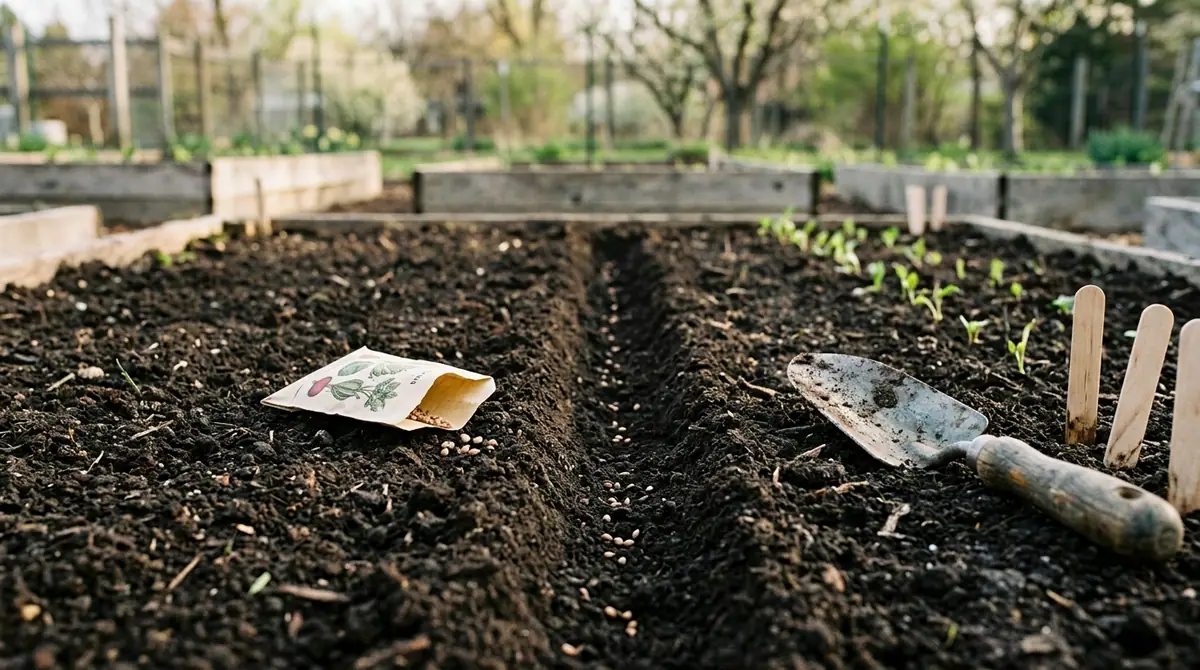
I stood in trial gardens last April, shivering slightly in a damp fleece jacket, holding a packet of snap pea seeds between numb fingers while looking out over frost-crusted soil. My neighbor had tilled his entire plot three weeks prior, convinced that the sudden 70°F (21°C) afternoon spike meant spring had officially arrived. I chose to wait. My seeds went into the ground seven days later when the soil temperature at a 4-inch (10 cm) depth held steady at 45°F (7°C). His seeds rotted in the waterlogged, freezing mud and required a complete re-seeding; mine emerged in twelve days, vigorous and uniform. Knowing when to start planting seeds outdoors is the single most defining factor between a thriving, abundant harvest and a frustrating cycle of rotting embryos, stunted cotyledons, and lost labor.

1. Botanical Overview & Natural Habitat
To understand when to sow seeds outdoors, we must look to nature. In native ecosystems, plants drop their seeds at the end of the fruiting cycle—typically late summer or autumn. These seeds undergo a natural period of cold stratification, winter dormancy, or after-ripening, waiting patiently until specific environmental cues signal that the danger of lethal freezing has passed and the growing season has begun.
Botanically, seeds are embryonic plants encased in a protective seed coat (testa) along with a localized food supply (endosperm). When a seed senses the correct confluence of environmental signals—primarily soil temperature, moisture, and light or darkness—it breaks dormancy. Water imbibition (absorption) rehydrates the tissues, activating internal enzymes that convert stored starches into usable sugars for the emerging root (radicle) and shoot (plumule).
Different plant families possess vastly different evolutionary adaptations to temperature and photoperiod:
- Cool-Season Crops (Hardy Annuals & Biennials): Plants like brassicas, spinach, and root vegetables evolved in temperate or alpine regions. Their enzymes function efficiently at lower metabolic thresholds. They can be safely sown outdoors 4 to 6 weeks before the last expected spring frost, when soil temperatures reach 40°F to 45°F (4°C to 7°C).
- Warm-Season Crops (Tender Annuals): Species originating from tropical or subtropical niches—such as tomatoes, peppers, squash, and beans—possess zero tolerance for frost. Their cellular walls rupture easily when exposed to sub-freezing temperatures, and their metabolic enzymes remain dormant until the soil warms to 60°F to 70°F (15°C to 21°C) or higher.
If you are transitioning warm-season crops from indoor setups or considering structural planting timelines, you may also want to review our guide on When to Transplant Cucumber Seedlings: Stop Root Shock & Boost Growth to ensure your timing bridges indoor stratification and outdoor hardening off seamlessly.
2. Essential Environmental & Care Requirements
Timing outdoor seed planting is useless if the surrounding environmental parameters do not support germination and early root development. You cannot rely solely on the calendar date on your wall; nature operates on thermodynamic units and moisture dynamics.
Soil Temperature vs. Air Temperature
Gardeners often make the mistake of checking the weather app for air temperature. Seeds germinate in response to soil temperature. A string of warm 75°F (24°C) days in early March does not mean the soil is warm; dense earth retains winter cold far longer than the ambient air. Use a digital soil thermometer inserted 2 to 4 inches (5 to 10 cm) deep into the bed during the morning hours to get an accurate reading.
Moisture and Soil Structure
A seed requires continuous, gentle moisture contact to soften its seed coat and initiate imbibition. However, waterlogged soil excludes oxygen, causing the seed to suffocate and rot due to opportunistic soil pathogens like Pythium or Rhizoctonia. The ideal seedbed has a fine, crumbly tilth—resembling breadcrumbs—composed of balanced aggregates that retain moisture while draining excess water freely.
| Parameter | Optimal Condition | Common Mistake | Why It Matters |
|---|---|---|---|
| Soil Temperature | 50°F–75°F (10°C–24°C) depending on species | Planting too early when soil is under 45°F (7°C) | Cold soil halts metabolic activity, causing seeds to rot before emergence. |
| Sowing Depth | 2 to 3 times the diameter of the seed | Burying tiny seeds too deep (over 0.5 inches / 1.3 cm) | Tiny seeds lack the endosperm energy reserves to reach the soil surface from deep burial. |
| Moisture Tension | Consistently damp like a wrung-out sponge | Alternating between waterlogged mud and bone-dry crust | Dryness halts cell division instantly; waterlogging causes anoxic rot. |
| Seed-to-Soil Contact | Firmly pressed into contact with soil particles | Tossing seeds onto loose, un-tamped earth | Air pockets prevent moisture transfer from soil to seed coat, halting imbibition. |
💡 Pro-Tip: When dealing with difficult or slow-germinating seeds outdoors, consult the comprehensive resources provided by the Royal Horticultural Society (RHS) Propagation Guide to match your local microclimate conditions with the specific dormancy-breaking requirements of your chosen plant families.
3. Step-by-Step Cultivation, Feeding & Propagation
Direct sowing requires precision. Unlike transplanting nursery starts, direct-sown seeds must navigate soil crusting, wind erosion, and predatory insects during their most vulnerable stage. Follow this meticulous 5-step protocol to ensure high germination rates outdoors.
- Site Preparation and Weed Eradication: Clear the planting bed of all perennial weeds and debris two weeks prior to sowing. Gently rake the top 2 inches (5 cm) of soil to break up clods, creating a fine, level seedbed without pulverizing the underlying soil structure.
- Pre-Irrigation: Water the bed thoroughly the evening before you plan to plant. This ensures moisture permeates the lower soil profile, allowing you to plant into damp earth without washing seeds away with a heavy post-sowing deluge.
- Precision Sowing at Correct Depths: Consult your seed packet for exact depth requirements. As a general rule of thumb, plant seeds at a depth equal to two to three times their width. Press larger seeds (like beans or squash) gently into the furrow with your thumb to ensure absolute seed-to-soil contact. For specialized crop strategies, such as managing fine herbs or cool-season roots, check our specialized protocol on How to Germinate Parsley Seeds Fast: Hot Water Soak & 7-Day Trick.
- Gentle Covering and Tamping: Cover the seeds with fine compost, vermiculite, or sifted native soil. Lightly tamp the surface with the back of a rake or a flat board. This eliminates microscopic air pockets and establishes capillary action, drawing moisture upward from the soil profile to the seed coat.
- Moisture Maintenance and Protection: Mist the bed daily using a fine rose attachment on your hose or a watering wand to avoid displacing the soil. If heavy rains or intense sun are forecasted, lay a temporary layer of floating row cover or burlap over the bed to retain humidity and protect the surface from crusting. Remove the cover immediately upon seedling emergence to prevent leggy (etiolated) growth.
⚠️ Important Caution: Never fertilize newly direct-sown seeds or emerging cotyledons with high-nitrogen synthetic fertilizers. The high salt index of chemical fertilizers will draw moisture away from the delicate, unestablished radicles via osmotic pressure, resulting in fertilizer burn and instant seedling collapse.
4. Common Problems, Pests & Troubleshooting
Even with pristine timing, outdoor seedbeds face environmental hazards. Diagnosing issues early saves your crop from total failure.
Seed Rot and Damp-Off
- Symptom: Seeds fail to emerge, or seedlings emerge and rapidly pinch off at the soil line, toppling over and dying.
- Cause: Fungal pathogens thriving in cold, poorly drained, overly saturated soils.
- Solution: Improve surface drainage by incorporating organic matter into future plantings. Wait until soil temperatures meet the specific minimum requirement for your crop before sowing. For regional strategies on timing resilient crops against seasonal moisture shifts, refer to When to Plant Strawberries in Kansas: Zone 6a/6b Seasonal Calendar.
Crust Formation
- Symptom: A hard, impermeable ceramic-like crust forms on top of the soil after a heavy rain followed by intense sun, trapping emerging shoots underground.
- Cause: High clay content in the soil combined with heavy droplet impact from rainfall or coarse watering.
- Solution: Break the crust gently using a tine rake or spray the bed lightly with water to soften it. Prevent future crusting by covering direct-sown rows with a light dusting of vermiculite or finished compost rather than packing heavy native clay over the seeds.
Predation by Birds and Rodents
- Symptom: Cleanly swept patches in your rows where seeds have been actively dug up and consumed overnight.
- Cause: Sparrows, finches, mice, and chipmunks identifying exposed seeds or freshly turned earth.
- Solution: Secure your direct-sown beds with physical barriers such as floating row covers pinned tightly at the edges, or stretch chicken wire over wooden frames until the seedlings have developed their first set of true leaves.

5. Frequently Asked Questions
How do I know when my soil is warm enough to plant seeds outside?
You should purchase a digital soil thermometer and test the earth at a depth of 4 inches (10 cm) every morning for three consecutive days. If the reading consistently meets or exceeds the minimum germination temperature required for your specific plant variety (e.g., 45°F/7°C for lettuce, 60°F/15°C for beans, 70°F/21°C for peppers), it is safe to proceed. For warmer climate zones with unique regional microclimates, consult the guidelines provided by the University of California Agriculture and Natural Resources (UC ANR) for localized soil warming charts.
Can I plant all vegetable seeds outdoors at the same time?
No. Doing so will result in massive crop failure. Cool-season crops (kale, carrots, peas, spinach) thrive when planted 4 to 6 weeks before the final spring frost in cold soils. Warm-season crops (tomatoes, cucumbers, melons, squash) will wither, rot, or stall out permanently if planted before all danger of frost has passed and the soil has thoroughly warmed up.
What happens if I plant my seeds outdoors too early?
If you plant too early, the seeds will sit dormant in cold, wet soil. This prolonged exposure increases their vulnerability to fungal pathogens, soil-borne insects, and bacterial rots. Even if they manage to germinate, cold stress will stunt their growth, resulting in weak plants that rarely catch up to crops sown at the correct thermal window.
Should I water every day after planting seeds outdoors?
You should keep the seedbed consistently moist, which may require watering once a day or even twice a day if the weather is windy and dry. However, the goal is to keep the soil damp like a wrung-out sponge, never soggy or flooded. Once seedlings emerge and develop deeper root systems, you should transition to deeper, less frequent watering to encourage downward root growth.
Related Guides
- When to Start Seeds Outdoors
- When to Start Fertilizing Seedlings
- How to Start Hostas from Seed
- When to Start Tomatoes Indoors Zone 6
- When to Start Tomato Seeds Indoors Zone 6
📋 Table of Contents ▼ Click to expand
Tags:
Keep reading
🌿 Related Plants You Might Like






PlantSavvyWorld
Editorial team
PlantSavvyWorld is an independent botanical education project. Articles are drafted with AI assistance, then edited and checked against university extension services, botanical garden collections and other published horticultural sources.