

How to Start Hostas from Seed
Written with AI assistance, edited and checked against horticultural sources.
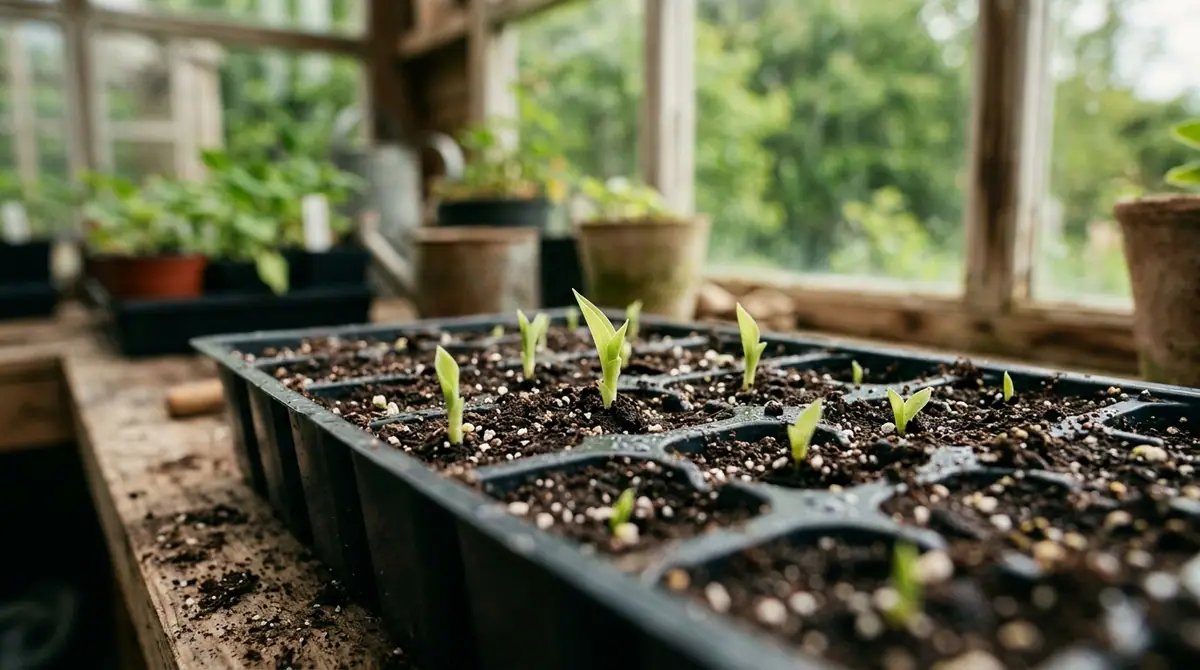
Propagating hostas from wrinkled, jet-black seeds harvested from a 'Halcyon' clump is quite different from starting garden vegetables like When to Start Tomatoes Indoors Zone 6, whereas commercial growers typically propagate hostas almost exclusively by division or tissue culture to lock in exact genetic traits. Growing hostas from seed requires patience, careful moisture management, and an appreciation for botanical diversity, allowing home growers to successfully germinate a hosta forest from scratch.
1. Botanical Overview & Natural Habitat

In their natural woodland understory habitats, hostas experience distinct seasonal shifts. Seeds mature inside dry, three-celled capsules by late autumn. As winter approaches, these capsules split open, releasing papery, winged seeds that drift on the wind or drop directly into the leaf litter below. They experience natural cold stratification over the winter months before germinating when spring soil temperatures rise and woodland canopies let in filtered sunlight.
Understanding this natural cycle is the secret to breaking dormancy successfully in a controlled indoor environment. While similar to the careful scheduling required when calculating When to Start Seeds Outdoors, indoor hosta propagation allows you to bypass the harsh winter elements while still mimicking the precise biological triggers the seeds require.
2. Essential Environmental & Care Requirements
Replicating a damp, fertile East Asian woodland floor indoors means paying close attention to light, temperature, moisture, and soil composition. Hostas do not like heavy, waterlogged clay or scorching, unshielded sunshine during their initial stages of life.
Light
Germinating hosta seeds do not strictly require light to spark initial sprouting, but the emerging cotyledons need high-intensity, indirect light immediately. Position your seed flats 3 to 4 inches (7.5 to 10 cm) beneath a full-spectrum LED grow light for 14 to 16 hours daily. Direct, intense window sunlight will quickly scorch tender, paper-thin seedlings.
Temperature
During the initial germination phase, maintain a steady ambient temperature between 65°F and 72°F (18°C to 22°C). Once true leaves emerge, you can drop nighttime temperatures slightly to 60°F (15°C) to encourage stocky, robust stem development rather than weak, leggy growth.
Moisture and Medium
Use a sterile, fine-textured seed-starting mix composed of peat moss, perlite, and vermiculite. The medium must retain moisture without compacting. Keep the relative humidity around 70% to 80% using a humidity dome until germination occurs, ensuring the top layer never dries out completely. For more details on timing and early spring seed management in general, you can reference resources like the University of Minnesota Extension.
| Parameter | Optimal Condition | Common Mistake | Why It Matters |
|---|---|---|---|
| Soil Temperature | 65°F – 72°F (18°C – 22°C) | Allowing soil to drop below 55°F (13°C) | Low temperatures delay or completely stall radical emergence. |
| Sowing Depth | 1/8 inch (0.3 cm) or surface sown | Burying seeds deeper than 1/4 inch (0.6 cm) | Hosta seeds require light-assisted triggers or minimal cover to push through. |
| Moisture Level | Consistently damp, sponge-like | Saturated mud or completely dry surface | Excess water rots the endosperm; dryness kills the emerging embryo. |
| Light Duration | 14–16 hours daily post-germination | Placing in dark corners or direct blazing sun | Insufficient light causes legginess; direct sun fries young leaves. |
💡 Pro-Tip: If you harvested your own hosta seeds fresh in autumn, give them a dry 4-week cold treatment in your refrigerator at 38°F to 40°F (3°C to 4°C) inside a sealed paper envelope before sowing. While not strictly mandatory for all open-pollinated species, this artificial winter chill dramatically speeds up uniform germination rates.
3. Step-by-Step Cultivation, Feeding & Propagation
Growing hostas from seed is a rewarding, multi-month journey. Because hostas have slow initial growth rates, timing your indoor start is less time-sensitive than crops like When to Start Squash Seeds Indoors, but starting them 8 to 10 weeks before your final spring frost ensures a strong root system before summer heat sets in.
Follow this step-by-step cultivation protocol:
- Sanitize Your Equipment: Wash seed trays, cell packs, and humidity domes in a 10% household bleach solution to eliminate fungal spores, damping-off pathogens, and gnats.
- Prepare the Medium: Moisten your sterile seed-starting mix in a bucket until it feels like a wrung-out sponge. Fill your modular cell trays to 1/4 inch (0.6 cm) from the top and gently tap the tray to settle the soil.
- Sow the Seeds: Press one to two hosta seeds firmly into the surface of each cell. Because hosta seeds benefit from light to germinate, cover them with no more than 1/8 inch (0.3 cm) of fine vermiculite or sifted peat moss.
- Initiate Moisture and Heat: Mist the surface gently with a fine-spray bottle. Place a clear plastic humidity dome or wrap over the tray to lock in vapor. Set the tray on a propagation heating mat calibrated to 70°F (21°C).
- Monitor for Germination: Check daily. Germination typically occurs within 14 to 28 days. The moment you see green loops piercing the soil surface, remove the humidity dome immediately to promote air circulation.
- Provide Lighting: Position your grow lights directly above the seedlings, maintaining the 3 to 4-inch (7.5 to 10 cm) clearance as the plants grow taller.
- Feed Moderately: Once the seedlings develop their second set of true leaves (usually around week 6), apply a balanced, water-soluble organic fertilizer diluted to one-quarter strength every two weeks.
- Pot Up: When seedlings are 2 inches (5 cm) tall and have a robust root system, transplant them individually into 3-inch (7.5 cm) pots using a standard, well-draining potting soil enriched with compost.
- Harden Off: Two weeks before planting them into your landscape beds, transition your young hostas outside incrementally, starting with 1 hour of filtered shade on day one and working up to full shade exposure over 14 days. For broader planting guidelines, consult the Royal Horticultural Society.
⚠️ Important Caution: Never use heavy garden soil from your yard for indoor seed starting. Outdoor soil contains native fungal pathogens like Pythium, which will rapidly trigger damping-off disease, turning your healthy hosta stems translucent and killing them overnight.
4. Common Problems, Pests & Troubleshooting
Even experienced gardeners encounter hiccups when starting perennials from seed. Diagnosing issues early prevents total crop loss.
Damping-Off Disease
If you notice seedlings suddenly collapsing at the soil line with pinched, water-soaked stems, you are dealing with damping-off fungi. This is caused by overwatering, poor air circulation, and stagnant humidity.
- The Fix: Remove infected cells immediately, turn on a small oscillating fan nearby to circulate air, and bottom-water your trays rather than spraying from above.
Leggy, Weak Seedlings
When hosta stems stretch out thin, pale, and weak, your plants are starving for light or experiencing temperatures that are too warm for the available light levels.
- The Fix: Lower your grow lights closer to the plant canopy (maintaining that 3-inch/7.5 cm distance) and extend your light timer to 16 hours a day.
Fungus Gnats
Tiny, black flying insects buzzing around your seed trays indicate an overly wet organic medium where larvae are feeding on tender hosta root hairs.
- The Fix: Let the top 1 inch (2.5 cm) of your seed medium dry out completely between waterings, and apply biological Bacillus thuringiensis israelensis (BTI) dunks to your watering can.

5. Frequently Asked Questions
Do hosta seeds come true to the parent plant?
No. Because hostas are predominantly outcrossing plants pollinated by bees and hummingbirds, seeds gathered from a named cultivar like 'Guacamole' or 'Sum and Substance' will yield genetically diverse offspring. If you want an exact clone of a specific plant, you must propagate via root division or tissue culture.
How long do hosta seeds take to germinate?
Under optimal conditions with soil temperatures between 65°F and 72°F (18°C to 22°C) and consistent moisture, hosta seeds typically germinate within 14 to 28 days. Stale seeds or low soil temperatures can stretch this window out to 42 days.
Can I direct sow hosta seeds straight into the garden?
Yes, you can direct sow them in late autumn after the first frost, or in early spring just as the soil thaws. However, indoor seed starting yields significantly higher survival rates because you can protect the minuscule, fragile seedlings from heavy downpours, slugs, and garden pests during their vulnerable first months.
When is the best time to start hosta seeds indoors?
Start your hosta seeds indoors roughly 10 to 12 weeks before your region's average last spring frost date. This provides ample time for the slow-growing seedlings to develop a strong root system before they are hardened off and transplanted into shady garden beds.
Related Guides
- Slug Resistant Hostas
- When to Start Fertilizing Seedlings
- When to Start Tomatoes Indoors Zone 6
- When to Start Tomato Seeds Indoors Zone 6
- When to Start Strawberries Indoors
📋 Table of Contents ▼ Click to expand
Tags:
Keep reading
🌿 Related Plants You Might Like

PlantSavvyWorld
Editorial team
PlantSavvyWorld is an independent botanical education project. Articles are drafted with AI assistance, then edited and checked against university extension services, botanical garden collections and other published horticultural sources.