

Slug Resistant Hostas
Written with AI assistance, edited and checked against horticultural sources.
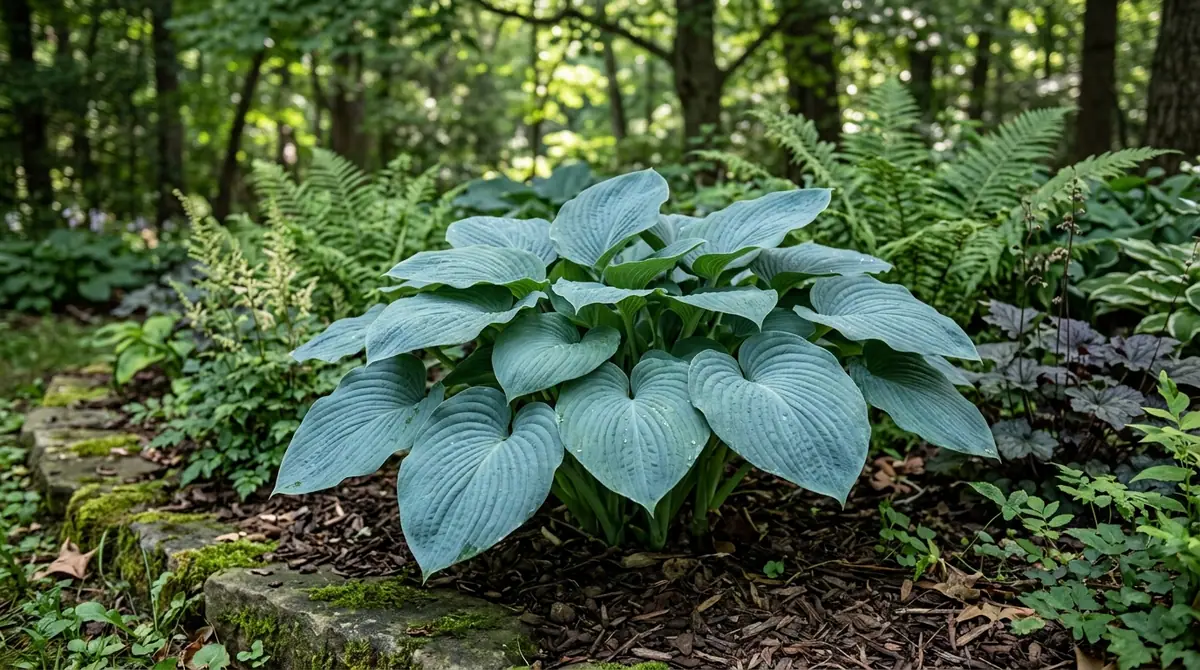
I stood in my shade garden last June, coffee mug in hand, staring down at a massacre. In a patch of ultra-thin, bright chartreuse hostas, what remained looked less like foliage and more like green lace, riddled with ragged holes where nocturnal gastropods had held a midnight buffet. Right beside them, however, sat a robust clump of 'Halcyon' and 'Blue Mouse Ears', completely untouched, their powdery glaucous coating mocking the slimy invaders. That morning reminded me of a hard lesson every shade gardener learns eventually: if you want hostas without the heartache, you have to choose varieties with the botanical armor to fight back.
1. Botanical Overview & Natural Habitat

Slug resistance in hostas is not an accident of nature; it is a direct result of distinct morphological adaptations. When evaluating slug-resistant varieties, we look at three primary physical traits:
- Leaf Substantia (Thickness): Resistant hostas feature high concentrations of cellulose and lignin within the cell walls, making the tissue mechanically difficult for a slug's radula (its rasping feeding tongue) to penetrate.
- Glaucous Cuticle: A waxy, powdery blue-gray coating on the leaf surface that repels water and gums up the mouthparts of feeding insects and mollusks.
- Puckering and Ribbing (Pancaking): Deeply corrugated or cupped leaves create structural rigidity and air pockets that slugs find physically cumbersome to navigate.
According to research from the Royal Horticultural Society, cultivars featuring these dense, puckered leaves experience up to 85% less herbivory than smooth, thin-leaved species like Hosta plantaginea.
2. Essential Environmental & Care Requirements
To keep your slug-resistant hostas thriving, you must replicate their native woodland floor conditions. While they are famously tough, providing the precise environmental parameters below prevents stress, which can otherwise compromise their natural defense mechanisms.
| Parameter | Optimal Condition | Common Mistake | Why It Matters |
|---|---|---|---|
| Soil pH | 6.5 to 7.0 | Planting in heavily acidic peat (< 5.0) | Extreme pH locks up essential calcium, which hostas need to build thick, rigid cell walls. |
| Soil Texture | Loamy, humus-rich | Heavy, unamended clay or dry sand | Clay suffocates roots and retains surface moisture too long; sand dries out instantly. |
| Light Exposure | Morning sun (2–4 hours), afternoon shade | Deep, dark shade or scorching midday sun | Morning light enhances blue coloration and vigor; harsh midday sun scorches leaves and weakens plants. |
| Soil Moisture | Consistently moist (1 inch / 2.5 cm per week) | Saturated, boggy conditions | Excess moisture attracts slugs and causes crown rot (Phytophthora). |
| Ambient Temp | 60°F to 75°F (15°C to 24°C) | Exposing to sustained heat over 85°F (29°C) | High temperatures induce summer dormancy and sap the plant's energy reserves. |
💡 Pro-Tip: When planting blue-leaved slug-resistant hostas like 'Halcyon', site them to receive only eastern morning light. Afternoon sun melts the protective waxy epicuticular wax (the glaucous bloom) that gives blue hostas their primary defense against both slugs and sunscald.
3. Step-based Cultivation, Feeding & Propagation
Establishing a new bed of slug-resistant hostas requires precision planting to ensure deep root anchorage and long-term vitality. Follow this step-by-step protocol for successful cultivation:
- Site Selection and Soil Preparation: Choose a shaded location with well-draining soil. Excavate an area twice as wide as the nursery container and 12 inches (30 cm) deep. Incorporate a 3-inch (7.6 cm) layer of well-rotted leaf mold or compost to boost organic matter.
- Hole Digging and Amendment: Dig a planting hole equal to the depth of the root ball and 1.5 times the width. Mix a handful of slow-release, balanced organic granular fertilizer (such as a 10-10-10 blend) into the backfill soil at a rate of 1 tablespoon per square foot.
- Planting Depth Adjustment: Position the hosta so that the crown—where the stems meet the root system—sits exactly level with or 0.5 inches (1.3 cm) above the surrounding soil grade. Burying the crown too deeply invites fungal rot.
- Initial Watering and Settling: Fill the hole halfway with native soil, tamp gently to remove air pockets, and water thoroughly with 1 gallon (3.8 liters) of water to settle the roots. Finish filling the hole and water a second time.
- Mulching and Surrounding: Apply a 2-inch (5 cm) layer of sharp pine straw or crushed nut shells around the base of the plant. Avoid using shredded hardwood bark mulch directly against the stems, as damp bark creates an ideal breeding ground for slugs.
- Routine Feeding: Feed established plants every spring just as the pips (shoots) emerge from the ground, using a water-soluble, low-nitrogen, high-potassium fertilizer to encourage strong cellular growth rather than soft, susceptible foliage.
- Propagation via Division: Propagate mature clumps every 3 to 5 years in early spring when the shoots are 2 to 3 inches (5 to 7.6 cm) tall. Dig up the entire root mass, wash away soil to locate natural division points, and use a sharp, sterilized spade to slice the crown into sections containing at least three healthy eyes and a robust root fan. Replant immediately at the original depth.
⚠️ Important Caution: Never use high-nitrogen lawn fertilizers near your hostas. Excess nitrogen forces rapid, watery cell expansion that bypasses the plant's natural hardening process, turning even thick-leaved cultivars into prime targets for ravenous pests.
4. Common Problems, Pests & Troubleshooting
Even the toughest slug-resistant hostas can occasionally encounter issues if environmental conditions slip out of balance.
- Slugs and Snails: Although thick-leaved varieties deter them, persistent populations may still rasp the edges of leaves during damp spring weather (temperatures between 50°F and 70°F / 10°C to 21°C). Control active populations using iron-phosphate-based baits applied around the drip line every 14 days during wet spells. For regional pest management insights, consult the University of Minnesota Extension.
- Foliar Nematodes (Aphelenchoides fragariae): These microscopic roundworms swim up the exterior moisture film of the plant and enter stomata, causing distinct brown, wedge-shaped necrotic lesions between the leaf veins by late summer. Prune infected leaves down to the soil line immediately, bag them, and dispose of them in the trash; never compost infected tissue.
- Southern Blight and Crown Rot: Caused by soil-borne fungi (Sclerotium rolfsii), this disease shows up as white, fan-like fungal threads at the soil line, followed by sudden yellowing and collapse of the entire clump. Prevent this by ensuring proper soil drainage and spacing plants at least 3 feet (0.9 meters) apart for optimal air circulation.
- Voles and Deer: While slugs plague the leaves, voles target the fleshy roots underground during winter freeze-thaw cycles. Guard against voles by planting hostas in wire mesh baskets buried 12 inches (30 cm) deep in heavy vole pressure zones.

5. Frequently Asked Questions
What are the absolute best slug-resistant hostas?
Cultivars with thick substance, blue coloration, or heavy corrugated puckering offer the highest natural resistance. Top recommendations include 'Halcyon', 'Blue Mouse Ears', 'Elegans', 'Sum and Substance', 'Krossa Regal', and 'First Frost'. These varieties possess dense cellular walls that dull a slug's feeding mouthparts.
Do slug-resistant hostas need any slug bait at all?
In most garden settings, established thick-leaved hostas require little to no intervention. However, during abnormally wet springs with high slug populations, young shoots or transitional leaf edges may still experience minor cosmetic damage. Applying an organic, pet-safe iron phosphate bait in early spring provides absolute insurance.
Are green hostas more susceptible to slugs than blue hostas?
Not necessarily. While many thin-leaved green hostas are highly vulnerable, dark green hostas with heavy puckering (such as 'Big Daddy') are remarkably resistant. The primary factor is leaf thickness and chemical composition (lignin content), not the pigment of the chlorophyll or anthocyanin within the leaf.
How do I know if my hosta has slug damage or fungal leaf spot?
Slug damage always starts at the margins or creates irregular holes through the interior of the leaf blade, accompanied by silvery dried slime trails nearby. Fungal leaf spots typically manifest as circular, water-soaked lesions that develop distinct brown or purple borders with tiny black spore-producing structures in the center.
Related Guides
📋 Table of Contents ▼ Click to expand
Tags:
🌿 Related Plants You Might Like


PlantSavvyWorld
Editorial team
PlantSavvyWorld is an independent botanical education project. Articles are drafted with AI assistance, then edited and checked against university extension services, botanical garden collections and other published horticultural sources.