

Poisonous Lawn Mushroom Types
Written with AI assistance, edited and checked against horticultural sources.
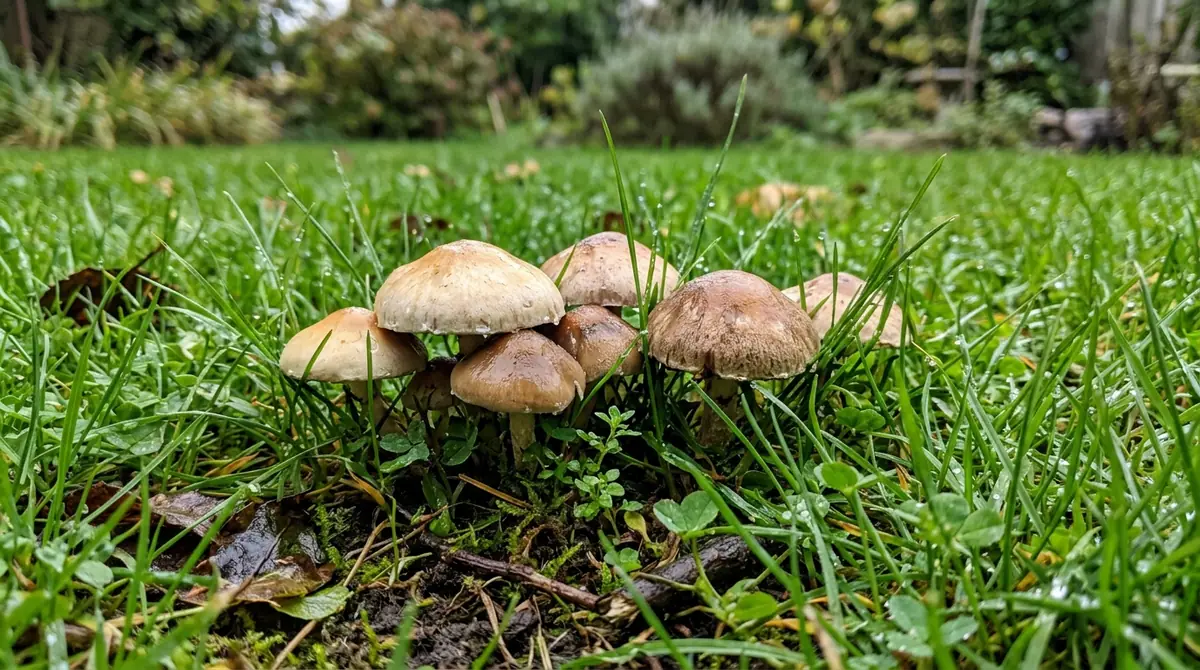
Last Tuesday morning, stepping out onto growers’s newly renovated Kentucky bluegrass lawn with my moisture meter in hand, I nearly stepped right on a tight cluster of smooth, ivory-white caps pushing through the damp thatch. They looked deceptively benign, like buttons picked fresh from a produce aisle, but as I knelt down to inspect the gills and base, my stomach dropped: Chlorophyllum molybdites, the infamous false parasol. That morning encounter is precisely why homeowners across the country panic when these fungal interlopers suddenly make an overnight appearance, transforming a pristine turf into an intimidating field guide of mysterious toxins.
1. Botanical Overview & Natural Habitat

Lawns provide an ideal, highly disturbed artificial ecology for these organisms. Unlike deep forest floors, typical residential turf features rich organic amendments, buried construction debris, decaying tree roots from removed shade trees, and frequent irrigation cycles. Fungi thrive in these conditions because they are nature's ultimate recyclers, breaking down lignins and celluloses.
The most frequently encountered toxic or poisonous species invading residential turfgrass include:
- Chlorophyllum molybdites (False Parasol / Green-Spored Lepiota): Responsible for the vast majority of mushroom poisonings in North America. These large, white-capped mushrooms feature a scaly surface and a ring on the stalk. When mature, their gills turn a distinct pale green, shedding green spores. Ingesting them causes severe gastrointestinal distress, intense vomiting, and severe cramping within 30 minutes to 3 hours.
- Amanita bisporigera (Destroying Angel): Though more commonly found near deciduous and coniferous trees bordering lawns, they frequently fruit out of shaded turf zones containing buried wood. Pure white from cap to bulbous base, consuming even a fraction of a single cap can cause irreversible liver and kidney failure, with symptoms often delayed by 6 to 24 hours.
- Inocybe geophylla and Conocybe filaris (Lawn Inocybe and Little Brown Mushrooms): These tiny, unassuming brown mushrooms often hide unnoticed among tall grass blades. Conocybe filaris contains amatoxins similar to the Destroying Angel, posing a severe risk to foraging pets and crawling toddlers.
- Omphalotus illudens (Jack-o'-Lantern Mushroom): While typically emerging around decaying stumps or buried roots in shaded yards rather than open turf, their brilliant orange clusters and bioluminescent gills occasionally tempt homeowners who mistake them for chanterelles.
Understanding how these organisms interact with your soil requires a close look at their growth parameters. Below is a breakdown of the environmental variables that drive their life cycle in a managed landscape.
| Parameter | Optimal Condition | Common Mistake | Why It Matters |
|---|---|---|---|
| Soil Temperature | 65°F to 85°F (18°C to 29°C) | Assuming cold winters eliminate all fungal structures | Mycelium goes dormant rather than dying, rapidly fruiting the moment spring soil warms up. |
| Relative Humidity | 80% to 100% surface moisture | Frequent, shallow evening sprinkler cycles | Keeps the thatch layer perpetually saturated, signaling the subterranean mycelium to push up fruiting bodies. |
| Soil pH | 5.5 to 6.5 (Slightly acidic) | Over-liming to an extreme alkaline balance without testing | Fungi tolerate a wide pH range, but slight acidity accelerates the breakdown of organic turf amendments they feed upon. |
| Thatch Depth | Greater than 0.75 inches (1.9 cm) | Neglecting core aeration and vertical mowing | Thick, decaying organic thatch acts as a direct food source and shelter for developing fungal buttons. |
2. Essential Environmental & Care Requirements
Managing the presence of poisonous lawn mushrooms requires disrupting the environmental triggers that coax them out of the soil. Fungi do not require sunlight for energy—since they lack chlorophyll, they rely entirely on absorbing nutrients from their surrounding environment. However, they are utterly dependent on moisture and oxygen balance within the soil profile.
When designing a lawn management program that discourages fungal fruiting, focus primarily on moisture management. Most lawn mushrooms surge after heavy rain events or persistent over-irrigation. If your irrigation system delivers water every single day for 10 to 15 minutes, you are maintaining a constantly damp upper soil layer (0 to 2 inches / 0 to 5 cm depth) that invites fungal hyphae to aggregate and form primordia (pinheads).
Instead, transition to deep, infrequent irrigation cycles that allow the top 1.0 inch to 2.0 inches (2.5 cm to 5.0 cm) of soil to dry out completely between watering sessions. This dries out the delicate young mushroom caps before they can emerge. Furthermore, address soil compaction. Fungi thrive in anaerobic, compacted soils where organic matter decays slowly and unevenly. Utilizing mechanical core aeration every autumn helps introduce oxygen deep into the root zone, accelerating the aerobic microbial breakdown of thatch and burying debris that would otherwise fuel fungal growth.
💡 Pro-Tip: Never throw pulled poisonous mushrooms into your home compost pile or leave them sitting on the turf surface. Mature caps shed millions of microscopic spores that wind and water will redistribute across your entire property, effectively planting next season's crop. Bag them securely and place them in municipal yard waste or trash.
3. Step-by-Step Cultivation, Feeding & Propagation
While most gardeners want to eradicate these fungi, understanding how they propagate helps us systematically dismantle their habitat. Fungi reproduce by releasing trillions of spores into the atmosphere. When a compatible spore lands in a moist, nutrient-rich lawn environment, it germinates, sending out microscopic thread-like cells called hyphae. These hyphae weave together to form a sprawling network (mycelium) that feeds on decaying organic matter, eventually producing the macroscopic mushrooms we see above ground.
If you are dealing with a recurring flush of poisonous mushrooms—such as fairy rings or large clusters of Chlorophyllum molybdites—you must execute a multi-step cultural remediation protocol to starve the underground network.
- Hand-Removal and Safety Prep: Put on durable nitrile gloves. Carefully twist and pull the entire above-ground mushroom cap and stem out of the soil, ensuring you extract the base. Place them directly into a sealable plastic bag to prevent spore dispersal.
- Thatch Reduction via Verticutting: Set your vertical mower or dethatcher to slice through the turf canopy, adjusting the blades to penetrate 0.25 inches (0.6 cm) into the soil surface. This physically disrupts the shallow fungal mats living in the upper thatch layer.
- Mechanical Core Aeration: Run a hollow-tine core aerator across the lawn, pulling plugs at least 2.5 inches (6.4 cm) deep and spaced roughly 3.0 inches (7.6 cm) apart. Leave the soil cores on the surface for 24 to 48 hours to break down naturally via beneficial bacteria.
- Nutrient Balancing and Nitrogen Adjustment: Apply a balanced, slow-release nitrogen fertilizer (such as a 24-0-10 formulation) at a rate of 0.5 pounds of actual nitrogen per 1,000 square feet. Avoid high-sugar or raw organic mulches that fuel rapid fungal expansion.
- Moisture Reset: Adjust your smart irrigation controller to a deep-watering schedule, delivering 1.0 inch (2.5 cm) of water once every 7 to 10 days rather than light daily sprinkling, allowing the upper soil profile to dry out thoroughly.
- Fungicide Application (Optional/Targeted): If dealing with aggressive fairy ring-forming species that cause hydrophobic rings in the turf, apply a professional-grade systemic fungicide containing azoxystrobin or propiconazole, specifically watered-in to reach the root zone where the mycelial ring resides. For reliable guidance on turf disease and fungal management, consult resources like the University of Minnesota Extension Yard and Garden.
4. Common Problems, Pests & Troubleshooting
When managing poisonous lawn mushrooms, property owners frequently run into misdiagnoses and ineffective quick fixes. Let's look at the most common issues you might encounter and how to correct them scientifically.
- Problem: Mushrooms returning in a literal circle (Fairy Rings) year after year.
- Diagnosis: You are dealing with basidiomycete fungi that feed on deep organic matter (such as buried construction timber or old tree roots). Surface removal of the mushrooms does nothing to stop the underground ring from expanding outward by 4.0 to 12.0 inches (10 cm to 30 cm) per year.
- Solution: Do not rely on home remedies like dish soap or salt, which will burn your turfgrass. Instead, use a wetting agent to break the hydrophobic soil barrier created by the fungal mat, followed by heavy deep-root watering and core aeration. For deeper insights into safe landscape management, review guidelines provided by the Royal Horticultural Society.
- Problem: Pets or toddlers repeatedly attracted to toxic lawn specimens.
- Diagnosis: Small children and dogs explore the world through touch and taste, and species like Chlorophyllum molybdites possess a deceptively fleshy, mushroom-like aroma that invites ingestion.
- Solution: Implement daily morning patrols during peak spring and autumn flush seasons (when soil temperatures sit reliably between 70°F and 80°F / 21°C and 27°C) to manually harvest every single cap before children or pets step outside.
- Problem: White mold or mycelial threads appearing beneath the turf surface after applying mulch.
- Diagnosis: Using uncomposted wood chips or bark mulch directly over lawn edges introduces saprophytic fungi that rapidly colonize the high-carbon material.
- Solution: Rake back the mulch so it never touches the turf canopy or crowns, maintaining a 2.0-inch (5.0 cm) clear buffer zone filled with dry gravel or breathable edging.
⚠️ Important Caution: Never rely on old folk tales to determine if a lawn mushroom is edible or poisonous—such as testing whether silver turns black, peeling the cap skin, or checking if animals have nibbled on them. Many deadly species, including the Destroying Angel (Amanita bisporigera), taste pleasant or neutral, and their toxins can cause permanent organ failure long before symptoms fully present themselves. When in doubt, treat every uninvited lawn mushroom as lethally toxic.

5. Frequently Asked Questions
Can dogs get seriously poisoned by eating mushrooms growing in the grass?
Yes, absolutely. Dogs are frequently attracted to the earthy odor of lawn mushrooms, and ingestion of toxic species like Chlorophyllum molybdites or Inocybe species can lead to severe gastroenteritis, liver damage, neurological seizures, or even death depending on the specific toxin involved. If you suspect your dog has ingested an unknown lawn mushroom, collect a sample of the remaining fungi in a paper bag and contact your veterinarian or an animal poison control center immediately.
Do commercial lawn fungicides kill poisonous mushrooms permanently?
Generally, no. Most over-the-counter fungicides are formulated to target foliar turf diseases like dollar spot, brown patch, or rust, rather than saprophytic soil-dwelling fungi. Even professional-grade systemic fungicides rarely eradicate the deep underground mycelium entirely; they only temporarily suppress fruiting. The most effective long-term control strategy remains cultural modification: improving soil drainage, reducing thatch accumulation, and adjusting irrigation practices.
Why do mushrooms suddenly appear overnight in my lawn after it rains?
Mushrooms appear to pop up overnight because the vast majority of their life cycle occurs invisibly underground as a sprawling network of mycelium. Once soil moisture reaches peak saturation—typically following a heavy rainstorm or prolonged irrigation—the underground fungal colony rapidly absorbs water, swells hydraulic pressure within the cells, and pushes the fruiting body (the mushroom) upward through the soil surface in a matter of hours to release spores.
Are mushrooms in the lawn a sign of bad soil health?
Not necessarily. In fact, the presence of fungi indicates that your soil contains organic matter and active biological activity. However, an abundance of mushrooms often signals specific structural imbalances in your turf management—such as excessive thatch buildup, poor soil drainage, chronic over-watering, or compaction that limits oxygen penetration. While fungi are vital for decomposing organic waste in natural ecosystems, their heavy presence in a residential lawn points to the need for mechanical aeration and moisture management adjustments.
Related Guides
📋 Table of Contents ▼ Click to expand
Tags:
🌿 Related Plants You Might Like
PlantSavvyWorld
Editorial team
PlantSavvyWorld is an independent botanical education project. Articles are drafted with AI assistance, then edited and checked against university extension services, botanical garden collections and other published horticultural sources.