

Carnation Stem
Written with AI assistance, edited and checked against horticultural sources.
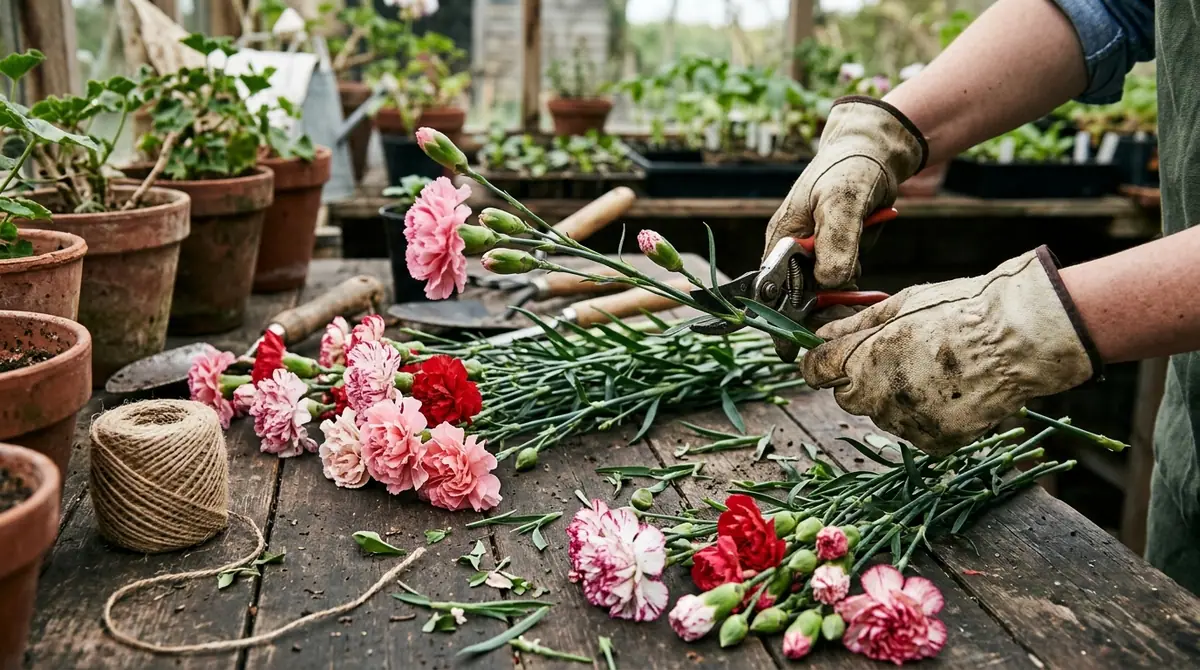
I stood in trial gardens this past June, shears in hand, staring down at a basket full of wilting 'Sim' carnations whose stems had buckled just two inches below the calyx long before their petals even thought of fading. That heartbreak is usually where most gardeners give up on cut flowers, but the real secret to growing and maintaining these resilient blooms isn't hidden in the petals—it lives entirely inside the architecture of the carnation stem.
1. Botanical Overview & Natural Habitat
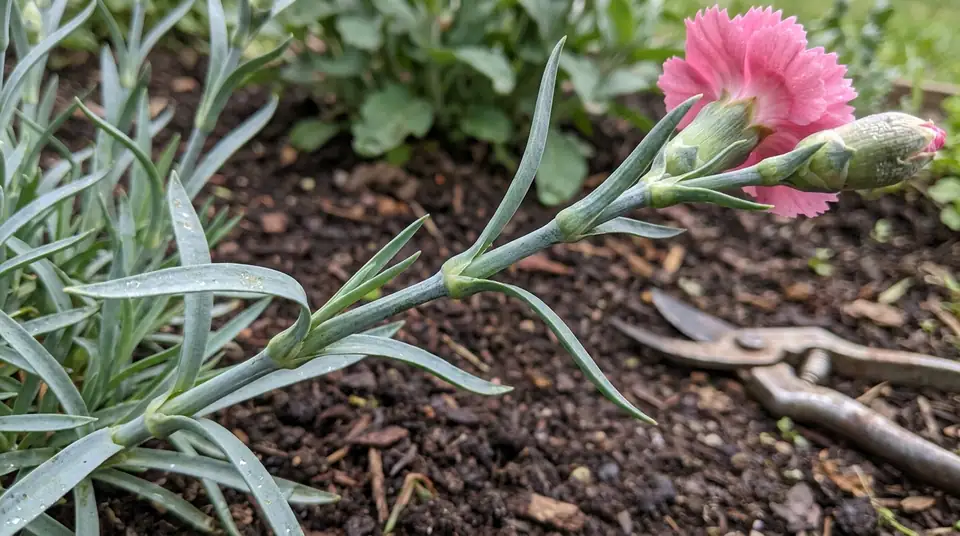
The interior anatomy consists of strong vascular bundles reinforced by thick layers of sclerenchyma cells. This fibrous reinforcement gives the stem its signature rigid, upright posture, allowing wild ancestors to resist strong coastal winds sweeping across their native Southern European habitats. However, this rigidity comes with a biological trade-off: once a carnation stem snaps or bends sharply, the inflexible vascular rings fracture, rendering water transport to the flower head nearly impossible.
In terms of physical dimensions, standard florists' carnations produce primary flowering stems reaching 24 to 36 inches (60 to 90 cm) in height, while dwarf border types stay compact at 8 to 12 inches (20 to 30 cm). The stem diameter typically ranges from 0.15 to 0.3 inches (4 to 8 mm) at the base, tapering slightly toward the terminal bud. The epidermis is coated with a thick, waxy cuticle—the source of the blue-green or glaucous appearance—which acts as a natural shield against excessive moisture loss through transpiration. Understanding this structural baseline allows us to recreate optimal conditions for both garden cultivation and vase life longevity.
2. Essential Environmental & Care Requirements
Growing robust carnation stems requires strict attention to light, temperature, and root-zone drainage. Because their native Mediterranean habitat features baking sun and lean, calcareous soils, replicating these conditions indoors or in standard garden beds prevents weak, leggy stems.
| Parameter | Optimal Condition | Common Mistake | Why It Matters |
|---|---|---|---|
| Light Exposure | Full sun (6–8 hours daily of direct sunlight) | Shifting plants to partial shade | Low light triggers etiolation, producing thin, weak stems that snap under the weight of the flower. |
| Temperature Range | 50°F to 65°F (10°C to 18°C) | Exposing plants to sustained heat above 85°F (29°C) | High temperatures cause stem elongation, poor bud opening, and rapid internal tissue degradation. |
| Soil pH | 6.5 to 7.5 (Neutral to slightly alkaline) | Planting in acidic peat-heavy soil (pH below 6.0) | Acidic conditions lock out calcium and magnesium, weakening the cell walls of the stem. |
| Watering Depth | 1 to 1.5 inches (2.5 to 3.8 cm) per week, drying out between waterings | Keeping soil constantly saturated | Waterlogged media induces root rot, which immediately chokes vascular flow up the main stem. |
Soil texture is just as critical as chemistry. Carnations demand sharp drainage. If your native garden soil leans toward heavy clay, amend it generously with coarse horticultural sand and compost to prevent moisture retention around the basal nodes. For comprehensive guidelines on testing and amending garden soils for alkaline-loving ornamentals, consult the Penn State Extension Soil Management Guide.
💡 Pro-Tip: When planting carnations, never bury the crown or the lowest stem node below the soil line. Keeping the base exposed to circulating air prevents crown rot and ensures the primary stem hardens off properly as it matures.
3. Step-by-Step Cultivation, Feeding & Propagation
Producing commercial-grade stems with exceptional length and strength requires a methodical approach to pinching, staking, and nutritional management. Follow this step-by-step protocol to maximize your harvest:
- Site Selection and Soil Prep: Choose a planting site receiving a minimum of 6 hours of direct sunlight. Work organic compost and agricultural lime into the top 8 inches (20 cm) of soil to achieve a target pH of 6.5 to 7.0.
- Initial Planting: Space your bare-root plants or rooted cuttings 12 inches (30 cm) apart. Set them so the root ball sits flush with the surrounding soil surface, ensuring zero stem burial.
- The Critical First Pinch: When the primary central stem reaches a height of 6 to 8 inches (15 to 20 cm) and displays at least 5 to 6 visible leaf nodes, use sterile shears to pinch out the growing tip just above the fourth node down. This forces energy into lateral stems, transforming a single-stemmed plant into a productive bush.
- Targeted Fertilization: Feed plants every 14 days during the active spring growing season using a balanced, low-nitrogen, high-potassium water-soluble fertilizer (such as a 5-10-10 or 9-15-30 ratio). Excess nitrogen causes rapid, soft stem growth that easily collapses.
- Disbudding for Exhibition Blooms: For standard carnations grown for long single stems, remove the small lateral flower buds that form on the upper 6 inches (15 cm) of the stem. Leave only the terminal bud to direct 100% of the stem's carbohydrate reserves into one massive flower.
- Harvesting: Harvest stems when the outer petals begin to unfurl and show color (the "paint brush" stage). Cut cleanly at a 45-degree angle just above a lower node using a sanitized blade, immediately placing the stems into a clean bucket of tepid water.
⚠️ Important Caution: Never use dull scissors or kitchen knives to harvest or prune carnation stems. Crushed vascular bundles cannot take up water efficiently, leading to premature leaf yellowing and bent-neck syndrome in the vase.
4. Common Problems, Pests & Troubleshooting
Even with meticulous care, carnation stems can fall victim to specific physiological disorders and pathogens. Identifying them early saves the crop.
- "Sleepy" Stems and Bent-Neck: If your cut carnation stems bend sharply right below the calyx within 48 hours of cutting, it is typically caused by ethylene gas exposure (often from ripening fruit nearby) or harvest at an immature stage. Always keep cut stems away from apples, bananas, and tomatoes, and ensure you harvest only when the buds are showing true petal color.
- Fusarium Wilt (Fusarium oxysporum f. Sp. dianthi): This soil-borne fungus enters the root system and colonizes the vascular bundles of the stem. You will notice one side of the plant turning yellow, followed by brown, sunken streaks appearing along the lower stem. There is no cure once infected; discard the plant immediately and sterilize the surrounding soil. For integrated management strategies against vascular wilts, refer to the Royal Horticultural Society Pests and Diseases Portal.
- Stem Rot (Rhizoctonia solani): Appearing as a brown, rotting girdle right at the soil line, this occurs when mulch is piled directly against the stem or when humidity is too high. Pull back all organic mulches at least 2 inches (5 cm) away from the stem base and improve air circulation.
- Aphids and Thrips: These sap-sucking insects target the tender, fast-growing tips of young carnation stems, causing distorted, twisted growth and sticky honeydew secretions. Treat early infestations with insecticidal soap or horticultural oils applied in the early morning or late evening.
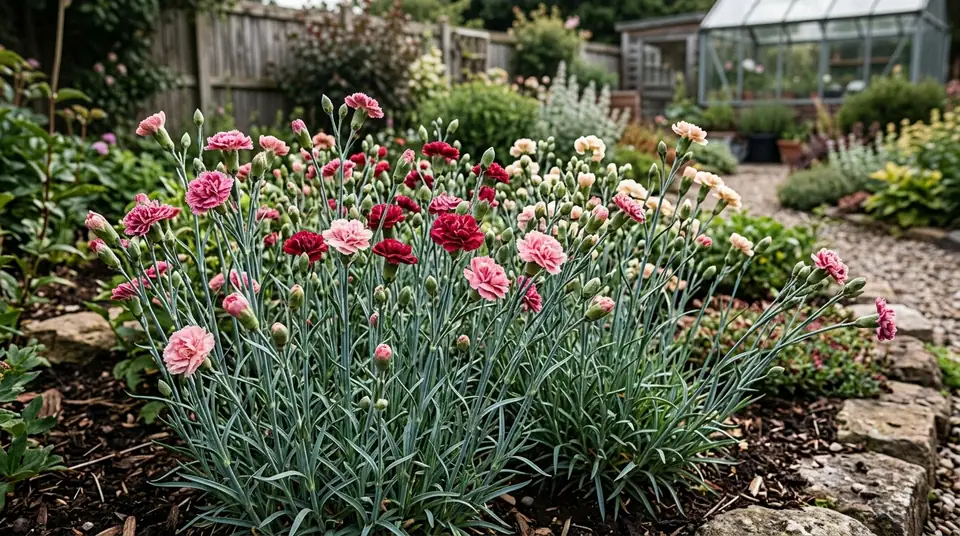
Tall slender stems of carnation plants with pink and red flowers growing in a garden bed
5. Frequently Asked Questions
Can I root a cut carnation stem from a store-bought bouquet?
Yes, it is entirely possible, though success rates hover around 30% to 40% depending on how long ago the stem was harvested and whether it was treated with anti-sprouting growth regulators. Select a healthy, thick stem, trim the bottom to a length of 6 inches (15 cm), dip the lowest node in rooting hormone powder, and stick it into a sterile propagation mix of perlite and peat. Keep it under bright, indirect light at 70°F (21°C) until roots form in 21 to 28 days.
Why are my carnation stems turning yellow at the base?
Base yellowing is almost always an indicator of overwatering, poor soil drainage, or planting too deep. When roots suffocate in waterlogged soil, they fail to transport iron and nitrogen up the stem, resulting in chlorosis of the lower leaves. Allow the top 2 inches (5 cm) of soil to dry completely between watering sessions.
How do I make carnation stems last longer in a vase?
To maximize vase life up to 14 to 21 days, strip away all foliage that would sit below the water line to prevent bacterial growth. Recut the stems under water at a 45-degree angle to eliminate air embolisms in the xylem, and add floral preservative containing a bactericide and sugar source. Change the vase water every 48 hours.
Do carnation stems need full sun to produce flowers?
Yes. Carnations require a minimum of 6 hours of direct sunlight daily to initiate the biochemical processes necessary for flower bud formation. Stems grown in partial shade or indoors without supplemental grow lights will stretch toward the light source, resulting in weak, spindly stems that cannot support blooms.
Related Guides
📋 Table of Contents ▼ Click to expand
Tags:
🌿 Related Plants You Might Like
PlantSavvyWorld
Editorial team
PlantSavvyWorld is an independent botanical education project. Articles are drafted with AI assistance, then edited and checked against university extension services, botanical garden collections and other published horticultural sources.