

Hibiscus Edible Flowers
Written with AI assistance, edited and checked against horticultural sources.
1. Botanical Overview & Natural Habitat

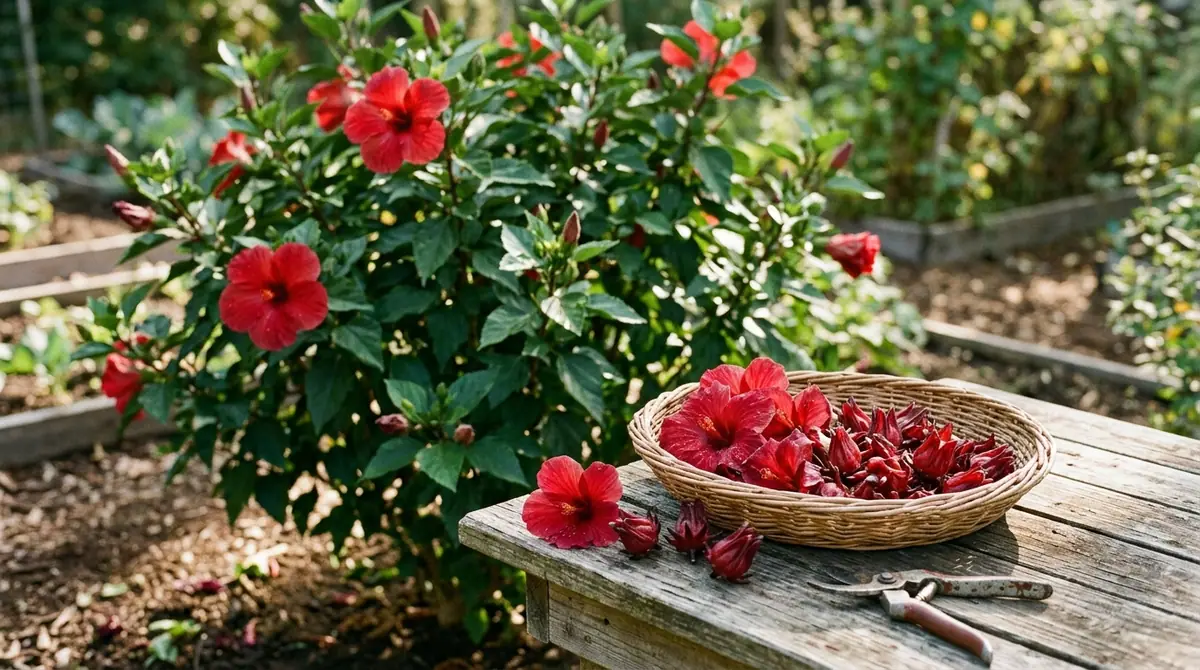
Morphologically, hibiscus flowers are magnificent examples of botanical architecture. They are typically actinomorphic (radially symmetrical) and feature a prominent staminal column—a fused structure of stamens surrounding the style. Below the petals lies the calyx, which in Hibiscus sabdariffa enlarges and becomes fleshy, vibrant crimson after the petals drop; this calyx is the prime target for teas, syrups, and preserves. The leaves, stems, and petals are rich in plant mucilage, organic acids (including citric, malic, and tartaric acids), and potent antioxidant anthocyanins, which give the blooms their deep red, pink, or yellow hues.
In their natural habitats across West Africa, Southeast Asia, and the Caribbean, these plants thrive under intense, unfiltered sunlight and seasonal monsoon rains. They have evolved to handle high ambient temperatures, often enduring sustained heat above 90°F (32°C) while maintaining vigorous vegetative growth. Understanding this tropical origin is the first step in unlocking their potential in your home landscape, especially if you are navigating cooler northern microclimates akin to sorting out What Zone is Ohio for Planting Flowers where they must be treated as annuals or container specimens brought indoors for the winter.
2. Essential Environmental & Care Requirements
To produce abundant, flavorful edible flowers, you must replicate the plant's native environmental conditions as closely as possible. Hibiscus plants are notorious sun-worshippers and require a minimum of 6 to 8 hours of direct, unfiltered sunlight daily. In shadier locations, plants will stretch, become leggy, and drastically reduce their flowering output.
Temperature is another critical factor. Hibiscus plants are sensitive to cold and suffer structural damage when temperatures dip below 40°F (4°C). Their optimal growth range sits comfortably between 70°F and 95°F (21°C to 35°C). If you are cultivating them in containers—a method heavily inspired by our insights on Salad Trees Edible Leaves—ensure your pots are large enough to insulate the root ball against sudden temperature swings.
| Parameter | Optimal Condition | Common Mistake | Why It Matters |
|---|---|---|---|
| Light | 6–8+ hours of direct sun daily | Placing in partial shade | Reduces bloom count and dulls flavor compounds |
| Soil pH | Slightly acidic to neutral (6.0–6.8) | Highly alkaline or compacted clay | Locks out essential micronutrients like iron |
| Watering | Evenly moist, well-draining | Waterlogged or bone-dry soil | Causes root rot or triggers premature bud drop |
| Temperature | 70°F–95°F (21°C–35°C) | Exposure to frost below 40°F (4°C) | Induces severe cellular damage and leaf drop |
Soil composition dictates overall plant health. Hibiscus demands rich, loamy soil with exceptional drainage. A heavy clay soil that holds excess water will suffocate the root system and invite fungal pathogens, while sandy soils that drain too rapidly will leach away necessary nutrients before the plant can uptake them. Maintaining proper soil health is just as crucial here as it is when managing unexpected garden intruders, such as differentiating between troublesome weeds and beneficial species as outlined in Weeds with Blue Flowers Identification. For deeper technical cultivation guidelines, consult the resource provided by the North Carolina Extension Gardener Plant Toolbox.
3. Step-by-Step Cultivation, Feeding & Propagation
Growing your own supply of hibiscus edible flowers is deeply rewarding when approached with methodical precision. Follow this step-by-step framework from seed or cutting to harvest:
- Site Selection and Soil Preparation: Choose a spot in your garden that receives full sun and is protected from harsh, drying winds. Amend your native soil with a 2-inch (5 cm) layer of fully composted organic matter to improve both structure and fertility, tilling it to a depth of 8 to 10 inches (20 to 25 cm).
- Planting Seeds or Transplants: If starting from seed, scarify the hard seed coat lightly with sandpaper, then soak them in warm water for 12 hours. Sow seeds indoors or directly in the ground after the last frost date when soil temperatures reach a consistent 65°F (18°C). Plant seeds at a depth of 0.5 inches (1.2 cm) spaced 24 to 36 inches (60 to 90 cm) apart.
- Establishment and Watering: Water newly planted seeds or transplants deeply, providing roughly 1 inch (2.5 cm) of water per week. Keep the soil consistently moist but never waterlogged during the first 30 days of establishment.
- Fertilization Protocol: Feed your hibiscus plants every 4 weeks during the active growing season (spring through late summer) with a balanced, slow-release organic fertilizer. Avoid high-nitrogen formulas, which will push lush green foliage at the expense of flower and calyx production. Instead, look for a fertilizer with a slightly higher potassium and phosphorus ratio, similar to formulations recommended by the Royal Horticultural Society.
- Pruning and Shaping: Pinch back the growing tips of young plants when they reach 12 inches (30 cm) in height to encourage lateral branching. More branches equal more flowering sites.
- Harvesting the Edible Blooms: Harvest individual petals of Hibiscus rosa-sinensis just as they pop open fully in the morning, or harvest the plump, fleshy calyces of Hibiscus sabdariffa approximately 3 weeks after the petals have fallen, when they are firm and deep red.
💡 Pro-Tip: Never harvest hibiscus flowers that have been treated with systemic insecticides or synthetic pesticides. If you plan to consume the blooms, strictly rely on organic pest control methods like hand-picking or neem oil applications applied at least 14 days before harvest.
4. Common Problems, Pests & Troubleshooting
Even with meticulous care, edible hibiscus plants can encounter environmental stress and pest pressures. Recognizing symptoms early prevents crop loss and ensures your harvest remains safe for the kitchen.
- Bud Drop (Ablation): If your flower buds form but drop off before opening, you are likely dealing with inconsistent watering or sudden temperature drops. Ensure your watering schedule remains strictly regular, and protect container-grown plants from chilly nocturnal drafts.
- Aphids and Whiteflies: These sap-sucking insects congregate on the tender new growth and the underside of leaves, leaving behind sticky honeydew. Blast them off with a strong jet of water from your garden hose, or apply insecticidal soap in the early evening to avoid leaf scorch.
- Chlorosis (Yellowing Leaves): Interveinal chlorosis—where the leaf turns yellow while the veins remain green—typically points to iron deficiency caused by soil that is too alkaline. Correct this by working elemental sulfur or acidic peat moss into the root zone to lower the pH closer to the 6.0 mark.
- Root Rot (Phytophthora or Pythium): Caused by poorly draining soil or overwatering, root rot results in sudden wilting despite moist soil conditions. Inspect the roots; healthy roots are firm and light-colored, whereas infected roots are mushy, dark, and foul-smelling. Improve drainage immediately and withhold watering until the top 2 inches (5 cm) of soil are completely dry.
⚠️ Important Caution: Always cross-reference any edible flower you harvest with botanical keys to ensure positive identification. Never consume flowers picked from roadside areas, municipal parks, or unfamiliar nurseries, as they may have been treated with restricted-use systemic chemicals unsafe for human consumption.

5. Frequently Asked Questions
What do hibiscus edible flowers taste like?
Hibiscus flowers, particularly Hibiscus sabdariffa calyces, possess a uniquely tart, tangy flavor profile heavily reminiscent of cranberries, tart cherries, and fresh rhubarb. The tropical petaled varieties (Hibiscus rosa-sinensis) tend to be much milder, offering a subtle, floral, slightly mucilaginous crunch that works wonderfully as a fresh salad garnish.
Can you eat all varieties of hibiscus flowers?
No, not all hibiscus species are palatable or safe for culinary use. While Hibiscus sabdariffa, Hibiscus rosa-sinensis, and Hibiscus syriacus (Rose of Sharon) produce edible flowers, many ornamental landscape varieties may cause mild gastrointestinal irritation or have been treated with non-food-safe systemic pesticides. Always verify the exact species and chemical treatment history before ingestion.
How do you harvest and store hibiscus flowers for cooking or tea?
Harvest fresh flowers or calyces in the morning after the dew has evaporated but before the afternoon heat sets in. Gently shake them to dislodge any hidden insects. To store, use them fresh within 2 to 3 days by keeping them in a breathable container lined with a damp paper towel in the refrigerator, or dehydrate them completely at 105°F (40°C) for long-term storage in airtight glass jars.
Are hibiscus flowers safe for pets?
According to the ASPCA, true hibiscus species (Hibiscus spp.) are generally considered non-toxic to cats, dogs, and horses. However, ingestion of large quantities of plant material or stems can still cause mild gastrointestinal upset, vomiting, or diarrhea due to the fibrous nature of the plant tissue and natural plant acids.
Related Guides
- Water Hibiscus Plant
- Hibiscus Seeds How to Plant
- Grow Hibiscus from Seed
- Salad Trees Edible Leaves
- Can You Eat Moss Edible Mosses
📋 Table of Contents ▼ Click to expand
Tags:
Keep reading
🌿 Related Plants You Might Like






PlantSavvyWorld
Editorial team
PlantSavvyWorld is an independent botanical education project. Articles are drafted with AI assistance, then edited and checked against university extension services, botanical garden collections and other published horticultural sources.