

Salad Trees Edible Leaves
Written with AI assistance, edited and checked against horticultural sources.
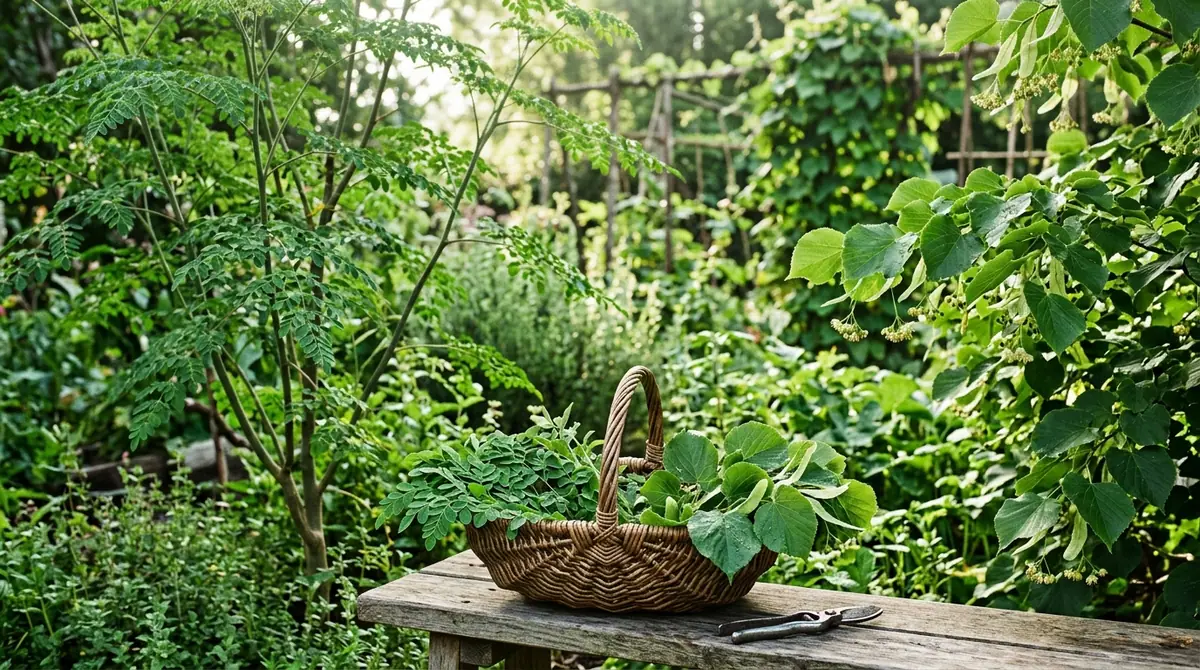
During an uncharacteristic late-spring cold snap when the thermometer dips to 30°F (-1.1°C), prized Sciadopitys and nearby saplings can suffer frost damage, but the multi-grafted perennial green—the specimen of Polyscias scutellaria, commonly known as the Salad Tree—barely flinches. Its resilient, glossy foliage, packed with crisp texture and mild, mineral-rich flavor, serves as a cornerstone of perennial vegetable design. Few plants bridge the gap between ornamental landscape architecture and high-yield kitchen utility quite like the salad tree. Whether you are seeking a living privacy screen or a vertical harvest of tender greens that bypasses the annual seed-starting grind, this guide will walk you through establishing, growing, and harvesting these extraordinary plants.
1. Botanical Overview & Natural Habitat

Morphologically, Polyscias scutellaria is prized for its variable, highly ornamental foliage. The leaves are alternate, compound, and typically feature distinct, rounded, cup-shaped leaflets with crenate or dentate margins. Cultivars such as 'Marginata' showcase striking white or cream variegation, making them exceptional focal points in tropical and subtropical landscape designs. Unlike traditional leafy greens (Lactuca sativa) that bolt and bitter as temperatures rise, the salad tree maintains its vegetative vigor year-round in frost-free climates, developing a sturdy, woody trunk that can reach heights of 10 to 20 feet (3 to 6 meters) if left unpruned.
From a landscape utility standpoint, their upright, columnar growth habit allows them to fit seamlessly into tight garden footprints—making them an intriguing vertical companion when designing around structural elements, much like choosing the 15 Best Trees for Driveways That Won't Crack Concrete where spatial economy and non-invasive root systems are paramount. Botanically, the plant responds exceptionally well to heavy coppicing and pruning, a trait we exploit in edible landscaping to keep the nutrient-dense, tender young leaves within arm's reach while encouraging dense, bushy regeneration.
2. Essential Environmental & Care Requirements
To cultivate thriving salad trees, you must replicate their native understory and tropical island microclimates. While they are remarkably forgiving plants once established, specific environmental thresholds dictate whether your tree produces succulent, harvestable greens or drops its lower foliage in stress.
Temperature is the primary limiting factor. Salad trees are strictly tropical and subtropical perennials, rated for USDA Hardiness Zones 10 through 12. They experience metabolic slowdown at temperatures below 50°F (10°C) and suffer cellular damage or defoliation when exposed to temperatures dropping to 32°F (0°C). If you live in temperate zones, they make exceptional container specimens that can be easily overwintered indoors in a bright, south-facing sunroom.
Light requirements balance between full sun and partial shade. In intense equatorial or desert sun, foliage can scorch or bleach, particularly on variegated cultivars. Conversely, too much shade results in leggy, weak stems and sparse leaf production. Aim for 4 to 6 hours of direct morning sun paired with bright, dappled afternoon light.
Soil composition must prioritize drainage while maintaining moderate moisture retention. These plants demand a rich, loamy soil amended with ample organic matter, with an optimal pH range between 6.0 and 7.0. Heavy clay soils that remain waterlogged will quickly induce root rot (Phytophthora species), while excessively sandy soils drain too rapidly for a plant with high transpiration rates.
| Parameter | Optimal Condition | Common Mistake | Why It Matters |
|---|---|---|---|
| Temperature | 70°F–85°F (21°C–29°C) | Exposing to frost (<32°F / 0°C) | Freezing temperatures rupture cell walls, causing rapid defoliation and potential plant death. |
| Soil pH | 6.0 to 7.0 | Planting in alkaline or compacted clay | Improper pH locks out essential micronutrients like iron and manganese, leading to chlorosis. |
| Watering | Moist, well-draining; dry top 1 in (2.5 cm) | Keeping soil constantly saturated | Waterlogged roots suffocate, inviting fungal pathogens and root rot. |
| Sunlight | Bright, indirect to partial morning sun | Direct baking midday desert sun | Intense heat scorches leaves and causes premature leaf drop. |
💡 Pro-Tip: When growing salad trees in containers, use a potting mix heavy in coconut coir and perlite rather than standard garden soil. This ensures elite aeration around the root zone, mimicking the loose, organic-rich forest floor of their native tropical habitat.
3. Step-by-Step Cultivation, Feeding & Propagation
Establishing a productive salad tree requires a deliberate approach to planting, fertility management, and vegetative propagation. Because these trees rarely produce viable seed in cultivation, mastering stem cuttings is the gateway to scaling your harvest.
Step 1: Site Selection and Soil Preparation
Select a microclimate protected from high winds, which can snap the somewhat brittle branches of mature Polyscias species. Dig a hole twice as wide as the root ball and equal in depth. Amend the native backfill with 30% aged compost to boost biological activity and structural drainage.
Step 2: Planting the Specimen
Gently tease out any circling roots from the nursery container. Place the root ball so the root flare sits 0.5 inches (1.3 cm) above the surrounding soil grade. Backfill halfway, water thoroughly to settle air pockets, then finish backfilling and tamp down gently. Apply a 2-inch (5 cm) layer of organic mulch, keeping it 3 inches (7.6 cm) away from the trunk to prevent collar rot.
Step 3: Establishing an Irrigation Routine
During the first 90 days, irrigate deeply whenever the top 1 inch (2.5 cm) of soil feels dry to the touch. Once established, reduce watering frequency but ensure the root zone never dries out completely for extended periods.
Step 4: Fertilization and Nutrient Management
Feed your salad tree during its active growing season (spring through early autumn) every 4 to 6 weeks with a balanced, slow-release organic fertilizer featuring an N-P-K ratio around 10-10-10, supplemented with micronutrients. Because you are harvesting leaves continuously, nitrogen is essential for rapid cellular division and lush green output.
Step 5: Propagation via Stem Cuttings
Select a healthy, semi-hardwood stem measuring 6 to 8 inches (15 to 20 cm) long from an established tree. Make a clean, 45-degree cut just below a leaf node using sterilized pruning shears. Strip the lower leaves off, leaving only the top two or three leaflets. Dip the cut end in rooting hormone powder and insert it 2 inches (5 cm) deep into a pre-moistened medium of half perlite and half peat moss. Place the cutting under high humidity (using a clear plastic dome or bag) at a constant temperature of 75°F (24°C). Roots typically emerge within 35 to 45 days.
For further scientific grounding on tropical plant care and arboricultural best practices, consult resources provided by the Royal Horticultural Society (RHS) and the University of Florida IFAS Extension.
4. Common Problems, Pests & Troubleshooting
Even with meticulous care, environmental stressors and opportunistic pests can occasionally impact your salad trees. Early identification is key to maintaining a healthy, edible harvest.
- Leaf Drop and Yellowing: This is almost universally a symptom of overwatering or sudden temperature fluctuations. If the soil remains soggy, the fine feeder roots suffocate and drop foliage to reduce transpiration load. Allow the soil to dry out between waterings and check drainage holes.
- Mealybugs and Scale Insects: These sap-sucking pests frequently target the tender new growth nodes and the undersides of leaves, leaving a sticky, cottony residue (honeydew) that can foster black sooty mold. Treat minor infestations by wiping affected areas with a cotton swab dipped in 70% isopropyl alcohol. For larger outbreaks, apply horticultural neem oil in the cool evening hours to avoid leaf burn.
- Root Rot (Phytophthora): Manifesting as sudden wilting despite moist soil, alongside dark, mushy stem bases, root rot is fatal if left unaddressed. Immediately cease watering, improve surrounding soil drainage, and apply a biofungicide containing Bacillus subtilis to suppress pathogenic fungal activity.
⚠️ Important Caution: Never use synthetic systemic insecticides or broad-spectrum chemical pesticides on salad trees. Because the primary yield of this plant is consumed raw or lightly cooked, any chemical application risks leaving toxic residues on your edible foliage. Stick exclusively to organic, food-safe interventions like insecticidal soaps and horticultural oils.

5. Frequently Asked Questions
What do salad tree leaves taste like, and how are they eaten?
Salad tree leaves offer a mild, slightly grassy, and refreshing flavor profile with a uniquely crisp, tender crunch. The younger, smaller leaves are best harvested for raw consumption, tossed directly into mixed green salads or used as an edible wrap. Mature leaves can become slightly fibrous or pungent, making them better suited for steaming, stir-frying, or shredding into soups and curries where their texture softens delightfully.
Can I grow a salad tree indoors in a colder climate?
Yes, absolutely. While they cannot survive outdoor freezing winters, salad trees make magnificent indoor container plants if given sufficient light. Place your potted specimen directly in front of a south-facing or west-facing window where it receives at least 6 hours of bright light daily. Because indoor air tends to be dry during heating seasons, mist the foliage regularly or place the pot on a pebble tray filled with water to maintain ambient humidity.
How often can I harvest leaves without harming the tree?
You can begin harvesting light pickings once the tree reaches at least 3 feet (0.9 meters) in height and has established a robust canopy. As a general rule, never harvest more than 25 to 30 percent of the total foliage at any single pruning session. Regular, moderate harvesting actually stimulates the tree to branch out more densely, producing an even greater yield of tender new shoots over time.
Are salad tree leaves safe for pets?
According to horticultural toxicology databases and agricultural extension guidelines, Polyscias scutellaria is generally considered non-toxic to humans and common household pets like cats and dogs. However, any plant material ingested in large quantities by animals can occasionally cause mild, transient gastrointestinal upset. It is always wise to monitor your pets to ensure they do not graze heavily on your indoor or outdoor containerized specimens.
Related Guides
- Trees with Round Leaves
- Hibiscus Edible Flowers
- Can You Eat Moss Edible Mosses
- 30 Edible Plants to Grow in 5 Gallon Buckets
- Indoor Plant Leaves Curling Inward
📋 Table of Contents ▼ Click to expand
Tags:
Keep reading
🌿 Related Plants You Might Like


PlantSavvyWorld
Editorial team
PlantSavvyWorld is an independent botanical education project. Articles are drafted with AI assistance, then edited and checked against university extension services, botanical garden collections and other published horticultural sources.