

Trees with Round Leaves
Written with AI assistance, edited and checked against horticultural sources.
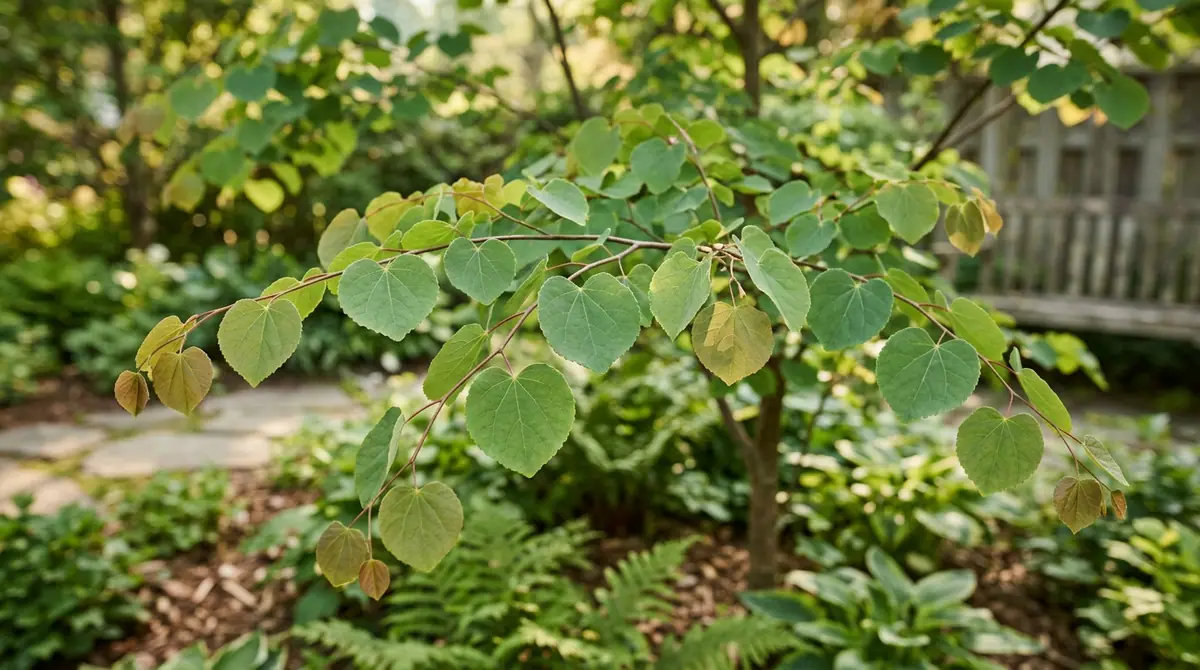
Standing beneath a mature quaking aspen (Populus tremuloides) in late September, I watched its nearly circular leaves flicker in a 12 mph wind like silver coins catching the autumn sun. That distinct motion—caused by a flattened petiole that twists with the slightest breeze—first hooked me on the understated architectural elegance of trees with round leaves. Over many seasons I have found that incorporating orbicular and cordate foliage into residential and urban landscapes breaks the monotony of standard lanceolate leaves, introducing soft, organic geometry that instantly transforms a harsh site design. Whether you are looking for autumn brilliance, unique architectural bark, or even a novel food source similar to what you might harvest when exploring Salad Trees Edible Leaves, round-leaved trees offer unmatched versatility.
1. Botanical Overview & Natural Habitat

Consider the Eastern Redbud (Cercis canadensis). Native to the understory of deciduous forests across eastern and central North America, its leaves are distinctly cordate to orbicular, unfurling in a rich burgundy before maturing to a vibrant, glossy green 3 to 5 inches (7.6 to 12.7 cm) across. This adaptation allows the understory tree to maximize light capture in dappled shade environments. Similarly, the Quaking Aspen (Populus tremuloides) dominates cold northern latitudes and high-altitude western mountain ranges, thriving in disturbed soils and forming vast clonal colonies connected by a single extensive root system. Its deltoid-to-orbicular leaves are an aerodynamic marvel, engineered to reduce wind resistance and prevent tearing during fierce mountain gales.
Another standout is the Katsura tree (Cercis-like in leaf shape, though taxonomically Cercidiphyllum japonicum), native to the moist, fertile valleys of Japan and China. Its delicate, kidney-shaped leaves emerge pinkish-purple in spring, turn bluish-green in summer, and drop in autumn smelling intoxicatingly of burnt brown sugar or cotton candy. When designing landscapes, understanding these natural habitats dictates where these trees will thrive. If you are grouping them with other understory species—perhaps beneath the dense canopy managed according to principles found in Planting Landscaping Under Pine Trees—you must mimic their native soil biology and moisture levels to prevent transplant shock.
2. Essential Environmental & Care Requirements
Selecting the right round-leaved tree means matching microclimate realities to ecological origins. While an Eastern Redbud appreciates partial shade and rich, moist loamy soils, a Silver Poplar (Populus alba) demands full blazing sun and tolerates heavy clay with high pH.
Most orbicular-leaved trees require well-draining soils with a pH between 6.0 and 7.0. Water management is critical during establishment. Newly planted specimens need approximately 1 inch (2.5 cm) of water weekly, delivered deeply to encourage downward root growth rather than shallow surface mats. When evaluating site conditions, consult authoritative horticultural guidance such as the Royal Horticultural Society for regional climate compatibility.
| Parameter | Optimal Condition | Common Mistake | Why It Matters |
|---|---|---|---|
| Soil pH | 6.0 – 7.0 (Slightly acidic to neutral) | Planting in highly alkaline or severely acidic unamended soils | Extreme pH locks out essential micronutrients like iron and manganese, causing interveinal chlorosis. |
| Sunlight | Full sun to partial shade (6–8 hours daily) | Placing understory species in scorching afternoon sun | Intense heat scorches delicate, broad leaf margins, causing premature defoliation. |
| Irrigation | Deep watering every 7 to 10 days post-establishment | Frequent, shallow daily sprinkling | Shallow water promotes weak root systems vulnerable to drought and windthrow. |
| Mulch Depth | 2 to 3 inches (5.1 to 7.6 cm) organic wood chips | Piling mulch directly against the bark ("volcano mulching") | Trapped moisture rots the cambium layer, inviting fungal pathogens and wood-boring insects. |
💡 Pro-Tip: When planting round-leaved trees in urban or wind-swept areas, avoid heavy synthetic fertilizers during the first growing season. Instead, inoculate the planting hole with mycorrhizal fungi to establish symbiotic root networks that naturally extract soil phosphorus and water.
3. Step-by-Step Cultivation, Feeding & Propagation
Establishing a thriving round-leaved tree requires precision during planting and early structural training. Whether you are planting a Cercidiphyllum or a Populus species, follow this rigorous protocol to ensure long-term vitality.
- Site Evaluation and Digging: Locate a site with proper drainage. Dig a hole 3 times wider than the root ball but no deeper than the root flare, ensuring the top of the root ball sits 1 to 2 inches (2.5 to 5.0 cm) above the surrounding grade.
- Root Preparation: Gently score the outer 0.5 inches (1.3 cm) of the root ball with a hori-hori knife or pruning shears to break any circling roots and stimulate outward radial growth.
- Backfilling: Backfill with native unamended soil. Tamp down gently every 6 inches (15 cm) of fill to eliminate large air pockets without compacting the soil structure.
- Initial Watering: Saturate the root zone slowly with 5 gallons (18.9 liters) of water to settle soil particles around the fine feeder roots.
- Mulching: Apply a 3-inch (7.6 cm) layer of shredded hardwood mulch in a 3-foot (0.9 meter) radius around the trunk, maintaining a 2-inch (5 cm) gap between the mulch and the bark.
- Structural Pruning: In late winter while the tree is dormant, prune away crossing branches, dead wood, and lower branch scaffolds to establish a strong central leader. If you enjoy precision woody plant manipulation, the techniques used here mirror those detailed in our guide on How to Prune Apple Trees for Maximum Fruit Yield.
⚠️ Important Caution: Never fertilize a newly planted tree with high-nitrogen commercial blends at planting time. Nitrogen stimulates tender top-growth before the root system can support it, leading to transplant failure and increased susceptibility to drought stress and insect attacks.
4. Common Problems, Pests & Troubleshooting
Round-leaved trees, particularly species in the Populus and Cercis genera, are prone to specific environmental stressors and biological pests due to their broad, soft leaf surfaces.
Leaf Spot and Fungal Pathogens: During wet springs, Eastern Redbuds frequently suffer from Cercospora leaf spot, manifesting as small purple-brown spots that merge and cause leaf drop. Prevent this by practicing good garden hygiene—rake and destroy all fallen infected leaves in autumn to break the fungal spore lifecycle. Avoid overhead irrigation, which splashes soil-borne fungal spores onto lower foliage.
Aphids and Scale Insects: The lush, tender foliage of orbicular trees attracts sap-sucking insects like aphids and soft scales. Heavy infestations cause sticky honeydew secretion and subsequent black sooty mold. Treat minor outbreaks with a forceful stream of water from a hose nozzle, or apply horticultural neem oil at a 1% dilution rate during the cooler morning hours when temperatures remain below 85°F (29°C).

5. Frequently Asked Questions
What is the best small tree with round leaves for a small yard?
The Eastern Redbud (Cercis canadensis) or its cultivar 'Forest Pansy' is exceptional for small residential spaces. Growing to a manageable height of 20 to 30 feet (6.1 to 9.1 meters) with a comparable spread, it features striking heart-to-round leaves, brilliant pink spring flowers, and fits comfortably into compact foundation plantings or urban courtyards.
Why are my round tree leaves turning yellow in mid-summer?
Mid-summer yellowing usually points to either drought stress, poor drainage causing root hypoxia, or a nutrient lockout due to soil compaction. Check soil moisture 4 inches (10 cm) deep; if it is dry, implement a deep weekly watering schedule. If soggy, withhold water and aerate the surrounding soil.
Are round-leaved trees prone to root damage or aggressive root systems?
It depends heavily on the genus. Trees in the Populus family (like the Quaking Aspen) possess aggressive, shallow, sucker-prone root systems that can disrupt turfgrass and pavement. Conversely, trees like the Katsura (Cercidiphyllum japonicum) have well-behaved root systems that pose minimal threat to nearby hardscaping when given adequate planting space.
How do I protect young round-leaved trees from winter frost cracking?
Young trees with smooth, thin bark—such as young redbuds and aspens—are vulnerable to frost cracks caused by rapid temperature swings in late winter. Wrap the trunks loosely from the base up to the first main branch using breathable paper tree wrap in November, and remove the wrap by April once active spring growth begins.
Related Guides
- Salad Trees Edible Leaves
- Indoor Plant Leaves Curling Inward
- Money Tree New Leaves Drooping
- Why is My Money Tree Dropping Leaves
- Why is My Money Tree Leaves Drooping
📋 Table of Contents ▼ Click to expand
Tags:
Keep reading
🌿 Related Plants You Might Like


PlantSavvyWorld
Editorial team
PlantSavvyWorld is an independent botanical education project. Articles are drafted with AI assistance, then edited and checked against university extension services, botanical garden collections and other published horticultural sources.