

Indoor Plant Leaves Curling Inward
Written with AI assistance, edited and checked against horticultural sources.
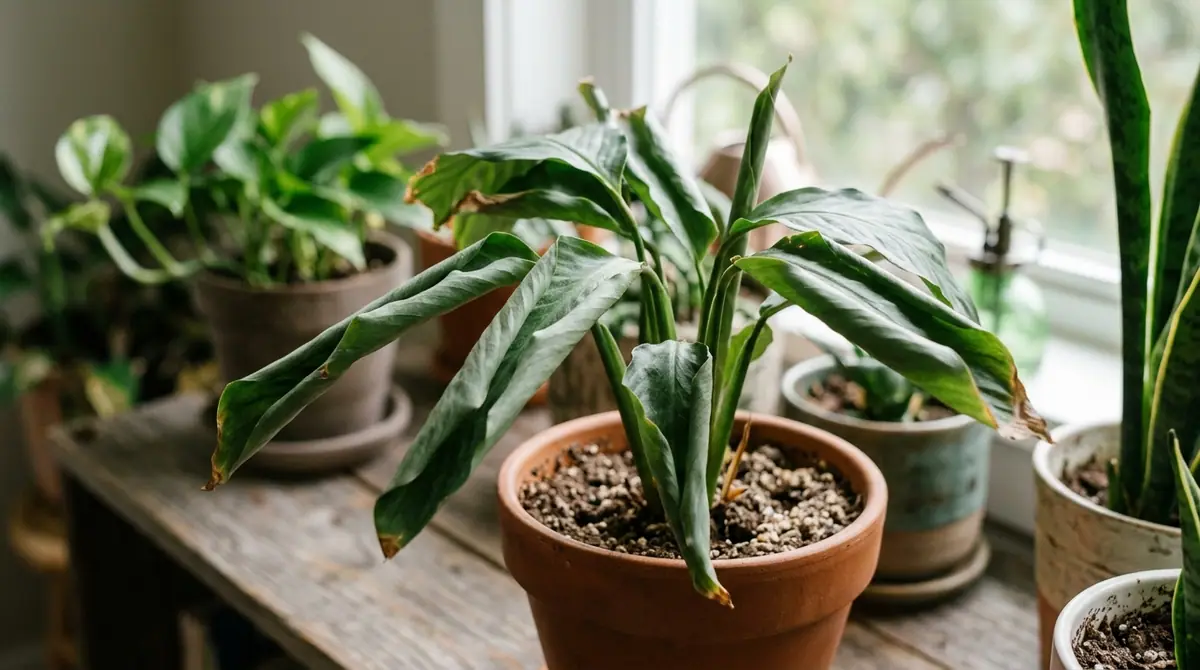
When indoor relative humidity drops to a dry 20% from central heating vents, Calathea ornata leaves curl tightly inward, sealing their margins. This dramatic reaction occurs when internal hydraulic pressure collapses, serving as a distress signal of leaf distortion.

1. Botanical Overview & Natural Habitat
To understand inward leaf curl, we must first look at plant anatomy. Leaves are dynamic solar panels composed of multiple cell layers. The upper epidermis protects the leaf, while the mesophyll layer contains chloroplasts that drive photosynthesis. On the underside of most leaves, specialized cells called guard cells open and close microscopic pores known as stomata, regulating gas exchange and transpiration—the process by which water moves up from the roots and evaporates into the air.
Under normal conditions, water pressure inside plant cells, known as turgor pressure, keeps leaves flat and fully expanded. When environmental stressors disrupt this hydraulic system, the delicate balance fails.
⚠️ Important Caution: Never mist curling leaves as a quick fix for low humidity. While it provides a fleeting 30 seconds of moisture, overhead water droplets trapped inside tightly curled leaf folds create the ideal anaerobic microclimate for fungal pathogens like Botrytis cinerea and bacterial leaf spot to take hold.
In their native understory habitats, most popular houseplants—such as Monstera deliciosa, Alocasia, and Calathea—grow beneath a dense tropical canopy. They experience ambient relative humidity levels of 70% to 90%, gentle air movement, and filtered sunlight that rarely exceeds a few hundred foot-candles. When we transplant these species into modern homes where relative humidity routinely plummets below 30% and indoor temperatures hover between 68°F and 74°F (20°C to 23°C), the rate of water loss through transpiration drastically outpaces the roots' ability to absorb replacement moisture. The plant responds by curling its leaves inward to shield its stomata from the desiccating indoor atmosphere.
For broader botanical insights on maintaining optimal plant health across diverse ecosystems, the Royal Horticultural Society offers exceptional resources on plant physiology and environmental stress management.
2. Essential Environmental & Care Requirements
Correcting inward leaf curl demands a methodical review of your plant's immediate environment. A single factor rarely operates in isolation; low humidity often exacerbates minor watering inconsistencies, while excessive fertilizer compounds root stress.
| Parameter | Optimal Condition | Common Mistake | Why It Matters |
|---|---|---|---|
| Soil Moisture | Dry down to 1.5 to 2 inches (3.8 to 5 cm) deep before watering | Keeping soil perpetually soggy or letting it bake bone-dry | Fluctuating moisture damages delicate root hairs, halting water uptake and causing cellular collapse |
| Relative Humidity | 50% to 70% RH | Allowing ambient humidity to drop below 30% | Low humidity accelerates transpiration, forcing leaves to curl inward to trap residual moisture |
| Temperature | 65°F to 75°F (18°C to 24°C) with stable air | Placing plants near drafty windows or heating/AC vents | Rapid thermal shifts shock vascular tissues, inhibiting efficient water transport to the upper canopy |
| Light Intensity | Bright, indirect light (2,000 to 5,000 lux) | Exposing shade-dwellers to direct afternoon sun | Intense solar radiation overheats leaf tissue, prompting rapid water loss and protective rolling |
When managing these parameters, remember that indoor environments change drastically by season. Just as outdoor gardeners must calculate precisely When to Plant Pumpkins in Southern California based on seasonal heat, indoor growers must adjust watering intervals and humidity supplementation as autumn heating systems kick on.
3. Step-by-Step Cultivation, Feeding & Propagation
Reversing leaf curl and restoring your plant to vibrant health requires a structured, gentle intervention protocol. Follow these steps to diagnose and correct the underlying stressors without shocking the plant further.
- Perform a Root and Soil Assessment: Carefully slide the plant out of its container. Gently brush away the top 1 inch (2.5 cm) of potting mix to inspect the root crown. Healthy roots should be firm and white or light tan; dark, mushy, or brittle roots indicate rot or severe drought damage.
- Execute a Thorough Substrate Flush: If salt buildup from synthetic fertilizers is suspected, take the plant to a sink and run lukewarm water slowly through the root ball for 5 minutes. Allow all excess water to drain completely from the bottom drainage holes.
- Adjust the Watering Technique: Adopt a deep-watering schedule rather than frequent sips. Water thoroughly until it runs freely from the base, then let the soil dry to the specific depth recommended for your plant species before watering again.
- Calibrate Ambient Humidity: Group tropical specimens together to raise local humidity, or deploy a cool-mist ultrasonic humidifier nearby. Aim to keep ambient readings stable between 50% and 60% relative humidity.
- Relocate to Optimal Illumination: Move plants away from intense southern window glass or thermal drafts. If your space lacks natural light, supplement with a full-spectrum LED grow light positioned 12 to 18 inches (30 to 45 cm) above the canopy for 12 hours a day.
- Withhold Fertilizer Temporarily: Do not fertilize a stressed plant. Wait until the plant has produced at least two consecutive sets of flat, normal leaves before resuming a half-strength, balanced liquid fertilizer routine during the active growing season.
💡 Pro-Tip: If you are reviving a severely dehydrated tropical plant whose leaves have curled into tight tubes, slip a clear plastic bag loosely over the entire canopy for 48 hours after a deep watering. This creates a temporary greenhouse effect that halts transpiration, allowing the plant's cells to rehydrate and unfurl naturally without losing more moisture to the room.
If you enjoy managing precise growing schedules indoors, you might also appreciate planning your outdoor edible garden by reviewing guides on When to Plant Beets in Utah or When to Plant Beets in Kansas. Similar attention to detail is required for cool-season crops like When to Plant Bok Choy Zone 7.
4. Common Problems, Pests & Troubleshooting
When inward leaf curl persists despite proper watering and humidity adjustments, biological culprits or chemical toxicities are usually to blame. Sucking insects are notorious instigators of leaf distortion.
- Spider Mites (Tetranychus urticae): These microscopic arachnids thrive in warm, dry indoor air. They pierce plant cells to feed on sap, usually on the undersides of leaves. As they colonize, they spin fine webbing and cause leaves to cup, curl inward, and develop a stippled, chlorotic yellow appearance. Inspect foliage weekly with a 10x jeweler's loupe.
- Thrips (Thysanoptera): Slender, minute insects that feed by rasping leaf surfaces and sucking cell contents. Their feeding damage disrupts normal cell expansion, forcing developing leaves to twist, curl inward, and emerge stunted or scarred with silvery patches and black frass dots.
- Root Rot (Pythium or Phytophthora species): Paradoxically, overwatering can mimic underwatering symptoms. When potting mix remains saturated, roots suffocate and die. Without functional roots to take up water, the above-ground foliage dehydrates, causing leaves to roll inward as if suffering from drought. Check for a sour, swampy soil odor and limp, brown roots.
- Chemical Phytotoxicity: Over-application of synthetic pesticides, leafshine products, or high-concentration chemical fertilizers can burn tender foliage margins, causing them to curl inward as the damaged cells die and contract. Rinse foliage thoroughly with plain water if chemical burn is suspected.

5. Frequently Asked Questions
Why are my indoor plant leaves curling inward even though the soil is wet?
When soil is consistently wet but leaves curl inward, your plant is likely suffering from root rot or oxygen deprivation. If root tissues have rotted due to poor drainage or overly dense soil, they can no longer transport water upward. The leaves experience physiological drought despite standing in moisture. Check the root system immediately, trim away decayed material, and repot into a fresh, well-aerated orchid bark and peat mix.
Can too much light cause indoor plant leaves to curl?
Yes. When exposed to excessive light intensity or direct, harsh sunlight, plants increase their transpiration rate to cool their tissues. If water loss exceeds supply, or if the solar radiation threatens to bleach the chloroplasts, the plant actively curls its leaves inward to minimize the surface area intercepting the light rays. Relocate the plant to a spot with bright, indirect illumination.
Will leaves that have curled inward ever uncurl?
It depends on the severity and duration of the stressor. If caught early, mildly curled leaves will often relax and flatten out once humidity and watering are normalized. However, leaves that have remained tightly rolled for weeks undergo permanent cellular changes and mechanical distortion. These older leaves may stay curled, but new growth emerging from the apical meristem will unfurl normally once conditions are corrected.
How do I know if pests are causing my plant leaves to curl?
Inspect the undersides of the curled leaves and along the leaf stems using a magnifying glass. Look for fine webbing, tiny moving dots, sticky residue (honeydew), or silvery-white patches of stippling. Pests like spider mites and thrips inject saliva that disrupts normal leaf development, causing the tissue to warp and curl inward as it grows around the feeding sites.
Related Guides
- Curling Leaves on Hydrangea
- How to Care for Indoor Orchids to Make Them Bloom Again
- Best Shade Loving Plants for Indoor Planters and Dark Rooms
- Money Tree New Leaves Drooping
- Why is My Money Tree Dropping Leaves
📋 Table of Contents ▼ Click to expand
Tags:
Keep reading
🌿 Related Plants You Might Like






PlantSavvyWorld
Editorial team
PlantSavvyWorld is an independent botanical education project. Articles are drafted with AI assistance, then edited and checked against university extension services, botanical garden collections and other published horticultural sources.