

When to Plant Beets in Utah
Written with AI assistance, edited and checked against horticultural sources.
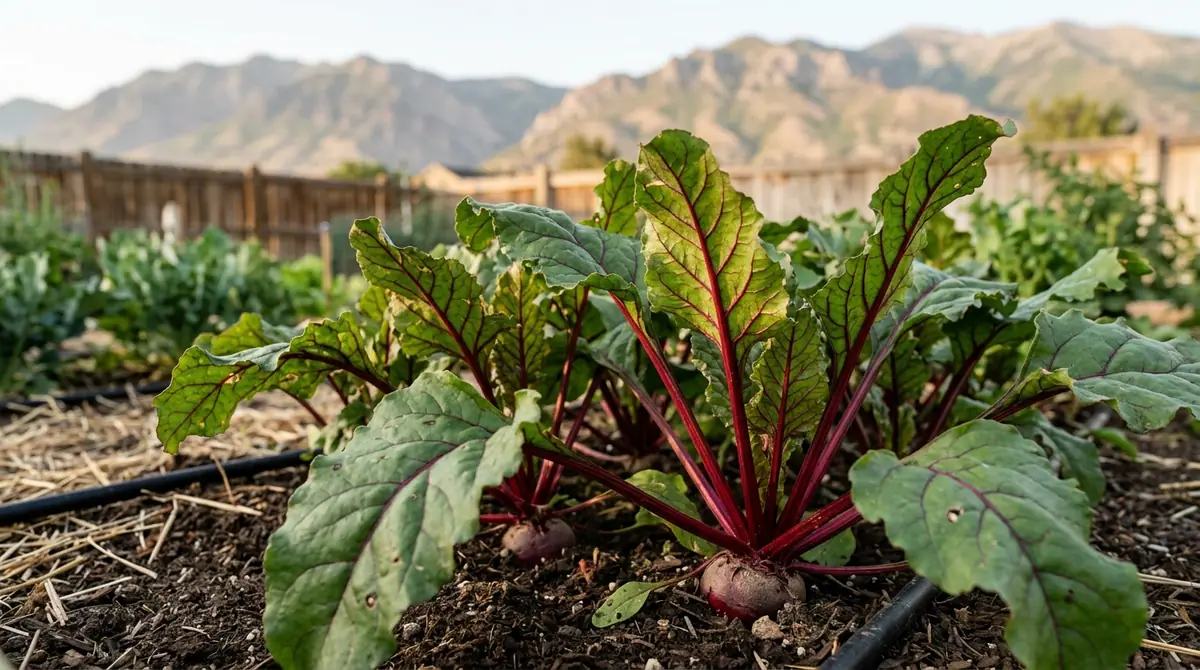
Utah's intermountain climate plays by its own rules: spring air can shift from freezing to seventy degrees within forty-eight hours, and desert-tinged summer sun demands careful timing to yield sweet, crisp roots rather than woody, bitter bullets. Getting beet timing right across Utah's unique microclimates—from the mild Dixie of St. George to the high-elevation frost pockets of Park City—requires reading soil temperatures rather than just calendar dates. These ruby-red biennials respond to specific Western terroir, making it essential to understand the exact science of when and how to plant them for an exceptional harvest.
1. Botanical Overview & Natural Habitat

Understanding their classification as temperate biennials dictates how they behave in Utah's variable landscapes. In their first growing season, they focus entirely on vegetative growth, storing sucrose, minerals, and water in that swollen hypocotyl. If subjected to prolonged exposure to cold temperatures—typically sustained periods between 35°F and 50°F (1.7°C to 10°C)—during their early development, the plant misinterprets the chill as passing through a harsh winter. This triggers a hormonal shift called vernalization, causing the beet to bolt prematurely, sending up a woody seed stalk instead of swelling into a tender root.
In Utah, where spring nights frequently dip below freezing while daytime highs climb rapidly, managing this vernalization risk is critical. Conversely, when planting for our intense summer or fall crops, we must account for daylight length and heat accumulation. Beets are remarkably adaptable, but they demand precision during establishment. Much like timing your cool-season greens or carefully managing When to Transplant Cilantro Seedlings, timing your beet sowing ensures the plants mature during optimal thermal windows. If you are balancing your spring planting schedule, you might also find insights in our guide on When to Transplant Flower Seedlings to synchronize your garden ecosystem.
2. Essential Environmental & Care Requirements
To produce deep-red, sweet roots, beets require specific environmental conditions that mimic their ancestral coastal habitat while adapting to the intermountain West.
| Parameter | Optimal Condition | Common Mistake | Why It Matters |
|---|---|---|---|
| Soil Temperature | 50°F to 85°F (10°C to 29.4°C) | Planting when soil is below 45°F (7.2°C) | Cold soil causes seed rot, poor germination, and triggers bolting. |
| Soil pH | 6.0 to 7.5 (Slightly acidic to neutral) | Ignoring Utah's naturally alkaline soils (>8.0) | High alkalinity locks up essential micronutrients like boron and manganese. |
| Sunlight | Full sun (6 to 8+ hours daily) | Planting in dense shade | Reduces photosynthetic yield, resulting in stunted, stringy roots. |
| Moisture | 1 inch (2.5 cm) of water weekly | Erratic watering (drought followed by flood) | Causes root cracking, woody texture, and hollow heart disease. |
Soil preparation in Utah requires special attention because our native soils often skew heavily alkaline and compact easily into dense clay. Beets demand loose, friable, well-draining loam to allow the hypocotyl to expand without restriction. If your garden sits in heavy clay, incorporate aged compost or organic matter to improve soil structure, a practice equally vital when preparing beds for When to Transplant Snapdragon Seedlings.
Nutrient management is another cornerstone of successful beet cultivation. Because beets are heavy miners of potassium and boron, a deficiency in the latter will result in internal black spots and corky, malformed roots. For localized regional guidance tailored to your specific county's frost dates and soil peculiarities, consult the Utah State University Extension service, which offers fantastic, research-backed publications for local growers. Additionally, for broad botanical standards and pest management strategies, the Royal Horticultural Society provides exceptional reference material on root crop cultivation.
3. Step-by-Step Cultivation, Feeding & Propagation
Direct sowing is always the gold standard for beets. Because they develop a delicate taproot immediately upon germination, transplanting them often damages the root structure, leading to forked, deformed, or stunted beets. Plan your planting schedule around Utah's regional frost dates: in lower elevations like Washington County (Zone 8), you can plant as early as mid-February; along the Wasatch Front (Zone 6-7), aim for late March to mid-April; and in high-elevation mountain valleys (Zone 4-5), wait until mid-May.
💡 Pro-Tip: When seeding in early spring, cover your beet beds with floating row covers. This traps ambient heat, raises the soil temperature by 3°F to 5°F (-16°C to -15°C), and protects tender emerging seedlings from sudden April snowstorms common in Utah.
Here is the exact step-by-step cultivation protocol for a bountiful harvest:
- Site Preparation: Clear the bed of debris and amend the top 8 to 12 inches (20 to 30 cm) of soil with well-rotted compost. Rake the soil until it achieves a fine, crumbly tilth free of large rocks that could deflect the growing taproot.
- Precision Sowing: Poke shallow furrows 0.5 to 0.75 inches (1.3 to 1.9 cm) deep, spaced 12 inches (30 cm) apart. Drop seeds every 1 to 2 inches (2.5 to 5 cm) along the furrow.
- Cover and Tamp: Gently pull soil over the seeds and press down firmly with the flat back of a rake to ensure optimal seed-to-soil contact for moisture absorption.
- Moisture Maintenance: Water the seeded bed gently using a fine-rose nozzle to avoid displacing seeds. Keep the soil consistently moist—like a wrung-out sponge—until germination occurs, which typically takes 7 to 14 days at soil temperatures of 50°F (10°C) or higher.
- The Critical Thinning Phase: When seedlings reach 3 inches (7.6 cm) tall, thin them rigorously to 3 to 4 inches (7.6 to 10 cm) apart. Crucial botanical note: Each "seed" is actually a multi-germ fruit containing 2 to 6 embryos. Cutting the excess seedlings at the soil line with scissors (rather than pulling, which disturbs neighboring roots) ensures individual plants have room to expand.
- Nutritional Top-Dressing: Side-dress the row with an organic, balanced, slow-release fertilizer rich in phosphorus and potassium when the greens reach 6 inches (15 cm) in height. Avoid high-nitrogen fertilizers, which trigger lush, beautiful foliage at the expense of stunted, flavorless roots.
- Fall Succession Planting: For a second harvest in Utah, sow a fall crop roughly 8 to 10 weeks before your first expected autumn frost. Fall-grown beets exposed to crisp October nights develop exceptionally high sugar content as starch converts to sucrose to protect cellular walls from freezing.
⚠️ Important Caution: Never let your beet beds dry out completely during the swelling phase of root development. If roots experience severe drought followed by heavy watering, the inner cells expand faster than the outer skin, causing the roots to split open and ruin their storage quality.
4. Common Problems, Pests & Troubleshooting
Even with meticulous planning, Utah's unique climate and soil chemistry can throw curveballs at your beet crop. Recognizing symptoms early separates a thriving harvest from a ruined patch.
- Leaf Miners (Pegomya hyoscyami): These small flies lay eggs on the undersides of leaves. The larvae tunnel inside the leaf tissue, creating unsightly, blistered, pale mines. Remedy: Immediately crush the larvae inside the leaves by hand or prune away heavily infested foliage. Use floating row covers early in the season to physically block adult flies from depositing eggs.
- Flea Beetles: These tiny, jumping beetles chew countless small, "shot-hole" punctures into seedling leaves, sometimes devastating an entire spring planting overnight. Remedy: Dust seedlings with food-grade diatomaceous earth or apply neem oil in the cool evening hours. Maintain vigorous watering to help seedlings outgrow minor damage.
- Cercospora Leaf Spot: A fungal disease thriving in warm, humid microclimates or during overhead irrigation, causing circular spots with purple margins and gray centers. Remedy: Switch to base-of-plant drip irrigation, practice strict crop rotation, and ensure adequate plant spacing to maximize airflow and leaf drying.
- Boron Deficiency (Internal Black Spot): Common in Utah's alkaline soils where high pH ties up trace minerals. Roots look fine externally, but slice them open to find dark, necrotic, corky tissue. Remedy: Apply a foliar spray of solubilized boron (such as agricultural borax) at a very conservative rate—typically 1 tablespoon per gallon of water—only if soil tests confirm a deficiency, as excess boron is toxic to plants.

5. Frequently Asked Questions
Can I grow beets successfully in containers on a Utah patio?
Yes, absolutely. Beets adapt remarkably well to container culture because you can completely control the soil composition. Choose a container at least 10 to 12 inches (25 to 30 cm) deep with ample drainage holes to accommodate the taproot. Fill it with a loose, high-quality potting mix blended with perlite and compost. Varieties with shorter roots, such as 'Little Ball' or 'Detroit Dark Red', perform exceptionally well in pots on sunny balconies.
What happens if I plant my beet seeds too early in the spring?
If you sow seeds when soil temperatures consistently sit below 40°F (4.4°C), the seeds will sit dormant in cold, wet mud. This dramatically increases the risk of seed rot caused by soil-borne pathogens like Pythium. Furthermore, if seeds do germinate in cold conditions, the prolonged cold stress triggers the aforementioned vernalization response, causing the plant to bolt and produce seed instead of a swollen root.
How do I know when my beets are ready to harvest?
You do not need to wait until the end of the season. You can harvest beet greens at any stage when they are large enough for a salad, taking only a few outer leaves per plant so the root can keep growing. For the roots, harvest when they reach between 1.5 and 3 inches (3.8 to 7.6 cm) in diameter. Larger beets often become woody, fibrous, and lose their rich, sweet flavor. Gently brush away surface soil near the crown to check the shoulder width before pulling.
Can beet seeds be saved from a garden for next year?
Beets are wind-pollinated biennials that cross-pollinate easily with other Beta vulgaris varieties, including Swiss chard and sugar beets, within a 1-mile (1.6 km) radius. If you only grew one isolated variety and allowed it to overwinter (protecting it heavily from freezing temperatures with thick mulch or moving it to a root cellar and replanting in spring), it will flower and set seed in its second year. However, for most home gardeners, purchasing fresh, certified seed each season is much more efficient and guarantees true-to-type genetics.
Related Guides
📋 Table of Contents ▼ Click to expand
Tags:
Keep reading
🌿 Related Plants You Might Like


PlantSavvyWorld
Editorial team
PlantSavvyWorld is an independent botanical education project. Articles are drafted with AI assistance, then edited and checked against university extension services, botanical garden collections and other published horticultural sources.